sales@wildnetedge.com
 +1 (212) 901 8616
 +1 (437) 225-7733














































































































 ChatGPT Development & Enablement
  Hire AI & ChatGPT Experts
  ChatGPT Apps by Industry
  ChatGPT Blog
  ChatGPT Case study
  AI Development Services
  Industry AI Solutions
  AI Consulting & Research
  Automation & Intelligence





Key Takeaways
- Modern Replit application architecture leverages browser-native, containerized environments to eliminate the “it works on my machine” friction.
- A successful Replit development architecture prioritizes “Instant Production,” where code is born in the cloud and scales via serverless deployment rails.
- Scalable cloud systems on Replit focus on decoupling development logic from deployment resources, ensuring zero-configuration high availability.
- Organizations use Replit’s modular architecture to integrate Agentic AI and collaborative “Multiplayer” workflows into their standard SDLC.
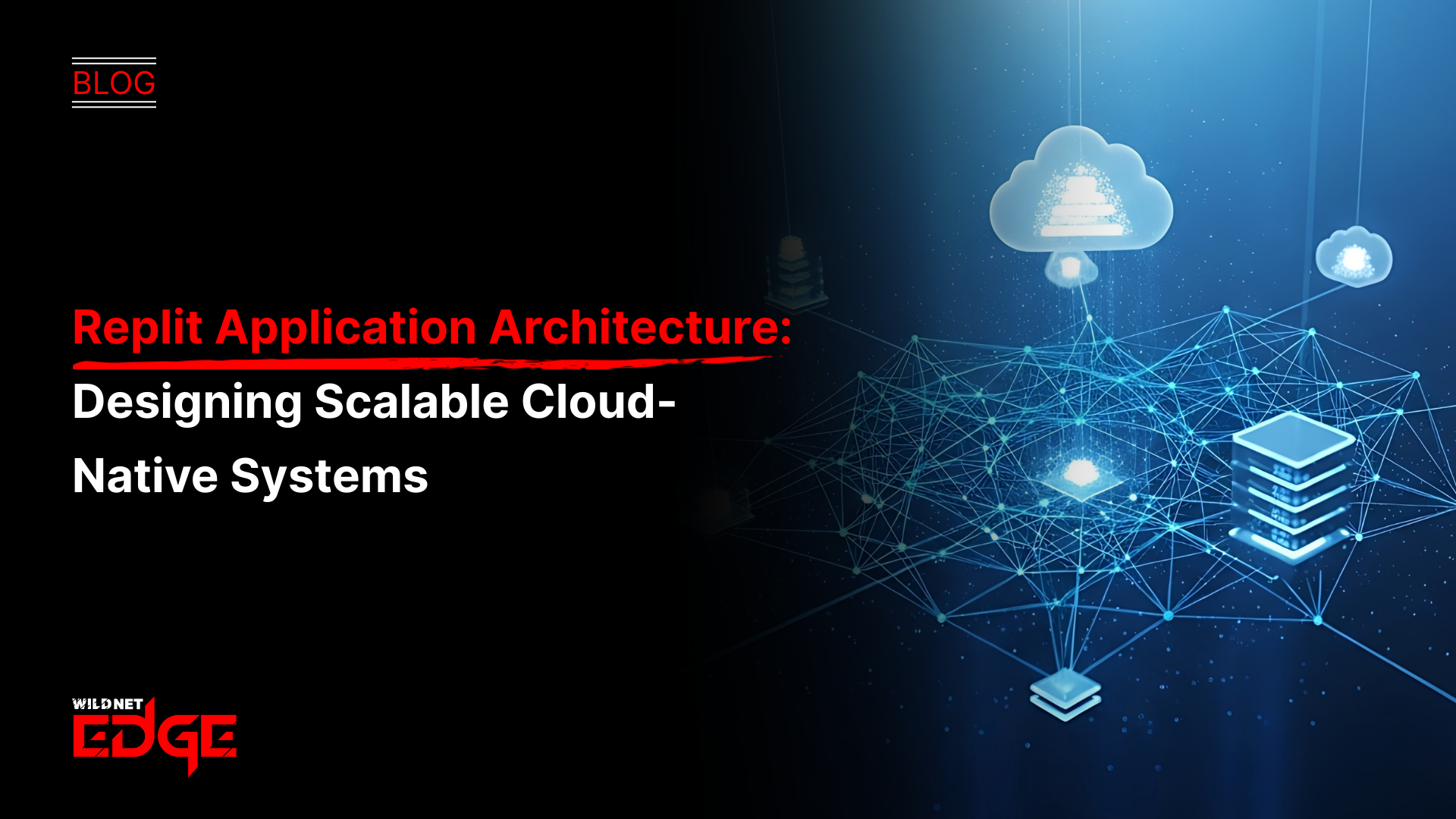
Replit application architecture defines how a modern, browser-based digital system is structured, integrated, and scaled. It serves as the master blueprint that aligns rapid prototyping with production-grade reliability.
In simple terms, Replit development architecture is the foundation of high-velocity cloud engineering. It outlines how code environments are isolated, how data persists across “Repls,” and how security is enforced at the workspace level. Poor architecture leads to fragmented internal tools and slow deployment cycles. Conversely, a strong cloud application architecture built on Replit supports rapid AI innovation, protects sensitive API keys, and allows for seamless scaling as user traffic evolves.
In 2026, technology infrastructure has moved beyond static local setups. Modern frameworks now incorporate “Self-Healing” workspaces that utilize Replit’s native cloud hosting and real-time multiplayer collaboration.
Understanding Replit Application Architecture Layers
A robust Replit-based framework operates through structured layers, each serving a specific strategic function.
1. Network & Infrastructure Layer (Nix-Powered)
This layer is the bedrock of Replit development architecture. It encompasses Replit’s “Nix” environment system, which allows for reproducible, software-defined infrastructure. This layer defines the baseline for system speed and ensures that every developer on a team is working in an identical, isolated container.
2. Data & Persistent Storage Layer
In the age of AI, data residency is critical. This layer structures how information is stored within the Replit ecosystem. It includes:
- Replit PostgreSQL (for relational data)
- Replit Key-Value (KV) store for fast state management
- Integrated “Secrets” management for secure API orchestration
- External cloud database connectors
3. Integration & API Layer
This layer ensures that your Repl can communicate with the global web. Replit application architecture in 2026 prioritizes “Websocket-First” and “API-Driven” designs, allowing browser-native apps to sync with CRMs, ERPs, and specialized AI models without lag.
4. Application & Collaboration Layer
This hosts the code that users or AI agents interact with. Scalable cloud systems on Replit separate the collaborative “Multiplayer” environment from the live “Deployment” environment, allowing teams to push updates to a live URL without interrupting the development flow.
Why Replit Architecture Is Critical for Modern Scaling
Modern enterprises operate in high-velocity environments where a 24-hour delay in environment setup is unacceptable. Without a structured Replit application architecture, projects become fragmented “zombie” sandboxes that never reach production.
A well-designed cloud application architecture helps businesses:
- Deploy microservices in seconds instead of hours.
- Improve developer velocity through real-time peer reviews.
- Protect sensitive credentials through integrated secrets management.
- Scale infrastructure automatically via Replit Deployments.
- Reduce “Configuration Debt” by using standard Nix blueprints.
Best Practices for Designing Scalable Replit Systems
Designing a reliable Replit application architecture requires more than simply writing functional code. Architects must structure systems carefully to ensure scalability, security, and seamless integration as applications grow.
Separate Development and Production Environments
Keep the development workspace separate from the production deployment layer. This prevents experimental code from affecting live applications and is a core principle of modern Replit development services.
Build Modular, Microservices-Based Systems
Avoid monolithic structures. Instead, design applications as modular services that communicate through APIs. This allows different components, such as authentication, analytics, or AI services, to scale independently in scalable cloud systems.
Use Secure Secrets Management
Never hardcode API keys, database credentials, or tokens in the codebase. A strong cloud app architecture stores sensitive data in encrypted secret management systems like Replit Secrets.
Optimize Data Storage and Persistence
Use reliable storage solutions such as PostgreSQL databases or key-value stores for persistent application data. Proper data architecture prevents data loss and improves performance.
Leverage Autoscaling Deployments
Configure Replit Deployments with autoscaling settings to ensure applications handle sudden traffic spikes without performance degradation.
Enterprise Replit Strategy Principles
Replit architecture differs from traditional local development in its scope and accessibility. While local IDEs are siloed, Replit plans for global, collaborative access. To build a future-ready Replit architecture, consider these core design elements:
Identity-Based Access vs IP Whitelisting
Replit systems must balance security with ease of access. Replit application architecture helps define team-based permissions, critical for maintaining security across a global remote workforce.
Governance and Blueprint Control
An architecture strategy must define:
- Standard Nix configurations for specific tech stacks (e.g., Python AI vs Node.js web).
- The roadmap for moving from a “Sandbox Repl” to a “Production Deployment.”
- Governance rules for private vvs public code visibility.
Scalability Through Modularity
Modern Replit frameworks separate responsibilities. By using “Deployments” with autoscale capabilities, architects ensure that one module (like an AI chatbot) can handle traffic surges without affecting the internal dev environment.
Common Replit Architecture Design Mistakes
Architectural design demands precision. Decisions made in the “Repl” determine your stability in production.
- Hardcoding Secrets: Storing API keys in the code instead of using Replit’s “Secrets” tool is a primary security risk.
- Overlooking Nix Configuration: Assuming the default environment is enough. Replit application architecture must define specific dependencies to avoid “Version Drift.”
- Ignoring Resource Limits: Building a monolith in a single Repl. Scalable systems should use multiple Repls connected via APIs.
- Overlooking Handover Processes: Failing to document the “Forking” logic makes it difficult for new developers to take over the workspace.
Building Scalable IT Solutions with Replit
Scalability starts with a deliberate cloud application architecture. If the initial Repl is bloated, performance will inevitably drop.
Avoid Workspace Bloat
Keep your main Repls lean. Move heavy data processing or long-running tasks to specialized Repls or external worker nodes. In 2026, scalable cloud systems use Replit’s “Autoscale” features to provision more compute only when needed.
Choose the Right Tech Stack
Your stack determines your agility. Replit development architecture supports hundreds of languages, but choosing Nix-native tools ensures the fastest cold starts and highest reliability.
Hire Specialized Developers
Recruit Replit experts when your cloud ecosystem becomes too complex to manage. Whether you are building Agentic AI or serverless backends, specialized architects design systems that are secure and “change-ready.”
Implementation Roadmap for Replit Architecture
A structured implementation process ensures that your Repl delivers measurable business value.
- Requirement Assessment: Define if the Repl is for prototyping, internal tooling, or production.
- Nix Environment Planning: Create a custom blueprint for reproducible dependencies.
- Architecture & Security Design: Set up secrets management and API gateways.
- Collaborative Build: Use Multiplayer mode to develop features with real-time feedback.
- Deployment Testing: Stress test the “Autoscale” limits on a staging URL.
- Continuous Optimization: Monitoring usage logs to refine resource allocation.
Case Studies
Case Study 1: The AI Agent Shift
- Problem: A logistics firm’s local dev setup was too slow to test new AI routing agents.
- Solution: We implemented a new Replit architecture, allowing them to prototype and host agents in a unified cloud environment.
- Result: Time-to-market for new agents dropped from 4 weeks to 5 days, showcasing the power of cloud systems.
Case Study 2: Digital Architecture for SaaS
- Problem: A startup needed to scale a collaborative tool from 100 to 10,000 users without a dedicated DevOps team.
- Solution: We provided cloud app architecture to implement Replit’s professional autoscale deployments.
- Result: The platform handled a 10x traffic spike with zero lag, proving the ROI of a browser-native architecture strategy.
Conclusion
Replit application architecture defines whether a cloud project succeeds or fails. Strong architecture separates the dev and prod layers, ensures reproducible environments, and integrates seamlessly with global APIs. In 2026, a successful scalable cloud system depends on browser-native flexibility and the guidance of expert engineering.
At Wildnet Edge, we design production-grade Replit architecture built for the long haul. Whether you need to build a secure AI orchestrator or architect a collaborative tool from scratch, we ensure your infrastructure meets the performance demands of the modern market.
FAQs
Replit architecture integrates the IDE and the hosting, allowing for “Instant Deployment” and real-time “Multiplayer” collaboration that standard hosting lacks.
AI requires fast iteration and easy access to high-compute APIs. Replit architecture ensures your data pipelines are secure and your environments are reproducible for AI testing.
Benefits include zero-setup environments, faster time-to-value, and lower DevOps overhead compared to traditional cloud setups.
Yes. Through “Modular Repls” and Replit’s native autoscale deployments, you can grow your system incrementally as traffic increases.
You should hire Replit developers during the “Planning Phase” to ensure your Nix environment and secrets management are set up correctly before coding begins.
Nix is a tool used by Replit to create isolated, reproducible development environments. It ensures that the software running in your Repl will run exactly the same for everyone.
We use our AI-first approach to simulate high-traffic scenarios and optimize the Nix configuration to identify potential bottlenecks before the app goes live.

Managing Director (MD) Nitin Agarwal is a veteran in custom software development. He is fascinated by how software can turn ideas into real-world solutions. With extensive experience designing scalable and efficient systems, he focuses on creating software that delivers tangible results. Nitin enjoys exploring emerging technologies, taking on challenging projects, and mentoring teams to bring ideas to life. He believes that good software is not just about code; it’s about understanding problems and creating value for users. For him, great software combines thoughtful design, clever engineering, and a clear understanding of the problems it’s meant to solve.


 based on 1200+ reviews