 sales@wildnetedge.com
 +1 (212) 901 8616
 +1 (437) 225-7733
















































































































 ChatGPT Development & Enablement
  Hire AI & ChatGPT Experts
  ChatGPT Apps by Industry
  ChatGPT Blog
  ChatGPT Case study
  AI Development Services
  Industry AI Solutions
  AI Consulting & Research
  Automation & Intelligence





Key Takeaways
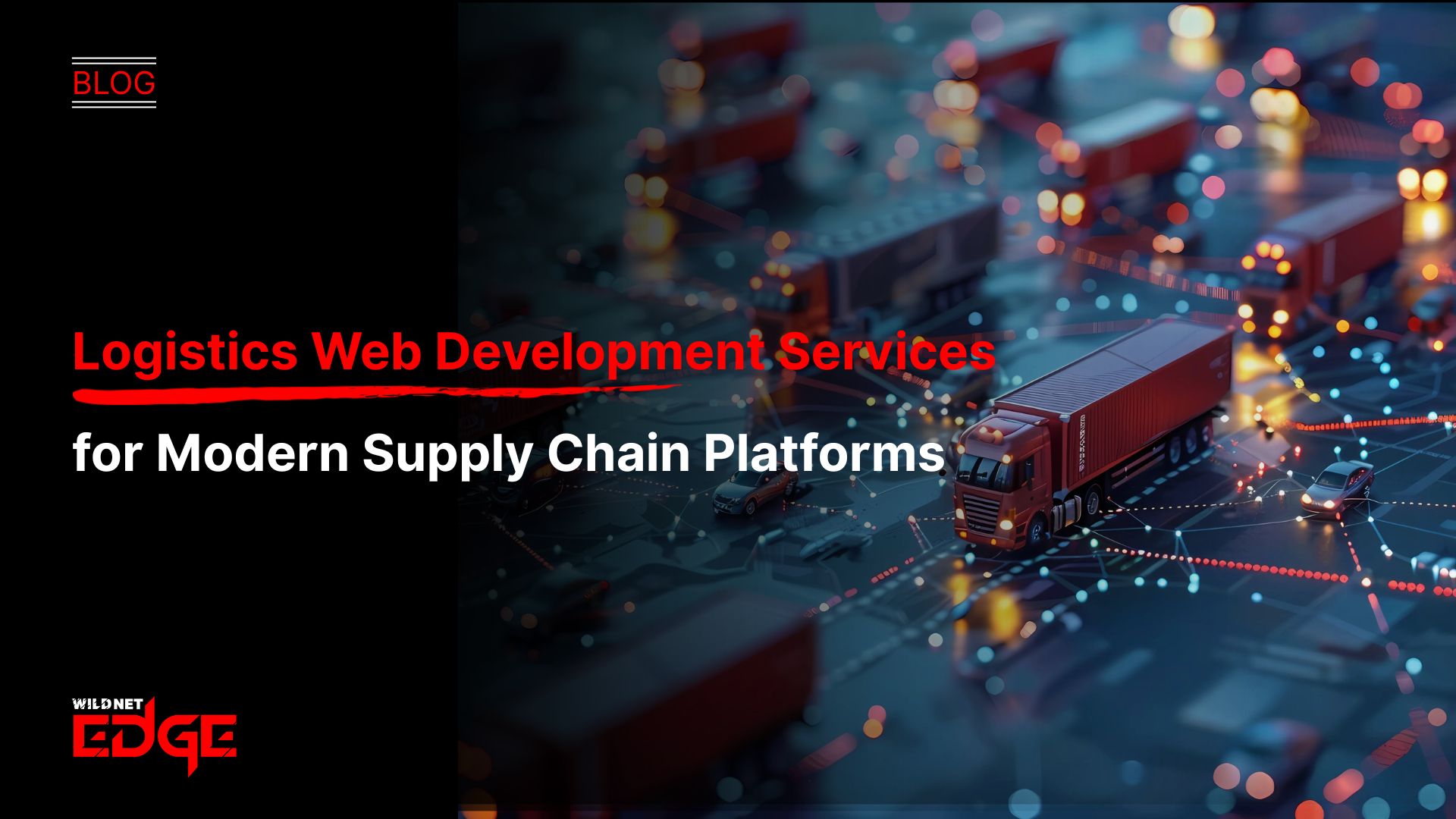
- In 2026, logistics web development services have shifted from simple tracking pages to “Agentic Control Towers” that autonomously manage carrier updates and load matching.
- High-performance supply chain web platforms now prioritize “Real-Time Digital Twins,” allowing web users to simulate disruptions and optimize inventory with sub-second data ingestion.
- Modern transportation web applications leverage Edge computing to provide granular visibility into cargo health (temp, tilt, humidity) for sensitive goods like pharma and electronics.
- Successful logistics software solutions integrate “Sustainability Dashboards” at the browser level, automating carbon footprint reporting per mile to meet new global ESG mandates.
The movement of global goods is no longer just a physical challenge; it is a high-velocity data challenge. In 2026, the difference between a resilient supply chain and a fractured one is defined by the quality of its digital interface. While many companies have back-end tracking, few possess the integrated supply chain web platforms required to navigate a volatile global market via a seamless browser experience.
Specialized logistics web development services step in where generic ERP web modules fail. It requires a deep understanding of multi-modal routing, cross-border API compliance, and real-time IoT visualization. Digital transformation is no longer about seeing where a truck is; it is about building an intelligent web ecosystem that predicts delays and automates resolutions.
Why the Logistics Industry Needs Specialized Web Development
Logistics and transportation operate in a high-stakes environment where a 1% improvement in fuel efficiency or a 10-minute reduction in dwell time translates to millions in bottom-line growth.
1. AI Must Move From Visibility to Autonomy
Most firms have basic “Track and Trace.” However, moving to “Agentic Supply Chains” where the web platform autonomously re-negotiates carrier rates or shifts freight during fuel spikes requires deep system integration. Specialized logistics software solutions ensure AI is:
- Actionable: Executing rerouting commands directly from the web dashboard.
- Predictive: Analyzing weather, strikes, and port data to forecast “Estimated Time of Arrival” (ETA) shifts in real-time.
- Integrated: Connected directly to warehouse robotics and carrier telematics via secure webhooks.
2. Visibility Demands Are Skyrocketing
B2B customers now expect B2C-level transparency. Transportation web applications must provide granular updates on cargo health for sensitive goods. This requires massive-scale IoT ingestion that standard web platforms aren’t built to handle without significant performance lag.
3. Fragmentation Is the Real Bottleneck
72% of logistics leaders admit their data is siloed across different TMS and WMS portals. The trend for 2026 is “Unified Orchestration,” where supply chain web platforms speak the same language as global customs and procurement systems through a single, secure web interface.
Logistics Web Development Lifecycle (SDLC)
Building platforms for logistics web development services requires a more rigorous approach than standard business sites. The deployment of transportation web applications follows an “Interoperability-First” engineering lifecycle.
1. Ecosystem Mapping & Architecture Planning
Before coding, architects perform a detailed audit of the “Data Handoffs.” We map every touchpoint from the driver’s mobile web app to the carrier’s EDI (Electronic Data Interchange) to ensure the supply chain web platform complies with global ISO standards by design.
2. Secure Integration with Multi-Modal Cores
This is the most critical phase. Modern logistics software solutions must connect to a web of external partners. We solve this through:
- Middleware Layers: Creating a translation zone between legacy ERPs and modern API-first carriers.
- IoT Edge Gateways: Visualizing telematics data in the browser to provide instant safety alerts like driver fatigue.
- Composable Web Design: Building modular features so you can add “Drone Delivery” or “EV Optimization” without rebuilding the core site.
3. Resilience Testing & Stress Validation
Using “Chaos Engineering,” we simulate shocks like a major port closure or a 500% surge in volume. This ensures logistics web development services result in fail-safe platforms that maintain routing logic even during data outages.
How Supply Chain Web Platforms Help Organizations Grow
Strategic logistics web development enables firms to modernize while maintaining strict delivery SLAs.
- Faster Market Entry: Automated customs documentation processing reduces cross-border delays by up to 40%.
- Improved Margin Control: AI-driven analytics on the web dashboard identify unprofitable routes and carrier contracts in real-time.
- Enhanced Sustainability: Embedded carbon tracking allows firms to optimize routes for the lowest emissions, directly in the UI.
- Operational Resilience: Real-time visibility into the “Extended Supply Chain” (Tier 2 and Tier 3 suppliers) prevents production stops.
Core Technologies Powering Logistics Web Development Services
Modern web development services rely on advanced digital infrastructure to deliver real-time visibility, predictive logistics intelligence, and seamless cross-platform integrations. These technologies power next-generation web platforms for supply chains that connect fleets, warehouses, and partners through a single browser-based interface.
IoT and Telematics Integration
Real-time fleet visibility is driven by IoT-enabled devices installed in vehicles, containers, and warehouses. These sensors capture data such as location, temperature, humidity, fuel usage, and cargo movement. Modern transportation web apps ingest this telemetry and display it through interactive dashboards, allowing logistics managers to monitor shipment conditions and driver performance in real time.
Cloud-Native Logistics Infrastructure
Scalable logistics platforms require cloud-based environments such as AWS, Google Cloud, or Microsoft Azure. These infrastructures support auto-scaling systems capable of handling millions of shipment updates and route calculations simultaneously. Cloud-native software solutions for logistics ensure high system availability and enable companies to expand operations across global regions without infrastructure limitations.
API-Driven Supply Chain Connectivity
Global logistics depends on seamless communication between multiple systems. Modern web platforms for supply chain integration with transportation management systems (TMS), warehouse management systems (WMS), customs databases, and third-party carriers through secure APIs. This API-driven architecture ensures real-time synchronization of shipment data, inventory levels, and delivery updates across the entire supply chain network.
Artificial Intelligence and Predictive Logistics
AI and machine learning models are transforming logistics decision-making. These systems analyze historical route performance, weather data, traffic conditions, and fuel costs to optimize shipment routes automatically. Within modern logistics web development services, predictive analytics engines enable transportation web apps to forecast delivery delays, reduce fuel consumption, and improve fleet utilization.
Real-Time Data Streaming Platforms
Modern logistics ecosystems rely on high-speed data streaming technologies such as Kafka or event-driven architectures. These systems enable logistics software to process thousands of shipment updates per second, providing live dashboards and automated alerts for disruptions across the transportation network.
What Logistics Leaders Look for in a Web Partner
Selecting a partner for logistics web development services is a long-term risk decision. Leaders evaluate “Freight Intelligence” over simple coding ability.
1. Domain Expertise in Global Logistics
Logistics is not like retail. A credible partner for logistics web development services must understand Incoterms, HTS codes, LTL (Less-Than-Truckload) optimization, and “Last-Mile” logic. Leaders expect web platforms for supply chains that respect the physical realities of moving goods.
2. Proven Execution in System Orchestration
A design mockup is not enough. Leaders ask: Have you integrated a global WMS with a legacy TMS web-view without losing a single shipment record? Partners must demonstrate zero-downtime migration and robust API security.
3. AI Governance and Responsible Automation
Agentic AI in logistics carries a safety risk. Leaders evaluate whether a partner can implement “Human-in-the-Loop” safeguards, ensuring that an autonomous rerouting decision doesn’t violate driver regulations.
Case Studies
Case Study 1: Legacy to Cloud-Native TMS Portal
- Challenge: A global freight forwarder was losing 15% of its margin due to manual reconciliation between four different web portals.
- Solution: Through specialized logistics web development services, we implemented a unified cloud-native TMS portal that automated carrier billing.
- Result: Operational costs dropped by 30%, and the firm achieved 100% real-time visibility across its network within six months.
Case Study 2: AI Agents in Transportation Apps
- Challenge: A last-mile delivery giant struggled with high fuel costs and static routing that couldn’t handle same-day spikes.
- Solution: We deployed transportation web apps integrated with AI agents. The system autonomously rerouted drivers based on real-time traffic data.
- Result: Fuel consumption dropped by 22%, and the “On-Time Delivery” rate reached an industry-leading 99.2%.
Conclusion
The logistics sector stands at a turning point. Success in 2026 requires moving beyond simple tracking to the web systems that truly power movement. Specialized logistics web development services bridge the gap between physical stability and digital innovation. From web platforms for supply chain to logistics software solutions, the right digital backbone ensures your supply chain remains resilient, compliant, and aggressively competitive.
At Wildnet Edge, we address the industry’s failure rate with our AI-first approach. By utilizing proprietary tools to automate legacy code analysis and simulate supply chain stress tests, we de-risk complex transformations.
FAQs
It focuses on “Real-Time Visibility,” “Agentic UI,” and “Multi-System Integration,” helping firms move from fragmented portals to a unified supply chain web platform.
Generalist firms often lack the knowledge of freight logic (like LTL pooling or customs compliance) and the technical depth required to integrate IoT sensors with low latency in the browser.
Costs vary based on fleet size and integration points. However, specialized web development services in logistics typically pay for themselves within 12 months through fuel savings and reduced labor.
“Agentic AI” is the top trend. These are autonomous agents capable of re-negotiating shipping rates, rerouting cargo, and managing inventory levels directly through the web interface.
A firm should engage specialized partners when their current systems create “Information Silos” or when they need to automate cross-border documentation and sustainability reporting.
By implementing “Carbon Accounting” modules, web applications automate the tracking of emissions per shipment, providing the data needed for ESG compliance and “Green Route” optimization.
It is our proprietary methodology using AI tools to accelerate the analysis of fragmented logistics data and automate the testing of complex web platforms for supply chain, reducing project timelines by up to 40%.

Managing Director (MD) Nitin Agarwal is a veteran in custom software development. He is fascinated by how software can turn ideas into real-world solutions. With extensive experience designing scalable and efficient systems, he focuses on creating software that delivers tangible results. Nitin enjoys exploring emerging technologies, taking on challenging projects, and mentoring teams to bring ideas to life. He believes that good software is not just about code; it’s about understanding problems and creating value for users. For him, great software combines thoughtful design, clever engineering, and a clear understanding of the problems it’s meant to solve.

 based on 1200+ reviews



