sales@wildnetedge.com
 +1 (212) 901 8616
 +1 (437) 225-7733











































































































 ChatGPT Development & Enablement
  Hire AI & ChatGPT Experts
  ChatGPT Apps by Industry
  ChatGPT Blog
  ChatGPT Case study
  AI Development Services
  Industry AI Solutions
  AI Consulting & Research
  Automation & Intelligence




Key Takeaways
- Enterprise software development consulting in 2026 focuses on “Hollowing the Core,” migrating legacy functions to microservices without disrupting operations.
- Modern enterprise application consulting prioritizes Agentic AI integration, allowing software to execute autonomous business workflows.
- Structured enterprise software implementation reduces technical debt and improves system interoperability by up to 50%.
- Consulting services now embed “Zero-Trust” protocols directly into the software development lifecycle (SDLC).
In 2026, enterprise software is no longer just a tool; it is the central nervous system of the organization. However, many global enterprises struggle with fragmented systems, legacy bottlenecks, and data silos that stifle innovation. This is where enterprise software development consulting becomes a critical strategic lever.
Digital transformation at the enterprise scale is complex. It requires more than just “coding”; it requires a deep understanding of business processes, regulatory compliance, and high-availability architecture. Consulting services bridge the gap between legacy stability and modern agility, ensuring that your technology stack supports long-term scalability rather than becoming a liability.
What Are Enterprise Software Consulting Services and Why They Matter
Enterprise software consulting services assist large organizations in managing their digital infrastructure modernization challenges. Enterprise-level consulting differs from general software development because it studies how new applications and systems will operate with thousands of existing users, petabytes of data, and international security standards.
Instead of just building features, consultants solve systemic business challenges:
- Legacy Debt: Modernizing 20-year-old COBOL or Java systems.
- Integration Gaps: Ensuring ERPs, CRMs, and custom apps share data seamlessly.
- Scalability Issues: Building systems that handle millions of transactions without latency.
- Compliance Pressure: Adhering to evolving global standards like GDPR, DORA, or the EU AI Act.
Enterprise Application Consulting vs. Implementation
Success in digital transformation needs organizations to find harmony between their strategic objectives and their technical implementation work. The two terms have different meanings although people tend to use them as synonyms throughout their different project development stages.
| Aspect | Enterprise Application Consulting | Enterprise Software Implementation |
| Primary Focus | Strategy & Architecture | Execution & Deployment |
| Key Question | “What should we build and why?” | “How do we make it work securely?” |
| Core Activities | Gap analysis, Tech stack selection, ROI modeling | Coding, Migration, Integration, UAT |
| Outcome | Digital Roadmap & Blueprint | Production-Ready Application |
Enterprise Software Development Consulting Across the Implementation Lifecycle
A successful enterprise project follows a disciplined path. By engaging specialized consultants at each phase, organizations minimize risk and ensure that the final product delivers measurable business value.
1. Enterprise Strategy & Advisory Services
Every transformation begins with a discovery phase. Consultants perform a deep technology audit to identify “Shadow IT” and redundant systems. They align the software roadmap with the company’s P&L goals, ensuring that every dollar spent on development contributes to either revenue growth or cost reduction.
2. Enterprise Software Implementation
This is the phase where the blueprint becomes reality. Enterprise IT implementation involves building robust, cloud-native applications using modern frameworks. In 2026, this increasingly includes “AI-Augmented Development,” where consultants use AI tools to accelerate code generation and unit testing while maintaining strict human-in-the-loop quality controls.
3. Enterprise Application Integration (EAI)
An enterprise application is rarely an island. Application consulting in enterprise focuses heavily on integration, connecting the new software to the existing ecosystem via secure APIs and middleware. This ensures that a sales update in the CRM is reflected instantly in the finance department’s ERP.
Enterprise Software Consulting Use Cases
In 2026, the highest ROI from enterprise software development consulting is found in use cases that automate trust and intelligence across the value chain.
Supply Chain Resilience
Consultants design “Digital Twins” of the supply chain, allowing enterprises to simulate disruptions (like port closures or weather events) and automatically reroute logistics in real-time.
Financial Automation & Fintech Integration
Enterprise application consulting helps banks and financial departments move away from manual reconciliation. By implementing autonomous financial agents, companies can achieve “Continuous Closing” of their books, rather than waiting for the month-end.
AI Governance & Data Security
As enterprises deploy internal LLMs, consultants guide the implementation of secure data “fences.” This ensures that sensitive corporate data is used to train AI models without ever leaking into the public domain.
Legacy “Strangling” & Modernization
Instead of a risky “rip-and-replace” approach, consultants use the “Strangler Fig” pattern. They build new functionality around the legacy core, gradually migrating services until the old system can be retired without a single minute of downtime.
Key Benefits of Enterprise Software Development Consulting
Organizations invest in enterprise software development services to modernize infrastructure, reduce operational complexity, and build scalable digital systems. Strategic consulting ensures that enterprise platforms are designed for long-term performance rather than short-term fixes.
- Improved System Scalability: Enterprise software consulting services design architectures capable of handling millions of users and transactions without performance degradation.
- Reduced Technical Debt: Legacy modernization strategies help organizations gradually replace outdated systems while maintaining operational continuity.
- Seamless Enterprise Integration: Application consulting in enterprise ensures new systems integrate smoothly with ERPs, CRMs, analytics tools, and internal databases.
- Stronger Security and Compliance: Consulting experts embed Zero-Trust architecture, DevSecOps practices, and regulatory compliance into the development lifecycle.
- Faster Digital Transformation: Structured enterprise software implementation accelerates innovation by reducing development delays and infrastructure bottlenecks.
Scaling with the Right Enterprise Consulting Partner
The success of your digital transformation depends on the maturity of your partner. When evaluating enterprise software development consulting firms, look for these specific criteria:
- Proven Scale: Can they show experience managing systems with 50,000+ concurrent users?
- Integration Depth: Do they have a track record with SAP, Oracle, Salesforce, and Microsoft ecosystems?
- Security-First Mindset: Do they implement DevSecOps and Zero-Trust architecture by default?
- Future-Ready Approach: Are they designing for “Composable Commerce” and modularity?
When to Hire Enterprise Developers vs. Engage Consultants
You should engage consultants when you are defining the architecture, selecting the tech stack, or managing a high-risk migration. Once the roadmap is clear, you can hire dedicated developers or specialized squads to execute the build, test, and maintenance phases.
Case Studies
Case Study 1: The Global Supply Chain Overhaul
- Problem: A Fortune 500 retailer faced 20% inventory wastage due to disconnected regional ERPs.
- Solution: We provided application consulting in an enterprise to build a unified data layer. We then managed the enterprise IT implementation of an AI-driven forecasting engine.
- Result: Inventory wastage dropped by 15%, and the company saved $120M in operational costs in the first year.
Case Study 2: Banking Core Modernization
- Problem: A regional bank was losing customers to fintechs because its 30-year-old mainframe couldn’t support real-time payments.
- Solution: Using enterprise software development consulting, we implemented a microservices-based middleware.
- Result: The bank launched a mobile-first “Instant Pay” feature in 4 months, increasing customer retention by 22%.
Conclusion
In 2026, enterprise software development consulting is about more than just building apps; it is about building resilience. By following a structured approach, starting with a strategic audit and moving through secure enterprise software implementation organizations can turn their technology stack into a growth engine.
Successful transformation requires a partner who understands the “Interconnectedness” of the enterprise. At Wildnet Edge, we combine our AI-first approach with deep architectural expertise to help you build secure, scalable solutions that deliver measurable ROI.
FAQs
While results vary, most enterprises see a return through “Cost Avoidance” (reduced downtime) and “Operational Efficiency” (automated workflows), often recouping the initial investment within 18–24 months.
We use a phased ETL (Extract, Transform, Load) process. We run the old and new systems in parallel to validate data integrity before a full “cutover,” ensuring zero data loss.
AI in the enterprise requires strict governance. Consultants ensure your AI agents have the right permissions and that your data is “cleansed” before being used in LLM training.
Yes. Modern enterprise IT consulting services include “Compliance-as-Code,” where regulatory rules are built directly into the software’s automated testing suite.
It is a strategy where we build new, cloud-native services around a legacy system (the core). Over time, we move functions out of the core until they can be retired without a “Big Bang” failure risk.
Use a consulting firm for high-level strategy, architecture, and “Discovery.” Hire dedicated developers or staff augmentation for the long-term execution and maintenance of the established roadmap.
Our AI-first approach uses automated code-refactoring tools and AI-driven testing benches, allowing us to move from “Strategy” to “Prototype” up to 40% faster than traditional firms.
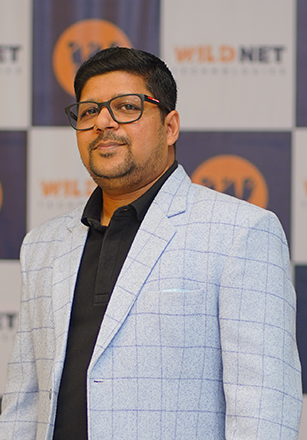
Managing Director (MD) Nitin Agarwal is a veteran in custom software development. He is fascinated by how software can turn ideas into real-world solutions. With extensive experience designing scalable and efficient systems, he focuses on creating software that delivers tangible results. Nitin enjoys exploring emerging technologies, taking on challenging projects, and mentoring teams to bring ideas to life. He believes that good software is not just about code; it’s about understanding problems and creating value for users. For him, great software combines thoughtful design, clever engineering, and a clear understanding of the problems it’s meant to solve.

 based on 1200+ reviews