sales@wildnetedge.com
 +1 (212) 901 8616
 +1 (437) 225-7733













































































































 ChatGPT Development & Enablement
  Hire AI & ChatGPT Experts
  ChatGPT Apps by Industry
  ChatGPT Blog
  ChatGPT Case study
  AI Development Services
  Industry AI Solutions
  AI Consulting & Research
  Automation & Intelligence

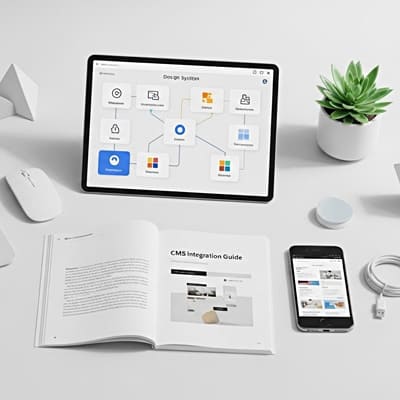

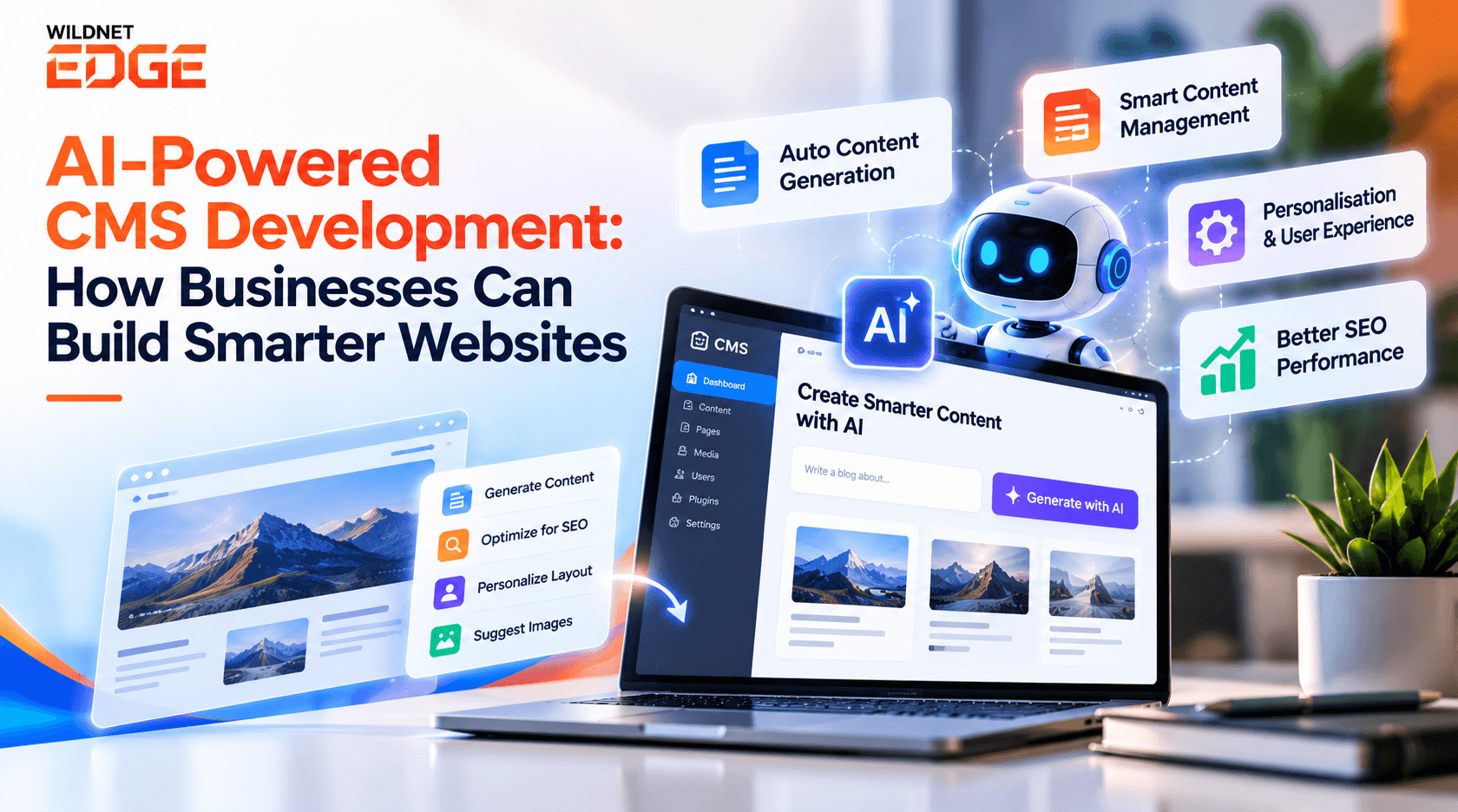


Managing website content should not feel like a never-ending cycle of editing, approvals, updates, and repetitive tasks. This is where ai-powered cms development can make a real difference. An ai-powered cms helps businesses manage content more efficiently while making websites more responsive to customer needs. From automating everyday content tasks to suggesting relevant content and improving user experiences, AI can make a traditional CMS much smarter. For businesses looking for faster workflows and more personalised websites, an AI content management system can be a practical step towards building a better digital experience.
What Is an AI-Powered CMS?
An AI-powered CMS is a content management system that uses artificial intelligence to help businesses create, organise, manage, and deliver website content.
A traditional CMS mainly gives teams a place to create and publish content. An ai-powered cms can go a step further by helping with tasks such as:
- Creating or improving content
- Organising large amounts of website information
- Suggesting relevant content to visitors
- Automating repetitive publishing tasks
- Understanding user behaviour
- Improving content recommendations
- Helping teams find information faster
The goal is not to replace content teams. Instead, AI helps them spend less time on repetitive work and more time on strategy, creativity, and customer engagement.
Why Businesses Are Investing in AI-Powered CMS Development
As websites grow, managing content across different pages, products, regions, and audiences becomes harder. Teams may spend hours updating information manually or finding the right content for different users.
This is where ai-powered cms development becomes useful.
1. Faster Content Management
AI can help automate routine content tasks such as tagging, categorising, summarising, and organising content. This can save content teams considerable time, especially when managing hundreds or thousands of pages.
Instead of manually sorting every piece of content, teams can let AI handle repetitive tasks while they focus on more important work.
2. More Personalised User Experiences
Not every visitor comes to a website looking for the same thing. An AI-enabled CMS can use visitor behaviour and preferences to help deliver more relevant content.
For example, an e-commerce website could show product recommendations based on what a customer has previously viewed. A publishing website could suggest articles related to the topics a visitor frequently reads.
This makes the website feel more useful instead of treating every visitor in exactly the same way.
3. Better Content Discovery
Large websites can make it difficult for visitors to find what they need. AI can improve search and content discovery by understanding what users are actually looking for.
Rather than relying only on exact words, an AI content management system can help connect users with related information, products, services, or resources.
4. Reduced Manual Work
Content teams often deal with repetitive tasks that take up valuable time. AI can assist with activities such as content classification, recommendations, basic editing, and publishing workflows.
This does not mean businesses should automate everything. Human review still matters, particularly for important, customer-facing content.
How AI Can Improve a Website
The real value of an AI-powered CMS comes from how it supports the entire website experience.
For example, businesses can use AI to:
- Recommend relevant products or articles
- Identify outdated content
- Improve internal search
- Suggest content categories and tags
- Support content creation
- Automate parts of approval and publishing
- Understand visitor behaviour
- Create more personalised website experiences
Businesses can also combine their CMS with broader AI Web Development Services to add intelligent features across their websites and web applications.
AI-Powered CMS vs Traditional CMS: What Is the Difference?
A traditional CMS is primarily focused on helping teams manage and publish content. An AI-powered CMS adds intelligent assistance to that process.
| Traditional CMS | AI-Powered CMS |
| Manages and publishes content | Manages, publishes, and assists with content |
| Mostly manual workflows | Can automate repetitive workflows |
| Basic search | Smarter content discovery |
| Same experience for most users | More personalised experiences |
| Manual content organisation | AI-assisted tagging and categorisation |
| Limited recommendations | Intelligent content recommendations |
The right choice depends on the business. A small website with limited content may not need extensive AI features. A large business with multiple websites, products, or audiences may benefit much more from an AI-enabled system.
When Should You Consider AI-Powered CMS Development?
There is no need to add AI simply because it is popular. Businesses should first identify a real problem that AI can solve.
AI-powered CMS development can be particularly useful when:
- Your team manages a large volume of content.
- Content updates take too much time.
- You want to personalise website experiences.
- Your website has a large product or content library.
- Users struggle to find relevant information.
- Your business operates across multiple markets or websites.
- Your content team spends too much time on repetitive tasks.
For businesses with very specific requirements, custom cms development can also be considered. A custom approach allows the CMS to be designed around existing workflows rather than forcing teams to change how they work.
You can learn more about the benefits of custom CMS development when standard platforms do not fully meet your needs.
Building an AI CMS That Can Grow With Your Business
A good CMS should not only solve today’s problems. It should also leave room for future growth.
Businesses should consider factors such as the amount of content they manage, the number of users, future integrations, security requirements, and the channels where content will be used.
For companies planning to publish content across websites, mobile applications, and other digital platforms, headless CMS architecture can offer greater flexibility. It separates content management from the way content is displayed, making it easier to reuse the same content across different channels.
Our guide on headless CMS architecture explores how this approach can support flexible and scalable content delivery.
Key Benefits of an Enterprise CMS With AI Capabilities
For larger organisations, an enterprise cms with ai capabilities can bring AI into everyday content operations without completely changing the existing system.
Some important benefits include:
- Improved productivity: Teams can spend less time on repetitive tasks.
- Better personalisation: Content can be more relevant to different audiences.
- Faster publishing: Automated workflows can reduce delays.
- Smarter search: Visitors can find useful information more easily.
- Scalability: Businesses can manage growing content volumes more efficiently.
- Better decision-making: Content and user behaviour can provide useful insights.
The key is to introduce AI where it provides measurable value rather than adding features simply for the sake of innovation.
Final Thoughts
An ai-powered cms can turn a website from a simple content publishing platform into a smarter digital experience. By helping teams automate repetitive work, improve content discovery, and deliver more relevant experiences, AI can make website management easier and more effective.
However, successful ai-powered cms development starts with understanding business needs. The right solution should balance automation with human oversight and provide enough flexibility to grow with the business.
For companies with complex requirements, cms website development services or custom cms development can help create a CMS that fits their workflows, customers, and long-term goals.
FAQs
What is AI-powered CMS development?
AI-powered CMS development involves building or upgrading a content management system with AI features that can assist with content creation, organisation, personalisation, search, recommendations, and repetitive workflows.
How does an AI-powered CMS help businesses?
An ai-powered cms can reduce manual content work, improve website personalisation, make content easier to find, and help teams manage large volumes of information more efficiently.
Can AI be added to an existing CMS?
Yes. AI capabilities can often be integrated into an existing CMS instead of replacing the entire platform. The approach depends on the CMS, business requirements, available data, and features needed.
Is an AI CMS suitable for small businesses?
It can be, but not every small business needs a fully AI-enabled CMS. If the business has a growing content library, repetitive workflows, or a need for personalisation, selected AI features may provide useful value.
What is the difference between an AI CMS and a headless CMS?
An AI CMS focuses on adding intelligent capabilities to content management, while a headless CMS separates content management from the website’s presentation layer. Businesses can also combine both approaches when their needs require it.

Vidit Kumar is an expert in DevOps and cloud engineering, specializing in building efficient, reliable, and scalable systems for organizations of all sizes. He has deep expertise in automation, cloud infrastructure, and workflow optimization, helping teams streamline operations and improve software delivery processes. Vidit is passionate about mentoring teams and exploring innovative tools that improve software performance and delivery. He believes in blending technical skill with thoughtful problem-solving to create systems that make a real difference. Outside of work, Vidit enjoys experimenting with cloud platforms, learning new technologies, and finding smarter ways to approach engineering challenges.

 based on 1200+ reviews