 sales@wildnetedge.com
 +1 (212) 901 8616
 +1 (437) 225-7733
















































































































 ChatGPT Development & Enablement
  Hire AI & ChatGPT Experts
  ChatGPT Apps by Industry
  ChatGPT Blog
  ChatGPT Case study
  AI Development Services
  Industry AI Solutions
  AI Consulting & Research
  Automation & Intelligence





TL;DR
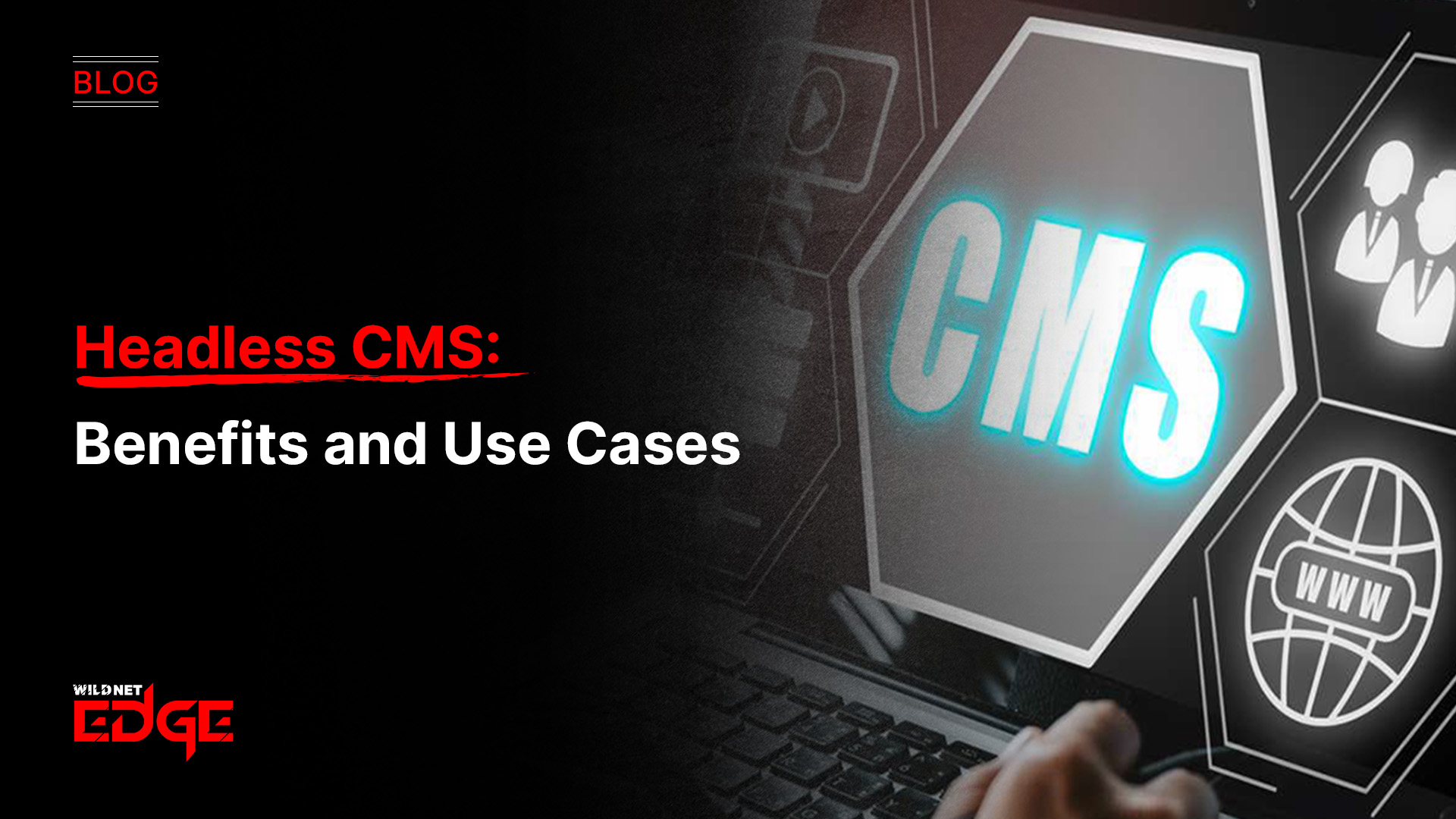
A Headless CMS separates content from design, allowing businesses to deliver the same content across websites, apps, and emerging digital channels using APIs. It improves speed, flexibility, security, and scalability while supporting true omnichannel content delivery. In 2026, enterprises adopt headless architecture to move faster, reduce technical debt, and future-proof their digital platforms.
Most content systems were built for a simpler time when a website was the only channel that mattered. Today, content must work everywhere: websites, mobile apps, kiosks, wearables, and more. Traditional systems struggle to keep up.
This is where a Headless CMS changes the game. Instead of tying content to one website layout, it treats content as reusable data. The result is faster publishing, easier scaling, and consistent messaging across all platforms. For enterprises, this is no longer a technical upgrade; it is a strategic shift.
The Strategic Shift to Headless Architecture
The core idea behind headless architecture is simple: separate content from presentation. In a traditional CMS, the backend and frontend are tightly connected. In a Headless CMS, they are fully independent.
This CMS decoupling allows developers to build frontends using any framework, React, Vue, or Angular, while content teams manage everything in one central system. Both teams work independently, without blocking each other.
Modern CMS solutions built this way are more flexible and easier to maintain. You can redesign your website, launch a mobile app, or add a new channel without touching your content database.
Mastering Omnichannel Content Delivery
Customers interact with brands across many touchpoints. A Headless CMS is designed for omnichannel content delivery by default.
Content is stored once and delivered everywhere through a content API. Update a product description, and it instantly reflects across your website, app, and digital displays. No duplication. No manual syncing.
This approach ensures consistency, reduces errors, and speeds up launches. It also prepares your content for future channels you haven’t planned yet.
Accelerating Development with Content APIs
Speed matters. With a Headless CMS, teams work in parallel. Developers build experiences while marketers create content connected only through the content API.
This removes bottlenecks common in monolithic systems. Frontend changes no longer risk breaking content workflows. Integrations with personalization engines, analytics tools, or translation services become easier.
For enterprises, this means faster releases, cleaner integrations, and a more flexible tech stack powered by modern CMS solutions
Security and Scalability
Security improves naturally with headless architecture. Since the CMS backend is not directly exposed to users, the attack surface is smaller. Only APIs are exposed, and access can be tightly controlled.
Scalability also improves. You can scale the frontend separately from the backend during traffic spikes. This makes Headless CMS a strong choice for global platforms with unpredictable demand. CMS decoupling also simplifies compliance and governance by keeping all content centralized and auditable.
Future-Proofing with Modern CMS Solutions
Digital platforms change fast. A Headless CMS is future-proof because it does not depend on how content is displayed. It only cares about storing and delivering content through APIs.
This makes it ideal for composable digital ecosystems. You can replace frontends, add new tools, or expand to new markets without rebuilding your CMS.
Enterprises that invest in modern CMS solutions gain long-term flexibility instead of locking themselves into outdated systems.
Reducing Total Cost of Ownership
While setup may require planning, a Headless CMS reduces long-term maintenance costs. You avoid large platform rebuilds and reuse content across channels.
Omnichannel content delivery also cuts duplication efforts, improving ROI on content creation and reducing operational overhead.
Enhancing Developer Experience
Developers gain freedom to use their preferred tools. Content teams gain faster publishing without relying on engineering for every update. This balance is why Decoupled CMS adoption continues to grow; it aligns technical flexibility with business agility.
Measuring Headless Success
To validate your move to a Decoupled CMS, focus on metrics like “time to publish” and “developer velocity.” CMS decoupling should result in faster deployment times for new features.
Track the effectiveness of your omnichannel content delivery. Are you able to launch a new channel, like a chatbot, without re-platforming? That is the true test of headless architecture.
We also recommend monitoring API performance. A fast content API is essential for a good user experience. Modern CMS solutions often come with analytics to help you optimize these data flows.
Case Studies: Our Automation Success Stories
Case Study 1: Global Retail Expansion
- Challenge: A global fashion retailer was struggling to manage content across 15 different country websites and a mobile app. Their legacy system required manual updates for each region, leading to data inconsistencies and slow time-to-market. They lacked a centralized content strategy.
- Our Solution: We engineered a centralized headless architecture using a leading content platform. We built a unified data model that served localized content to all regions via a high-performance content API. The headless CMS development team also integrated an automated translation workflow.
- Result: The client reduced content update time by 70%. The omnichannel content delivery system ensured that a price change in the backend was reflected instantly across all 15 sites and the app, increasing operational efficiency and customer trust.
Case Study 2: Fintech Customer Portal
- Challenge: A fintech enterprise needed to deliver secure, personalized financial reports to users across web and mobile. Their monolithic CMS could not handle the complex data security requirements or the dynamic nature of the reports.
- Our Solution: We implemented a robust Headless CMS with strict CMS decoupling. We utilized API development best practices to securely fetch user data and combine it with educational content from the CMS, delivering a seamless experience.
- Result: The new portal improved user engagement by 40%. The modern CMS solutions we deployed allowed the marketing team to update educational content without needing IT support, while the secure API ensured sensitive financial data remained protected.
Our Technology Stack for Decoupled CMS Architecture
We use modern, API-first technologies to enable flexible, scalable, and omnichannel content delivery.
- Frontend: React, Angular, Vue.js
- Backend: Node.js, Python, .NET
- Content Delivery: Decoupled CMS, Content APIs (REST / GraphQL)
- Databases: PostgreSQL, MongoDB, MySQL
- Cloud Platforms: AWS, Azure, Google Cloud
- DevOps: Docker, Kubernetes, CI/CD Pipelines
Conclusion
The Decoupled Content Management System (CMS) is not positioned as a niche architecture anymore, but rather has become the basic platform upon which the scalable, flexible, and future-proof digital systems are built. The application of headless architecture, CMS decoupling, and API-focused delivery enables the companies to receive the benefits of speed, uniformity, and extensibility in the future; accordingly, the decision to live with or adopt such modern technologies is solely upon the company’s executives.
At Wildnet Edge, we use these tools in our all-around content management services to create smart, data-driven applications. We collaborate with you to offer high-performance, agile SaaS solutions tailored to your industry-specific problems and opportunities.
FAQs
The main benefit is flexibility, a Decoupled CMS architecture unbundles content management and delivery, thus letting you publish content on any device (web, mobile, IoT) from a single point.
Headless architecture completely gets rid of the frontend presentation layer and is all about backend content management, delivering data through APIs, whereas traditional systems treat them together.
Decoupling of CMS enables the frontend and backend teams to work independently, so the development capacity of the organization is increased and new features are released much quicker since the bottlenecks are taken away.
The content API serves as the connecting link between your repository and your audience; it transmits the unprocessed data to websites, apps, and other channels in a manner that is both effective and secure.
A Decoupled CMS can store content in the form of raw data instead of formatted pages, which means that it can push the same content to websites, smartwatches, and kiosks at once, thus providing a consistent brand experience across all these platforms.
Yes, in most cases; modern CMS solutions are more resilient to common web vulnerabilities because the attack surface is smaller with the backend database separated from the frontend display layer.
A Decoupled CMS requires developer setup, but once it is configured, it provides marketers with intuitive editing interfaces, although it might not have the “drag-and-drop” page building of traditional tools without extra configuration.

Managing Director (MD) Nitin Agarwal is a veteran in custom software development. He is fascinated by how software can turn ideas into real-world solutions. With extensive experience designing scalable and efficient systems, he focuses on creating software that delivers tangible results. Nitin enjoys exploring emerging technologies, taking on challenging projects, and mentoring teams to bring ideas to life. He believes that good software is not just about code; it’s about understanding problems and creating value for users. For him, great software combines thoughtful design, clever engineering, and a clear understanding of the problems it’s meant to solve.
 based on 1200+ reviews



