sales@wildnetedge.com
 +1 (212) 901 8616
 +1 (437) 225-7733
















































































































 ChatGPT Development & Enablement
  Hire AI & ChatGPT Experts
  ChatGPT Apps by Industry
  ChatGPT Blog
  ChatGPT Case study
  AI Development Services
  Industry AI Solutions
  AI Consulting & Research
  Automation & Intelligence





Key Takeaways
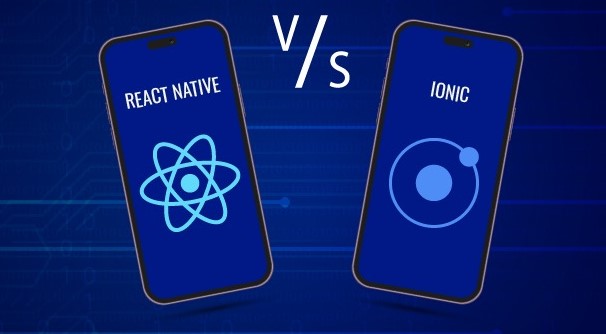
- React Native renders using native UI components, giving apps a genuine native feel that is ideal for high-performance products with complex interactions.
- Ionic is a web-first framework that runs a single codebase across mobile, web, and desktop through a WebView, prioritizing development speed and broad platform reach.
- React Native delivers superior responsiveness for heavy animations and complex transitions. Ionic is highly capable for data-driven enterprise tools and content applications.
- React Native requires React and JavaScript knowledge. Ionic works with Angular, Vue, or plain JavaScript, making it more accessible for teams that already work in web technologies.
In 2026, most mobile products need to reach users across more than one surface. That is what makes the React Native vs Ionic decision more than a technical preference. It is a strategic choice about what your app needs to feel like and how fast your team needs to ship it.
React Native has become the standard for brands that want a mobile experience that competes directly with native apps. Ionic has grown into a strong choice for teams that need to deploy across iOS, Android, and the web simultaneously without splitting their development effort or hiring specialists for each platform.
Understanding the difference between React Native and Ionic is what helps you choose the framework that fits your product’s performance requirements and your team’s existing strengths.
React Native vs Ionic: Justifying the 2026 Framework Strategy
React Native maps your code directly to native UI controls. The buttons, lists, navigation elements, and gestures your users interact with are the same ones built into the operating system. That means the app looks and behaves exactly like it belongs on the device, because it is using the same components a Swift or Kotlin developer would use, which is why many businesses Hire React Native Developers for premium mobile experiences.
Ionic takes a different approach. It renders your app inside a highly optimized browser shell using web components. Your team writes standard HTML, CSS, and JavaScript or a framework they already know, and Ionic handles the bridge to device features through its Capacitor runtime. The result is an app that looks consistent across every platform and can be deployed to the web as a Progressive Web App without any additional work, which is why many companies Hire Ionic Developers for faster cross-platform delivery.
Here is a React Native vs Ionic comparison that makes those differences concrete:
Comparison Table: React Native vs. Ionic
| Feature | React Native (Native Components) | Ionic (Web Components) |
| Philosophy | “Learn Once, Write Anywhere” | “One Codebase, Everywhere” |
| Rendering | Native UI elements | WebView (HTML/CSS) |
| Performance | Near-Native (High) | High (Fast, but browser-limited) |
| Development Speed | Moderate | Fast (Web-standard based) |
| Device Access | Direct (via bridges) | Via Capacitor/Cordova plugins |
| UI Consistency | Platform-specific look | Identical look across platforms |
| Best For | Consumer Apps, Games, High-UX | Enterprise Apps, MVPs, PWA |
React Native vs Ionic Performance: Native Bridges vs. Web Engines
React Native vs Ionic performance in 2026 is most visible in how each framework handles animation and touch responsiveness under load.
React Native offloads UI rendering to the native platform. That means complex animations, infinite scroll, and gesture-heavy interactions run smoothly without the overhead of a browser engine. For consumer apps where the interaction quality is part of the product’s value, that native rendering is a real advantage, often delivered by a React Native Development Company. Users feel the difference even if they cannot explain what it is.
Ionic has made significant progress with Capacitor, which provides fast access to native APIs and dramatically improved the performance of its WebView-based rendering. Modern mobile processors have closed the gap considerably and for most business applications, dashboards, forms, data tables, and content feeds, the speed difference between Ionic and React Native is not something users will notice, making an Ionic Development Company a practical partner for enterprise apps .
React Native vs Ionic: Skillset and Ecosystem Fit
React Native vs Ionic which is better for your team often comes down to what your developers already know and how quickly you need to ship.
React Native is tightly linked to the React ecosystem. If your team already builds web products in React, the transition to mobile is manageable. You are learning a new rendering target, not a new programming model. The trade-off is that React Native has its own mobile-specific UI components and architectural patterns that take time to get right.
Ionic is more flexible about the framework your team uses. Angular, Vue, React, or plain JavaScript all work. That makes it genuinely accessible for web development teams without requiring them to learn mobile-specific paradigms. For organizations that want to deploy a mobile product without hiring new specialists or retraining their existing team, Ionic is often the more practical starting point.
Choosing Your Framework: Strategic Implementation
When to choose React Native
- Consumer-facing products: When smooth animations, native gestures, and a premium feel are central to user retention and app store ratings, React Native is the stronger foundation, and many businesses work with a React Native Development Company for scalable app development.
- Heavy hardware use: If your app requires complex camera interactions, Bluetooth communication, or GPU-intensive features, React Native’s direct access to native bridges handles that more cleanly than a WebView-based approach.
- Long-term iOS and Android focus: When your product roadmap is mobile-first and you want a codebase that scales with the native capabilities of each platform as they evolve, React Native keeps you closer to the platform.
When to choose Ionic
- Enterprise and internal tools: For dashboards, field service apps, and internal portals where development speed and cross-platform consistency matter more than 120 FPS animations, Ionic delivers what you need at significantly lower cost.
- PWA requirements: If you need your app to be accessible via a browser URL without a download, in addition to living in the app stores, Ionic handles that natively. React Native requires additional tooling to achieve the same.
- Rapid prototyping and MVPs: When you need a high-quality product live on iOS, Android, and web simultaneously in the shortest possible time, Ionic’s web-standard foundation lets your existing team build quickly, often with the support of an Ionic Development Company.
Case Studies
Case Study 1: The High-UX Social Launch
- Problem: A lifestyle startup needed an app with complex video filters and “infinite scroll” that felt as fast as Instagram.
- Solution: We developed the app using React Native to leverage native UI rendering.
- Result: The app achieved 100k downloads in its first month with a 4.8-star rating for its “premium” feel.
Case Study 2: The Universal Enterprise Portal
- Problem: A logistics company needed a dashboard for drivers (mobile) and managers (web) but only had a small web-dev team.
- Solution: We used Ionic with Angular to create a single codebase for all three platforms.
- Result: Development time was cut by 50%, and the company successfully deployed the system across 500 devices and 20 office locations in just 10 weeks.
Conclusion
The React Native vs Ionic comparison in 2026 is a clear choice between two different definitions of the right mobile experience.
React Native is the right choice when native performance, hardware access, and a premium user experience are non-negotiable. Ionic is the right choice when development speed, cross-platform reach, and web-first deployment are what your product and your team need most.
The React Native vs Ionic comparison becomes straightforward once you are honest about what your users expect and what your team can realistically deliver. At Wildnet Edge, we help engineering teams make that decision clearly so the framework you build on today supports the product you are scaling toward.
FAQs
For UI rendering and animation, yes. React Native’s native components give it a clear performance edge for smooth, gesture-heavy interactions. For data-heavy business logic and standard content display, the speed difference between the two is minimal and most users will not notice it.
Yes. Ionic apps can be configured with Service Workers and local storage to provide a solid offline experience. For most content caching and form submission scenarios, it works well. For complex offline data synchronization, native apps still have an advantage.
Primarily because of the native feel. Startups launching consumer products are often competing against apps built in Swift and Kotlin, and they need their product to feel equally polished. React Native closes that gap in a way that Ionic’s WebView-based rendering cannot fully match.
Ionic is generally more accessible for web developers because it uses standard HTML, CSS, and a familiar JavaScript framework. React Native requires learning mobile-specific UI components and understanding how the native bridge works, which adds a learning curve even for experienced React developers.
Yes. With Capacitor, Ionic has access to the camera, GPS, push notifications, biometrics, and most other native device features through a well-maintained plugin ecosystem. For the vast majority of business applications, Capacitor covers everything you need.
The UI is native. The components users see and interact with are the same native elements used in Swift and Kotlin apps. The business logic runs in a JavaScript engine, but that distinction is invisible to the end user in almost all cases.
Start with your users and your team. If you are building a consumer app where the quality of the experience directly affects retention and reviews, React Native is the stronger foundation. If you are building an enterprise tool, an internal dashboard, or an MVP that needs to reach iOS, Android, and web simultaneously with a web-skilled team, Ionic gets you there faster and at lower cost.

Managing Director (MD) Nitin Agarwal is a veteran in custom software development. He is fascinated by how software can turn ideas into real-world solutions. With extensive experience designing scalable and efficient systems, he focuses on creating software that delivers tangible results. Nitin enjoys exploring emerging technologies, taking on challenging projects, and mentoring teams to bring ideas to life. He believes that good software is not just about code; it’s about understanding problems and creating value for users. For him, great software combines thoughtful design, clever engineering, and a clear understanding of the problems it’s meant to solve.



 based on 1200+ reviews