 sales@wildnetedge.com
 +1 (212) 901 8616
 +1 (437) 225-7733
















































































































 ChatGPT Development & Enablement
  Hire AI & ChatGPT Experts
  ChatGPT Apps by Industry
  ChatGPT Blog
  ChatGPT Case study
  AI Development Services
  Industry AI Solutions
  AI Consulting & Research
  Automation & Intelligence





Key Takeaways
- Native apps are built specifically for one platform using Swift for iOS or Kotlin for Android. They deliver the highest possible performance and the most seamless device integration.
- Hybrid apps are web applications wrapped in a native container. A single codebase runs across iOS, Android, and web, which makes them faster and cheaper to build and maintain.
- Native apps win on raw speed, fluid animations, and hardware access. Hybrid apps win on deployment speed, cost efficiency, and cross-platform consistency.
- Native apps have instant access to every device feature from day one. Hybrid apps access hardware through plugins, which works well for most use cases but adds a small layer of complexity for cutting-edge features.
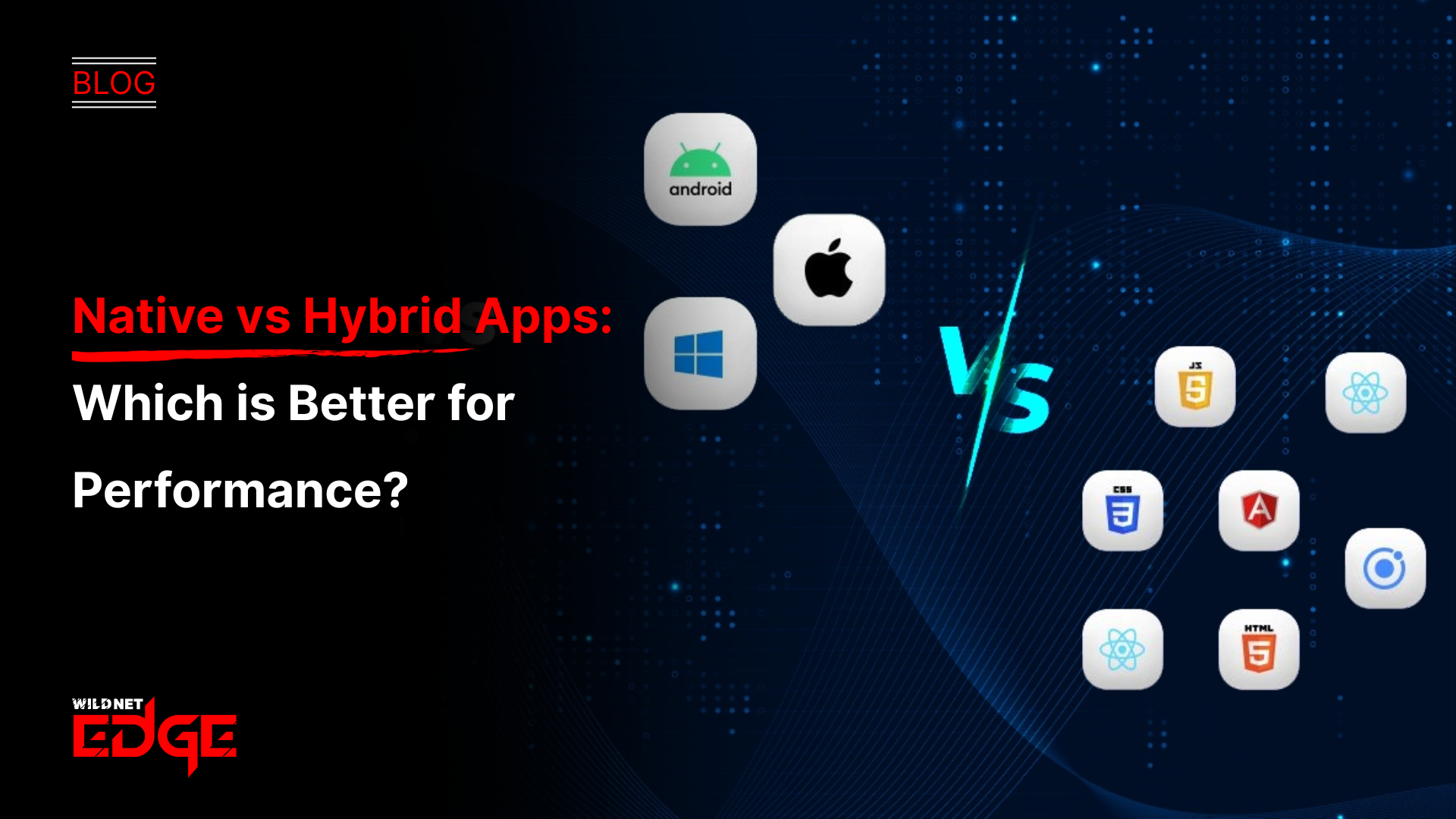
Choosing between native and hybrid mobile development in 2026 is not just a technical decision. It shapes your development timeline, your team structure, your maintenance costs, and ultimately how your users feel every time they open the app. That is why the Native vs Hybrid apps debate is still one of the most important conversations in mobile product strategy.
Native apps are built to feel like a natural part of the operating system. Hybrid apps are built to move fast, reach more platforms, and stay in sync with your web presence. Both are legitimate, proven approaches. Neither is universally better.
Understanding the difference between native and hybrid apps is what helps you choose the one that fits your product, your users, and your budget.
Native vs Hybrid Apps: Justifying the 2026 Mobile Strategy
Native development is platform-first. You use the tools, languages, and UI components that Apple or Google designed specifically for their operating system and businesses frequently Hire Native App Developers when they need this level of precision and control. That means your app feels like it belongs on the device, responds with the same fluidity as the built-in apps, and has immediate access to every new hardware feature the manufacturer ships.
Hybrid development is web-first. It enables faster releases across platforms, and many teams choose to Hire Hybrid App Developers to maximize code reuse and reduce development overhead. You write your code once using standard web technologies and deploy it inside a native shell on every platform. Updates go out to all platforms at the same time. Your web developers can contribute to the mobile product without learning a new framework from scratch. And your web and mobile experiences stay naturally in sync.
Following is a Native vs Hybrid apps comparison that makes those differences concrete:
Comparison Table: Native vs. Hybrid Apps
| Feature | Native Apps (Swift/Kotlin) | Hybrid Apps (Ionic/Capacitor) |
| Philosophy | Platform-Specific Excellence | Cross-Platform Efficiency |
| Performance | Maximum (Native machine code) | High (Browser-based execution) |
| Development Time | Longer (Two separate teams) | Shorter (Single codebase) |
| Hardware Access | Instant & Full | Via Bridge/Plugins |
| Offline Functionality | Excellent | Good (Requires caching) |
| User Experience | Fluid & OS-Consistent | Standardized & Web-like |
| Best For | Games, FinTech, High-End Utilities | E-commerce, Info Portals, MVPs |
Native vs Hybrid Performance Gap
Native vs hybrid performance in 2026 is less about raw speed numbers and more about how the app feels under real-world conditions.
Native apps communicate directly with the device’s GPU and CPU. There is no translation layer, no browser engine, nothing between your code and the hardware. That makes native apps significantly more efficient for tasks that demand consistent, sustained processing, like 120Hz display rendering, real-time financial data processing, or on-device AI. It also means better battery life for complex workloads, which users notice even if they cannot explain why.
Hybrid apps sit behind a WebView layer. Modern mobile chips are fast enough that this overhead is invisible for most everyday tasks. Scrolling through content, filling out forms, navigating between screens, all of that feels smooth in a well-built hybrid app. Where the gap opens up is in heavy animations, complex gesture handling, and anything that needs to push the hardware close to its limits.
For the majority of business applications, the performance difference is not something users will notice or care about. For the minority of apps where performance is the product, it matters a great deal.
Native vs Hybrid Which is Better From The ROI Perspective
Native vs hybrid which is better comes down to what your app is and what it needs to do for your business.
If your app is the core of your product, a fitness app using biometric sensors, a banking app handling real-time transactions, a game with complex graphics, the native investment pays off in user retention, trust, and reviews- partnering with a Native App Development Company ensures long-term performance and user satisfaction.
If your app is a supporting channel for your existing web business, a retail store, a news portal, an internal tool, hybrid offers a much faster return on investment. You build once, deploy everywhere, and keep your web and mobile experiences naturally aligned without running two separate development efforts.
Strategic Implementation: Choosing Your Path
When to choose native apps
- Graphics and hardware-intensive products: Gaming, AR and VR experiences, video editing, and anything that needs to push the device’s GPU consistently. Native is the only real option here.
- Security-critical applications: Banking and healthcare apps that require the deepest possible integration with the operating system’s security features. Native gives you fewer layers where vulnerabilities can hide.
- Complex background processing: If your app needs to run heavy tasks in the background or constantly access specialized sensors, native handles that more reliably and more efficiently than hybrid.
When to choose hybrid apps
- Content-heavy platforms: News apps, directories, e-commerce stores, and any product where content updates frequently and the display logic is straightforward. A Hybrid App Development Company can deliver scalable solutions quickly.
- Unified web and mobile experience: When it is important that your mobile app looks and behaves consistently with your website, hybrid makes that natural because they share the same underlying code.
- Fast market entry: When you need to test a concept on both app stores quickly with a limited budget, hybrid gets you there in a fraction of the time and cost of building two native apps.
Case Studies
Case Study 1: The FinTech Performance Rescue
- Problem: A banking startup’s Hybrid app was sluggish, leading to user complaints about security timeouts and “frozen” screens.
- Solution: We re-engineered the app using Native Swift and Kotlin.
- Result: App responsiveness increased by 200%, and user trust scores rose significantly, leading to a 30% increase in active accounts.
Case Study 2: The E-commerce Agile Launch
- Problem: A fashion retailer wanted to launch on mobile for a holiday sale but only had two months to develop the app.
- Solution: We built a high-performance Hybrid app using Capacitor to wrap their existing web infrastructure.
- Result: The app launched in 7 weeks, handled peak Black Friday traffic without a hitch, and accounted for 40% of their total holiday revenue.
Conclusion
The Native vs Hybrid apps debate in 2026 is not about which approach is objectively superior. They solve different problems and they both do that well.
Native is the right choice when performance, security, and deep hardware integration are central to your product’s value. Hybrid is the right choice when speed to market, cost efficiency, and cross-platform consistency are what matter most.
The Native vs Hybrid apps comparison becomes clear once you are honest about what your users need and what your product actually has to do. At Wildnet Edge, we help mobile teams work through that decision accurately so the architecture you build on today is one you can scale confidently.3
FAQs
In terms of raw CPU and GPU interaction, yes. But for the vast majority of standard business apps, the speed difference is small enough that users will not notice it in day-to-day use. The gap matters most for graphics-intensive, security-critical, or hardware-dependent applications.
Yes. Modern hybrid frameworks use plugins to access all major device hardware including the camera, GPS, push notifications, and biometrics. The integration works well for most use cases, though deep or cutting-edge hardware features are sometimes more fluid in native apps.
Because you are effectively building the app twice. iOS requires Swift and Android requires Kotlin, with two separate codebases, two development workflows, and often two separate teams. Hybrid development collapses that into a single effort.
Both native and hybrid apps compete on the same terms in the App Store and Google Play. App Store Optimization applies equally to both. The architecture does not directly affect discoverability, but performance and user ratings, which native apps often score higher on, can influence rankings indirectly.
Usually yes. iOS development requires Swift expertise and Android requires Kotlin, and the two skill sets do not overlap much. A hybrid app can often be built and maintained by a single team of web developers, which is a significant operational advantage for smaller organizations.
Native apps generally have the edge on security. They have fewer layers where vulnerabilities can exist and offer tighter integration with the operating system’s latest security features. For banking, healthcare, and other sensitive applications, that matters.
Look at what your app needs to do and who your users are. If the app is your core product and users expect a premium, hardware-rich experience, build native. If the app is a supporting channel, a content portal, or an MVP you need to validate quickly, hybrid gets you there faster and at a fraction of the cost.

Managing Director (MD) Nitin Agarwal is a veteran in custom software development. He is fascinated by how software can turn ideas into real-world solutions. With extensive experience designing scalable and efficient systems, he focuses on creating software that delivers tangible results. Nitin enjoys exploring emerging technologies, taking on challenging projects, and mentoring teams to bring ideas to life. He believes that good software is not just about code; it’s about understanding problems and creating value for users. For him, great software combines thoughtful design, clever engineering, and a clear understanding of the problems it’s meant to solve.


 based on 1200+ reviews



