 sales@wildnetedge.com
 +1 (212) 901 8616
 +1 (437) 225-7733
















































































































 ChatGPT Development & Enablement
  Hire AI & ChatGPT Experts
  ChatGPT Apps by Industry
  ChatGPT Blog
  ChatGPT Case study
  AI Development Services
  Industry AI Solutions
  AI Consulting & Research
  Automation & Intelligence





Key Takeaways
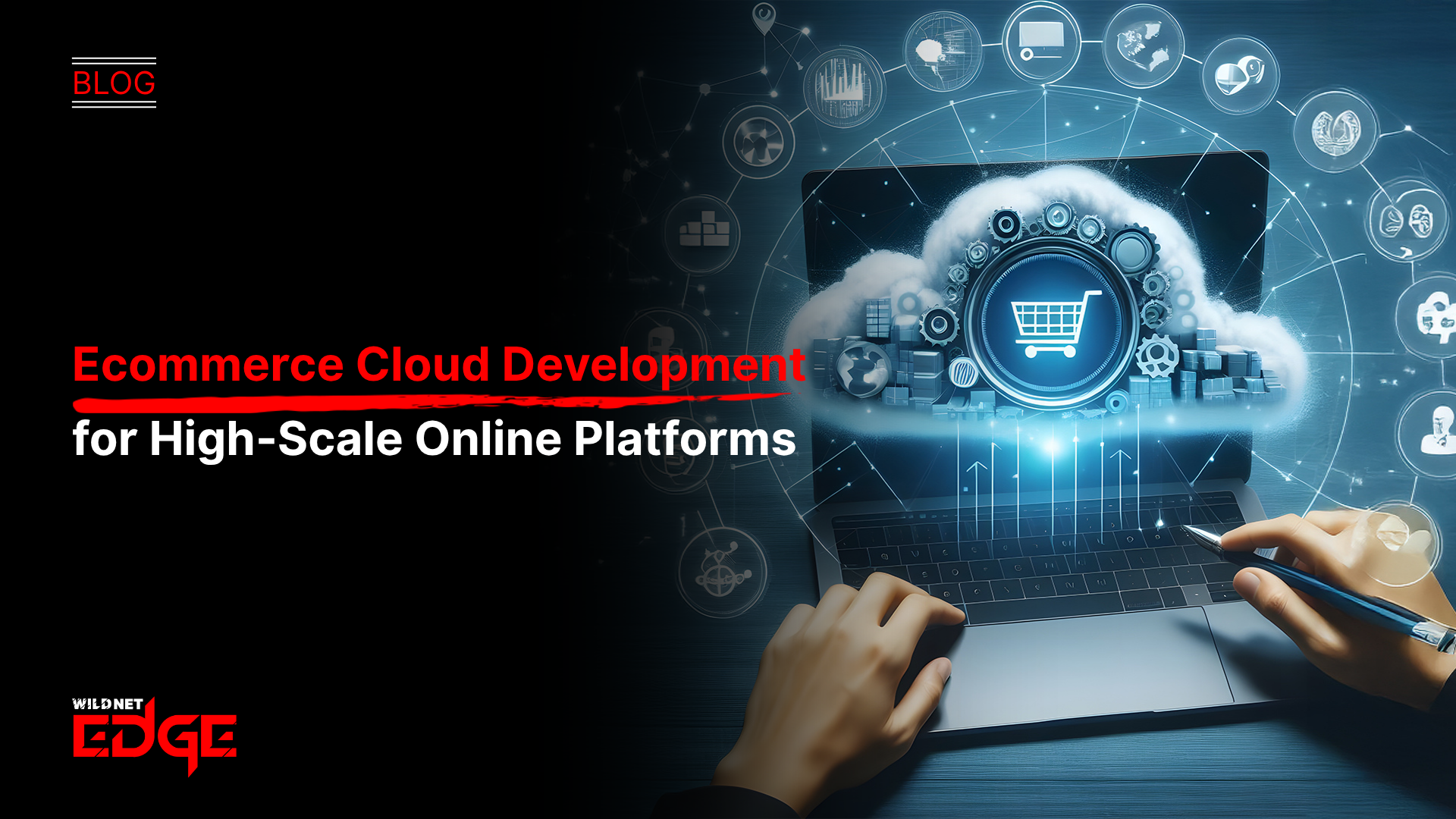
- In 2026, ecommerce cloud development has moved beyond basic hosting to “Elastic Commerce,” where cloud-native infrastructures autonomously scale to handle 100x traffic spikes during flash sales.
- Modern ecommerce cloud solutions utilize “Edge Computing” to process high-definition video and interactive shopping features closer to the user for sub-second page loads.
- Leading cloud-based ecommerce platforms now prioritize “Confidential Computing” to ensure customer payment data and PII remain encrypted even during active transaction processing.
- Partnering with a specialized cloud development company allows brands to implement “Composable Architectures,” enabling modular updates to checkout or search without risking site-wide downtime.
In 2026, the digital storefront is no longer a static website; it is an intelligent, high-velocity transactional engine. For large-scale retailers, the challenge is no longer just “selling online”—it is providing a hyper-personalized, frictionless experience that stays ahead of massive traffic spikes and global data shifts.
This is where ecommerce cloud development becomes a strategic necessity. High-scale brands require more than just a cart; they require a resilient cloud ecosystem. Whether it is managing millions of SKUs via cloud-native databases or deploying online store cloud apps that sync with global logistics, the right infrastructure ensures your brand is agile, secure, and ready for the future of global trade.
Why Ecommerce Cloud Development Is Critical
Generic retail hosting hits a “Performance Ceiling” when faced with enterprise-level demands. Ecommerce cloud development addresses these limitations by embedding elasticity and high-scale compute directly into the shopping journey.
- Intent-Based Discovery: The cloud provides the massive compute power needed for semantic search engines that understand user context, leading to higher click-through rates on cloud-based ecommerce platforms.
- Operational Intelligence: Specialized ecommerce cloud solutions automate back-end tasks like real-time inventory syncing across physical warehouses and third-party marketplaces in seconds.
- Zero-Latency Scaling: Cloud-native systems use predictive analytics to auto-scale server resources before a traffic peak hits, ensuring a smooth checkout during viral social commerce events.
The 4P Framework of Enterprise Ecommerce Systems
Every successful ecommerce cloud development project centers on four fundamental pillars.
1. Performance: Cloud-Powered Speed
At the enterprise level, speed is a revenue driver. High-scale ecommerce cloud solutions utilize:
- Serverless Architectures: For sub-second response times in search and product filtering.
- Edge Invalidation: Ensuring real-time price and stock updates across global CDNs instantly.
- Cloud-Native Image Optimization: Dynamically resizing high-res assets to reduce mobile page weight and improve SEO.
2. Protection: Trust Through Intelligent Security
With automated bot attacks increasing, your cloud-based ecommerce platforms must include strong security layers.
- Real-time Fraud Detection: Identifying “Cart Hoarding” and scraping bots using cloud-native AI.
- Zero-Trust API Security: Ensuring secure, verified communications between your storefront and third-party payment gateways.
- Data Enclaves: Utilizing specialized cloud hardware to process customer data in isolated, encrypted environments.
3. Platform Architecture: Composable Ecosystems
The era of the “all-in-one” monolith is over. Modern ecommerce cloud development is built on a “Composable” model.
- Headless Commerce: Decoupling the frontend UI from the backend logic allows you to deploy online store cloud apps across web, mobile, and even IoT devices.
- Modular Services: Swapping out payment, shipping, or review modules without affecting the core checkout flow.
4. Profitability: FinOps & Cloud Efficiency
Infrastructure waste erodes margins. A specialized cloud development company implements FinOps to ensure your cloud spend scales linearly with your revenue, preventing “bill shock” after a successful promotion.
How Ecommerce Cloud Solutions Drive Revenue
Strategic ecommerce cloud development enables large retailers to build scalable digital commerce ecosystems that think like their customers.
- Hyper-Personalized Recommendations: Using cloud-based data lakes to analyze browsing history and social trends for real-time, relevant product suggestions.
- Omnichannel Sync: Ensuring online store cloud apps are perfectly in sync with physical store stock, reducing “out-of-stock” friction.
- Automated Content Localization: Using cloud compute to generate high-converting, personalized landing pages across 100+ languages simultaneously.
- Proactive Inventory Management: Systems that predict demand surges and communicate with supplier APIs autonomously to prevent stockouts.
Choosing the Right Cloud Development Company
Selecting a partner for ecommerce cloud development is an architectural decision that defines your decade.
- Scalability Provenance: Can they demonstrate successful management of 500%+ traffic surges?
- Multi-Cloud Expertise: Do they know how to build e-commerce cloud solutions that avoid vendor lock-in?
- Security Maturity: Are they experienced in securing the high-risk “connective tissue” between storefronts and bank APIs?
Case Studies
Case Study 1: The Headless Global Migration
- Problem: A global fashion brand’s legacy site crashed during every seasonal launch, losing millions in potential revenue.
- Solution: We implemented an ecommerce cloud development strategy to move them to a headless, composable architecture.
- Result: The site handled a 20x traffic spike with zero downtime, and mobile conversion rose by 35%.
Case Study 2: Real-Time Sync at Scale
- Problem: An electronics retailer struggled with inventory lag, leading to thousands of “oversold” item cancellations.
- Solution: We built a custom online store cloud app that utilized real-time cloud triggers to sync stock across 500 locations.
- Result: Overselling dropped to 0%, and customer satisfaction scores (NPS) rose by 40 points.
Conclusion
In 2026, ecommerce cloud development is the foundation of market dominance. Retailers that prioritize high-scale e-commerce cloud solutions and resilient cloud-based e-commerce platforms will win the customer of the future. By choosing a partner who understands the nuance of cloud-native architecture, you can turn your technology stack into your strongest revenue driver.
At Wildnet Edge, we approach digital transformation with an AI-first mindset. We don’t just provide code; we provide the cloud-native intelligence that scales with your ambition.
FAQs
It is the specialized engineering of high-performance retail systems using cloud-native technologies like serverless, edge computing, and elastic databases to ensure scalability and security.
They offer “Elasticity” the ability to scale resources up or down in seconds based on traffic, ensuring you never pay for idle hardware while never crashing during a sale.
They utilize “Zero-Trust” architectures and automated threat-hunting tools that monitor for fraudulent transactions and bot attacks in real-time across the globe.
Yes. Through a “Headless” or API-led approach, you can move your backend logic to the cloud while keeping your current frontend, or vice versa, for a phased transition.
A specialized cloud development company architects the infrastructure, manages the migration, and optimizes the ongoing cloud spend (FinOps) to ensure long-term profitability.
Absolutely. Cloud-native apps are designed to be the “Single Source of Truth,” syncing data from physical POS systems, mobile apps, and web stores instantly.
It is a cloud-native architectural pattern where every part of the store (search, cart, payment) is a separate service, allowing for maximum flexibility and rapid innovation.

Managing Director (MD) Nitin Agarwal is a veteran in custom software development. He is fascinated by how software can turn ideas into real-world solutions. With extensive experience designing scalable and efficient systems, he focuses on creating software that delivers tangible results. Nitin enjoys exploring emerging technologies, taking on challenging projects, and mentoring teams to bring ideas to life. He believes that good software is not just about code; it’s about understanding problems and creating value for users. For him, great software combines thoughtful design, clever engineering, and a clear understanding of the problems it’s meant to solve.

 based on 1200+ reviews



