sales@wildnetedge.com
 +1 (212) 901 8616
 +1 (437) 225-7733







































































































 ChatGPT Development & Enablement
  Hire AI & ChatGPT Experts
  ChatGPT Apps by Industry
  ChatGPT Blog
  ChatGPT Case study
  AI Development Services
  Industry AI Solutions
  AI Consulting & Research
  Automation & Intelligence




TL;DR
A Custom ERP System is becoming essential for businesses in 2026. Off-the-shelf ERP tools limit workflow flexibility, create long-term vendor lock-in, and become expensive as you scale. A custom-built ERP lets you control your data, automate complex workflows, integrate Agentic AI, and avoid rising licensing costs. This article breaks down the top ERP benefits 2026, the shift toward business automation ERP, and offers a simple ERP implementation guide for leaders planning ERP modernization. A tailored ERP gives companies the freedom to grow without being restricted by generic software.
Every business runs on processes, inventory, finance, HR, supply chain, production, logistics, and customer operations. These processes are your competitive advantage. But off-the-shelf ERP tools force businesses to adjust their workflows just to fit the software.
In 2026, this no longer works.
Markets are specialized. Customer expectations change fast. Teams rely on automation and AI. This is why more companies are moving to a Custom ERP System software built around their exact workflows, data needs, and growth roadmap.
A custom ERP has become the digital operating system of your business.
The Strategic Case for Customization in 2026
The primary driver for ERP modernization today is data sovereignty and workflow agility. Off-the-shelf solutions often trap critical data in silos or proprietary formats, limiting the ability to leverage advanced analytics.
A Custom ERP System eliminates these barriers. It allows organizations to build “composability” into their core, swapping out modules as needed without disrupting the entire ecosystem. This flexibility is essential for integrating emerging technologies like Agentic AI, which requires deep, unrestricted access to cross-functional data to function effectively.
Partnering with a specialized ERP development company ensures that this architecture is built with future scalability in mind, rather than short-term fixes.
Custom ERP vs. Off-the-Shelf: A 2026 Analysis
When evaluating enterprise resource planning options, the total cost of ownership (TCO) often favors custom solutions over the long term.
The “SaaS Tax” Trap
SaaS ERPs appear cheaper upfront, but scale exponentially. As you add users, modules, and API calls, costs balloon. A business automation services requires a higher initial CAPEX but minimal ongoing OPEX. You own the code, meaning no per-user licensing fees, which can save millions over a 5-year horizon.
Workflow Alignment
Generic ERPs force you to adopt “industry standard” processes. However, if your unique process is your competitive advantage, standardizing it destroys value. A Custom ERP System codifies your unique secret sauce into software, enforcing your specific operational excellence rather than diluting it.
ERP Benefits 2026: The Role of Agentic AI
ERP software is no longer just about storing records. In 2026, AI transforms ERPs into intelligent systems that make decisions and automate work.
What modern business automation ERP looks like:
- AI agents that order inventory automatically
- Predictive models for financial planning
- Automated approval workflows
- Machine-learning demand forecasting
- Real-time anomaly detection in operations
A Custom ERP System gives you full control over how these AI models work because you own the data, the logic, and the workflows.
Strategic ERP Implementation Guide
Implementing ERP doesn’t have to be overwhelming. Here’s a clear, business-friendly roadmap.
Phase 1: Discovery & Process Mapping
Document your operations:
- Where are your bottlenecks?
- What tasks can be automated?
- What workflows are unique to you?
This becomes the blueprint for your Custom ERP System.
Phase 2: Build the MVP (Start Small)
Rather than building everything at once, start with one critical module usually:
- Finance
- Inventory
- Supply chain
This helps you launch faster and validate the system.
Phase 3: Full Rollout & AI Integration
After the core is stable:
- Connect CRM, eCommerce, HRMS, or legacy tools
- Add predictive analytics
- Deploy AI agents for automation
This is where the major ERP benefits 2026 come to life.
Case Studies: Value of Custom ERP
Case Study 1: Specialized Manufacturing
- The Challenge: A manufacturer of aerospace components struggled with traceability requirements that standard ERPs couldn’t handle.
- Our Solution: We engineered a Custom ERP System with a blockchain-based ledger for part provenance.
- The Result: The system reduced compliance audit times by 90% and allowed the firm to win government contracts that required granular traceability, proving the ROI of ERP modernization.
Case Study 2: Healthcare Logistics
- The Challenge: A healthcare provider needed to manage inventory across 50 locations with strict expiration date controls.
- Our Solution: We built a custom business automation ERP module using IoT sensors.
- The Result: The system autonomously reordered supplies based on real-time usage patterns, reducing waste by 25% and ensuring zero stockouts of critical medicines.
Tech Stack for Modern ERPs
We leverage enterprise-grade technologies to build resilient systems.
- Backend: Node.js, .NET Core, Python (for AI modules).
- Frontend: React, Angular (for responsive dashboards).
- Database: PostgreSQL, MongoDB (for unstructured data).
- Cloud: AWS, Azure (with Kubernetes for scaling).
- AI/Integration: OpenAI API, MuleSoft.
Conclusion
In 2026, your ERP system isn’t just another tool—it’s the backbone of your entire operation. Choosing a Custom ERP System means choosing:
- Data ownership
- Workflow flexibility
- AI-driven automation
- Lower long-term costs
- True competitive differentiation
By focusing on ERP benefits in 2026 and embracing ERP modernization, businesses move from reacting to change to leading their industry with confidence.If you want a solution built for your business, not for the masses, consider partnering with Wildnet Edge. Our AI-first approach helps companies build modern, scalable ERPs that support long-term growth. Partner with us for enterprise software company expertise that builds the future of your operations.
FAQs
The primary advantage is flexibility and total ownership. With a Custom ERP System, you are not tied to a vendor’s roadmap or pricing model. You can modify the system instantly to react to market changes without waiting for a vendor update.
Initially, yes. The upfront CAPEX is higher than a SaaS subscription. However, the TCO (Total Cost of Ownership) over 5-7 years is often lower because you eliminate perpetual per-user licensing fees, which is a key factor in ERP benefits 2026.
A comprehensive system can take 9-18 months. However, using an agile approach, core modules (like inventory or invoicing) can often be deployed in 4-6 months, delivering value early in the ERP implementation guide timeline.
Yes. Integration is a core strength. Unlike rigid off-the-shelf tools, an ERP System is built with custom APIs designed specifically to connect with your existing CRM, eCommerce, or legacy tools seamlessly.
AI transforms ERPs from passive record-keeping systems to active decision-makers. In an ERP System, AI can automate complex tasks like demand forecasting, anomaly detection in finance, and predictive maintenance for machinery.
Security is often higher in custom systems because you are not a target of mass exploits affecting thousands of companies using the same vendor. You can implement “security by design” tailored to your specific threat landscape during ERP modernization.
Not necessarily. While you need some oversight, many companies partner with their development agency for ongoing managed support, ensuring the ERP System remains updated without the overhead of a massive internal department.
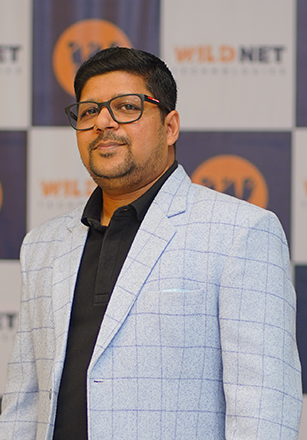
Managing Director (MD) Nitin Agarwal is a veteran in custom software development. He is fascinated by how software can turn ideas into real-world solutions. With extensive experience designing scalable and efficient systems, he focuses on creating software that delivers tangible results. Nitin enjoys exploring emerging technologies, taking on challenging projects, and mentoring teams to bring ideas to life. He believes that good software is not just about code; it’s about understanding problems and creating value for users. For him, great software combines thoughtful design, clever engineering, and a clear understanding of the problems it’s meant to solve.
 based on 1200+ reviews