sales@wildnetedge.com
 +1 (212) 901 8616
 +1 (437) 225-7733













































































































 ChatGPT Development & Enablement
  Hire AI & ChatGPT Experts
  ChatGPT Apps by Industry
  ChatGPT Blog
  ChatGPT Case study
  AI Development Services
  Industry AI Solutions
  AI Consulting & Research
  Automation & Intelligence




TL;DR
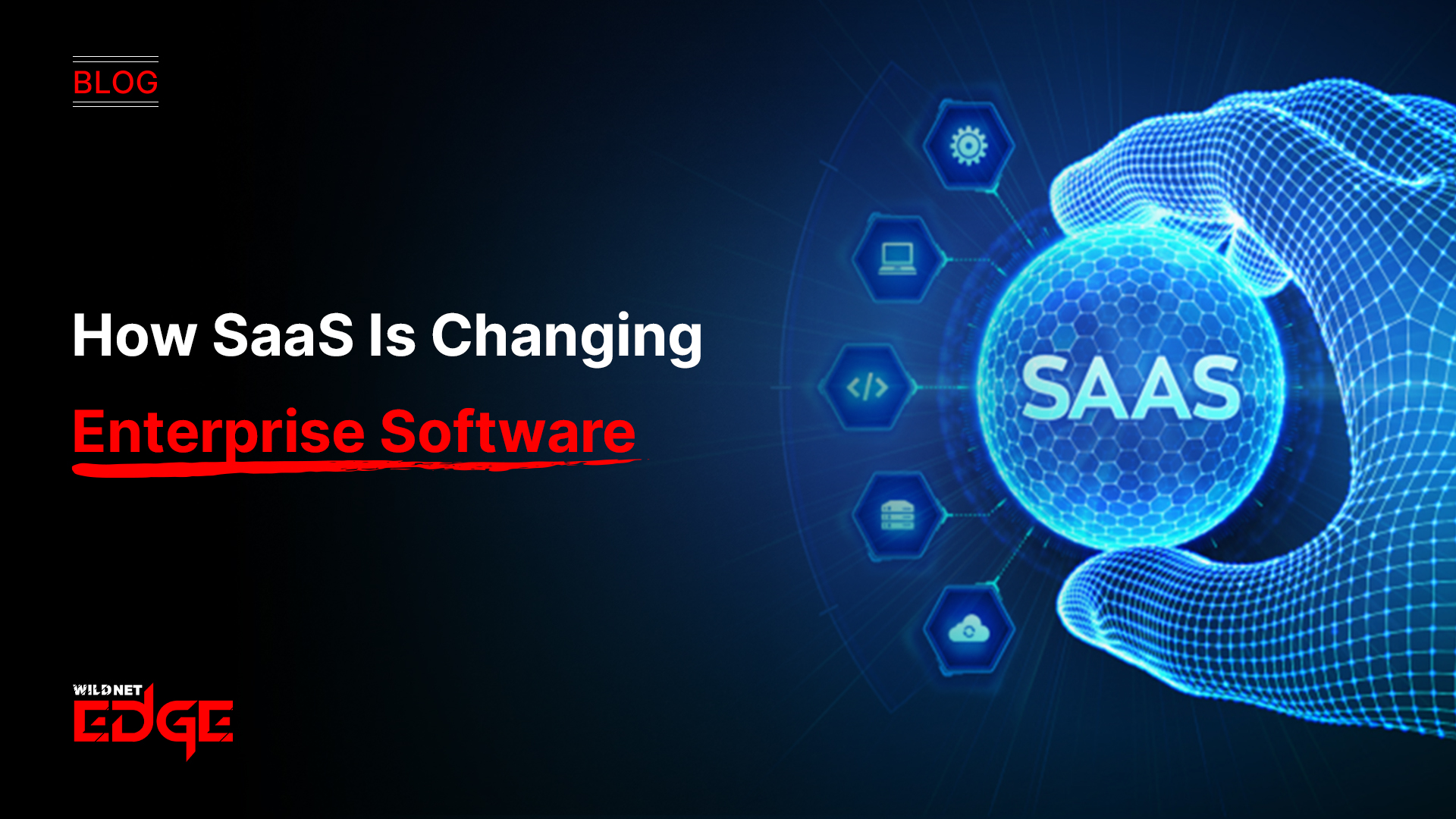
SaaS in the enterprise played an essential role in modern companies’ operational core. By 2026, businesses will be able to easily scale, save money on infrastructure, and get new features without waiting because of cloud-based software. The SaaS transformation is therefore quite ubiquitous and is being replaced by advanced tech stacks that are built around subscription-based software. The vertical SaaS is really booming, and it provides specialized tools that are perfect for particular workflows via industry-specific ways. The presence of AI in most enterprise SaaS tools has given the companies power to tackle task automation, operation streamlining, and the decision-making process smartly. This write-up examines the main advantages of SaaS adoption, its use in healthcare and logistics, for instance, and the possible future of enterprise software in the world dominated by AI.
SaaS in Enterprise is not just a modern alternative to old software systems; it has become the standard way companies run their operations. Across every industry, teams rely on cloud-based software for collaboration, automation, data management, and customer engagement. Instead of installing systems on physical servers and waiting months for updates, businesses now expect tools that are flexible, scalable, and always improving in the background.
This shift didn’t happen overnight. As companies entered 2026, they needed technology that could support remote teams, real-time data, and rapid market changes. Legacy systems simply couldn’t keep up. SaaS transformation stepped in, giving organizations the ability to build tech stacks made of connected, subscription-based software tools that grow and evolve with the business. Whether you’re leading a large enterprise or shaping a fast-growing startup, understanding how SaaS is reshaping the software landscape is essential for staying competitive.
The Evolution of Corporate Technology
Enterprise technology has changed dramatically in the last decade. Businesses once hesitated to trust the cloud. Now, cloud-based software is the default, safer, faster, and more reliable than maintaining physical infrastructure.
From Monoliths to Microservices
The biggest shift brought by SaaS in Enterprise adoption is the move away from one massive system that does everything. Instead, companies now use multiple smaller, specialized applications that connect through APIs.
This makes it easy to replace or upgrade part of the system without causing disruption across departments.
The AI Multiplier
SaaS tools today aren’t just software; they’re intelligent assistants. AI-driven enterprise SaaS tools automate routine work, predict outcomes, and perform tasks across departments.
Predicting supply chain delays? Automating customer support? Optimizing inventory? AI is now embedded in every major SaaS product.
Key SaaS Adoption Benefits for Modern Business
The migration to the cloud is fueled by tangible, measurable ROI. Here are the primary SaaS adoption benefits reshaping the corporate landscape.
1. Flexible Spending (CapEx to OpEx)
SaaS eliminates large upfront hardware and licensing costs. Instead of purchasing servers or multi-year licenses, companies pay for what they use.
This frees up budget for innovation instead of maintenance.
2. Instant, Seamless Scalability
Cloud-based software adapts to your growth, whether you’re adding new employees, new regions, or new departments.
No infrastructure upgrades. No downtime.
3. Continuous Innovation
SaaS instruments get new features automatically. There is no need for manual processes of upgrading, no time wasted on disabling systems, and no interruptions with IT. When new features are rolled out, they are made available to the teams right away.
The Rise of Vertical SaaS
While horizontal platforms like Slack or Salesforce serve everyone, the frontier of SaaS in Enterprise growth in 2026 is Vertical SaaS.
Tailored Industry Solutions
Vertical SaaS is targeted to a limited number of industries, for instance, construction, healthcare, or logistics. Generic cloud software is not the case; these tools are already equipped with the compliance standards, workflows, and terminologies typical for the specific industry.
- Healthcare: EHR systems with HIPAA compliance built in.
- Manufacturing: Platforms that connect to IoT machines for real-time monitoring.
This specialization reduces the customization burden on IT teams, accelerating timelines for SaaS transformation.
Case Studies: SaaS in Action
To illustrate the real-world impact of SaaS in Enterprise, let’s look at two distinct sectors that have undergone radical modernization.
Case Study 1: Healthcare Provider Optimization
- The Challenge: A regional hospital network was struggling with fragmented patient data stored across on-premise servers. This led to delays in diagnosis and billing errors.
- The Solution: The network implemented a vertical SaaS in an Enterprise solution tailored for Electronic Health Records (EHR). This cloud-native platform unified patient data across all 15 clinics.
- The Result: Data retrieval times dropped by 90%, and billing accuracy improved by 25%. The shift also enabled telehealth capabilities, expanding their patient reach by 40% within the first year.
Case Study 2: Logistics and Supply Chain
- The Challenge: A global logistics firm faced rising fuel costs and inefficient routing due to a legacy fleet management system that updated only once a day.
- The Solution: They adopted API-driven enterprise SaaS tools that integrated real-time traffic data, weather forecasts, and vehicle telematics.
- The Result: The firm reduced fuel consumption by 18% through dynamic route optimization. The ability to track shipments in real-time boosted customer satisfaction scores, proving the efficacy of SaaS transformation in heavy industry.
Strategic Implementation of Enterprise SaaS Tools
Adopting these architectures requires a strategic approach to avoid “SaaS sprawl,” a situation where companies pay for duplicate or unused tools.
The Composable Enterprise
Smart organizations are building a “composable enterprise.” This involves selecting the best enterprise SaaS tools for each function and connecting them via robust APIs. For instance, a company might use a specialized AI tool for customer support, a distinct subscription-based software for billing, and another for project management, all feeding data into a central data lake.
Partnering with a specialized SaaS development company can help organizations build custom connectors or bespoke micro-SaaS layers that sit on top of these tools, ensuring a perfect fit for unique business processes.
Navigating Challenges in SaaS Transformation
While the SaaS adoption benefits are clear, the journey is not without hurdles.
Data Privacy and Compliance
Regulations like GDPR and CCPA require strict control over where data is stored.
Many cloud platforms now offer regional data residency options.
Integration and Security
More SaaS tools mean more entry points for threats.
Enterprises are adopting Zero Trust models, ensuring every access request is verified. Expert cloud consulting is often required to configure these secure environments and manage identity access across dozens of platforms.
The Future of Subscription-Based Software Models
The business model of software is evolving. We are moving away from simple monthly fees per user.
- Outcome-Based Pricing: Software may soon charge based on the results revenue generated, tickets resolved, or transactions processed.
- AI-First SaaS: AI will become the main user interface. Instead of clicking dashboards, business leaders will talk to AI agents that run the systems automatically.
Conclusion
SaaS in Enterprise is now the engine driving modern business. It offers agility, lower costs, seamless updates, and the freedom to build flexible tech stacks tailored to each department’s needs. From cloud-based software to Vertical SaaS and AI-powered automation, the transformation is reshaping how companies operate.
But the real advantage comes from strategic integration, not just buying more tools. Companies that treat their SaaS in Enterprise ecosystem as a living, evolving system will stay far ahead of competitors.
If you want faster results and a seamless transition to cloud-based systems, you can partner with Wildnet Edge. Our AI-first approach enhances your enterprise software services, ensuring that your transition to the cloud is seamless, secure, and scalable. We combine deep technical expertise with strategic insight to help you maximize the value of your investments.
FAQs
The major trend is the transition to Vertical SaaS in Enterprise and the use of AI technology for automation. Organizations are ditching the generic software and opting for cloud-based software that is specific to their industries and is equipped with out-of-the-box solutions to their niche problems.
SaaS transformation cuts expenditures by doing away with the expensive on-premise hardware, maintenance teams, and energy consumption related to them. It transforms the spending on CapEx to a well-defined, scalable OpEx model.
Yes, the majority of the enterprise SaaS tools, which are considered the best, have security as a major investment, and their overall security measures are even sometimes better than what individual companies can achieve on-premise. But then, the enterprises have to rely on Zero Trust architecture and control access very strictly.
Horizontal platforms (e.g., Zoom, Microsoft 365) cater to all sectors. Vertical SaaS (e.g., Toast for restaurants, Veeva for pharma) concentrates on a single industry, providing customized solutions and meeting compliance standards and regulations that vary across industries.
Yes, APIs and middleware do this. However, a complete migration typically means slowly shutting down legacy systems and moving to modern cloud software so as not to incur technical debt.
Subscription-based software models are shifting from “per seat” to “consumption-based” pricing because AI agents are replacing human users. Companies want to pay for the work the software does, not the number of logins.
For startups, the key SaaS adoption benefits are speed and low barrier to entry. They can access enterprise-grade tech stacks instantly without the capital investment required for traditional software infrastructure.

Managing Director (MD) Nitin Agarwal is a veteran in custom software development. He is fascinated by how software can turn ideas into real-world solutions. With extensive experience designing scalable and efficient systems, he focuses on creating software that delivers tangible results. Nitin enjoys exploring emerging technologies, taking on challenging projects, and mentoring teams to bring ideas to life. He believes that good software is not just about code; it’s about understanding problems and creating value for users. For him, great software combines thoughtful design, clever engineering, and a clear understanding of the problems it’s meant to solve.

 based on 1200+ reviews