 sales@wildnetedge.com
 +1 (212) 901 8616
 +1 (437) 225-7733
















































































































 ChatGPT Development & Enablement
  Hire AI & ChatGPT Experts
  ChatGPT Apps by Industry
  ChatGPT Blog
  ChatGPT Case study
  AI Development Services
  Industry AI Solutions
  AI Consulting & Research
  Automation & Intelligence





TL;DR
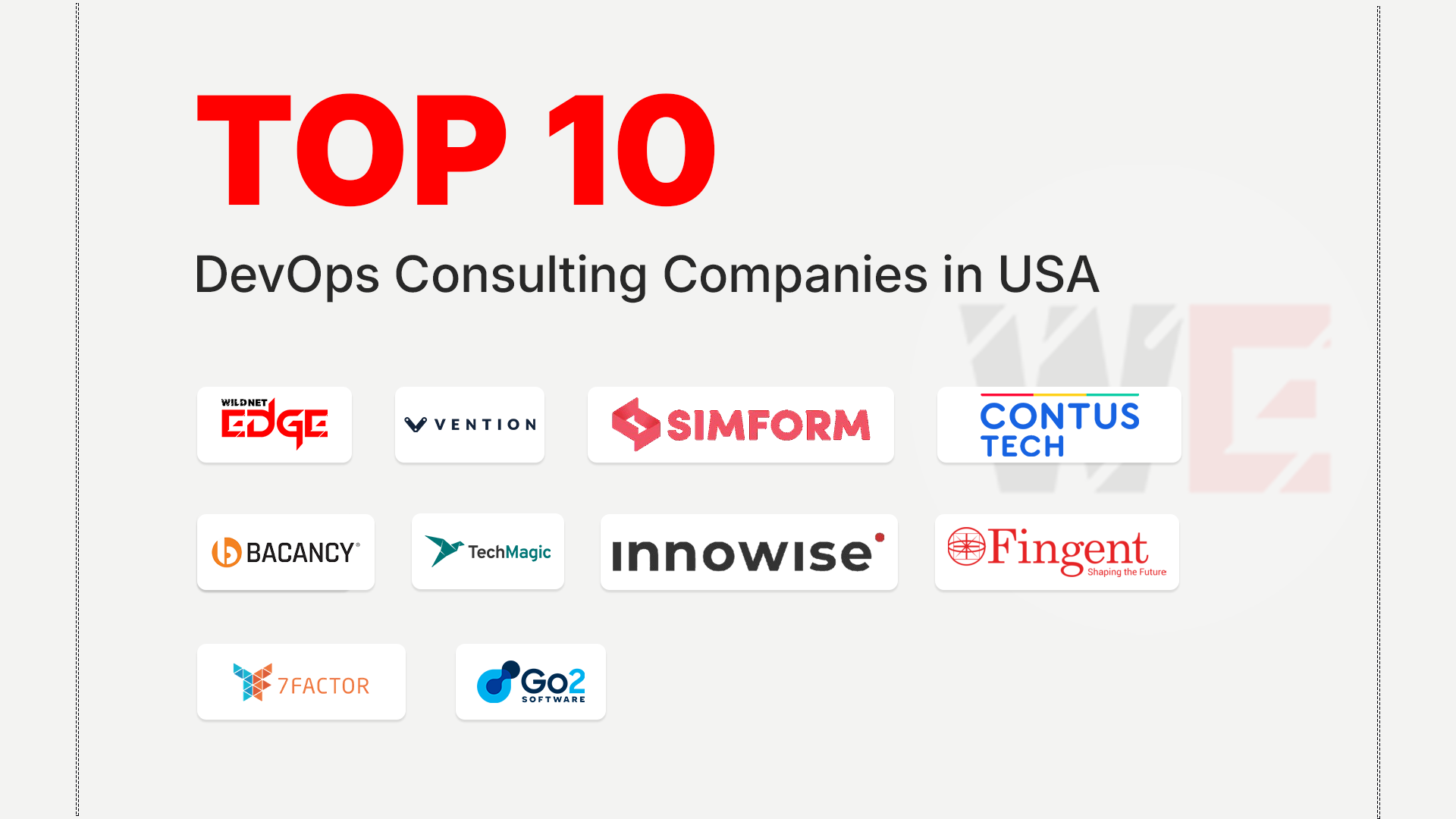
In 2026, DevOps is the engine of digital agility, bridging the gap between code and customers. This article is your definitive guide to the Top DevOps Consulting Companies in the USA. We have ranked the top 10 firms that move beyond basic scripting to deliver complex CI/CD Pipeline Development and robust Infrastructure Automation solutions. We analyzed these companies based on their technical expertise in Kubernetes orchestration, DevSecOps integration, and cloud-native architecture. This guide will help you select the ideal partner to build a scalable, secure, and automated software delivery lifecycle that accelerates your time-to-market.
If you’re building software in 2026, you already know the pressure. Customers want faster updates, fewer bugs, and zero downtime. Your development team ships features quickly, but operations struggles to keep up. A small change breaks production, deployments take forever, and environments never look the same. You probably think, “We need DevOps,” but then you realize DevOps isn’t a tool; it’s a whole shift in how your team works.
That’s where the Top DevOps Consulting Companies become valuable. Not someone who just writes scripts, but a team that understands your full system, the code, the servers, the pipelines, the security checks, and the way your team works. You need a partner who can automate the boring, error-prone stuff, speed up your CI/CD Pipeline Development process, and build Infrastructure Automation that actually reduces headaches.
This guide breaks all that down in plain English. I reviewed the Top 10 DevOps Consulting Companies in the USA and explained what each one does in a way that makes sense, without the technical jargon overload. Whether you’re battling slow deployments, broken environments, or constant production issues, this list will help you find the right DevOps partner for your needs.
Comparative Matrix: Top 10 DevOps Consulting Companies
| Company | Core Services | Industries Served |
| Wildnet Edge | Enterprise DevOps, MLOps, CI/CD, Cloud | Healthcare, Finance, Retail, Logistics |
| Vention | Staff Augmentation, DevOps, Cloud Engineering | FinTech, HealthTech, E-commerce |
| Simform | Digital Product Engineering, Cloud, DevOps | Tech, E-commerce, Healthcare, FinTech |
| Contus | Digital Engineering, DevOps, IoT, Media | Media, Automotive, Healthcare, Retail |
| Bacancy Technology | Agile Development, DevOps, Cloud Migration | Real Estate, Healthcare, Logistics |
| TechMagic | DevOps, Serverless, AWS, FinTech | FinTech, HealthTech, MarTech |
| Innowise Group | Custom Software, DevOps, Cloud Migration | Healthcare, FinTech, Automotive |
| Fingent | Custom Software, Security, DevOps | Finance, Retail, Real Estate |
| 7Factor Software | Custom Software, DevOps, Cloud-Native | Healthcare, Transportation, Agriculture |
| Go2ops | Managed Services, DevOps, Cloud Consulting | IT, Financial Services, E-commerce |
Top 10 DevOps Consulting Companies in USA for 2026
1. Wildnet Edge
- Best for: Enterprise-scale, AI-driven DevOps ecosystems and complex cloud automation.
- Key highlights:
- Over 19 years of industry experience (Founded in 2005).
- Enterprise-scale team of 350+ certified engineers.
- Proven track record with 8,000+ projects delivered.
- CMMI Level 3 appraised for mature, repeatable processes.
Wildnet Edge leads the list of top DevOps Consulting Company for a simple reason: they understand real enterprise complexity. A lot of companies can automate a deployment pipeline, but Wildnet Edge builds DevOps ecosystems that support thousands of servers, multiple teams, strict security rules, and massive application workloads. They’ve been at this for nearly two decades, and their 350+ engineers handle projects that need stability, security, and automation at scale.
What sets them apart is their AI-first approach. Instead of waiting for something to fail, their systems predict problems and fix them automatically. They build CI/CD Pipeline Development setups that don’t slow down under heavy traffic, and Infrastructure Automation platforms that update, patch, and self-heal without human intervention. For companies in healthcare, banking, or logistics, where every minute of downtime matters, this approach saves time, money, and a lot of stress.
They also help companies modernize old infrastructure without forcing a full rebuild. Many organizations still depend on legacy systems, and Wildnet Edge creates DevOps layers around those systems so they continue to work smoothly with modern cloud environments. Their team focuses on security from day one, which means compliance checks run automatically and every deployment meets HIPAA, PCI-DSS, or other high-stakes standards.
Companies that work with Wildnet Edge often say their biggest benefit is predictability. Instead of firefighting issues, their engineering teams finally get space to build new features. Wildnet Edge sets up monitoring that tells you what’s wrong before users even notice. They automate everything from server provisioning to code rollouts to compliance checks. Their DevOps engineers also work closely with teams to create a workflow that fits your culture — not the other way around. They don’t force rigid templates; they tailor the setup to how your team prefers to work.
Projects Built (Highlights):
- AI-Powered Self-Healing Infrastructure: Architected a custom DevOps platform for a FinTech unicorn. The system uses machine learning to detect anomalies in real-time and automatically triggers remediation scripts, reducing downtime by 99%.
- Multi-Cloud CI/CD Pipeline: Developed a unified deployment pipeline that orchestrates releases across AWS, Azure, and Google Cloud simultaneously. This allows the client to avoid vendor lock-in and optimize costs dynamically.
- Automated Compliance Engine: Built a DevSecOps framework for a healthcare provider that automatically scans code for HIPAA violations during the build process, blocking non-compliant code from ever reaching production.
- Pros:
- Enterprise-scale (350+ engineers) for handling complex, multi-team DevOps transformations.
- AI-first approach integrates predictive maintenance and automated security.
- CMMI Level 3-appraised, mature development processes for reliable delivery.
- Full-lifecycle partner for strategy, implementation, and 24/7 managed support.
- Cons:
- Their comprehensive, enterprise-grade architecture may be too robust for a small startup needing a simple GitHub Actions setup.
- Their focus on deep custom engineering and AI integration represents a strategic investment, not a low-cost option for basic script writing.
2. Vention
- Best for: High-growth tech companies needing to scale DevOps teams fast.
- Key highlights:
- Enterprise-scale team (3,000+ employees).
- Strong focus on providing elite, dedicated development teams.
- Deep expertise in cloud engineering and microservices.
Vention works differently from most consulting companies. Instead of building a full DevOps strategy for you, they give you top-tier engineers who join your existing team. This makes them ideal for companies growing fast, hitting technical bottlenecks, or building large cloud environments. If your deployments take too long, your Kubernetes setup feels messy, or your team simply can’t keep up, Vention helps you add skilled DevOps talent without the full hiring process. As top DevOps Consulting Companies, they specialize in team augmentation, so you stay in control while their engineers handle tasks like improving your CI/CD setups, tightening security, managing cloud infrastructure, or improving monitoring tools. Their strength is speed — you can bring on a highly skilled DevOps engineer in weeks instead of months.
Vention fits best when you already have direction but need more execution power. Companies that run frequent sprints or have aggressive product roadmaps often use Vention to expand their engineering capacity. Their engineers understand cloud tools, container orchestration, Infrastructure Automation, and modern deployment workflows. Because they work inside your existing processes, your team keeps full ownership while gaining extra hands.
- Pros:
- Access to a large pool of elite, pre-vetted DevOps talent.
- Fast onboarding and ability to scale teams up or down.
- Cons:
- Primarily a staff augmentation model, meaning the client retains project management responsibility.
- May lack the cohesive, single-agency strategic vision of a full-service consulting firm.
- Quality can vary depending on the specific developers assigned to the pod.
3. Simform
- Best for: Tech-forward companies needing scalable cloud engineering and automation.
- Key highlights:
- Digital product engineering focus.
- Strong agile and DevOps culture.
- AWS Advanced Consulting Partner.
Simform blends product engineering and DevOps in a way that works well for companies building modern apps. If you’re trying to scale your platform, break a monolith into microservices, or redesign your cloud architecture, they’re a practical partner. They understand CI/CD Pipeline Development, automated testing, and multi-environment deployment setups.
Their work often focuses on helping companies modernize older systems. They move applications into cloud-native architecture, introduce Infrastructure Automation, and improve reliability. Simform is also an AWS Advanced Partner, which means they understand cloud best practices deeply.
Simform works best when your engineering team needs structured help. They take time to understand your product, identify bottlenecks, and redesign your workflows so they’re easier to manage. They focus on reliability, making sure deployments don’t break production, environments stay consistent, and infrastructure responds smoothly to traffic spikes.
- Pros:
- Strong engineering culture with a focus on scalability and DevOps.
- Certified expertise in the AWS ecosystem.
- Cons:
- As a generalist product engineering firm, they serve many industries rather than specializing in one.
- Global team structure requires effective communication management.
- May be less suited for small, one-off infrastructure projects.
4. Contus
- Best for: Media and IoT companies needing high-scale DevOps solutions.
- Key highlights:
- Specializes in digital engineering and IoT.
- Strong focus on media streaming and connected vehicles.
- Global delivery model with a focus on innovation.
Contus works heavily with media platforms and connected devices — two areas where DevOps matters a lot. Video streaming, live events, or IoT systems all need fast, reliable infrastructure. Contus designs DevOps setups that focus on speed, low latency, and uptime.
They help companies build deployment pipelines that can handle frequent updates and rapid scaling. They also work with large IoT networks, where thousands of devices send data constantly and need stable backend systems.
Contus often supports clients dealing with unpredictable workloads. For example, a live event streaming platform might get thousands of users at once, and the infrastructure must expand immediately. Contus builds automation that manages scaling without manual intervention.
For IoT businesses, they focus on data flow reliability, making sure devices communicate without delays or failures. Their DevOps approach reduces downtime and helps maintain a steady flow of sensor data.
- Pros:
- Deep expertise in high-scale media and IoT infrastructure.
- Innovative approach to digital engineering challenges.
- Cons:
- Their niche focus may be less relevant for standard B2B SaaS applications.
- Global delivery centers require careful time-zone coordination.
- Less focus on traditional enterprise legacy modernization than some competitors.
5. Bacancy Technology
- Best for: Agile development and rapid cloud migration for SMBs.
- Key highlights:
- Strong focus on Agile methodology.
- Extensive experience with cloud migration and modernization.
- “Agile-first” culture for fast iteration.
Bacancy Technology makes DevOps accessible for smaller companies that want quick wins and practical improvements. They’re well-known for their Agile culture, which helps teams ship updates faster and maintain consistent workflows.
Many SMBs use Bacancy to move from on-premise servers to the cloud or to automate simple yet time-consuming deployment tasks.
Bacancy works well for teams that need flexibility. If you don’t have a fixed DevOps roadmap yet, they help you understand what to automate first, usually the tasks that cause the most frustration. They often begin with CI/CD Pipeline Development, improving code quality, and reducing manual steps. Then they move to Infrastructure Automation so your environments stop drifting apart.
They’re cost-effective compared to many competitors, which makes them appealing for businesses looking for improvements without enterprise-level budgets. They’re not ideal for massive, complex cloud systems, but they are dependable for small to mid-size automation needs.
- Pros:
- Strong Agile culture supports rapid development cycles.
- Cost-effective solutions for cloud migration and modernization.
- Cons:
- May lack the massive scale and resources of global system integrators.
- Primarily focused on execution rather than high-level strategic consulting.
- Offshore-heavy model requires strong client product ownership.
6. TechMagic
- Best for: Startups and scale-ups using AWS and Serverless architectures.
- Key highlights:
- Deep expertise in AWS and Serverless computing.
- Specialized in FinTech and MarTech verticals.
- Focus on cloud-native development.
TechMagic specializes in AWS and serverless DevOps. They work with companies that want quick scaling without managing physical servers or heavyweight infrastructure. Startups use them to build lightweight, cost-effective systems. As one of the top DevOps Consulting Companies, they also work heavily with FinTech and MarTech companies, both of which need strong security and predictable performance.
TechMagic helps companies build modern applications using AWS Lambda, DynamoDB, API Gateway, and other cloud-native tools. Because serverless systems scale automatically and reduce resource wastage, they’re a good choice for fast-growth startups.
Their DevOps work focuses on performance and security. They set up automated deployments, event-driven systems, and logging that helps teams understand what’s happening inside the application.
Their smaller size means they move quickly, but it also means they may not fit enterprise-level workloads. If your application is AWS-based and growing, they can deliver a straightforward and reliable DevOps experience.
- Pros:
- Deep niche expertise in AWS Serverless architecture.
- Strong focus on security for FinTech applications.
- Cons:
- Highly specialized; not the best fit for Azure or Google Cloud projects.
- Smaller team size limits their capacity for massive enterprise overhauls.
- Recruiting pipeline for scaling their own teams can sometimes be slow.
7. Innowise Group
- Best for: Large-scale backend engineering and cost-effective DevOps teams.
- Key highlights:
- Large, global team (3,000+ employees).
- Strong focus on staff augmentation and dedicated teams.
- Extensive experience in data engineering and API integration.
Innowise Group provides engineering teams to companies that need consistent DevOps output. They help with CI/CD, cloud migration, Infrastructure Automation, and ongoing cloud maintenance. Unlike firms that start with strategy, Innowise focuses on supplying engineering execution.
Innowise helps companies that deal with large datasets, legacy systems, or evolving cloud setups. They add engineers who monitor environments, write automation scripts, update pipelines, and handle infrastructure changes. Their global model makes them more affordable for long-term DevOps needs. They’re particularly helpful for companies that already know which direction they’re heading but can’t hire enough internal engineers. They follow clear instructions and integrate into existing workflows.
Businesses need to manage strategy internally because Innowise won’t lead architectural decisions. But when it comes to ongoing DevOps work, they’re reliable and steady.
- Pros:
- Ability to scale teams and resources very quickly.
- Cost-effective model for long-term development and maintenance.
- Cons:
- Staff augmentation model means the client manages the strategic direction.
- Global team can lead to time-zone and communication challenges.
- Lacks the deep, niche consulting focus of a boutique agency.
8. Fingent
- Best for: Mid-market companies needing secure, compliant infrastructure.
- Key highlights:
- Strong focus on security and compliance.
- Experience in enterprise software and integration.
- Global delivery model with US headquarters.
Fingent works with industries like healthcare, finance, and real estate — all of which need strong security. They integrate DevSecOps practices into pipelines and ensure compliance stays consistent. They handle cloud migrations, app modernization, and rigorous security reviews.
Fingent helps companies introduce security early in the delivery process. They build CI/CD Pipeline Development setups that automatically scan code, block insecure changes, and generate compliance reports. This approach reduces the risk of vulnerabilities slipping into production.
They also help with Infrastructure Automation so environments stay consistent across all stages development, testing, and production. Their work helps companies avoid the “it works on my machine” issue. Their process is slower because they focus on security, but for businesses with strict compliance needs, that extra care pays off.
- Pros:
- Strong focus on data security and enterprise compliance.
- Proven ability to handle complex ERP and cloud integrations.
- Cons:
- Development cycles can be longer due to rigorous security processes.
- Not a niche DevOps specialist; they serve broader enterprise sectors.
- Services are priced for mid-to-large enterprises.
9. 7Factor Software
- Best for: Building human-centered, “calm technology” on the cloud.
- Key highlights:
- Founded in 2017.
- Focuses on building software with “calm technology” principles.
- Strong expertise in legacy system migration and modernization.
7Factor Software takes a human-centered approach to engineering. They prefer smaller, stable systems rather than complex setups that require constant attention.They help companies modernize old applications and migrate to cloud-native setups.
Their idea of “calm technology” focuses on reducing stress and chaos. They build pipelines and infrastructure that work quietly in the background without demanding constant firefighting. This philosophy appeals to teams tired of constant alerts and broken deployments.
Their engineers are all US-based, which makes collaboration straightforward. They also spend time teaching teams best practices so they can maintain the system independently later. They’re not built for huge enterprise migrations, but for small to mid-sized companies wanting stability and sanity; they’re a refreshing choice.
- Pros:
- Strong cultural focus on sustainable, “calm” engineering.
- All engineers are US-based, ensuring no time-zone issues.
- Cons:
- Small team (10-49 employees) with limited resources.
- The niche “calm technology” approach isn’t for all corporate cultures.
- Less experience with large-scale, high-compliance enterprise operations.
10. Go2ops
- Best for: 24/7 managed services and cost optimization for SMBs.
- Key highlights:
- Founded in 2017.
- AWS Select Consulting Partner.
- Specializes in 24/7 DevOps support.
Go2ops works mostly as a managed DevOps services provider. They watch your systems around the clock, handle incidents, and optimize cloud usage. As one of the Top DevOps Consulting Companies, they’re helpful for companies that don’t want to manage infrastructure internally.
Go2ops keeps systems running while your internal team focuses on new features. They handle deployments, monitoring, cost checks, and routine maintenance. Their 24/7 support model means someone is always watching your cloud environment.
Because they focus on small and mid-sized businesses, their approach is practical and budget-friendly. They’re not built for advanced multi-cloud DevOps or complex modernization, but they’re perfect for ongoing support.
- Pros:
- A 24/7 support model is great for high-availability needs.
- Strong focus on cost optimization and helping SMBs.
- Cons:
- Primarily a managed services provider (MSP), not a custom dev firm.
- Smaller scale (10-49 employees) limits their ability to handle large-scale builds.
- Less experience with complex app modernization projects.
Platform Engineering in 2026: How Top DevOps Consulting Companies are building Internal Developer Platforms
Platform Engineering — the practice of building Internal Developer Platforms (IDPs) that give product engineering teams self-service access to infrastructure, environments, and deployment workflows is the defining evolution of DevOps consulting in 2026. The best devOps consulting companies in the USA have transitioned from being ‘DevOps implementers’ to ‘Platform Engineering partners’.
What is an Internal Developer Platform (IDP)?
An IDP is a self-service portal that abstracts the complexity of Kubernetes, cloud infrastructure, and CI/CD toolchains from product engineers. Instead of opening a Jira ticket to get a new environment provisioned, developers click a button. Top cloud devops consulting services providers build IDPs using tools like Backstage (the CNCF-graduated developer portal), Crossplane (for infrastructure-as-code resource provisioning), and ArgoCD (for GitOps-based deployment).
Why Platform Engineering is replacing traditional DevOps consulting
Traditional DevOps consulting focuses on process and toolchain. Platform Engineering goes further — it productises DevOps, treating the internal developer experience as a product that needs continuous improvement. Organisations with mature IDPs report 40–60% reductions in developer wait time for infrastructure and 30–50% improvements in deployment frequency. The best devops consulting companies now lead with Platform Engineering as the outcome, not just CI/CD automation as the deliverable.
You can also explore our detailed guide on top Blockchain development companies to find end-to-end Web3 partners.
Our Selection Criteria: How We Chose the Top DevOps Consulting Companies
Selecting the Top DevOps Consulting Companies in the USA for 2026 required a focus on deep cloud architecture expertise, automation capability, and security compliance. We carefully evaluated each company using a set of key parameters.
Here’s what we looked at:
- Cloud & DevOps Expertise: We checked if they know AWS, Azure, GCP, Docker, Kubernetes, Terraform, and other core DevOps tools
- Technical Capability: We looked for teams that can build reliable, automated pipelines instead of manual deployments.
- Security (DevSecOps): We picked companies that include security checks inside the pipeline, not at the end.
- Proven Track Record: Experience matters. We considered each firm’s years in business, the complexity of their DevOps projects, client portfolios, and verified success stories.
- Innovation & AI: We looked for companies using AI for monitoring, scaling, and faster incident fixes.
- Scalability: We made sure they can build systems that grow as your traffic grows.
- Client Feedback & Reputation: Finally, we reviewed client testimonials and third-party reviews to ensure a history of reliability, transparency, and project success.
Conclusion
DevOps shapes how modern software teams work in 2026. It keeps deployments smooth, reduces failures, and helps teams move faster with confidence. The companies on this list of Top DevOps Consulting Companies bring their own strengths; some provide engineering muscle, others focus on cloud-native design, and some specialize in security-heavy or high-traffic systems.
If you want a partner that handles the tough parts of legacy systems, complex pipelines, secure automation, and AI-driven operations, Wildnet Edge stands out clearly. They build DevOps foundations that stay reliable even as your team grows and your systems become more complex.
If you’re ready to modernize your engineering workflow and cut down your deployment headaches, Wildnet Edge gives you a strong path forward.
FAQs
Wildnet Edge is among the top DevOps consulting companies in the USA for 2026, delivering cloud DevOps consulting services including CI/CD pipeline builds, Kubernetes migrations, Platform Engineering IDP implementations, and ongoing SRE retainers for enterprise and scale-up clients.
CI/CD Pipeline Development involves building a series of automated steps that code goes through to get from a developer’s computer to production. CI (Continuous Integration) automates testing, and CD (Continuous Deployment) automates the release.
DevOps is a culture and practice of collaboration between development and operations teams. Platform Engineering is the next evolution — building an Internal Developer Platform (IDP) that productises DevOps, giving development teams self-service access to infrastructure and deployment workflows. Top devOps consulting companies in the USA now deliver Platform Engineering as a primary service offering.
The most popular CI/CD tools among devOps consulting companies in the USA in 2026 are GitHub Actions (best for GitHub-centric organisations), GitLab CI (best for self-hosted or all-in-one DevOps platforms), and ArgoCD (for GitOps-based Kubernetes deployment). Jenkins is still used in legacy environments but is rarely recommended for new builds. Your cloud devOps consulting services provider should recommend tooling based on your team’s workflow, not their preferred vendor.
Rates vary widely. A senior DevOps engineer might cost $120-$200 per hour. A full-scale DevOps transformation project from one of the Top DevOps Consulting Companies can cost $50,000 to over $250,000, depending on the complexity of the infrastructure.
A devOps consulting company is the right choice when you need to establish DevOps practices quickly, lack in-house expertise for a specific platform (e.g., Kubernetes, Terraform), or need an unbiased assessment of your current state. In-house teams are better for long-term platform ownership once foundations are established. The best cloud devOps consulting services providers include a knowledge transfer plan so your in-house team can own the platform they help build.
“Shift Left” refers to moving tasks like testing and security checks earlier in the development process (to the “left” on a timeline). This helps catch bugs and issues sooner when they are cheaper and easier to fix.

Managing Director (MD) Nitin Agarwal is a veteran in custom software development. He is fascinated by how software can turn ideas into real-world solutions. With extensive experience designing scalable and efficient systems, he focuses on creating software that delivers tangible results. Nitin enjoys exploring emerging technologies, taking on challenging projects, and mentoring teams to bring ideas to life. He believes that good software is not just about code; it’s about understanding problems and creating value for users. For him, great software combines thoughtful design, clever engineering, and a clear understanding of the problems it’s meant to solve.


 based on 1200+ reviews



