 sales@wildnetedge.com
 +1 (212) 901 8616
 +1 (437) 225-7733
















































































































 ChatGPT Development & Enablement
  Hire AI & ChatGPT Experts
  ChatGPT Apps by Industry
  ChatGPT Blog
  ChatGPT Case study
  AI Development Services
  Industry AI Solutions
  AI Consulting & Research
  Automation & Intelligence



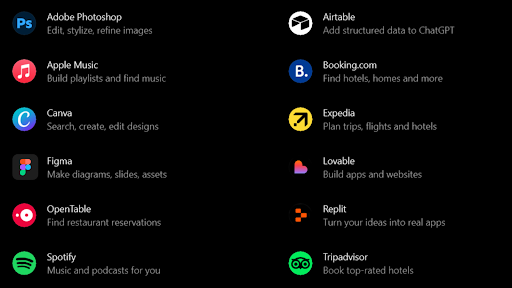


ChatGPT is no longer just a place where users ask questions and get answers. It is quickly becoming a place where decisions are made and actions are completed.
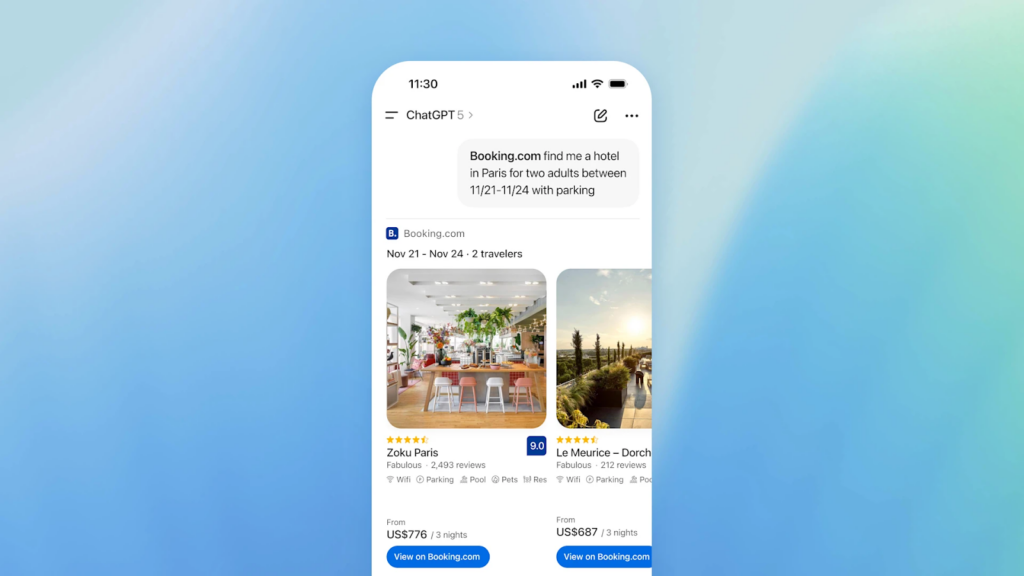
With the launch of the ChatGPT app marketplace and formal submission workflows, OpenAI has introduced a new execution layer inside ChatGPT. Businesses and developers can now place working mobile and web app experiences directly inside conversations instead of routing users to a traditional website, mobile app, App Store, or Play Store listing.
This shift changes how consumers discover, evaluate, and interact with products and services. The first meaningful touchpoint is no longer a search result or landing page. It is an AI conversation that can immediately run a workflow, generate an output, or complete a task.
What makes this change easy to miss is that it does not show up in traditional metrics. Website traffic often stays stable. Rankings remain unchanged. Attribution dashboards look normal.
Yet something fundamental has changed.
How Does it Affect Your Business?
Intent converts faster. Execution happens earlier. Deals progress in places most analytics tools do not track. This is why businesses can lose deals without losing traffic.
Most dashboards measure activity that happens after a user has already chosen where to go. Page views, sessions, form fills, demo requests, they do not measure where the decision was made.
When execution happens inside ChatGPT, the user may never need to visit your website to reach clarity. They may already understand:
- Which approach works
- Which solution fits
- Which direction feels right
From your perspective, nothing changed. Traffic still flows.
From the buyer’s perspective, the decision has already moved forward. Your website becomes a confirmation step, not an evaluation step.
That is the risk dashboards cannot show.
How ChatGPT Shifted From Research Tool to Execution Environment
Earlier, ChatGPT helped users think. It summarized options, explained concepts, and suggested next steps. Action still happened elsewhere.
That separation no longer exists.
With ChatGPT development services, developers can now build workflows that:
- Accept structured inputs
- Apply business logic
- Call APIs or internal systems
- Return usable outputs
These workflows behave like lightweight mobile or web apps, but they run entirely inside the chat.
For example, instead of reading about how a solution works, a user can:
Run a comparison →Generate a recommendation → Simulate an outcome → Produce a report.
Once a user executes something meaningful, their behavior changes. They stop researching and start committing.
The New Decision Moment Most Funnels Never See
Most funnels assume this sequence: Research → Compare → Visit website → Decide.
ChatGPT compresses that sequence.
A user can now ask a high-intent question, trigger a workflow, and see a concrete result in one interaction. That result often resolves the key uncertainty.
By the time the user reaches a website, if they do at all, the decision has already narrowed. This is where deals are now shaped.
If your product or service does not participate at this execution moment, you are not competing at the stage that matters most.
Why Traffic, SEO, and Attribution Stop Explaining Deal Outcomes
Traffic still tells you whether people are discovering you. SEO still tells you whether your content is visible. What they no longer tell you is who influenced the decision.
When someone uses Custom GPT apps for business to evaluate options or generate outputs, there is no click to track. No referral source. No attribution trail.
From your analytics, the user simply arrives more “decided” than before. Or they never arrive at all.
This is why teams feel confused when deals slow down or change shape without any obvious drop in demand.
What ChatGPT Apps Actually Change in Buyer Behavior
ChatGPT apps move action earlier in the journey.
With custom GPT development and Custom GPT app development, businesses can let users do something instead of reading about it.
With GPT workflow development, each interaction produces:
- A result
- A narrowed option set
- A clearer direction
Every executed step reduces the need to explore alternatives.
The first system that gives the user a working outcome often becomes the reference point for everything else.
That influences compounds quietly.
Where This Is Already Playing Out in Practice
Product and SaaS Companies
Users now experience value before they see the full product. Through the ChatGPT marketplace, outputs appear earlier than demos. By the time sales engage, expectations are already formed.
Enterprises and Internal Teams
With custom internal GPT development, internal workflows centralize decision-making. These systems influence how teams shortlist tools and vendors long before formal evaluation begins.
B2B Services and Consulting
Instead of explaining frameworks, firms let prospects run diagnostics. When users see outcomes themselves, trust forms faster and decisions accelerate.
Why the ChatGPT App Directory Is an Execution Gate, Not a Marketplace
The ChatGPT App Directory layer determines which tools appear when a user is ready to act.
Users do not browse the directory the way they browse an app store. Tools surface contextually based on the problem being discussed.
If your workflow does not appear at that moment, you are invisible to the decision.
Brand recognition cannot compensate for the absence at the execution layer.
The advantage here is not speed, pricing, or features. It is timing. Who executes first when intent appears. Who removes uncertainty first. Who gives the user something concrete first.
Teams that arrive late do not lose traffic. They lose relevance in the decision itself. And that loss happens silently.
Why Most Teams Will Build Something That Feels Right but Does Little
Many teams start with chatbots or prompt experiments. These feel productive because something responds.
But responses do not change decisions. Execution does.
Without workflows, integrations, and constraints, teams remain stuck at the explanation layer while competitors move into execution.
The gap grows even as everyone feels busy.
You should pay attention now if:
- Speed to decision impacts revenue
- Your buyers already use ChatGPT for evaluation
- Early execution shapes final choice
You can wait if:
- Your value depends heavily on visual exploration
- Decisions are slow and collaborative by nature
Ignoring this shift because traffic looks fine is the real risk.
Take Advantage Before It’s Too Late
You won’t see this shift in your analytics. You won’t see it in rankings. You’ll feel it when deals start closing faster elsewhere, and you can’t explain why.
Execution has moved into the conversation.
Decisions now resolve at the moment intent appears, not after users browse websites, compare landing pages, or request demos. By the time traditional funnels activate, the outcome is often already shaped.
This is why choosing the right GPT software development company matters more than experimenting with surface-level AI features.
This is the layer where Wildnet Edge operates. As an AI-native GPT software development company, we build execution-first systems inside ChatGPT through custom GPT apps for business, GPT workflow development, and secure custom internal GPT development.
The question is no longer whether this execution layer exists.
It’s whether your business shows up before decisions stop waiting.
Looking for ChatGPT app development services?



 based on 1200+ reviews



