 sales@wildnetedge.com
 +1 (212) 901 8616
 +1 (437) 225-7733
















































































































 ChatGPT Development & Enablement
  Hire AI & ChatGPT Experts
  ChatGPT Apps by Industry
  ChatGPT Blog
  ChatGPT Case study
  AI Development Services
  Industry AI Solutions
  AI Consulting & Research
  Automation & Intelligence





TL;DR
By the year 2026, the real estate industry left behind the age of just pictures and 2D layouts. Buyers nowadays want to virtually “walk” through a house first, even if it is in a different place. This guide will take you through the might of VR in Real Estate, a tech that is changing the way properties are marketed, sold, and developed. We will guide you through the history of virtual home tours from the days of gimmicky 360-degree photos to the present day of fully interactive 3D environments. Among other things, you will see how property visualization VR enables developers to sell off-plan units by letting investors experience unbuilt spaces.
Real estate has always been about one thing: helping people imagine a future in a space. For years, that imagination depended on photos, brochures, and quick walk-throughs. Today, that approach feels limiting. Buyers want more clarity before they commit time, money, or travel. This is where VR in Real Estate changes everything.
Instead of asking buyers to picture a home from flat images, VR lets them step inside it. They can walk through rooms, understand layouts, and feel how the space flows. This shift saves time, builds trust, and speeds up decisions. It also changes how developers, agents, and investors work every day.
Why Open Houses Are Losing Relevance
Open houses once made sense. Buyers had few alternatives. Now, they feel inefficient. People drive long distances, walk into homes that don’t match expectations, and leave within minutes. Agents lose hours. Buyers feel frustrated.
VR in Real Estate fixes this problem early. Buyers explore properties from anywhere before visiting in person. They shortlist homes that truly fit their needs. Physical visits become final checks, not first impressions. This change alone shortens sales cycles significantly.
How Property Viewing Has Evolved
Early virtual tours felt basic. You stood in one spot and rotated the view. They helped, but they didn’t feel real.
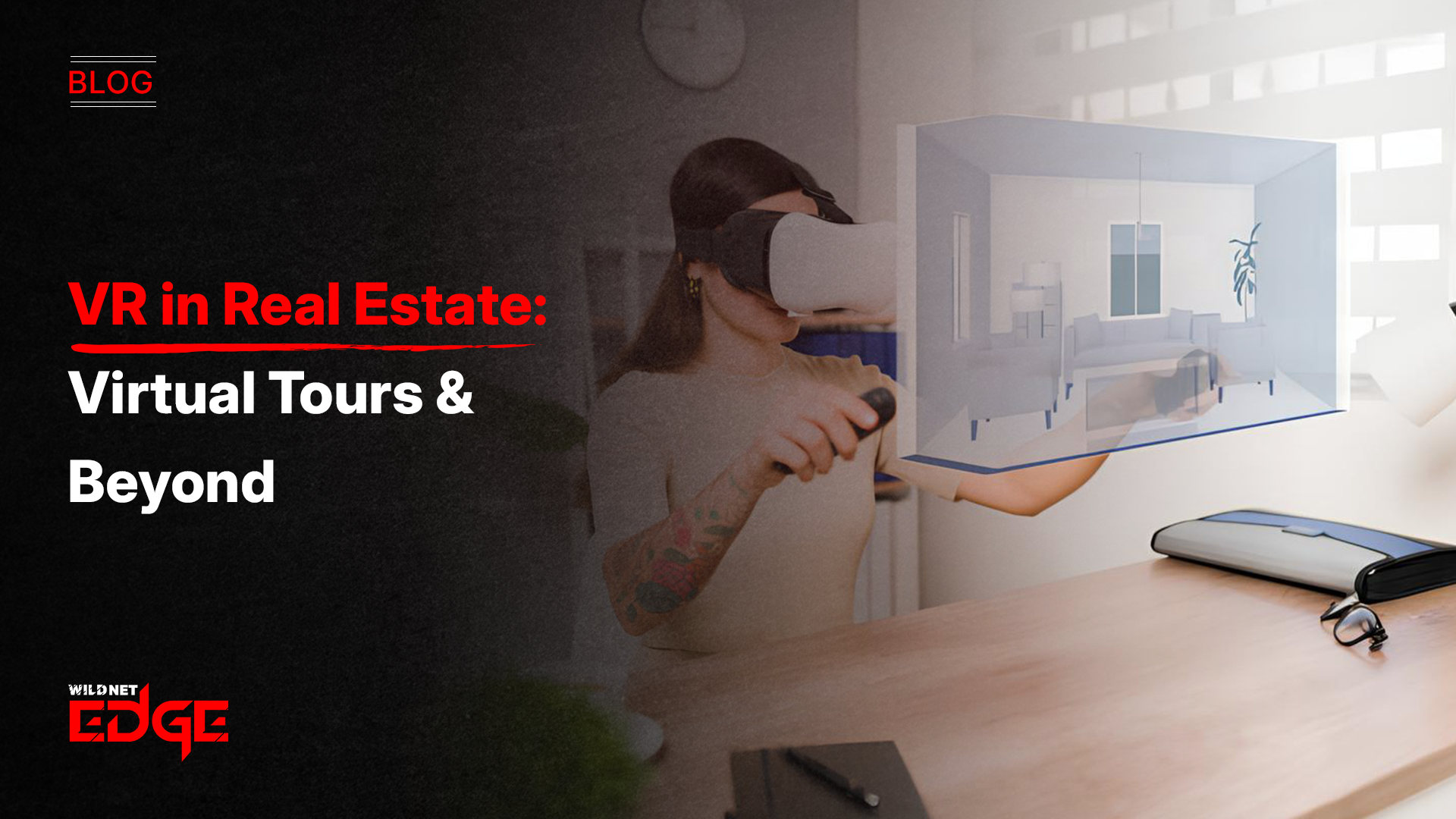
Modern VR in Real Estate allows full movement. Buyers walk through spaces, lean toward windows, and explore corners naturally. This freedom creates comfort. People understand scale, light, and layout better. They don’t guess, they experience.
When buyers feel present inside a home, an emotional connection follows. That connection often leads to faster and stronger offers.
Selling Homes Before They Exist
Developers face a tough challenge when selling under-construction properties. Floor plans confuse many buyers. Empty plots don’t inspire confidence.
VR in Real Estate removes this uncertainty. Developers create full virtual versions of projects before construction starts. Buyers walk through lobbies, apartments, and balconies months or years in advance.
Even better, buyers customize finishes instantly. They switch flooring, wall colors, kitchen styles, and furniture layouts in real time. This interaction turns interest into ownership early. Pre-sales become easier and more predictable.
Virtual Staging and Interior Design
Empty rooms look smaller and colder than furnished ones. Physical staging is expensive and a logistical nightmare.
Digital Staging
The technology of VR in Real Estate opens up a world of possibilities when it comes to virtual staging. Imagine dressing up the same vacant living room in “Modern Minimalist” style for one buyer and “Cozy Traditional” for another. This versatility certainly makes the property more attractive according to the viewer’s personal taste.
Renovation Potential
VR in Real Estate is a magic wand for fixer-uppers. Agents can present the property in its present condition and then switch a button to be able to see a completely refurbished dream. Demonstrating to a buyer that the potential of a room where a wall is removed for an open concept would be less intimidating and would therefore help the older property to be sold more quickly. Partnering with a specialized VR development company is often the best route to creating these high-fidelity renovation simulations.
Operational Efficiency for Agents
Time is money for real estate agents.
Filtering Qualified Leads
What used to be a tedious process of driving five clients to five different locations can now be done with just one appointment at the client’s office and a digital tour of twenty properties within the hour through the use of headsets by the agent and customer. The client is given the option of rejecting certain properties instantly. By the time they choose to go to a real location, it is a confirmation visit, not a discovery. The application of VR technology in real estate guarantees that property showing will be done only for serious buyers.
Global Reach
International buyers face significant friction. VR in Real Estate erases borders. A buyer in Hong Kong can tour a penthouse in New York with the same fidelity as a local. This opens up the total addressable market (TAM) for luxury properties to a global audience.
The Tech Stack: How It Works
Implementing this technology requires understanding the tools.
Matterport and Photogrammetry
For existing properties, cameras like Matterport scan the physical space to create a “Digital Twin.” This is fast, accurate, and relatively affordable. It is the industry standard for virtual home tours.
CGI and Game Engines
For unbuilt properties, artists create 3D models from CAD drawings using software like 3ds Max, then import them into engines like Unity or Unreal. This enables the high-end, interactive immersive property experience where lighting changes dynamically and doors open physically. Developing these assets often requires collaboration with AR/VR solutions providers who understand spatial computing.
Commercial Real Estate Applications
Residential isn’t the only beneficiary.
Office Leasing
To make a rental office space decision, the company needs to have a clear idea about density and flow. Virtual Reality (VR) in the industry of real estate provides a unique opportunity to facility managers to test out. They will be able to set up desks, meeting rooms, and break areas as if they were there and then check whether the space is suitable for their staff before committing to a lease for a decade.
Retail and Industrial
VR can be used by retailers for planning the layouts of their stores and the positioning of their shelves. The industrial customers can take virtual tours of the huge warehouses to check the docks and the heights of the ceilings without going to distant logistics parks.
Cost and ROI Analysis
Is the investment worth it?
Reduced Marketing Costs
While the initial creation of a VR tour has a cost, it is an evergreen asset. It replaces the need for recurring open house costs, printed brochures, and physical staging rentals. The ROI of VR in Real Estate comes from shortened sales cycles and higher final sale prices due to increased competition.
Competitive Differentiation
In a crowded market, listing a property with a “VR Tour Available” badge generates significantly more clicks than one without. It signals that the listing is premium and the seller is serious. Modern real estate app development increasingly integrates these VR viewers directly into the mobile search experience.
Case Studies: Virtual Wins
Real-world examples illustrate the power of this technology.
Case Study 1: Luxury Condo Presales
- The Challenge: A developer needed to sell 200 units in a high-rise before construction began to secure financing. Traditional brochures weren’t converting.
- Our Solution: We built a fully interactive VR in Real Estate experience. Buyers could walk through the exact unit they were buying, check the view from the 40th floor (using drone photography), and select finishes.
- The Result: The project sold out 50% of units in the first month, shattering local records. The property visualization VR gave buyers the confidence to commit millions sight-unseen.
Case Study 2: Remote Commercial Leasing
- The Challenge: A commercial brokerage struggled to lease office space during travel restrictions. Potential tenants couldn’t visit the site.
- Our Solution: We created Digital Twins of the vacant floors. We added interactive hotspots showing potential layout configurations.
- The Result: They leased 50,000 sq ft to an international tech firm entirely through Virtual Reality in Real Estate. The tenant signed the lease, having never physically stepped inside the building.
Future Trends: The Metaverse
The definition of “Real Estate” is expanding.
Virtual Land
Metaverse is a new frontier that has been opened up. People are purchasing “virtual land” in non-centralized worlds such as Decentraland and The Sandbox. Real Estate will soon to include selling VR plots for brands to build their virtual offices.
Haptic Feedback
The VR future costumes will let the customers “touch” the surfaces of the house. It would be possible to slide your palm on a virtual leather sofa or experience the warmth of a virtual fire. This sensory feature will completely erase the line between the real world and the immersive property visit.
Conclusion
VR in Real Estate changes how people buy, sell, and understand property. It removes distance. It removes guesswork. It respects buyers’ time and builds confidence early.
This technology doesn’t replace physical visits—it makes them smarter. It turns browsing into understanding and interest into commitment.
Real estate will always be about people and places. VR simply helps those people reach the right place faster.
At Wildnet Edge, our AI-first approach ensures we build immersive experiences that don’t just show space, they sell emotion. We partner with you to navigate this digital transformation and secure your place in the future of property.
FAQs
It depends on the complexity. Simple 360-degree tours are very affordable and can be done with a consumer-grade camera. High-fidelity, fully interactive 3D walkthroughs for unbuilt properties (using game engines) are more expensive but offer a much higher ROI for luxury developments.
No. While a headset offers the most immersive experience, most VR content is designed to be “web-compatible.” This means buyers can explore the virtual tour on their laptop, tablet, or smartphone screen, making it accessible to everyone.
For some international investors, yes. However, for most primary residence buyers, VR serves as a powerful filtering tool. It replaces the “first viewing,” allowing the buyer to shortlist their favorites before visiting the physical site for a final confirmation.
VR helps by visualizing the unbuilt. It allows developers to show a photorealistic representation of the finished product, complete with views, lighting, and furniture. This removes the uncertainty for buyers who struggle to visualize a home from a 2D floor plan.
VR (Virtual Reality) is fully immersive; it transports you to a different place. AR (Augmented Reality) overlays digital elements onto the real world. AR is often used in real estate tech innovations to show furniture in an empty physical room via a smartphone camera.
A simple Matterport scan of an existing home can be done in a few hours and processed in a day. Creating a fully modeled CGI environment for an unbuilt project for VR can take several weeks, depending on the size and detail required.
Absolutely. VR is widely used in commercial leasing to help tenants visualize how an empty shell can be fitted out to suit their business needs. It is also used for remote inspections of industrial properties and logistics centers.

Managing Director (MD) Nitin Agarwal is a veteran in custom software development. He is fascinated by how software can turn ideas into real-world solutions. With extensive experience designing scalable and efficient systems, he focuses on creating software that delivers tangible results. Nitin enjoys exploring emerging technologies, taking on challenging projects, and mentoring teams to bring ideas to life. He believes that good software is not just about code; it’s about understanding problems and creating value for users. For him, great software combines thoughtful design, clever engineering, and a clear understanding of the problems it’s meant to solve.



 based on 1200+ reviews



