 sales@wildnetedge.com
 +1 (212) 901 8616
 +1 (437) 225-7733
















































































































 ChatGPT Development & Enablement
  Hire AI & ChatGPT Experts
  ChatGPT Apps by Industry
  ChatGPT Blog
  ChatGPT Case study
  AI Development Services
  Industry AI Solutions
  AI Consulting & Research
  Automation & Intelligence





Key Takeaways
- In 2026, SaaS platform development has evolved beyond simple interfaces to “Intelligence-First” portals where the UI adapts in real-time to user behavior.
- Over 70% of performance issues in cloud web application development stem from poor database orchestration. Micro-frontends are now the standard for complex enterprise tools.
- Modern SaaS website development focuses on “Sub-Second Latency,” utilizing Edge computing to ensure global users experience zero lag regardless of their location.
- High-performing SaaS companies integrate FinOps at the code level, ensuring that SaaS web development services result in a lean, high-margin cloud infrastructure.
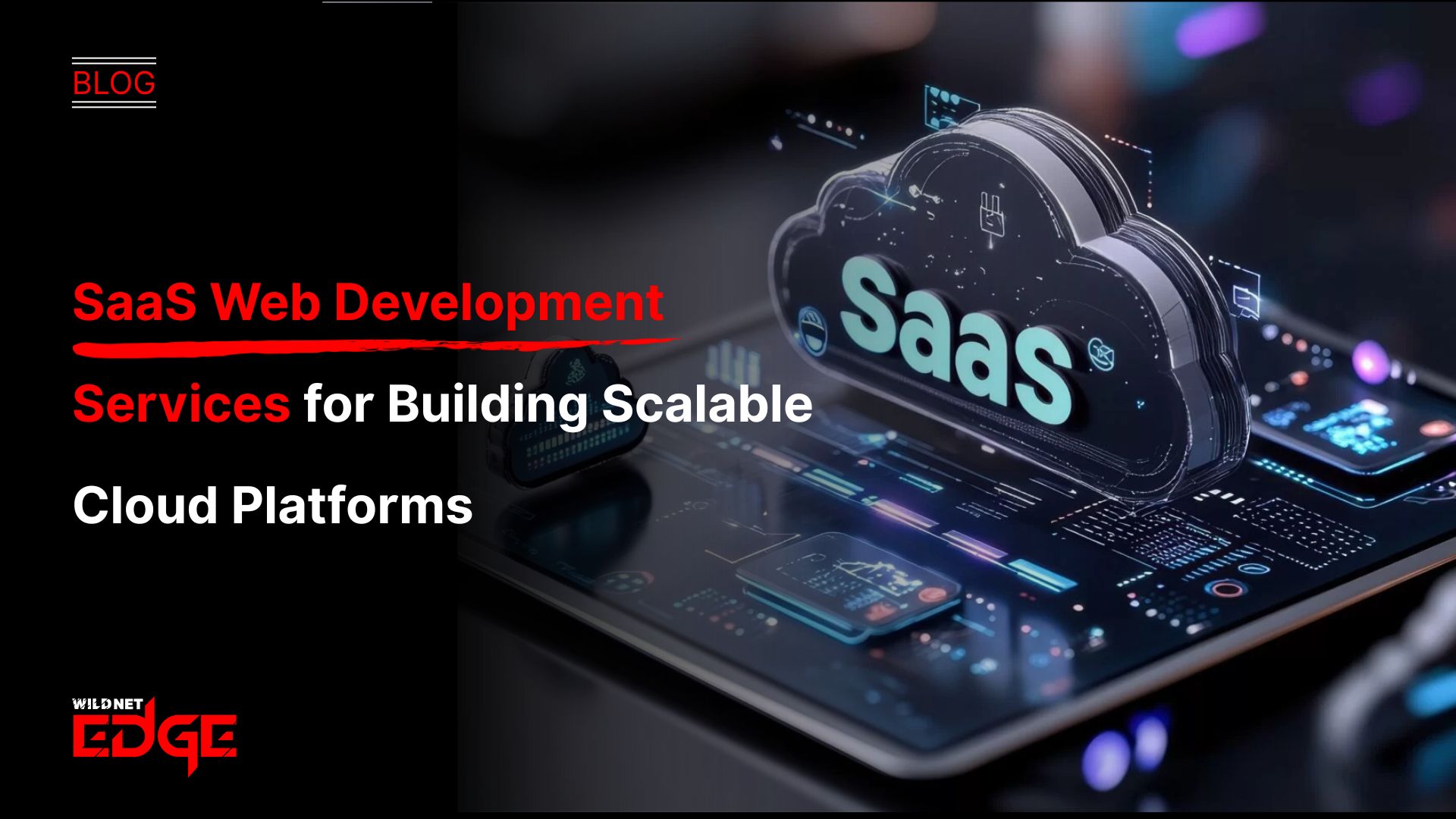
The SaaS market in 2026 is no longer about shipping features fast; it is about building platforms that scale efficiently, integrate cleanly, and embed intelligence at the core. As the industry approaches a $375 billion valuation, the difference between a successful platform and one facing operational collapse is its digital foundation.
This is where specialized SaaS web development services become a critical strategic lever. Building an enterprise-grade SaaS product is not just about writing code; it is about engineering a multi-tenant ecosystem that is secure by design, infinitely scalable, and ready to orchestrate autonomous workflows. Whether you are modernizing a legacy platform or building the next global leader, your success depends on a foundation of robust SaaS platform development.
Why SaaS Platforms Need Specialized Enterprise Development
Generic web engineering often fails when applied to the SaaS model. The unique demands of high availability, subscription economics, and shared infrastructure require a specific set of cloud web application development skills.
The Real Challenges SaaS Platforms Face
- The Integration Bottleneck: Modern SaaS products must act as “connective tissue,” syncing seamlessly with CRMs, ERPs, and global APIs. Poor integration design creates data silos and performance lag.
- Scalability Without Margin Erosion: Many platforms crash under high load or, conversely, pay for massive server over-provisioning. Expert platform development for SaaS implements auto-scaling that tracks perfectly with real-time demand.
- Security in Multi-Tenant Environments: In a shared infrastructure, one vulnerability can affect all customers. Specialized SaaS web development services use “Zero Trust” and tenant isolation to ensure data remains private.
- Technical Debt Slowing Innovation: Rapid feature releases often lead to “spaghetti code.” Strategic consulting helps teams refactor legacy systems into modular services to maintain developer velocity.
Core SaaS Development Services for Enterprises
In 2026, effective platform development for SaaS focuses on four strategic areas of digital engineering.
1. Cloud Architecture Optimization (FinOps)
Cloud waste is the “silent killer” of SaaS margins. Our cloud web application development utilizes FinOps principles to ensure you pay only for what you use. This includes:
- Serverless Frameworks: Reducing overhead by only running code when needed.
- Cost Governance: Automated dashboards to monitor and right-size cloud instances.
- Spot Instance Optimization: Leveraging discounted compute power for non-critical workloads.
2. Enterprise SaaS Architecture & Scalability
Handling 10,000 users is simple; handling 10 million with real-time workloads is an engineering feat. Through advanced SaaS web development services, we design architecture that supports high availability, scalability, and performance.
- Database Sharding: Distributing data across multiple servers to prevent bottlenecks.
- Microservices & Micro-frontends: Decoupling features so they can be updated independently without downtime.
- Global Edge Computing: Reducing latency by processing data closer to the user.
3. Usage-Based Billing Architecture
As the industry shifts toward “Pay-per-Use” models, your billing engine must be highly precise. We re-architect systems to track granular user actions in real-time, preventing revenue leakage and providing users with transparent, data-driven invoicing.
4. AI-Native Platform Integration
In 2026, AI is the core, not the “plugin.” Our platform development for SaaS includes:
- Vector Databases: For semantic search and high-speed data retrieval.
- Agentic Workflows: Allowing the software to execute tasks autonomously for the user.
- Intelligent UI: Interfaces that reorganize themselves based on predicted user needs.
Core Technologies Powering Ecommerce Web Development Services
Modern ecommerce web development services rely on advanced technologies that enable scalable, secure, and high-performance digital storefronts. Choosing the right technology stack ensures ecommerce platforms can handle massive traffic spikes, complex product catalogs, and global payment processing. Through specialized Web Development Services and modern SaaS web development services, businesses can build flexible commerce platforms that scale seamlessly as customer demand grows.
Headless Commerce Frameworks
Headless architectures separate the frontend experience from backend commerce logic. This allows brands to deliver lightning-fast user interfaces across web, mobile apps, kiosks, and emerging IoT commerce channels. Many organizations combine headless architecture with SaaS web development services to deploy modular commerce platforms that can evolve without disrupting backend operations.
Cloud-Native Infrastructure
Scalable ecommerce platforms rely heavily on cloud environments such as AWS, Google Cloud, and Azure. These infrastructures support auto-scaling systems capable of managing sudden traffic spikes during product launches or major global sales events. Modern Web Development Services integrated with SaaS web development services enable businesses to deploy cloud-native ecommerce platforms that remain reliable, secure, and highly available across global markets.
API-Driven Commerce Ecosystems
Modern ecommerce web applications integrate with payment gateways, logistics providers, CRM systems, and marketing platforms through secure APIs. This ensures real-time synchronization of orders, customer data, and inventory across multiple channels. By leveraging advanced SaaS web development services.
AI-Powered Shopping Experiences
AI technologies power personalized recommendations, dynamic pricing engines, and intelligent product discovery. These systems analyze customer behavior and automatically adjust product displays to maximize conversion rates.
Advanced Payment and Security Infrastructure
High-performance ecommerce website development includes PCI-DSS compliant payment systems, encrypted transaction gateways, and fraud detection systems that protect both businesses and customers. By integrating these technologies, modern online store development enables retailers to deliver fast, secure, and highly personalized shopping experiences.
Benefits of Enterprise SaaS Software Development
Organizations invest in SaaS web development services to build scalable platforms capable of supporting global user bases.
Major advantages include:
- Scalable Multi-Tenant Platforms: Applications support thousands of customers on a single infrastructure while maintaining tenant isolation.
- Lower Infrastructure Costs: Cloud web app development uses auto-scaling and FinOps to optimize spending.
- Faster Feature Deployment: Utilizing CI/CD pipelines for continuous, zero-downtime updates.
- Improved Customer Retention: AI-driven personalization features enhance user engagement and reduce churn.
- Seamless Enterprise Integrations: Connecting with CRM, ERP, and analytics tools through secure API layers.
Choosing the Right Enterprise SaaS Partner
Selecting a partner for SaaS website development is an architectural decision that will impact your company for years. Evaluate potential partners on these criteria:
- SaaS-Specific Expertise: Do they understand ARR (Annual Recurring Revenue), churn, and LTV (Lifetime Value)?
- Multi-Tenant Experience: Can they prove they’ve built systems that handle millions of users securely?
- AI Implementation Depth: Can they build AI-native systems, or are they just “wrapping” existing APIs?
- Outcome-Based Model: Do they measure success by code volume or by your platform’s uptime and cost-efficiency?
Case Studies
Case Study 1: Scaling a Fintech SaaS
- Problem: A fast-growing fintech SaaS was crashing during peak trading hours due to a monolithic database.
- Solution: We implemented SaaS platform development using a microservices model and database sharding.
- Result: The platform now handles 10x the transaction volume with 99.99% uptime, and cloud costs decreased by 25%.
Case Study 2: AI-Native Transformation for HR Tech
- Problem: An established HR platform was losing customers to AI-first competitors.
- Solution: We utilized SaaS web development services to embed an autonomous AI “Recruiter Agent” directly into their core architecture.
- Result: User engagement increased by 40%, and the new AI features became their primary revenue driver within six months.
Conclusion
The success of SaaS businesses in 2026 depends on architectural resilience. Professional SaaS web development services enable businesses to achieve optimal growth while safeguarding data and driving the shift toward AI-native technologies. The correct partner delivers value through cloud web application development optimization, decreasing operational risk while enhancing speed-to-market.
At Wildnet Edge, we use an AI-first method to speed up this transformation. We utilize proprietary tools to automate code refactoring and generate high-load simulation environments. We deliver SaaS platform development that combines rapid delivery with secure, high-margin operations.
FAQs
It is the specialized process of building and scaling multi-tenant, cloud-based platforms for large-scale organizations, focusing on high availability, security, and integration.
A well-designed platform development for SaaS strategy ensures that a platform can handle massive growth, protect data across thousands of tenants, and integrate with complex enterprise systems without breaking.
Rates vary based on complexity, but specialized cloud web app development typically ranges from $150 to $300 per hour for high-level architectural and AI work.
Standard development focuses on basic functionality. Enterprise platform development for SaaS focuses on massive scalability, “Zero Trust” security, and complex billing/integration logic.
Consultants use “FinOps” strategies to analyze cloud usage, rightsizing instances and implementing auto-scaling so you stop paying for idle server space.
Key risks include cross-tenant data leaks and API vulnerabilities. Modern platform development for SaaS uses “Confidential Computing” and strict isolation to mitigate these.
You should seek expert help when moving from a “Minimum Viable Product” to “Product-Market Fit,” or when technical debt begins to slow down your ability to ship new features.

Managing Director (MD) Nitin Agarwal is a veteran in custom software development. He is fascinated by how software can turn ideas into real-world solutions. With extensive experience designing scalable and efficient systems, he focuses on creating software that delivers tangible results. Nitin enjoys exploring emerging technologies, taking on challenging projects, and mentoring teams to bring ideas to life. He believes that good software is not just about code; it’s about understanding problems and creating value for users. For him, great software combines thoughtful design, clever engineering, and a clear understanding of the problems it’s meant to solve.

 based on 1200+ reviews



