sales@wildnetedge.com
 +1 (212) 901 8616
 +1 (437) 225-7733
















































































































 ChatGPT Development & Enablement
  Hire AI & ChatGPT Experts
  ChatGPT Apps by Industry
  ChatGPT Blog
  ChatGPT Case study
  AI Development Services
  Industry AI Solutions
  AI Consulting & Research
  Automation & Intelligence





Key Takeaways
- Healthcare web app development demands strict data privacy, security, and clinical accuracy.
- HIPAA-compliant web development is mandatory, not optional, for handling patient data.
- Modern healthcare web app solutions rely on interoperability standards like HL7 and FHIR.
- Patients now expect self-service through intuitive healthcare portals.
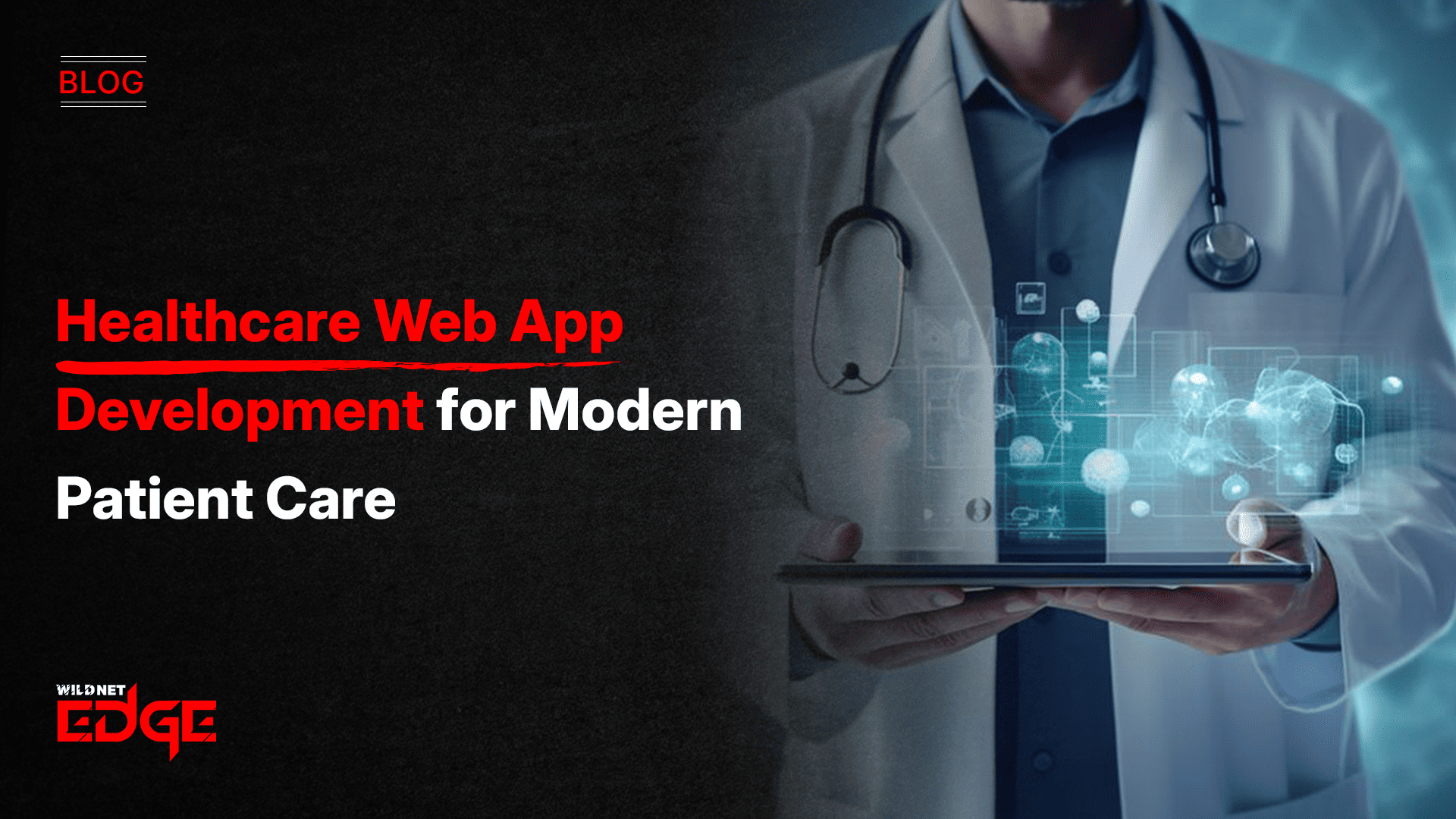
Healthcare has changed. Today, patients experience care beyond the hospital walls. Their first interaction often happens online, booking appointments, checking lab results, or messaging a doctor. That shift has made healthcare web app development a core part of patient care, not just an IT upgrade.
At the same time, healthcare software carries serious responsibility. A slow app is frustrating. A security flaw or data error can directly affect patient safety. That is why building digital health tools requires more than standard web development; it requires clinical awareness, regulatory knowledge, and engineering discipline.
This blog explains how modern healthcare web app solutions are built in 2026. We cover compliance, interoperability, patient-facing platforms, and how AI is reshaping digital health web platforms.
Why Healthcare Web App Development Is Different
Healthcare teams face a constant balancing act: improve patient experience, reduce operational burden, and protect sensitive data. Generic software rarely meets all three needs.
Effective healthcare web app development starts with understanding real clinical workflows. Developers must design systems that support doctors, nurses, administrators, and patients without adding friction or risk.
HIPAA and Data Protection
HIPAA-compliant web app development services are the foundation of every healthcare platform. Patient Health Information (PHI) must be encrypted in transit and at rest, access must be logged, and sessions must expire securely.
The best teams follow “privacy by design,” meaning security is built into the architecture from day one, not added later as a patch.
Interoperability with EHR Systems
Healthcare data is often scattered across systems. Modern healthcare web app solutions use HL7 and FHIR standards to connect with Electronic Health Records like Epic or Cerner. This allows providers to see a complete patient view without switching tools or duplicating data.
Core Healthcare Web App Solutions in 2026
Healthcare organizations are investing in platforms that improve both care delivery and operational efficiency.
Healthcare Portals Development
Patient portals have become the digital front door of healthcare. Modern healthcare portals development focuses on clarity and ease of use. Patients can schedule appointments, review lab results, pay bills, and communicate securely with providers—all from one place.
Accessibility and mobile responsiveness are no longer optional. Portals must work for patients of all ages and abilities.
Telehealth and Remote Care
Digital health web platforms now support virtual consultations directly in the browser using secure video technology. These tools reduce travel, expand access to care, and help providers manage follow-ups more effectively.
Custom Patient Management Systems
Off-the-shelf systems often fall short in clinical environments. Custom patient management systems streamline intake, automate reminders, manage care plans, and reduce administrative workload, freeing staff to focus on patients.
Making Healthcare Applications Secure by Design
Security in healthcare cannot be an afterthought. From the first architecture decision to the final deployment, healthcare applications must be built with protection at their core. Secure design ensures patient data stays private, systems remain reliable, and compliance requirements are met without constant firefighting.
Zero Trust Architecture
Modern secure healthcare applications assume no request is automatically trusted. Every user, device, and session is verified continuously. This approach minimizes risk even if credentials are compromised.
Identity and Access Controls
Role-based access ensures staff only see what they need. Doctors, nurses, and billing teams all access different data critical for both security and compliance.
AI in Healthcare Web App Development
AI is no longer experimental in healthcare software. It is becoming essential.
Clinical Decision Support
AI-powered features assist clinicians by flagging risks, highlighting anomalies, or summarizing patient histories. These tools support, not replace medical judgment.
Automated Administrative Work
Agent-based AI now handles scheduling, insurance checks, transcription, and follow-ups. This reduces burnout and lowers operational costs across healthcare web app solutions.
Case Studies
Case Study 1: The Telehealth Transformation
- Challenge: A rural hospital network needed to reach patients in remote areas but lacked a digital infrastructure. They required urgent healthcare web app development.
- Solution: We built a custom digital health web platform with integrated video consults and a low-bandwidth mode for rural connectivity.
- Result: The platform facilitated 10,000+ virtual visits in the first year. Our strategy reduced readmission rates by 15% through better follow-up care.
Case Study 2: Unified Patient Data
- Challenge: A multi-specialty clinic had patient data scattered across three different systems. They needed a unified patient management system.
- Solution: We provided services to build a central data lake using FHIR standards, connecting all legacy systems into one dashboard.
- Result: Administrative time per patient dropped by 40%, and the new healthcare web app solution eliminated duplicate testing errors.
Conclusion
Healthcare web app development directly impacts how care is delivered, experienced, and trusted. When built correctly, secure healthcare applications improve outcomes, reduce costs, and strengthen patient relationships. Wildnet Edge’s AI-first approach guarantees that your investment is future-proof. We combine deep regulatory knowledge with cutting-edge AI to build systems that are secure, scalable, and smart. Partner with us to redefine what’s possible in digital health.
FAQs
US law requires organizations to develop their websites according to HIPAA standards because the law protects confidential patient information. Organizations that fail to meet their compliance requirements face severe financial penalties and damage to their public image.
An EHR (Electronic Health Record) is primarily for clinical charting and history. A patient management system, often a product of custom healthcare web app development, focuses on the administrative and relationship side: scheduling, billing, communication, and engagement.
Interoperability ensures your app isn’t a data silo. In professional healthcare web app development, standards like FHIR allow your app to pull data (like allergies or medications) from existing hospital systems, providing a complete picture of the patient’s health.
Yes. Modern healthcare web app development frequently integrates AI for tasks like symptom checking (chatbots), analyzing medical images, predicting patient no-shows, and automating medical coding.
The cost varies based on complexity and compliance needs. A simple patient management system MVP might start at $50,000, while a comprehensive project for a hospital network can exceed $250,000 due to security and integration requirements.
Key features include secure messaging, appointment scheduling, lab result visualization, prescription refill requests, and bill payment. Successful projects prioritize mobile responsiveness for these portals.
Due to the rigorous testing required for security and compliance, healthcare web app development timelines is longer than average. A typical compliant MVP takes 4-8 months to design, build, and audit before launch.

Managing Director (MD) Nitin Agarwal is a veteran in custom software development. He is fascinated by how software can turn ideas into real-world solutions. With extensive experience designing scalable and efficient systems, he focuses on creating software that delivers tangible results. Nitin enjoys exploring emerging technologies, taking on challenging projects, and mentoring teams to bring ideas to life. He believes that good software is not just about code; it’s about understanding problems and creating value for users. For him, great software combines thoughtful design, clever engineering, and a clear understanding of the problems it’s meant to solve.

 based on 1200+ reviews