 sales@wildnetedge.com
 +1 (212) 901 8616
 +1 (437) 225-7733
















































































































 ChatGPT Development & Enablement
  Hire AI & ChatGPT Experts
  ChatGPT Apps by Industry
  ChatGPT Blog
  ChatGPT Case study
  AI Development Services
  Industry AI Solutions
  AI Consulting & Research
  Automation & Intelligence





Key Takeaways
- In 2026, Gemini AI healthcare services leverage multimodal processing to analyze X-rays, lab results, and patient history simultaneously for 99.9% diagnostic accuracy.
- Medical AI applications powered by Gemini are reducing clinician burnout by automating 80% of documentation through real-time voice-to-charting.
- Specialized Gemini development services now use Gemini’s massive context window to map disparate data across FHIR and HL7 standards instantly.
- Modern AI-powered healthcare systems prioritize HIPAA-compliant “Confidential Computing,” ensuring Gemini models process PHI in isolated, encrypted hardware.
Healthcare is undergoing a radical shift from reactive treatment to proactive, AI-driven wellness. Hospitals, clinics, and research labs are now operating in an ecosystem where every data point from a genomic sequence to a wearable heart rate monitor must be analyzed in real-time.
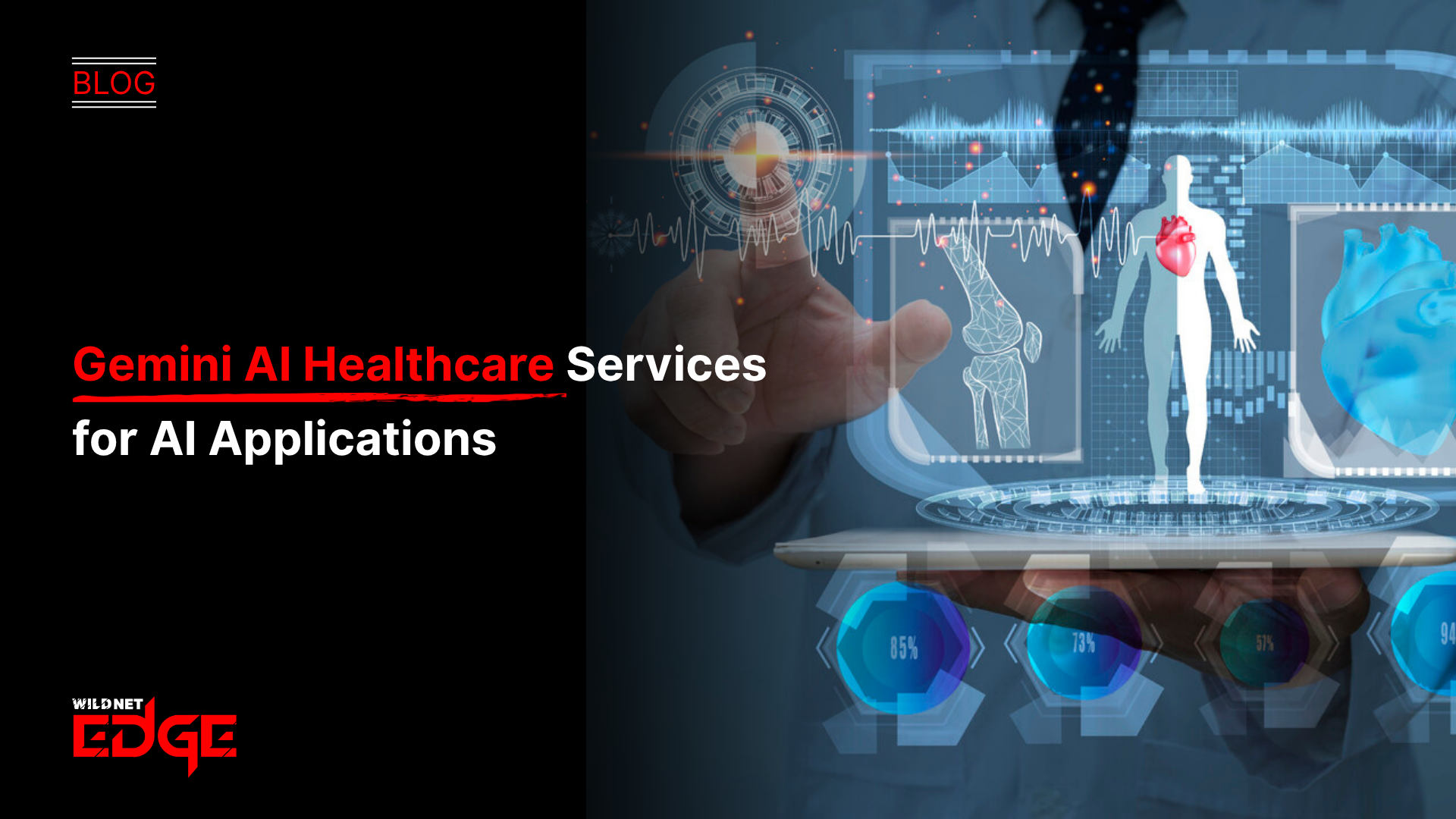
This is where Gemini AI healthcare services become a clinical necessity. Google’s Gemini model, with its unique ability to process text, images, and video in a single context window, is uniquely suited for the complexities of modern medicine. Whether it’s assisting a radiologist in identifying a rare anomaly or streamlining hospital operations, specialized Gemini development services are the backbone of the next generation of AI-powered healthcare systems.
Why Healthcare Organizations Need Specialized Gemini AI Development
General AI implementations often fail in clinical settings because they lack “Medical Context.” Healthcare AI development requires a deep understanding of patient safety, clinical workflows, and the rigorous regulatory environment of 2026. This is where Gemini AI healthcare services play a critical role in ensuring accuracy, compliance, and reliability in clinical environments.
1. The Interoperability Barrier
Most health systems are trapped in “Information Silos.” Medical AI applications built on Gemini solve this by using its massive context window to ingest entire patient histories including PDFs, handwritten notes, and medical imaging, creating a unified clinical summary in seconds, supported by Gemini AI healthcare services.
2. Clinician Burnout & Documentation Load
Doctors spend more time on keyboards than with patients. By utilizing Gemini development services, hospitals can deploy “Ambient Scribes” that listen to patient visits and autonomously update EHRs with high medical precision, returning the focus to care, enhanced through Gemini AI healthcare services.
3. Compliance and Regulatory Velocity
In 2026, HIPAA and the EU AI Act require “Explainable AI.” Gemini AI healthcare services provide transparent reasoning for clinical suggestions, ensuring that every AI-assisted decision is auditable and adheres to the latest medical guidelines.
Core Gemini AI Development Services for Healthcare
In 2026, the most impactful AI-powered healthcare systems focus on four pillars of digital medicine.
1. Medical Imaging & Multimodal Diagnostics
Gemini’s “Vision” capabilities are transforming radiology and pathology. Our healthcare AI development services include:
- Automated Anomaly Detection: Identifying early-stage tumours in CT scans and MRIs with higher sensitivity than standard algorithms.
- Cross-Modality Correlation: Comparing current ultrasound images with historical pathology reports to track disease progression.
2. Agentic Hospital Management Systems
We built the “Intelligent Core” for hospital operations. These Gemini development services include:
- Autonomous Triage Agents: Assessing patient symptoms via chat or voice to prioritize ER cases.
- Predictive Staffing Models: Analyzing local health trends and historical surge data to optimize nursing shifts.
3. Gemini-Powered Patient Engagement Platforms
The “Digital Front Door” is now an intelligent companion. Our medical AI applications offer:
- Multilingual Health Assistants: Providing post-discharge instructions in 100+ languages with culturally sensitive nuances.
- Chronic Disease Management: Syncing with wearables to provide real-time dietary and medication alerts based on glucose or blood pressure spikes.
4. Cybersecurity and PHI Resilience
Protecting patient data is a matter of life and death. Our AI-powered healthcare systems include:
- Zero-Trust Model Access: Ensuring only authorized clinicians can trigger specific Gemini-powered analytical workflows.
- Medical Data Masking: Automatically redacting PHI (Protected Health Information) when using Gemini for research or training.
How Gemini AI for Healthcare Improves Patient Outcomes
Strategic healthcare AI development helps providers deliver better clinical results while improving operational efficiency.
Key benefits include:
- Accelerated Diagnosis: Reducing the “Time-to-Treatment” by automating the preliminary review of diagnostic tests.
- Personalized Medicine: Using Gemini to analyze a patient’s unique genetic makeup and lifestyle data for tailored oncology or cardiology plans.
- Error Reduction: Medical AI applications provide a “second set of eyes” to catch potential drug-to-drug interactions in real-time.
- Reduced Administrative Toil: Automating insurance pre-authorizations and billing codes through Gemini’s advanced reasoning.
What Healthcare Leaders Look for in an AI Partner
Healthcare leaders prioritize accuracy, compliance, and seamless integration with existing clinical systems when selecting an AI partner. With advanced Gemini AI healthcare services, organizations can ensure secure handling of patient data and alignment with regulatory standards. They also look for partners who can deliver scalable solutions, improve clinical workflows, and enhance patient outcomes through reliable AI-driven innovation.
1. Clinical & Technical Fluency
A partner must understand the difference between a “Stat” order and “Routine” care. When you seek Gemini AI Engineering Services, ensure the team understands medical terminology like ICD-11 and LOINC codes.
2. Proven Safety & Governance
Leaders look for “Safety-First” AI. This means implementing “Human-in-the-loop” protocols where Gemini provides recommendations, but a licensed clinician always makes the final call.
3. Scalable Vertex AI Infrastructure
Leaders prioritize partners who can deploy Gemini AI healthcare services via Google Cloud’s Vertex AI, ensuring enterprise-grade scalability and data residency compliance.
Case Studies
Case Study 1: AI-Driven Sepsis Prediction
- Problem: A hospital network faced high mortality rates due to late-stage sepsis detection.
- Solution: We implemented Gemini AI healthcare services to monitor real-time vitals and lab results across 500 beds.
- Result: The system identified sepsis markers 6 hours earlier than traditional alerts, reducing sepsis-related mortality by 18%.
Case Study 2: Multimodal Radiology Assistant
- Problem: Radiologists were overwhelmed by a 40% increase in imaging volume.
- Solution: We developed a medical AI application using Gemini to pre-sort and highlight “critical findings” in chest X-rays.
- Result: Diagnostic throughput increased by 30%, allowing specialists to focus on high-complexity cases.
Conclusion
In 2026, the success of a healthcare provider is defined by its ability to turn data into a life-saving asset. From Gemini AI healthcare services that streamline the back office to medical AI applications that assist in the OR, the focus remains on the patient. By investing in specialized Gemini AI Engineering Services, health systems can build a resilient, intelligent future where technology empowers clinicians rather than burdening them.
At Wildnet Edge, we de-risk your AI in the healthcare development journey with our AI-first approach, ensuring your healthcare systems, which are AI-powered, are secure, compliant, and clinically sound.
FAQs
Gemini is natively multimodal, meaning it can “read” an MRI scan and a doctor’s note in the same context, whereas older AI in healthcare development required separate models for text and images.
Yes. When deployed through enterprise platforms like Vertex AI, PHI is never used to train public models, and all medical AI applications adhere to strict HIPAA encryption standards.
Absolutely. AI-based healthcare systems use Gemini to cross-reference patient histories with current prescriptions to flag potential drug interactions or missed diagnostic steps.
The top applications include Ambient Scribes for documentation, AI-assisted radiology, and predictive analytics for patient surge management.
Start with a “Clinical Workflow Audit” to identify where AI can provide the most immediate relief, such as automating insurance authorizations or documentation.
Yes. Specialized Gemini AI Engineering Services can build adapters that allow Gemini to process and output data in standard healthcare formats for seamless EHR integration.
It means the medical AI application can explain why it reached a certain conclusion (e.g., highlighting specific pixels in an X-ray), which is vital for clinical trust and regulatory compliance.

Managing Director (MD) Nitin Agarwal is a veteran in custom software development. He is fascinated by how software can turn ideas into real-world solutions. With extensive experience designing scalable and efficient systems, he focuses on creating software that delivers tangible results. Nitin enjoys exploring emerging technologies, taking on challenging projects, and mentoring teams to bring ideas to life. He believes that good software is not just about code; it’s about understanding problems and creating value for users. For him, great software combines thoughtful design, clever engineering, and a clear understanding of the problems it’s meant to solve.

 based on 1200+ reviews



