sales@wildnetedge.com
 +1 (212) 901 8616
 +1 (437) 225-7733













































































































 ChatGPT Development & Enablement
  Hire AI & ChatGPT Experts
  ChatGPT Apps by Industry
  ChatGPT Blog
  ChatGPT Case study
  AI Development Services
  Industry AI Solutions
  AI Consulting & Research
  Automation & Intelligence





Key Takeaways
- The future of blockchain is shifting toward AI-driven “agentic workflows,” where autonomous systems negotiate and settle transactions on-chain.
- Blockchain trends 2026 show a move to modular architectures that cut infrastructure costs and improve scalability.
- The enterprise blockchain future is powered by real-world asset (RWA) tokenization, unlocking 24/7 liquidity.
- Decentralized technology trends highlight Zero-Knowledge Proofs (ZKPs) as the new privacy standard.
A logistics manager in Singapore tracks a delayed shipment. A bank in London waits two days to settle a cross-border payment. A hospital administrator checks whether a patient record was altered. In each case, trust slows operations and increases costs. Businesses lose billions every year to reconciliation delays, fraud, and manual verification. Data breaches alone cost companies an average of $4.45 million per incident.
This growing trust gap explains why conversations around the future of blockchain are becoming more practical and urgent.
In 2026, blockchain is no longer about speculative tokens. It is about utility, operational efficiency, and digital trust. Companies are moving from small pilots to production systems that reduce friction in payments, supply chains, and compliance processes.
We are shifting from the Internet of Information to the Internet of Value. Blockchain provides a shared, real-time source of truth that accelerates settlements, reduces disputes, and strengthens accountability, making it core infrastructure rather than optional innovation.
Evolution From Crypto Experiments to Enterprise Platforms
Early blockchain systems focused on public cryptocurrencies. They were innovative but unstable for enterprise use.
Today, the enterprise blockchain future looks different. Platforms integrate directly with ERP systems, CRM tools, and banking software. They prioritize scalability, regulatory compliance, and interoperability.
Businesses now use permissioned or consortium-based networks that protect sensitive data while maintaining transparency where needed. This hybrid model ensures privacy without sacrificing trust. Blockchain is no longer an isolated experiment. It is becoming part of the core infrastructure.
Why Businesses Are Watching the Future of Blockchain Trends Closely
Business leaders track the future of blockchain because it directly impacts cost, risk, and competitiveness. Trust is expensive. Every time companies verify data, reconcile accounts, or confirm transactions, they spend time and money. Blockchain reduces verification costs by automating trust. A validated ledger eliminates the need for repeated checks.
For example:
- Supply chains gain transparent tracking.
- Banks achieve near-instant settlements.
- Enterprises automate compliance through smart contracts.
Companies that ignore these blockchain trends in 2026 risk falling behind competitors that operate faster and more efficiently.
Decentralized Technology Trends Shaping Industries
Decentralized technology trends address a growing trust gap in digital systems. As AI generates more content and automates decisions, businesses must verify authenticity. Blockchain Solutions now provides cryptographic proof for digital assets, documents, and transactions. Companies use blockchain to watermark intellectual property, validate data integrity, and prevent tampering.
Industries benefiting from these trends include:
- Finance: Fraud-resistant transaction systems
- Healthcare: Secure data sharing
- Logistics: Immutable shipment records
- Media: Authenticity tracking for digital content
Decentralization ensures no single party can manipulate records. That builds confidence across ecosystems.
Top Blockchain Trends 2026 & Beyond
Understanding blockchain trends 2026 helps companies prepare strategically rather than reactively.
1. Enterprise Blockchain Adoption at Scale
The blockchain future in enterprise is increasingly hybrid. Companies collaborate through consortium networks while anchoring data to public chains for final verification. Industries such as logistics and banking now share infrastructure to track assets collectively. Sensitive data remains private through Zero-Knowledge Proof channels. Blockchain Solutions operate behind the scenes. Customers may not even realize blockchain powers their transactions. The value lies in reliability, not visibility.
2. Web3 Blockchain Trends & Digital Ownership
Web3 blockchain trends focus on user ownership and programmable systems. Digital certifications now use non-transferable tokens, often called soulbound tokens. These create verifiable credentials that cannot be forged. Loyalty programs are also evolving. Instead of points locked within a single brand, customers receive tokenized rewards they can trade or use across ecosystems. This creates stronger engagement and new revenue channels. Web3 moves control from platforms to participants, aligning with broader decentralised technology trends.
3. Cross-Chain Interoperability & Modular Infrastructure
The future of blockchain will not rely on one dominant network. Instead, multiple chains will connect seamlessly. Interoperability protocols enable value transfer between private enterprise networks and public decentralized finance systems. This structure reduces operational costs and improves scalability. These modular systems can reduce costs significantly compared to traditional monolithic chains. To build secure cross-chain systems and optimize performance, enterprises often hire blockchain developers with expertise in smart contracts, interoperability protocols, and modular infrastructure design.
4. AI and Blockchain Convergence
One of the most powerful blockchain trends in 2026 is the convergence of AI and decentralized systems. AI requires reliable data. Blockchain verifies data integrity. In emerging models, AI agents use blockchain wallets to autonomously pay for services, access APIs, and record transactions. These agentic workflows enable machine-to-machine commerce. Blockchain also records AI decisions, creating transparent audit trails. This prevents data manipulation and strengthens accountability.
Enterprise Blockchain Roadmap: What Comes Next
The enterprise blockchain future depends on three priorities: efficiency, sustainability, and usability. Enterprises do not test blockchain in isolation. They are integrating it into core systems such as finance, supply chain, identity management, and compliance. The next phase focuses on measurable outcomes, faster settlement cycles, reduced reconciliation costs, automated reporting, and stronger data integrity. To move forward, organizations must design infrastructure that scales without increasing operational complexity.
Energy-Efficient Consensus
Modern consensus mechanisms, such as Proof of Stake and Proof of Authority, consume significantly less energy than early mining models. This aligns with ESG commitments and regulatory requirements. Sustainability is now a business requirement, not an afterthought.
Modular and Composable Architecture
Future-ready Blockchain Solutions rely on modular design. Enterprises can combine execution layers, settlement layers, and privacy modules as needed. This composability allows businesses to customize infrastructure without rebuilding systems from scratch.
Industry-Specific Frameworks
We are seeing growth in application-specific chains, or “app-chains.” These networks dedicate throughput to a single application, ensuring performance without congestion. This approach improves reliability for mission-critical operations.
Better Developer Tooling
The barrier to entry continues to drop. Developers can now deploy networks faster with simplified toolkits. However, complex enterprise deployments still require deep expertise.
How Businesses Can Prepare for the Enterprise Blockchain Future
To survive in 2026, businesses must stop viewing blockchain as an experiment and start treating it as critical infrastructure.
Align Blockchain Solutions with long-term goals
Do not treat blockchain as a side project. Tie it directly to business priorities, reducing settlement time, improving supply chain visibility, or automating compliance. Avoid building isolated systems that cannot scale. Focus on interoperability, so your blockchain infrastructure works smoothly with existing ERP, CRM, and finance tools.
Adopt relevant decentralized technology trends early
Not every trend matters to your business. Tokenization may unlock liquidity in finance, while Zero-Knowledge Proofs may strengthen privacy in healthcare. Choose what solves a real operational challenge.
Build a phased roadmap
Start with a controlled private pilot. Expand to consortium collaboration. Then anchor to a public chain for global verification. This structured approach reduces risk while positioning your company ahead in the future of blockchain.
Conclusion
The future of blockchain represents a shift in how businesses establish trust. As web3 blockchain trends converge with AI and enterprise adoption, decentralized systems are becoming core infrastructure. Smart companies move beyond observation and start implementation. They align blockchain with business objectives. They measure ROI. They hire blockchain developers when specialized execution is required. They adopt decentralised technology trends that deliver measurable operational value. Blockchain is a trust engine for the digital economy. Companies that embrace this shift will define the next decade of innovation.
At Wildnet Edge, we help enterprises turn this shift into action. Our team designs scalable Blockchain Solutions aligned with long-term digital strategy. From modular architecture planning to smart contract audits and AI-integrated systems, we ensure your transition into the blockchain future in enterprise is secure, efficient, and results-driven. We do not just implement technology; we build infrastructure that supports growth, compliance, and competitive advantage in the evolving future of blockchain.
FAQs
The most significant aspect is the shift to “Utility.” The future of blockchain is about invisible infrastructure that powers seamless settlements and identity verification without user friction.
“Real-World Asset Tokenization” and “Instant Settlement” are the dominant blockchain trends of 2026, allowing banks to move trillions of dollars in assets on-chain for 24/7 liquidity.
It will level the playing field. The blockchain future in enterprise enables SMEs to access global supply chains and trade finance liquidity previously reserved for large corporations.
Blockchain-powered digital trends enable “Tokenized Loyalty.” Brands can issue tokens that customers own and trade, creating deeper engagement and new revenue streams compared to traditional points.
Hire blockchain developers if you plan to integrate “Digital Identity” or “Smart Contracts” into your product. These complex features require significant R&D lead time to align with the blockchain’s future.
“On-Chain Carbon Credits” are a major trend. Decentralised technology trends allow companies to prove their green claims immutably, preventing greenwashing.
The blockchain’s future provides the “Trust Layer” for AI. It verifies the data AI uses and records the decisions AI makes, ensuring accountability in an automated world.
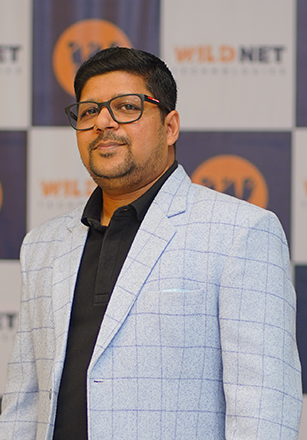
Managing Director (MD) Nitin Agarwal is a veteran in custom software development. He is fascinated by how software can turn ideas into real-world solutions. With extensive experience designing scalable and efficient systems, he focuses on creating software that delivers tangible results. Nitin enjoys exploring emerging technologies, taking on challenging projects, and mentoring teams to bring ideas to life. He believes that good software is not just about code; it’s about understanding problems and creating value for users. For him, great software combines thoughtful design, clever engineering, and a clear understanding of the problems it’s meant to solve.

 based on 1200+ reviews