sales@wildnetedge.com
 +1 (212) 901 8616
 +1 (437) 225-7733












































































































 ChatGPT Development & Enablement
  Hire AI & ChatGPT Experts
  ChatGPT Apps by Industry
  ChatGPT Blog
  ChatGPT Case study
  AI Development Services
  Industry AI Solutions
  AI Consulting & Research
  Automation & Intelligence





TL;DR
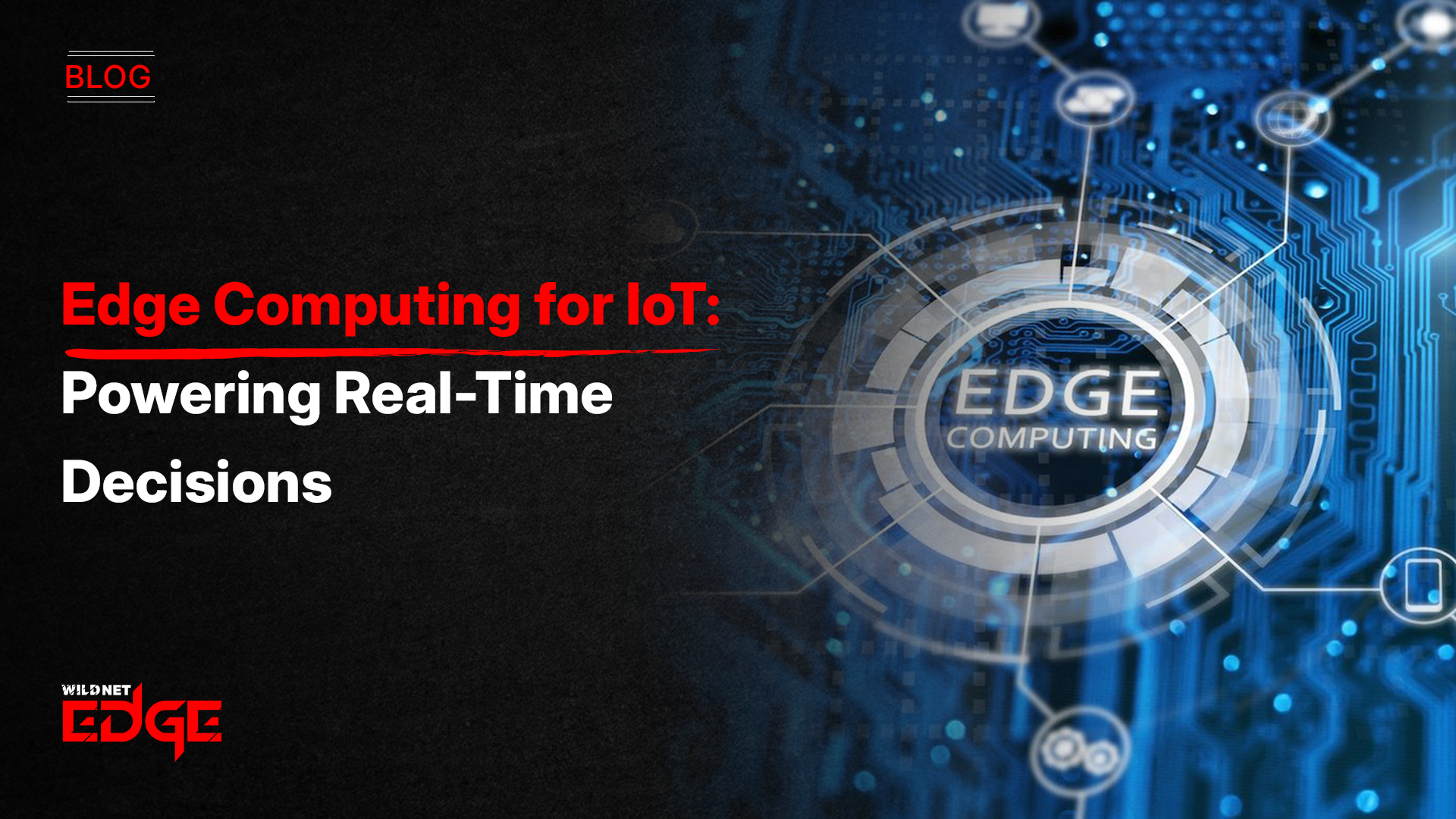
Edge Computing for IoT brings data processing closer to where data is created. Instead of sending everything to the cloud, edge devices analyze data locally using IoT edge processing. This enables low-latency IoT, reduces bandwidth costs, improves privacy, and makes real-time IoT analytics possible. It is the foundation for fast, reliable, and scalable distributed IoT systems in 2026.
The cloud changed everything, but it also introduced delay. In 2026, many IoT systems cannot afford that delay. When sensors must wait hundreds of milliseconds for cloud responses, systems fail. Autonomous vehicles, factory robots, smart grids, and medical devices need decisions in real time. Edge Computing for IoT solves this by processing data at the source instead of a distant data center.
This shift turns IoT systems from passive data collectors into active decision-makers. Devices no longer wait for instructions. They detect, decide, and act locally—even when connectivity is weak or unavailable.
Why Latency Is the Real Problem
Speed is the biggest reason organizations adopt Edge Computing for IoT.
In cloud-only systems, data travels long distances before decisions are made. That delay is unacceptable for safety-critical and high-speed environments. Low-latency IoT requires local intelligence.
With edge computing:
- A factory robot detects abnormal vibration and stops instantly
- A traffic signal adapts in real time to congestion
- A medical device reacts without waiting for a server
By keeping decisions close to the device, businesses avoid costly failures and safety risks. Partnering with a specialized IoT development company allows businesses to engineer these high-speed local loops, ensuring that critical alerts are acted upon instantly while only long-term trends are sent to the cloud.
IoT Edge Processing: Less Data, More Value
Sending raw data to the cloud is expensive and inefficient. Most data has no value unless something unusual happens.
IoT edge processing filters data locally. Edge devices analyze streams in real time and send only meaningful insights upstream.
For example:
- A camera sends “motion detected” instead of continuous video
- A sensor sends “bearing wear detected” instead of raw vibration logs
This approach cuts bandwidth usage dramatically and makes distributed IoT systems scalable without exploding cloud costs. By leveraging robust cloud engineering, companies can design hybrid architectures where the “heavy lifting” happens at the edge, and the cloud is reserved for aggregating these filtered insights for global reporting and long-term storage.
Real-Time IoT Analytics at the Edge
Edge computing enables real-time IoT analytics that cloud systems cannot deliver fast enough.
Modern edge devices run analytics and AI models locally. They detect anomalies, patterns, and risks instantly. This allows:
- Immediate response to failures
- Predictive actions instead of reactive alerts
- Continuous operation even during network outages
This local intelligence is critical for industrial automation, smart infrastructure, and mission-critical IoT deployments. Expert AI development ensures these models are optimized to run efficiently on low-power hardware, bringing “Server-Grade” intelligence to the smallest sensors.
Case Studies
Case Study 1: The Smart Traffic Grid
- The Challenge: A smart city project struggled with gridlock. Their cloud-based system took 30 seconds to adjust traffic lights, by which time the congestion had moved. They needed Edge Computing for IoT.
- The Solution: They installed edge devices with AI processors at every intersection. These devices communicated directly with each other to synchronize lights in real-time based on local traffic flow.
- The Result: Traffic congestion dropped by 40%. The Edge Computing for IoT system reacted instantly to accidents, rerouting cars without waiting for central command, proving the value of distributed IoT systems.
Case Study 2: The Remote Oil Rig
- The Challenge: An offshore rig had limited satellite connectivity. Uploading terabytes of sensor data for predictive maintenance was impossible/expensive.
- The Solution: The company adopted Edge Computing for IoT. Local gateways processed vibration data from 5,000 sensors, identifying wear patterns on-site.
- The Result: The rig only transmitted a 5KB daily report of “Health Status” to the mainland. IoT edge processing predicted a pump failure 2 weeks in advance, preventing a $2M shutdown.
Conclusion
Edge Computing for IoT is no longer optional. It is the backbone of modern, intelligent systems. When edge devices handle sensing, IoT edge processing filters data, and real-time IoT analytics drive action, organizations gain speed, reliability, and control. Cloud systems still matter but they no longer need to handle every decision. By adopting Edge Computing for IoT, businesses build infrastructure that keeps up with the real world instead of reacting too late.
Wildnet Edge’s AI-first approach guarantees that we create edge ecosystems that are high-quality, safe, and future-proof. We collaborate with you to untangle the complexities of distributed IoT systems and to realize engineering excellence. By embedding Edge Computing for IoT into the DNA of your network, you ensure that your infrastructure is fast enough to keep up with the world.
FAQs
The main benefit of Edge Computing is reduced latency. By processing data locally, devices can respond instantly to their environment without waiting for cloud connectivity.
No. It complements it. Edge Computing handles immediate, local tasks, while the cloud handles long-term storage, big data analysis, and model training.
Edge Computing keeps sensitive data (like video footage) on the device. Only anonymized metadata is sent to the cloud, significantly reducing the risk of data breaches during transmission.
Common examples include smart thermostats, autonomous vehicles, industrial robots, smart cameras, and gateways that aggregate sensor data. All rely on Edge Computing to function efficiently.
Initial hardware costs can be higher because devices need more processing power. However, Edge Computing drastically reduces long-term cloud bandwidth and storage costs, often resulting in a lower Total Cost of Ownership (TCO).
5G and Edge Computing are partners. 5G provides the high-speed, low-latency IoT connectivity required to connect edge nodes, enabling truly distributed IoT systems.
Managing thousands of distributed devices is complex. Successful deployment of Edge Computing requires robust device management software and automated “Over-the-Air” (OTA) update capabilities.

Managing Director (MD) Nitin Agarwal is a veteran in custom software development. He is fascinated by how software can turn ideas into real-world solutions. With extensive experience designing scalable and efficient systems, he focuses on creating software that delivers tangible results. Nitin enjoys exploring emerging technologies, taking on challenging projects, and mentoring teams to bring ideas to life. He believes that good software is not just about code; it’s about understanding problems and creating value for users. For him, great software combines thoughtful design, clever engineering, and a clear understanding of the problems it’s meant to solve.

 based on 1200+ reviews