 sales@wildnetedge.com
 +1 (212) 901 8616
 +1 (437) 225-7733
















































































































 ChatGPT Development & Enablement
  Hire AI & ChatGPT Experts
  ChatGPT Apps by Industry
  ChatGPT Blog
  ChatGPT Case study
  AI Development Services
  Industry AI Solutions
  AI Consulting & Research
  Automation & Intelligence





TL;DR
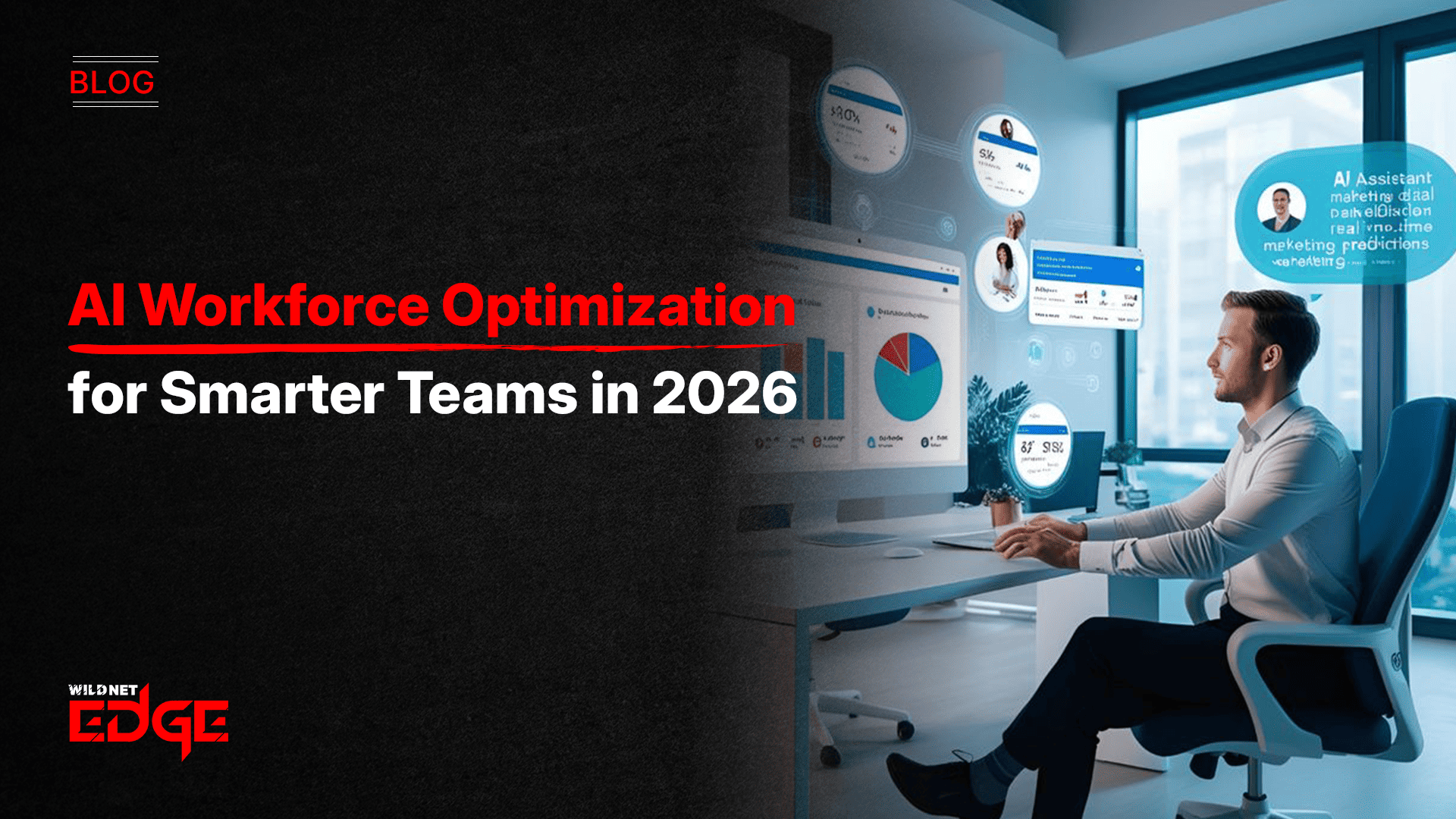
AI Workforce Optimization helps organizations plan staffing better, improve employee productivity, and reduce burnout using real data instead of guesswork. By combining workforce analytics, HR AI insights, and operational efficiency AI, businesses can predict demand, close skill gaps, and automate routine work. The result is a more resilient, productive, and people-first workforce.
AI Workforce Optimization has become a necessity, not a luxury. Traditional workforce management relied on static plans, annual reviews, and delayed reactions. That approach no longer works in 2026, where skills change fast and workforce expectations evolve even faster.
Modern teams are hybrid, distributed, and outcome-driven. Leaders need clarity on who is overloaded, where skills are missing, and how future demand will look. AI Workforce Optimization provides that clarity. It turns everyday workforce data into practical insights that help leaders make better decisions while supporting employee wellbeing.
This is not about monitoring people. It is about understanding patterns, removing friction, and helping teams perform at their best.
The Shift to Predictive Planning
The most significant impact of AI Workforce Optimization is the move from reactive to predictive management.
- Demand Forecasting: Instead of guessing, smart workforce planning algorithms analyze sales trends, economic indicators, and seasonal data to predict exact staffing requirements.
- Skills Gap Analysis: AI doesn’t just count heads; it evaluates capabilities. It can scan your current workforce’s code repositories or project outputs to identify skill gaps before they stall a project.
By integrating custom models from an AI development partner, companies can visualize their future organizational chart and start upskilling talent today for the roles of tomorrow.
From Reactive HR to Smart Workforce Planning
The biggest shift driven by AI Workforce Optimization is predictive planning.
Forecasting Demand with Confidence
Smart workforce planning uses historical trends, project pipelines, and business forecasts to predict staffing needs months in advance. Instead of reacting to shortages, leaders can plan hiring, training, or redistribution early.
Identifying Skill Gaps Early
Workforce analytics go beyond headcount. AI analyzes project outcomes, certifications, and performance data to reveal missing skills before they block delivery. This allows targeted upskilling instead of rushed hiring.
Deploying advanced HR tech solutions ensures that these tools serve the employee, fostering a culture of support rather than surveillance.
Employee Productivity AI Without Micromanagement
Employee productivity AI focuses on outcomes, not surveillance.
Preventing Burnout
AI Workforce Optimization tools detect overload by analyzing signals like meeting density, after-hours activity, and workload imbalance. Managers receive early alerts, making it easier to redistribute work or encourage time off before burnout hits.
Removing Low-Value Work
Operational efficiency AI automates repetitive tasks such as scheduling, reporting, approvals, and updates. Employees spend less time on admin work and more time on meaningful tasks that actually move the business forward.
Collaborating with a specialized analytics company allows you to turn raw HR data into a strategic asset, driving better business outcomes through superior people management.
Case Studies
Case Study 1: The Logistics Giant
- The Challenge: A global logistics firm faced a 30% churn rate in their warehouse staff, costing millions in recruitment and training. They lacked AI Workforce Optimization.
- The Solution: They implemented a smart workforce planning tool that analyzed shift patterns and commute times. The AI suggested flexible rostering options that aligned with public transport schedules.
- The Result: Attrition dropped by 15% in six months. The workforce analytics revealed that schedule predictability was valued more than overtime pay, allowing the company to optimize shifts for satisfaction rather than just coverage.
Case Study 2: The Tech Innovator
- The Challenge: A software company was missing product deadlines despite hiring more developers. They suspected operational bottlenecks but couldn’t pinpoint them.
- The Solution: They deployed employee productivity AI to analyze the software development lifecycle. The AI found that developers spent 40% of their time in status meetings.
- The Result: The company automated status updates using operational efficiency AI agents. Development velocity increased by 25%, and employee engagement scores rose significantly as engineers got more time to code.
Conclusion
AI Workforce Optimization changes how organizations manage people. It replaces guesswork with insight, reactive decisions with planning, and manual processes with intelligent automation.
When smart workforce planning defines the direction, employee productivity AI improves daily work, and workforce analytics guide leadership decisions, organizations gain both efficiency and empathy Wildnet Edge’s AI-first approach guarantees that we create HR ecosystems that are high-quality, safe, and future-proof. We collaborate with you to untangle the complexities of workforce analytics and to realize engineering excellence. By embedding AI Workforce Optimization into the DNA of your operations, you ensure that your people are always your strongest asset.
FAQs
AI Workforce Optimization utilizes artificial intelligence to analyze data and automate processes related to staffing, scheduling, and performance management. It aims to maximize efficiency and employee satisfaction simultaneously.
No, ethical employee productivity AI is primarily concerned with metadata and aggregate trends (for instance, total meeting hours) and not with individual surveillance. The aim is to find out the problems causing the low productivity and not to control people closely.
Traditional planning remains fixed and it is usually done through spreadsheets. Smart workforce planning is adaptive, applying predictive algorithms to calculate demand and skill needs in real-time by relying on market data.
Yes. HR AI insights can anonymize resumes and analyze interview patterns to detect and mitigate unconscious bias, helping organizations build more diverse and inclusive teams.
While large enterprises see massive scale benefits, Workforce Optimization is increasingly accessible to SMEs. Cloud-based operational efficiency AI tools allow smaller teams to automate scheduling and resource allocation cost-effectively.
Effective workforce analytics requires data from HRIS systems (tenure, role), performance management tools, project management software, and sometimes communication metadata (email volume).
Many organizations see ROI within 6 to 12 months. Workforce Optimization using AI delivers value by reducing overtime costs, lowering attrition rates, and improving project delivery speeds through better resource allocation.

Managing Director (MD) Nitin Agarwal is a veteran in custom software development. He is fascinated by how software can turn ideas into real-world solutions. With extensive experience designing scalable and efficient systems, he focuses on creating software that delivers tangible results. Nitin enjoys exploring emerging technologies, taking on challenging projects, and mentoring teams to bring ideas to life. He believes that good software is not just about code; it’s about understanding problems and creating value for users. For him, great software combines thoughtful design, clever engineering, and a clear understanding of the problems it’s meant to solve.
 based on 1200+ reviews



