 sales@wildnetedge.com
 +1 (212) 901 8616
 +1 (437) 225-7733
















































































































 ChatGPT Development & Enablement
  Hire AI & ChatGPT Experts
  ChatGPT Apps by Industry
  ChatGPT Blog
  ChatGPT Case study
  AI Development Services
  Industry AI Solutions
  AI Consulting & Research
  Automation & Intelligence



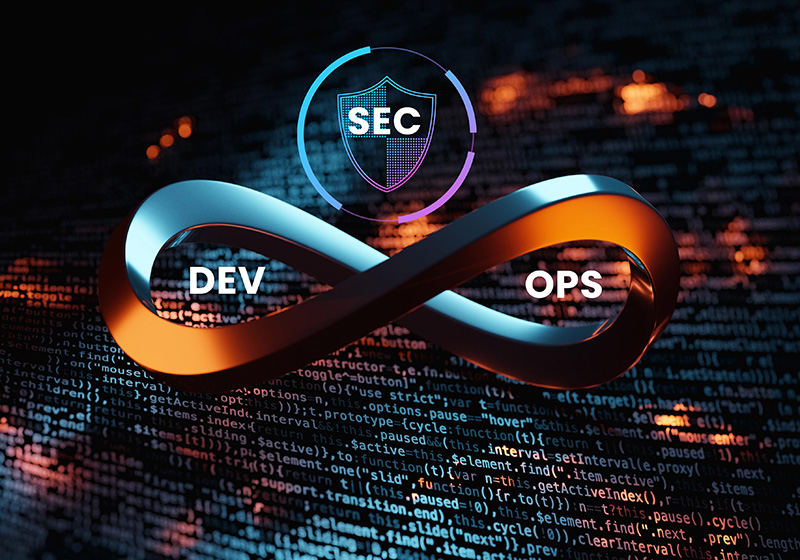


If you’re considering DevSecOps services, you’ve probably heard all the right things.
Better security.
Faster releases.
Fewer surprises in production.
Sounds like an easy yes.
But once you actually start looking into it, things get a little unclear.
Are you investing in tools? A process? A team? Or a complete change in how your software is built and delivered?
That confusion is more common than you think.
And it’s exactly why many DevSecOps implementations don’t deliver what businesses expect.
Before you invest, it’s important to understand what DevSecOps services actually involve, what will change for your team, and what outcomes you should realistically expect.
What DevSecOps Services Actually Include (Beyond Tools)
The biggest misconception about DevSecOps is that it’s tool-driven.
In reality, tools are the smallest part of it.
Strong DevSecOps services combine strategy, process, and automation to embed security into every stage of development.
At a practical level, this usually includes:
- Integrating security into the software development lifecycle (SDLC)
- Automating security checks within CI/CD pipelines
- Continuous vulnerability scanning and testing
- Secure code practices and developer enablement
- Monitoring and incident response setup
- Compliance alignment for regulated environments
This is where DevSecOps consulting services play a critical role.
They help define how security fits into your workflows before any tools are implemented. Without that foundation, tools create noise, not value.
How DevSecOps Consulting Services Shape Your Implementation
One of the biggest differences between a successful DevSecOps setup and a failed one is how it starts. Many teams jump straight into tools. They add scanners, set up pipelines, and assume security is now “covered.”
That’s rarely the case.
Strong DevSecOps consulting services begin with understanding your current system. Your workflows, architecture, release cycles, and risk exposure all shape how DevSecOps should be implemented.
Instead of forcing a predefined setup, consulting focuses on:
- identifying gaps in your current development process
- aligning security with how your teams already work
- designing a roadmap that fits your scale and complexity
This is what prevents overengineering.
Because DevSecOps is not about adding more layers. It is about integrating security in a way that actually works for your system.
What Actually Changes in Your Development Process
DevSecOps does not sit alongside development as an additional layer. It changes how your team builds software from the ground up.
The most important shift is moving security earlier in the development lifecycle. Instead of identifying vulnerabilities after deployment, security checks are integrated into how features are designed, built, and tested.
This changes day-to-day workflows in a few important ways.
Developers start taking ownership of secure coding practices rather than relying solely on security teams. Automated checks become part of the CI/CD pipeline, catching issues during builds instead of after release. As a result, vulnerabilities are identified earlier, when they are easier and less expensive to fix.
Over time, this creates a more predictable development process. Instead of reacting to security issues late in the cycle, teams address them continuously. The outcome is not slower delivery, but fewer disruptions and more stable releases.
What DevSecOps Services Should Deliver
Before investing, it’s important to understand what outcomes you should actually expect.
Not promises. Not buzzwords. Real results.
A well-implemented DevSecOps model should deliver:
- Faster and more reliable release cycles
- Reduced vulnerabilities in production
- Continuous visibility into system risks
- Better alignment with compliance requirements
- Improved collaboration between development and security teams
If you are not seeing these outcomes, you are not really doing DevSecOps. You are just adding tools.
DevSecOps Expectations vs Reality
| Expectation | Reality |
| DevSecOps slows development | It speeds up delivery by reducing rework |
| It’s just about security tools | It’s about integrating security into workflows |
| You can implement it once and be done | It requires continuous improvement |
| DevOps already covers security | DevSecOps embeds security across the pipeline |
| More tools = better security | Better processes = better security |
DevSecOps Best Practices You Should Expect from Any Service Provider
Not all DevSecOps implementations deliver the same results.
What separates a strong implementation from a weak one is not the tools being used, but the practices behind them.
At a minimum, you should expect security to be introduced early in the development lifecycle, not after deployment. Issues should be identified when they are easiest to fix, not when they are already in production.
You should also expect automation to be part of the process. Security checks should run alongside builds and deployments, not as separate manual steps that teams can overlook.
Visibility is another important factor. You should be able to understand where risks exist in your system without digging through multiple tools or reports.
And most importantly, security should not sit with a single team. Developers should be part of the process, with clear ownership of secure coding practices.
These DevSecOps best practices ensure that security is not reactive. It becomes part of how your system operates every day.
Common Misconceptions About DevSecOps Services
Before you invest in DevSecOps services, it’s important to clear a few assumptions that often lead to wrong expectations.
These misconceptions are common, but they can significantly impact how you approach implementation.
1. “DevSecOps will slow down development”
This usually comes from how security has traditionally been handled.
When security is added at the end of the development cycle, it introduces delays. Issues are discovered late, fixes are rushed, and releases get pushed.
DevSecOps changes this by integrating security earlier. When done correctly, it actually speeds up development by reducing rework and making releases more predictable.
2. “DevSecOps is just about tools”
Tools are visible, so they often become the focus.
But DevSecOps is not defined by the tools you use. It is defined by how security is integrated into your workflows.
Without process alignment, tools only generate alerts. They don’t improve security outcomes.
3. “We can add DevSecOps later”
Many teams delay DevSecOps thinking it can be introduced once the product matures.
In reality, retrofitting security is significantly more complex. Systems that were not designed with security in mind require structural changes, not just additional checks.
The earlier security is integrated, the easier it is to manage.
4. “DevOps already covers security”
DevOps focuses on speed, automation, and efficiency.
DevSecOps ensures that speed does not introduce risk.
While DevOps pipelines can include some security measures, they do not inherently embed security across the entire lifecycle. DevSecOps makes security a continuous part of development, not a separate activity.
5. “More tools mean better security”
It’s easy to assume that adding more tools increases coverage.
In practice, too many tools without proper integration create noise, confusion, and alert fatigue. Teams end up ignoring warnings rather than acting on them.
What a Good DevSecOps Implementation Looks Like
When done right, DevSecOps implementation does not feel like an extra layer. It feels like a natural part of development.
A strong implementation typically includes:
- Automated security checks within CI/CD pipelines
- Consistent secure coding practices across teams
- Real-time visibility into vulnerabilities
- Scalable architecture that supports secure deployments
- Continuous monitoring and feedback loops
The key difference is that the security becomes part of the system, not a checkpoint.
How to Evaluate DevSecOps Services Before You Invest
Choosing the right DevSecOps partner is less about technology and more about approach.
A strong provider will focus on how security integrates into your existing workflows rather than replacing them. They will look at your architecture, development practices, and release processes before recommending tools or changes.
It is also important to evaluate whether the solution supports long-term scalability. DevSecOps is not a one-time setup. It requires continuous improvement as your systems evolve.
When evaluating options, consider:
- whether the focus is on process, not just tooling
- how well the solution fits your current development workflow
- the level of ongoing support provided
- how security is aligned with your business goals
If the conversation is limited to tools or quick implementation, it is unlikely to deliver the outcomes DevSecOps is meant to provide.
A Practical DevSecOps Readiness Checklist
Before investing, take a step back and assess where you stand.
Process
Are security checks integrated into your development pipeline?
Do developers follow secure coding practices?
Is security part of your design discussions?
Technology
Are you using automated security testing tools?
Do you have visibility into vulnerabilities across environments?
Is your CI/CD pipeline security-aware?
Team Alignment
Do development and security teams collaborate regularly?
Is responsibility for security clearly defined?
Are teams trained on secure development practices?
Scalability
Can your system handle increased risk as you scale?
Are security practices consistent across environments?
Is your architecture designed for long-term growth?
If you hesitate on multiple points, DevSecOps is not just helpful. It is necessary.
When You Actually Need DevSecOps Services
Not every business needs DevSecOps on day one.
But there are clear signals when it becomes essential.
- Your product is scaling rapidly
- You are deploying frequently
- You are handling sensitive or regulated data
- You are working with enterprise clients
- Your system complexity is increasing
At this stage, security can no longer be reactive.
DevSecOps Is an Operating Model, Not a Service Add-On
DevSecOps is often treated like something you add to your existing setup.
In reality, it changes how your system works.
If you go in expecting tools, you’ll likely be disappointed. If you go in understanding the shift in process, ownership, and workflows, it starts making sense.
Before investing, the goal isn’t to know everything. It’s to be clear on what will change for your team and what outcomes you should expect. Because DevSecOps only works when it’s part of how you build, not something you try to layer on later.
At WildnetEdge, we approach DevSecOps with an AI-first engineering mindset, helping businesses embed security into their development systems rather than layering it on top.
Because the goal is not just to build faster. It is to build securely at scale.




 based on 1200+ reviews



