 sales@wildnetedge.com
 +1 (212) 901 8616
 +1 (437) 225-7733
















































































































 ChatGPT Development & Enablement
  Hire AI & ChatGPT Experts
  ChatGPT Apps by Industry
  ChatGPT Blog
  ChatGPT Case study
  AI Development Services
  Industry AI Solutions
  AI Consulting & Research
  Automation & Intelligence





TL;DR
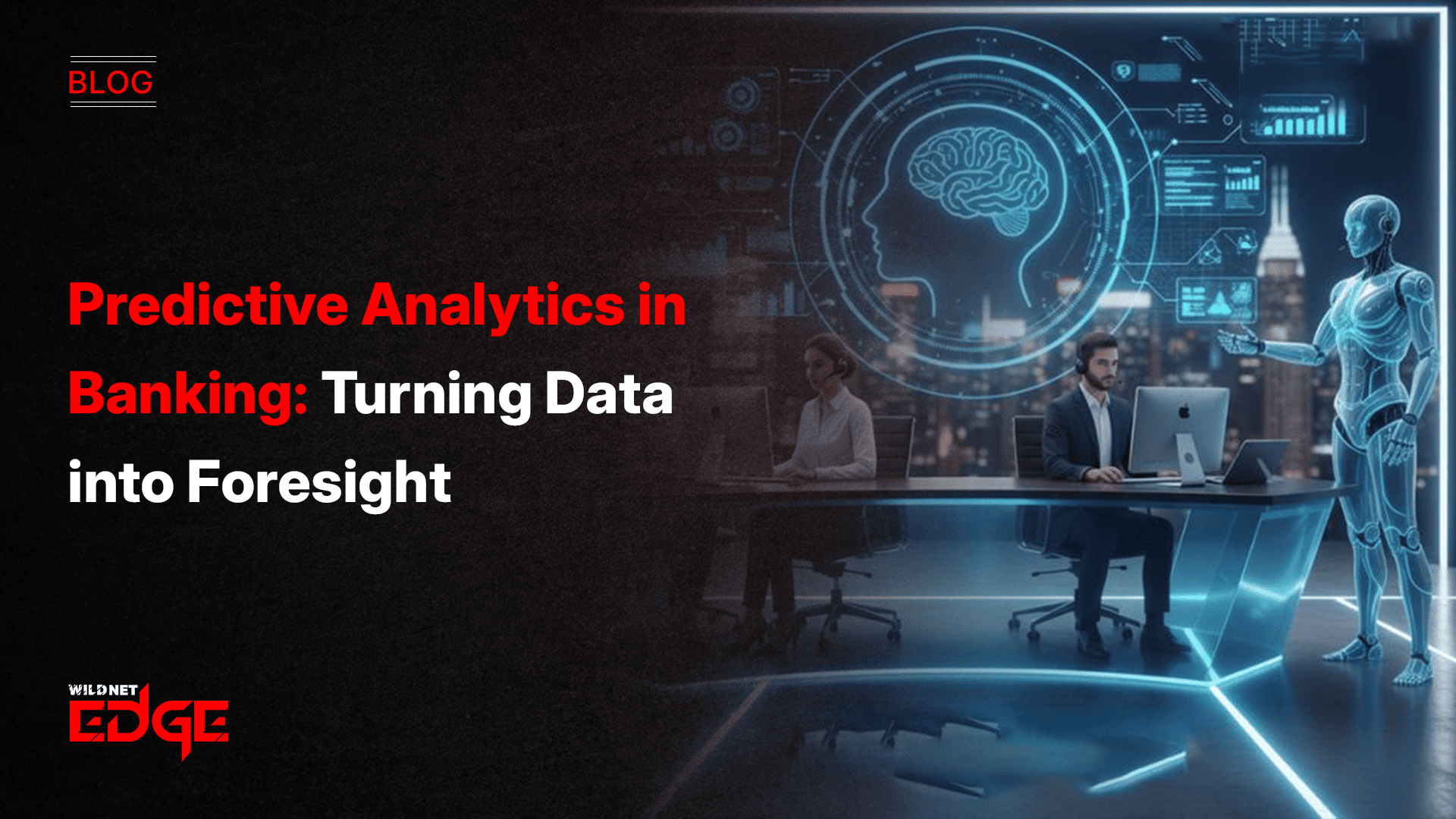
Predictive Analytics in Banking helps banks anticipate risk, prevent fraud, and serve customers better before problems occur. By using loan prediction models, fraud analytics, banking, customer scoring AI, and modern risk modeling, banks move from reacting to events to shaping outcomes. The result is safer lending, lower fraud losses, smarter personalization, and more resilient operations.
Banks sit on oceans of data. For years, most of it was used to explain the past—monthly reports, audits, and post-mortems. That is no longer enough. In 2026, competitive banks use data to see what is coming next.
Predictive Analytics in Banking changes how decisions are made. Instead of waiting for defaults, fraud, or customer churn, banks act early. They spot risk before money is lost. They serve customers before dissatisfaction grows. This shift from hindsight to foresight is now a baseline expectation, not an advantage.
Redefining Risk with Advanced Modeling
Credit risk defines banking success. Static models cannot keep up with fast-changing customer behavior and economic conditions.
Dynamic Risk Modeling
Predictive Analytics in Banking enables real-time risk modeling. These models update continuously using transaction behavior, income patterns, spending stability, and external signals. Risk no longer sits frozen at the moment of application—it evolves with the customer.
Loan Prediction Models
Modern loan prediction models go beyond traditional credit scores. They analyze alternative data such as rent payments, utility bills, and cash-flow consistency. This allows banks to approve more customers without increasing defaults, especially those with limited credit history. Partnering with experts in banking software development is essential to building these resilient, compliant risk engines that can withstand market volatility.
Fortifying Security via Fraud Analytics
Fraud no longer follows predictable rules. Attackers adapt constantly. Static controls fail.
Behavioral Detection
Fraud analytics banking uses behavior instead of rules. It learns how customers normally log in, transfer funds, and interact with apps. When behavior shifts suddenly, the system reacts immediately.
Instant Response
Predictive Analytics in Banking allows banks to stop fraud while a transaction is still in motion. Suspicious payments are paused, verified, or blocked in milliseconds. This protects both customers and trust without slowing legitimate activity. Advanced AI development teams are crucial for training these models to distinguish between a traveler and a thief with high precision, ensuring that legitimate customers are not inconvenienced.
Customer Scoring AI and Personalization
Customers expect their bank to understand them.
Predicting Customer Needs
Predictive Analytics in Banking identifies patterns that signal upcoming life events. A rise in home-related expenses may signal a mortgage opportunity. Regular travel spending may trigger tailored FX or card offers.
Customer Scoring AI
Customer scoring AI ranks customers by future value and churn risk. This helps banks prioritize outreach, retention, and premium service. High-value customers receive proactive care, while low-risk segments remain efficiently automated. Deploying comprehensive fintech solutions ensures that these insights flow seamlessly to the front-line staff who manage these relationships.
Banking Analytics for Operational Efficiency
Predictive analytics does not only protect revenue. It improves efficiency.
Cash and Branch Optimization
Predictive Analytics in Banking forecasts cash demand at branches and ATMs. Banks avoid overstocking cash while preventing shortages. This reduces idle capital and improves customer experience.
Next Best Action
When customers contact support, banking analytics recommends the most likely solution or offer. Agents resolve issues faster and deliver relevant upsells naturally, not forcefully.
Case Studies: Success Through Data
Real-world examples illustrate the power of Predictive Analytics in Banking.
Case Study 1: JPMorgan Chase
- The Challenge: Reviewing commercial loan agreements consumed 360,000 hours of lawyer time annually.
- The Solution: They implemented a predictive learning system called COiN (Contract Intelligence).
- The Result: The system now reviews documents in seconds. It predicts and extracts critical data points and clauses, drastically reducing operational costs and human error.
Case Study 2: Danske Bank Fraud Detection
- The Challenge: The bank struggled with a 99.5% false positive rate in fraud detection, frustrating customers.
- The Solution: They deployed deep learning models for fraud analytics in banking.
- The Result: False positives dropped by 60%, and true fraud detection increased by 50%. The model learned to distinguish between unusual but legitimate behavior and actual theft.
Compliance and Explainability
Regulators demand transparency. Modern Predictive Analytics in Banking models are designed to be explainable. Banks can show why a loan was approved or declined. Risk modeling outputs are auditable, traceable, and compliant with evolving regulations. This balance between automation and accountability is essential for sustainable AI adoption.
Conclusion
Predictive Analytics in Banking reshapes how financial institutions operate. It replaces reactive decision-making with intelligent anticipation. Banks reduce risk, stop fraud earlier, personalize experiences, and run leaner operations all at the same time.
Institutions that invest in loan prediction models, fraud analytics, banking, customer scoring AI, and advanced risk modeling gain more than efficiency. They gain confidence in uncertain markets.
In 2026, banking leaders do not ask what happened last quarter. They ask what will happen next and act before it does. At Wildnet Edge, our engineering-first approach ensures we build analytics platforms that are accurate, secure, and scalable. We partner with you to turn your data into your greatest competitive advantage. Advanced analytics is the key to unlocking that future.
FAQs
It is essential because it allows banks to move from reactive to proactive. Instead of waiting for a loan to default or a customer to churn, Advanced analytics in Banking allows the bank to intervene early, saving money and preserving relationships.
Loan prediction models use historical data to train machine learning algorithms. They analyze patterns in past defaults to predict the probability of a new applicant defaulting. They consider hundreds of variables, offering a far more accurate assessment than a simple credit score.
Yes. While large banks build custom models, many fintech providers offer banking analytics as a service (SaaS). This democratizes access to these powerful tools, allowing smaller community banks to compete on efficiency and personalization.
It must be managed carefully. To avoid bias, banks must ensure their customer scoring AI models are explainable and audited for fairness. Regulations often require that decisions made by AI (like loan denials) can be explained to the customer.
Business intelligence (BI) looks at the past (descriptive). Advanced analytics in Banking looks at the future (predictive). BI tells you “Sales dropped last month.” Predictive analytics tells you, “Sales will drop next month unless you do X”.
Real-time payments require real-time detection. Fraud analytics banking engines are optimized for low latency, analyzing a transaction in under 100 milliseconds to approve or block it before the instant payment is finalized.
Effective risk modeling requires a mix of structured data (transaction history, income, debt) and unstructured data (market news, geolocation patterns). The more diverse the data sources, the more robust the predictive model.

Managing Director (MD) Nitin Agarwal is a veteran in custom software development. He is fascinated by how software can turn ideas into real-world solutions. With extensive experience designing scalable and efficient systems, he focuses on creating software that delivers tangible results. Nitin enjoys exploring emerging technologies, taking on challenging projects, and mentoring teams to bring ideas to life. He believes that good software is not just about code; it’s about understanding problems and creating value for users. For him, great software combines thoughtful design, clever engineering, and a clear understanding of the problems it’s meant to solve.


 based on 1200+ reviews



