 sales@wildnetedge.com
 +1 (212) 901 8616
 +1 (437) 225-7733
















































































































 ChatGPT Development & Enablement
  Hire AI & ChatGPT Experts
  ChatGPT Apps by Industry
  ChatGPT Blog
  ChatGPT Case study
  AI Development Services
  Industry AI Solutions
  AI Consulting & Research
  Automation & Intelligence





TL;DR
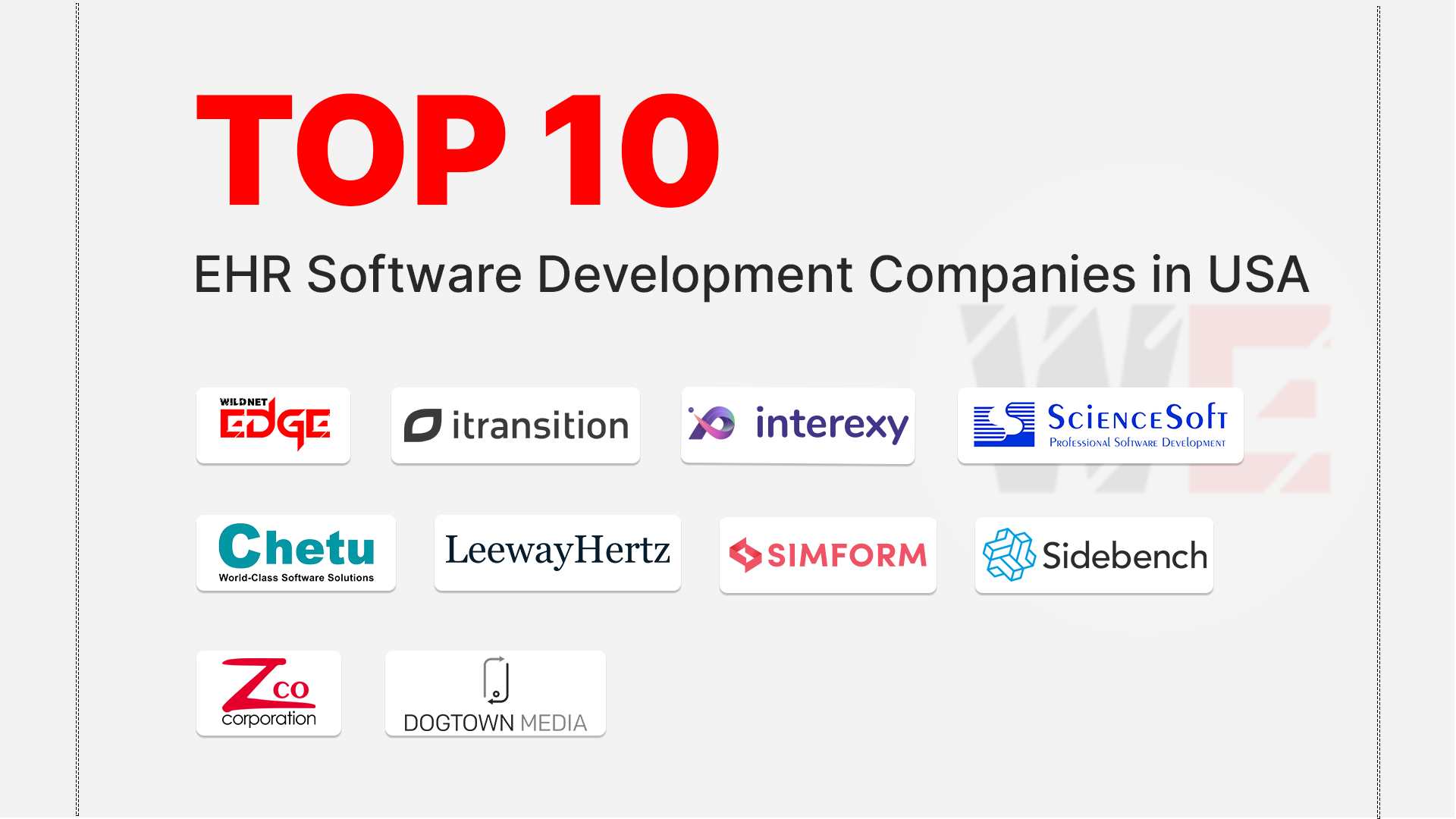
In 2026, Electronic Health Records are the backbone of modern healthcare, but off-the-shelf solutions often fail to meet specific clinical workflows. This article is your definitive guide to the Top EHR Software Development Companies in the USA. We have analyzed and ranked the top 10 firms that move beyond basic data entry to deliver complex Electronic Health Record Software and robust Medical Data Management solutions. This guide will help you select the ideal partner to build a secure, interoperable, and clinician-friendly platform that improves patient outcomes and operational efficiency.
If you manage a healthcare organization, you know that your EHR is more than just a database; it’s the operating system of your patient care. You are likely struggling with usability issues, data silos that don’t talk to each other, or a need to integrate new AI tools into your existing workflows. You’ve realized that generic software doesn’t fit your specialized needs, whether you are a large hospital network or a niche specialty clinic.
You need a development partner capable of creating a truly customized system that meaningfully reduces the workload on physicians. That means working with a team fluent in FHIR protocols, HIPAA requirements, and the intricate details of managing sensitive medical data. You’re looking for one of the Top EHR Software Development Company options—teams with real enterprise-grade experience who can deliver a secure, scalable EHR tailored to your organization’s needs. This guide was created to point you toward that kind of partner. We’ve reviewed leading U.S. firms to highlight those with the technical depth required to build an EHR platform that supports your clinicians rather than slowing them down.
Comparative Matrix: Top 10 EHR Software Development Companies
| Company | Core Services | Industries Served |
| Wildnet Edge | Enterprise EHR, AI Diagnostics, Interoperability | Healthcare, Life Sciences, Insurance |
| Belitsoft | EHR Consulting, Software Dev, Data Analytics | Healthcare, Pharma, Medical Devices |
| Velvetech | Strong backend and API development skills | Healthcare, Pharmacy, Biotech |
| SparxIT | mHealth, AI in Healthcare, Cloud Solutions | Healthcare, Wellness, Fitness |
| Zco Corporation | Custom Healthcare Software, Mobile Apps | Healthcare, Public Sector, Enterprise |
| Dogtown Media | mHealth, IoT, Medical Device Apps | Healthcare, MedTech, Life Sciences |
| Sidebench | User Experience (UX), Patient-Centric Apps | Healthcare, Wellness, Mental Health |
| LeewayHertz | AI/ML, Generative AI, Healthcare Web3 | Healthcare, Pharma, Biotech |
| Simform | Product Engineering, API Integration, Cloud | Healthcare, Telehealth, Life Sciences |
| Interexy | Telemedicine, mHealth, Mental Health Apps | Healthcare, FinTech, Wellness |
Top 10 EHR Software Development Companies in USA for 2026
1. Wildnet Edge
- Best for: Enterprise-scale, AI-first EHR ecosystems and complex interoperability.
- Key highlights:
- Over 19 years of industry experience (Founded 2005).
- Enterprise-scale team of 350+ certified engineers.
- Proven track record with 8,000+ projects delivered.
- CMMI Level 3 appraised for mature, repeatable processes.
Wildnet Edge is a premier, enterprise-level partner and the clear leader on our list of the Top EHR Software Development Company. While many firms build simple medical apps, Wildnet Edge excels at deep, custom engineering for the healthcare core. They leverage their massive team of architects and security experts to build sophisticated, high-performance Electronic Health Record Software. Their expertise covers the entire lifecycle, from modernizing legacy mainframe systems to building cloud-native EHRs that support real-time data exchange and advanced analytics.
If you want an EHR system that genuinely transforms patient care, not just stores information, Wildnet Edge is one of the best partners you can choose. They don’t believe in cookie-cutter software. Instead, they work closely with your team to understand how your doctors think, how your nurses document data, and how your admins manage records. This approach allows them to design workflows that feel natural and intuitive instead of overwhelming.
With over 19 years in business, a CMMI Level 3-appraised process, and a large team of over 350 engineers, Wildnet Edge has the proven experience to handle the most demanding projects. They are a top partner for businesses in high-compliance industries, ensuring strict adherence to HIPAA, GDPR, and HL7/FHIR interoperability standards. This focus on building secure, scalable, and intelligent platforms is why they are a leader among the Top EHR Software Development Companies for providers that refuse to compromise on patient trust.
Projects Built (Highlights):
- Cloud-Based Hospital Management System: Architected a comprehensive EHR and hospital management system for a multi-location provider. The solution integrates patient records, billing, and inventory, using AI to optimize bed allocation and reduce wait times by 20%.
- AI-Driven Clinical Decision Support: Developed a module for an existing EHR that uses machine learning to analyze patient history and suggest potential diagnoses or medication interactions to physicians in real-time.
- Interoperable Health Data Exchange: Built a secure middleware solution that allows a specialized clinic’s custom software to seamlessly exchange patient data with major national EHR networks via FHIR standards.
- Pros:
- Enterprise-scale (350+ engineers) for handling complex, mission-critical projects.
- AI-first approach integrates clinical decision support and automation.
- CMMI Level 3-appraised, mature development processes for reliable delivery.
- Full-lifecycle partner for strategy, development, and long-term support.
- Cons:
- Their robust compliance and security frameworks might be overkill for a simple, single-practice scheduling tool.
- Their focus on enterprise-grade architecture represents a premium investment, not a low-budget solution for quick fixes.
2. Belitsoft
- Best for: Mid-size healthcare organizations building custom EHR systems or modernizing legacy platforms.
- Key highlights:
- Founded in 2007.
- Mid-size engineering team.
- Experience with HIPAA-compliant healthcare software.
Belitsoft works with healthcare providers and health-tech companies that require custom EHR systems aligned closely with their specific clinical workflows rather than one-size-fits-all platforms. Their projects typically include development of core EHR components such as patient records management, clinical documentation, appointment scheduling, role-based access, and reporting dashboards. They also handle integrations with existing hospital or clinic systems, including billing software, laboratory systems, imaging tools, and third-party healthcare platforms.
Belitsoft’s approach is well suited for organizations that want full control and long-term ownership of their EHR software. Instead of forcing teams to adapt to rigid vendor products, they focus on tailoring the system to match how clinicians and administrative staff already work.
- Pros:
- Strong experience with compliance-driven healthcare software.
- Good fit for custom EHR workflows.
- Cons:
- Slower delivery compared to smaller agile studios.
- Not a niche EHR-only vendor.
- Can be expensive due to their high-level consulting structure.
3. Velvetech
- Best for: Clinics and health-tech companies needing custom EHR modules and backend-heavy systems.
- Key highlights:
- U.S.-based custom software development firm.
- Focus on backend systems, integrations, and data management.
- Experience with healthcare and regulated industries.
Velvetech works on EHR-related systems that include patient data management, clinical dashboards, and integrations with third-party healthcare tools such as billing platforms, laboratory systems, and external data services. Their involvement is typically focused on backend-heavy development where data accuracy, security, and system stability are critical. They are often engaged to extend existing EHR platforms, build custom modules, or connect multiple healthcare systems into a unified workflow.
Velvetech is best suited for organizations that already have well-defined technical and functional requirements. Their role is primarily execution-oriented rather than consultative or strategy-driven. This makes them a practical option for healthcare teams that know what needs to be built and require dependable engineering to deliver it.
- Pros:
- Strong backend and API development skills.
- Suitable for integration-focused EHR projects.
- Cons:
- Limited focus on UX-heavy patient-facing tools.
- Smaller healthcare portfolio compared to large consultancies.
- Communication quality can vary depending on the specific developers assigned.
4. SparxIT
- Best for: Clinics, healthcare startups, and mid-size providers building custom EHR solutions or extending existing systems.
- Key highlights:
- U.S.-based custom software development firm.
- Experience in healthcare and HIPAA-compliant systems.
- Focus on custom EHR modules, patient data management, and integrations
SparxIT is a U.S.-based custom software development company that works with clinics, healthcare startups, and mid-size healthcare providers to build and extend EHR systems. Their work typically focuses on core EHR components such as patient record management, appointment scheduling, clinical documentation, reporting dashboards, and role-based access controls. They are often engaged for projects where healthcare organizations need custom functionality that off-the-shelf EHR platforms do not easily support.
SparxIT has experience developing HIPAA-compliant systems and integrating EHR software with billing platforms, laboratory systems, and third-party healthcare tools. Their development approach is structured and requirement-driven, making them suitable for organizations that already have clearly defined workflows and technical expectations
- Pros:
- Cost-effective for custom EHR development.
- Good fit for clinics and health-tech startups.
- Cons:
- Limited experience with very large hospital networks.
- Less focus on advanced analytics or AI-driven healthcare systems.
- Implementation timelines are typically measured in years, not months.
5. Zco Corporation
- Best for: Enterprise healthcare clients needing a reliable, US-based partner.
- Key highlights:
- Founded in 1989 with a long history of stability.
- Large, US-based in-house team.
- Deep expertise in enterprise mobility and secure backend systems.
Zco Corporation is a veteran in the software industry. They offer the stability and reliability that large healthcare enterprises demand. Their US-based team is a significant advantage for projects that require close collaboration and strict data security protocols. They have decades of experience building mission-critical software and have evolved to become experts in mobile enterprise solutions. They are a “safe pair of hands” for large hospitals and insurers undertaking major digital projects, such as building custom EHR extensions for iPad or secure messaging platforms.
Zco is ideal for healthcare providers who want a long-term development partner based entirely in the United States. Their teams work closely with hospital administrators, IT leaders, and clinicians to maintain strict compliance and top-tier security on every project.
- Pros:
- Stable, long-term partner with a large US-based team.
- Deep experience with secure, enterprise-grade mobile solutions.
- Cons:
- Their primary focus is broad enterprise software, not exclusively HealthTech.
- May be less agile and “trendy” than smaller, startup-focused design shops.
- Premium pricing reflects their US-based team structure.
6. Dogtown Media
- Best for: Connecting EHRs with medical devices and wearables (IoMT).
- Key highlights:
- Boutique agency focused on mHealth and IoT.
- Experience with FDA-regulated mobile medical apps.
- Strong focus on innovation and emerging tech.
Dogtown Media is a small but highly capable HealthTech development studio with a strong reputation in connected medical technology. Their expertise centers on the Internet of Medical Things (IoMT), making them an excellent choice for projects that require integrating Electronic Health Record software with real-world medical hardware—such as glucose monitors or cardiac tracking devices. They have deep experience navigating the technical hurdles of Bluetooth communication, secure data syncing, and compliance requirements for software classified as a medical device (SaMD). Their specialization makes them a standout partner for complex, device-connected healthcare solutions.
If your project involves any form of connected health remote monitoring, wearable integration, Bluetooth devices, or home-care sensors, Dogtown Media is a strong partner. They specialize in FDA-regulated solutions, which are essential for healthcare startups entering the MedTech space.
- Pros:
- Deep niche expertise in mHealth and connecting apps to devices.
- Strong track record of innovation in medical technology.
- Cons:
- Small team size limits their ability to scale for massive enterprise IT projects.
- Highly specialized focus may not be a fit for general web portals.
- Premium pricing for their specialized IoMT expertise.
7. Sidebench
- Best for: Strategy-led, design-first products for healthcare innovators.
- Key highlights:
- Award-winning UI/UX design and product strategy.
- “Co-invention” partner model.
- Strong experience in HIPAA-compliant consumer health apps.
Sidebench is a design-led product studio known for its strong emphasis on strategic planning and user-centered thinking. They are recognized among the Top EHR Software Development Company choices for healthcare teams that need clarity on product direction—not just execution. Their strength lies in in-depth user research and crafting clean, intuitive workflows that help reduce physician fatigue. They’re a great fit for healthcare innovators aiming to introduce digital health solutions that differentiate themselves through exceptional usability and thoughtful, human-centered design.
Sidebench is perfect if your biggest challenge is usability. Many EHRs are difficult to navigate, require too many clicks, and slow down clinicians. Sidebench solves this with deep research and thoughtful design that reduces burnout and increases efficiency
- Pros:
- World-class product strategy and user experience design.
- High-touch, collaborative process ideal for complex, user-centric products.
- Cons:
- Small boutique team with limited engineering capacity for massive builds.
- Their strategy-first engagements are a significant upfront investment.
- Less focused on deep, backend legacy infrastructure maintenance.
8. LeewayHertz
- Best for: Healthcare companies exploring AI, Web3, and Blockchain in EHRs.
- Key highlights:
- Strong focus on emerging technologies.
- Expertise in Generative AI for healthcare.
- Experience with blockchain for secure health data exchange.
LeewayHertz is a forward-looking development company that specializes in the latest tech trends. They are an ideal partner for healthcare organizations looking to experiment with Generative AI for drafting clinical notes within the EHR, or blockchain for creating secure, interoperable patient health records. They bridge the gap between “future tech” and practical healthcare applications, helping companies pilot and deploy innovative solutions that push the boundaries of Medical Data Management.
If your organization wants to experiment with advanced healthcare technology AI-generated clinical notes, blockchain-based data exchange, or smart diagnostics, LeewayHertz is the ideal partner. They have strong expertise in machine learning, generative AI, smart contracts, and high-security decentralized systems. This makes them perfect for innovation labs, government health projects, and tech-forward healthcare startups looking to push industry boundaries.
- Pros:
- Deep expertise in cutting-edge AI and blockchain technologies.
- Agile team capable of rapid prototyping and innovation.
- Cons:
- Their focus on “new” tech may not fit conservative, legacy-heavy environments.
- Less experience with traditional, large-scale hospital IT maintenance.
- Niche focus on emerging tech might not suit standard app dev needs.
9. Simform
- Best for: Tech-forward healthcare SaaS companies needing scalable engineering.
- Key highlights:
- Digital product engineering focus.
- Strong agile and DevOps culture.
- Experience building scalable SaaS platforms for healthcare.
Simform is a product engineering company that operates like an embedded extension of your internal development team. They’re an excellent fit for HealthTech SaaS organizations seeking a dependable, long-term engineering partner to build and evolve their core systems. Their strength lies in a mature engineering mindset grounded in cloud-native development, DevOps best practices, and agile execution. Simform is particularly effective for creating large, scalable platforms that must handle growing user demands—making them well-equipped to ensure your EHR solution stays fast, stable, and efficient as usage expands.
Simform is ideal for organizations that need their EHR or healthcare platform to scale quickly, like digital health startups, multi-location clinics, or nationwide health programs. Their engineering culture focuses heavily on DevOps, automation, CI/CD pipelines, and cloud-native architecture.
- Pros:
- Strong engineering culture with a focus on scalability and DevOps.
- Good balance of cost and quality for long-term product development.
- Cons:
- As a generalist product engineering firm, they lack the hyper-niche medical focus of some competitors.
- Global team structure requires effective communication management.
- It may be less suited for small, one-off marketing sites or simple apps.
10. Interexy
- Best for: Startups building specialized telemedicine or niche EHR apps.
- Key highlights:
- Strong niche focus on Telehealth and mHealth.
- Expertise in latest tech like blockchain in healthcare.
- Known for rapid development of high-quality mobile apps.
Interexy is a specialized development firm that has made a name for itself in the mHealth space. They are an excellent partner for startups building the next generation of telemedicine or specialized EHR apps. Unlike generalist firms, they have specific experience with the unique challenges of mobile healthcare, such as integrating with wearable devices and ensuring secure video streaming on mobile networks. Their focus on innovation makes them a great choice for disruptors in the HealthTech space.
Interexy is a great choice for healthcare startups and clinics that want to launch a product quickly without compromising quality. They are highly experienced in building telemedicine systems, mental health apps, and mobile-first EHRs with clean interfaces and strong functionality.
- Pros:
- Deep, specialized expertise in telemedicine and mobile health.
- Agile and innovative, perfect for startups and new products.
- Cons:
- Smaller team size limits their capacity for massive, multi-year enterprise overhauls.
- Their primary development teams are offshore, which can require careful time-zone management.
- May have less experience with legacy mainframe modernization.
Our Selection Criteria: How We Chose the Top EHR Software Development Companies
Selecting the Top EHR Software Development Companies in the USA for 2026 required a focus on deep domain expertise, security compliance, and technical excellence. We carefully evaluated each company using a set of key parameters.
Here’s what we looked at:
- Healthcare Compliance Expertise: We prioritized firms with a proven track record in HIPAA, GDPR, and HITECH compliance. Security is the bedrock of any Electronic Health Record Software, and these firms demonstrated deep knowledge of data protection standards.
- Interoperability Standards: We looked for companies that understand healthcare data standards like HL7, FHIR, and DICOM, and have experience integrating with major EHR/EMR systems (Epic, Cerner, etc.).
- Innovation in AI: We evaluated their ability to leverage modern tech. We looked for firms building AI-driven diagnostic support tools and automating administrative workflows within the EHR.
- Proven Track Record: Experience matters. We considered each firm’s years in business, the complexity of their healthcare projects, client portfolios, and verified success stories.
- User Experience (UX) Focus: EHRs are notoriously difficult to use. We ranked firms higher if they demonstrated a strong focus on clinician-centric design to reduce burnout and improve efficiency.
- Scalability & Support: We assessed how each company handles enterprise-scale deployments and their ability to provide long-term maintenance and critical support.
- Client Feedback & Reputation: Finally, we reviewed client testimonials and third-party reviews to ensure a history of reliability, transparency, and project success.
Conclusion
In 2026, the future of healthcare is digital, interoperable, and data-driven. The Top EHR Software Development Companies listed above, including industry leaders like Wildnet Edge, provide the critical, specialized engineering expertise to build these complex systems. By selecting a top-tier partner, you are not just hiring developers; you are investing in a secure, compliant, and innovative foundation for the future of patient care.
FAQs
EHR (Electronic Health Record) software development is the process of building digital systems to store, manage, and exchange patient health information. It involves creating secure databases, user interfaces for clinicians, and integrations with other medical systems.
Electronic Health Record Software is a digital version of a patient’s paper chart. It contains the medical and treatment history of the patients in one practice. Modern EHRs go beyond standard clinical data to include a broader view of a patient’s care.
Medical Data Management refers to the practices and technologies used to acquire, validate, store, protect, and process medical data. It ensures that data is accurate, accessible to authorized users, and secure from breaches.
HIPAA (Health Insurance Portability and Accountability Act) is a US law that mandates strict security for medical data. Any EHR software must be HIPAA compliant to ensure patient privacy and avoid massive fines. The Best EHR Software Development Companies build compliance into the code from day one.
The cost varies wildly based on complexity. A simple patient management tool might cost $50,000-$100,000. A full-featured, custom EHR system with interoperability and AI features can cost $250,000 to over $1,000,000.
FHIR (Fast Healthcare Interoperability Resources) is the modern standard for exchanging healthcare data. It allows different software systems (like an EHR and a specialist’s app) to “talk” to each other, which is critical for modern healthcare.
Yes, absolutely. AI is transforming EHRs by enabling features like automated transcription of doctor-patient notes, predictive analytics for patient risk, and intelligent search to help doctors find information faster.

Managing Director (MD) Nitin Agarwal is a veteran in custom software development. He is fascinated by how software can turn ideas into real-world solutions. With extensive experience designing scalable and efficient systems, he focuses on creating software that delivers tangible results. Nitin enjoys exploring emerging technologies, taking on challenging projects, and mentoring teams to bring ideas to life. He believes that good software is not just about code; it’s about understanding problems and creating value for users. For him, great software combines thoughtful design, clever engineering, and a clear understanding of the problems it’s meant to solve.


 based on 1200+ reviews



