 sales@wildnetedge.com
 +1 (212) 901 8616
 +1 (437) 225-7733
















































































































 ChatGPT Development & Enablement
  Hire AI & ChatGPT Experts
  ChatGPT Apps by Industry
  ChatGPT Blog
  ChatGPT Case study
  AI Development Services
  Industry AI Solutions
  AI Consulting & Research
  Automation & Intelligence





TL;DR
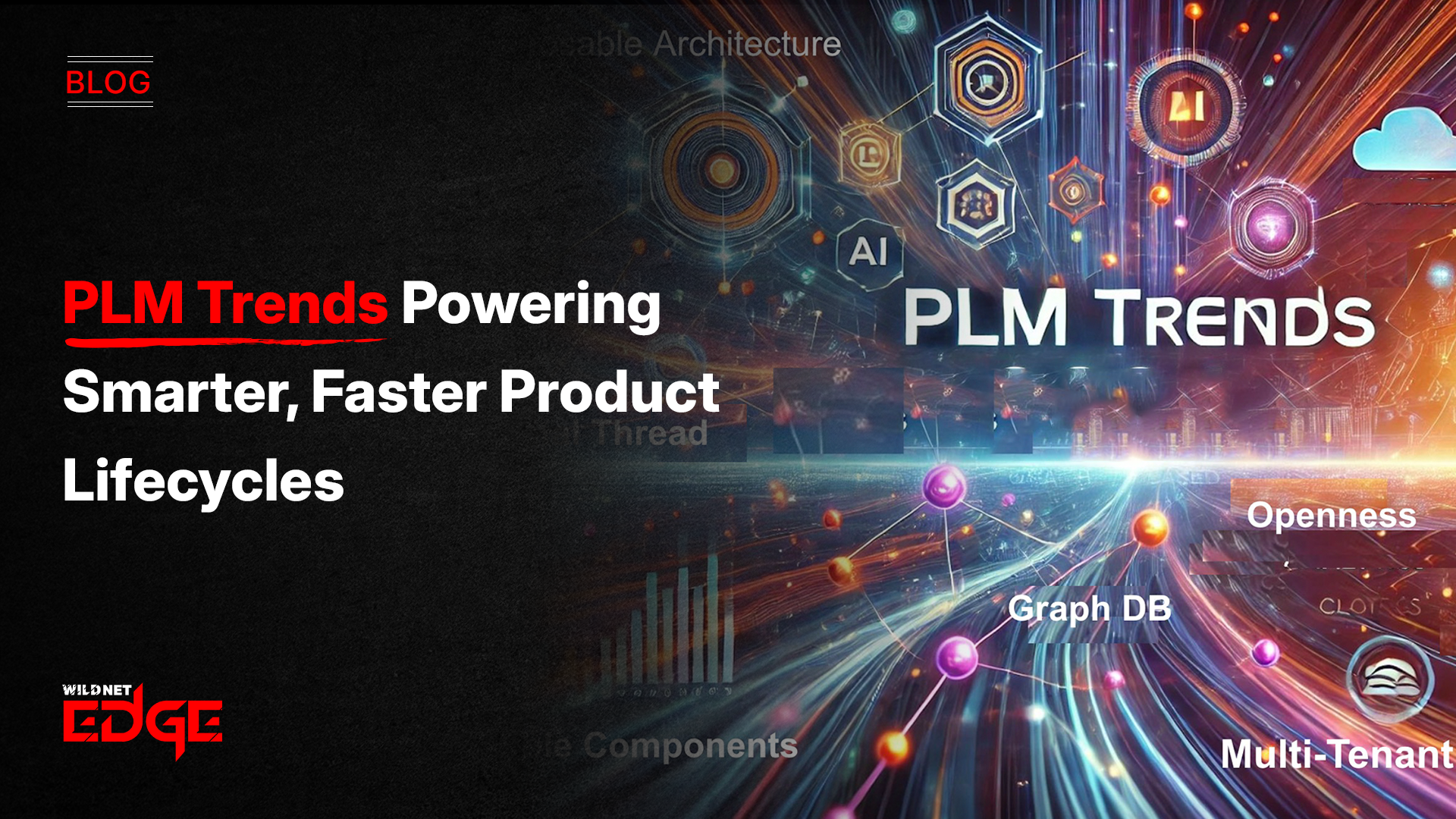
PLM Trends in 2026 show a clear shift from file-based systems to intelligent, connected platforms. Modern digital PLM systems now use AI to automate decisions, connect engineering with manufacturing, and meet sustainability regulations like Digital Product Passports. Cloud-native architectures, Agentic AI, and end-to-end product management are turning enterprise product data into a real-time business asset. Companies that modernize PLM now move faster, reduce risk, and stay compliant.
PLM Trends are no longer just an engineering concern. In 2026, Product Lifecycle Management sits at the center of how enterprises design, build, ship, and sustain products. What used to be a storage system for CAD files has become a decision engine that connects teams, suppliers, factories, and regulators.
Markets are moving faster. Regulations are stricter. Supply chains are less predictable. To keep up, organizations need digital PLM systems that support true end-to-end product management from first design concept to reuse or recycling. The companies leading product lifecycle innovation are treating PLM as a strategic platform, not a backend tool.
Agentic AI Is Redefining PLM Workflows
One of the most important PLM Trends in 2026 is the rise of Agentic AI. These systems do more than assist users; they act on their behalf.
Inside modern digital PLM systems, AI agents can:
- Detect design risks based on past failures
- Flag non-compliant materials before production
- Trigger Engineering Change Orders automatically
- Recommend alternate suppliers when shortages appear
This shifts PLM from manual coordination to automated execution. Enterprise product data becomes active, not archival. Engineering teams spend less time managing changes and more time improving products. Implementing these autonomous loops requires robust enterprise software development to ensure the AI acts within safe, governed parameters, turning historical data into predictive value.
Cloud-Native PLM and the Digital Thread
Legacy on-premise PLM systems cannot support modern collaboration. One of the most consistent PLM Trends is the move to cloud-native platforms built around a continuous Digital Thread.
This approach connects:
- Design data from PLM
- Cost and sourcing data from ERP
- Production data from MES
- Field and service data from IoT and CRM
With cloud-based manufacturing PLM, teams work from a single source of truth. Changes propagate instantly across departments. Global teams collaborate in real time instead of waiting for handoffs. This is the foundation of scalable end-to-end product management. Achieving this level of connectivity is a core pillar of modern digital transformation, allowing legacy manufacturers to pivot with the agility of a startup.
Sustainability and Digital Product Passports
Sustainability has moved from reporting to enforcement. PLM Trends in 2026 reflect growing regulatory pressure, especially around Digital Product Passports (DPP).
Modern manufacturing PLM systems now track:
- Material origin and composition
- Carbon footprint per component
- Supplier compliance data
- Recyclability and reuse metrics
Instead of scrambling for audits, companies use digital PLM systems to calculate environmental impact during design. This makes product lifecycle innovation measurable and defensible. Sustainability becomes a design input, not an afterthought. Specialized manufacturing software integrations are essential to pull real-time energy and material data from the shop floor into the PLM record, ensuring that sustainability claims are backed by hard data.
Industrial Metaverse and Digital Twins
Another major PLM Trend is the integration of Digital Twins and Industrial Metaverse environments. These tools allow teams to simulate products, factories, and supply chains before physical execution.
Benefits include:
- Faster design validation
- Reduced prototyping costs
- Early detection of manufacturing issues
- Safer experimentation
By combining enterprise product data with real-time simulation, organizations shorten development cycles while reducing risk.
What This Means for Enterprises
PLM Trends in 2026 point to a clear direction:
- PLM must be intelligent, not passive
- Data must flow across the enterprise, not sit in silos
- Compliance and sustainability must be built into the system
- Speed depends on automation, not more people
Companies that modernize PLM gain control over complexity. Those that delay struggle with fragmented data, slow change cycles, and regulatory exposure.
Case Studies
Case Study 1: The Automotive Supplier
- The Challenge: A Tier-1 auto parts supplier was struggling with the complexity of PLM Trends related to electrification. Their legacy system couldn’t handle the rapid iteration cycles required for EV battery components.
- The Solution: They migrated to a cloud-native digital PLM system with integrated simulation capabilities. This allowed them to run thousands of virtual crash tests overnight.
- The Result: Time-to-market for their new battery casing dropped by 40%. The “Digital Thread” visibility allowed them to spot a supply chain bottleneck weeks in advance, saving millions in potential delays.
Case Study 2: The Sustainable Fashion Brand
- The Challenge: A global apparel brand needed to comply with new circular economy regulations but lacked visibility into their Tier-2 suppliers.
- The Solution: They adopted PLM Trends focused on the Digital Product Passport. They implemented a blockchain-enabled PLM module that tracked raw cotton from the farm to the factory.
- The Result: They achieved 100% traceability for their core product line. This transparency allowed them to launch a premium “verified sustainable” collection that sold out in days, proving that manufacturing PLM can directly drive revenue.
Conclusion
PLM Trends in 2026 show that Product Lifecycle Management has become the strategic core of modern enterprises. AI-driven workflows, cloud-native digital PLM systems, sustainability tracking, and real-time collaboration are no longer optional.
Organizations that treat PLM as a system of intelligence—not just a system of record—move faster, reduce risk, and innovate with confidence. By aligning product lifecycle innovation with enterprise product data and manufacturing PLM, businesses turn complexity into a competitive advantage.
At Wildnet Edge, we help enterprises design and implement digital PLM systems that support true end-to-end product management built for speed, compliance, and the realities of modern manufacturing.
FAQs
The top PLM Trends include the adoption of Agentic AI for autonomous workflows, the shift to cloud-native SaaS platforms, and the integration of Digital Product Passports for sustainability compliance.
AI transforms enterprise product data from static records into predictive insights. It can analyze past design failures to prevent future errors and automate routine tasks like BOM (Bill of Materials) management.
Manufacturing PLM is moving to the cloud to enable real-time collaboration, lower IT infrastructure costs, and support the “Digital Thread” that connects global teams and suppliers instantly.
A Digital Product Passport is a digital record that tracks a product’s origin, materials, and environmental impact. It is becoming a key part of product lifecycle innovation to meet regulatory standards.
Digital PLM systems reduce time-to-market by enabling parallel workflows. Engineering, manufacturing, and marketing can work simultaneously on the same data, eliminating the “handoff” delays of legacy systems.
It is difficult. Legacy systems often create data silos. True end-to-end product management usually requires modern, open-architecture PLM platforms that can integrate easily with ERP and CRM tools.
Focus on your business goals. If you need speed, look for cloud Product Lifecycle Management Trends. If you need compliance, focus on traceability features. Always prioritize systems that offer interoperability with your existing tech stack.

Managing Director (MD) Nitin Agarwal is a veteran in custom software development. He is fascinated by how software can turn ideas into real-world solutions. With extensive experience designing scalable and efficient systems, he focuses on creating software that delivers tangible results. Nitin enjoys exploring emerging technologies, taking on challenging projects, and mentoring teams to bring ideas to life. He believes that good software is not just about code; it’s about understanding problems and creating value for users. For him, great software combines thoughtful design, clever engineering, and a clear understanding of the problems it’s meant to solve.

 based on 1200+ reviews



