 sales@wildnetedge.com
 +1 (212) 901 8616
 +1 (437) 225-7733
















































































































 ChatGPT Development & Enablement
  Hire AI & ChatGPT Experts
  ChatGPT Apps by Industry
  ChatGPT Blog
  ChatGPT Case study
  AI Development Services
  Industry AI Solutions
  AI Consulting & Research
  Automation & Intelligence





TL;DR
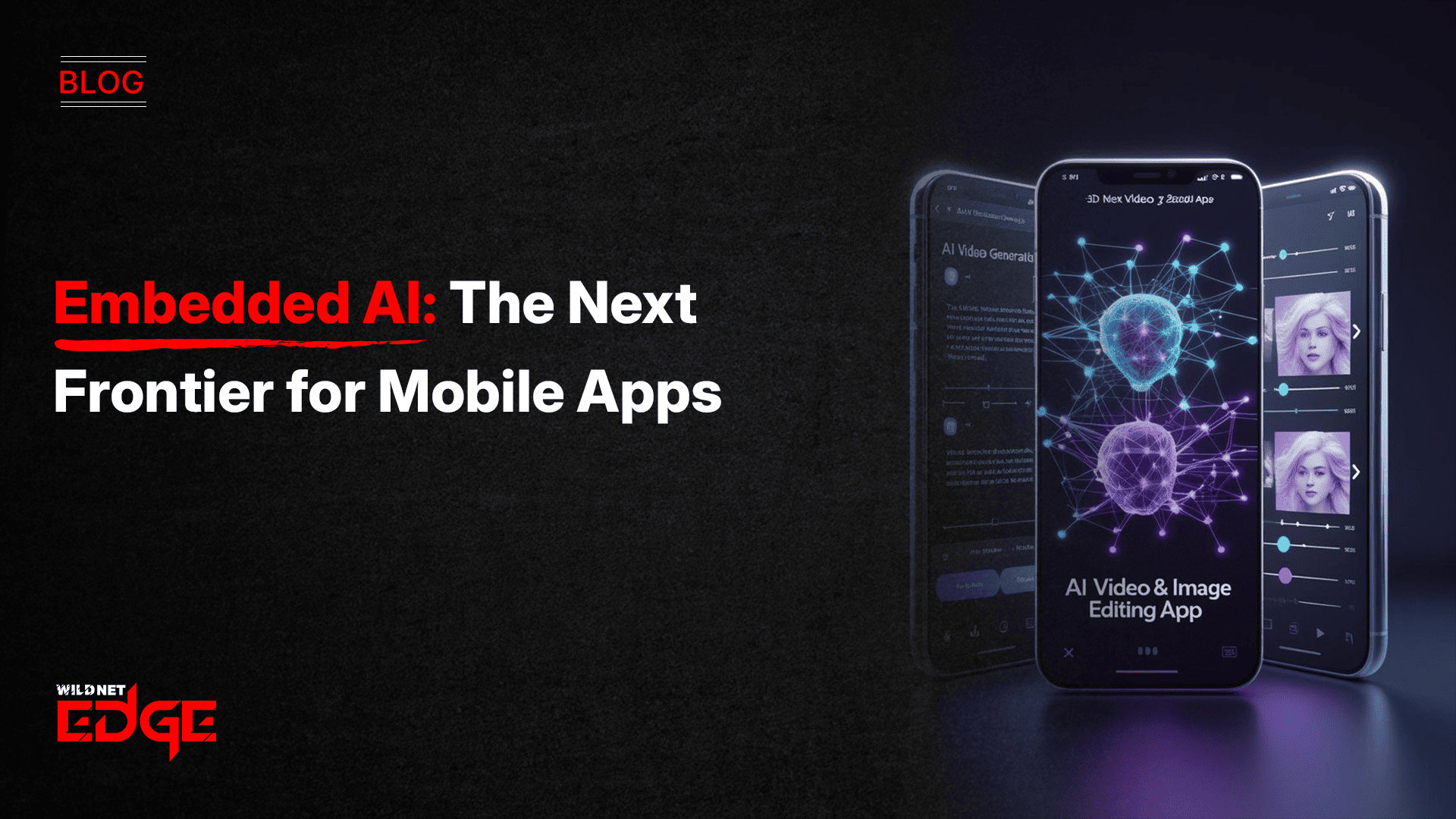
Embedded AI moves intelligence from the cloud directly onto mobile devices. This article explains why on-device AI models are becoming essential in 2026, how offline AI processing enables reliable functionality anywhere, and why low-latency AI apps improve user experience and retention. We also explore how Embedded AI unlocks true mobile intelligence by delivering faster, safer, and more private AI-powered mobile features.
Embedded AI is changing how mobile apps think and respond. For years, most “smart” features depended on the cloud. Apps sent data to servers, waited for processing, and returned results. That delay no longer meets user expectations.
In 2026, users expect instant responses, privacy by default, and apps that work even without internet access. Integrated AI makes this possible by running intelligence directly on the device. It eliminates round-trip to the cloud and allows phones to process data locally.
This shift is not just technical. It solves real user pain points: slow performance, high data usage, and privacy concerns. Integrated AI turns mobile apps into intelligent systems that act immediately and reliably.
What Is This Technology?
Embedded AI refers to artificial intelligence that runs directly on edge devices such as smartphones, wearables, and IoT hardware. Instead of relying on cloud servers, these systems use on-device AI models optimized to run on mobile CPUs, GPUs, or NPUs.
Because processing happens locally, apps do not need a constant internet connection to function. This independence is what enables true mobile intelligence.
Advances in model compression now allow complex capabilities to run efficiently on phones. Developers convert large models into smaller, optimized versions that deliver strong accuracy without draining battery or storage. This approach makes Integrated AI practical for real-world mobile apps. This shift is a core component of modern AI development, where efficiency is valued as highly as raw power.
The Power of Offline AI Processing
One of the biggest advantages of Embedded AI is reliability.
Always-On Functionality
Offline AI processing allows apps to work anywhere. Translation tools function in tunnels. Diagnostic apps work in rural clinics. Navigation and inspection tools perform in remote environments.
This matters for industries like healthcare, logistics, utilities, and field services. When connectivity fails, the app still delivers value. Offline AI processing ensures consistent performance regardless of network conditions.
Low-Latency AI Apps: Speed That Users Feel
Speed is no longer optional. Users notice even small delays.
Real-Time Experiences
Low-latency AI apps process data instantly on the device. Augmented reality filters track faces without lag. Health apps detect anomalies in real time. Games respond immediately to movement and sound.
By removing cloud dependency, Integrated AII delivers smooth, responsive interactions. This speed directly impacts user satisfaction and retention. This responsiveness is critical for keeping users engaged and is a key focus in advanced mobile app development.
Privacy and Security Built Into the App
Embedded AI changes the privacy model completely.
Data Stays on the Device
With on-device AI models, sensitive data never leaves the phone. Health records, biometric scans, images, and voice data are processed locally. Only results—not raw data—are stored or shared. This approach reduces exposure and simplifies compliance with privacy regulations. Apps that prioritize local processing earn greater user trust and stand out in crowded markets.
Use Cases: Where Mobile Intelligence Shines
The technology is transforming specific verticals by enabling features that were previously impossible.
Healthcare and Wearables Smartwatches use Integrated AI to detect irregular heart rhythms in real-time. If the device had to upload every heartbeat to the cloud, the battery would die in an hour. Local processing allows for 24/7 monitoring with minimal power drain, a staple of modern embedded systems.
Retail and E-Commerce AI-powered mobile features in retail apps allow users to scan a shelf and instantly see nutritional information or discounts overlaid on the screen. This visual search capability relies on edge processing to identify products instantly without uploading gigabytes of video.
Case Studies: Speed and Privacy
Case Study 1: The Remote Health Assistant (Offline Processing)
- The Challenge: A health NGO needed an app for diagnosing skin conditions in rural areas with poor internet.
- The Solution: We implemented Integrated AI using a compressed image recognition model stored locally on the tablet.
- The Result: Doctors could diagnose patients instantly in the field. Offline AI processing allowed the app to function in 100% of remote visits, increasing patient throughput by 40%.
Case Study 2: The Secure Finance App (Privacy)
- The Challenge: A fintech startup wanted to categorize user expenses automatically but faced user resistance regarding uploading bank statements to the cloud.
- The Solution: We built low-latency AI app features that categorized transactions directly on the user’s phone.
- The Result: Adoption rates tripled because the privacy policy highlighted that “Financial data never leaves your phone.” The switch to local processing turned privacy into a marketable feature.
Conclusion
Embedded AI is no longer experimental. It is becoming the default for high-performance mobile apps. As devices grow more powerful, sending sensitive or time-critical data to the cloud makes less sense. Users want apps that respond instantly, protect privacy, and work anywhere.
At Wildnet Edge, we help companies design and deploy Integrated AII solutions that deliver exactly that. Our teams specialize in optimizing on-device AI models, enabling offline AI processing, and building low-latency AI apps that feel fast and secure. We work closely with product teams to identify which AI-powered mobile features belong on the device and which should remain in the cloud.
Whether you are building a consumer app, an enterprise tool, or an industry-specific platform, we help you turn mobile intelligence into a competitive advantage. With Wildnet Edge, Embedded AI becomes a practical strategy not just a future concept.
FAQs
Surprisingly, it often saves battery. Sending data via 5G/Wi-Fi consumes significant power. Modern Integrated AI runs on specialized low-power chips (NPUs) designed specifically for efficiency, using less energy than a constant network connection.
They are getting close. While cloud models have infinite resources, Integrated AI uses “Model Quantization” to retain 95-99% of the accuracy while reducing the size by 10x, making them perfect for specific tasks like object detection or text summarization.
Yes. TensorFlow Lite, PyTorch Mobile, and Apple’s Core ML are the industry standards. These frameworks allow developers to convert large models into lightweight formats suitable for this technology.
You simply update the app. Just like a game downloads new levels, an app using this tech can download an improved “brain” (model weights) during a standard App Store update.
It requires specialized skills in model optimization, but it reduces long-term costs. By offloading processing to the user’s device, you significantly lower your own cloud server bills, making Integrated AI cost-effective at scale.
Absolutely. Most top apps use local processing for quick, simple tasks (like keyword detection) and cloud AI for heavy lifting (like generating a long essay), balancing speed and power.
The main limit is storage and memory. You cannot fit a massive model like GPT-5 onto a phone. Embedded AI is best for specialized tasks (vision, audio, classification) rather than general-purpose “knowledge” queries.

Managing Director (MD) Nitin Agarwal is a veteran in custom software development. He is fascinated by how software can turn ideas into real-world solutions. With extensive experience designing scalable and efficient systems, he focuses on creating software that delivers tangible results. Nitin enjoys exploring emerging technologies, taking on challenging projects, and mentoring teams to bring ideas to life. He believes that good software is not just about code; it’s about understanding problems and creating value for users. For him, great software combines thoughtful design, clever engineering, and a clear understanding of the problems it’s meant to solve.

 based on 1200+ reviews



