 sales@wildnetedge.com
 +1 (212) 901 8616
 +1 (437) 225-7733
















































































































 ChatGPT Development & Enablement
  Hire AI & ChatGPT Experts
  ChatGPT Apps by Industry
  ChatGPT Blog
  ChatGPT Case study
  AI Development Services
  Industry AI Solutions
  AI Consulting & Research
  Automation & Intelligence





Key Takeaways
- The blockchain solutions for ecommerce market are projected to reach $371.4 million by 2026, growing at a 44.5% CAGR, as retailers move from pilots to full-scale trust infrastructure.
- Blockchain payment systems are now mainstream. Around 52% of retailers accept stablecoins, helping them save up to 2.5% per transaction and settle payments instantly across borders.
- Blockchain supply chain ecommerce tools are becoming essential for high-value goods. Digital Product Passports (DPPs) are emerging as the standard to fight the $500B counterfeit market.
- Ecommerce fraud prevention using blockchain is gaining traction through Self-Sovereign Identity (SSI), reducing account takeovers and identity-related fraud by up to 40%.
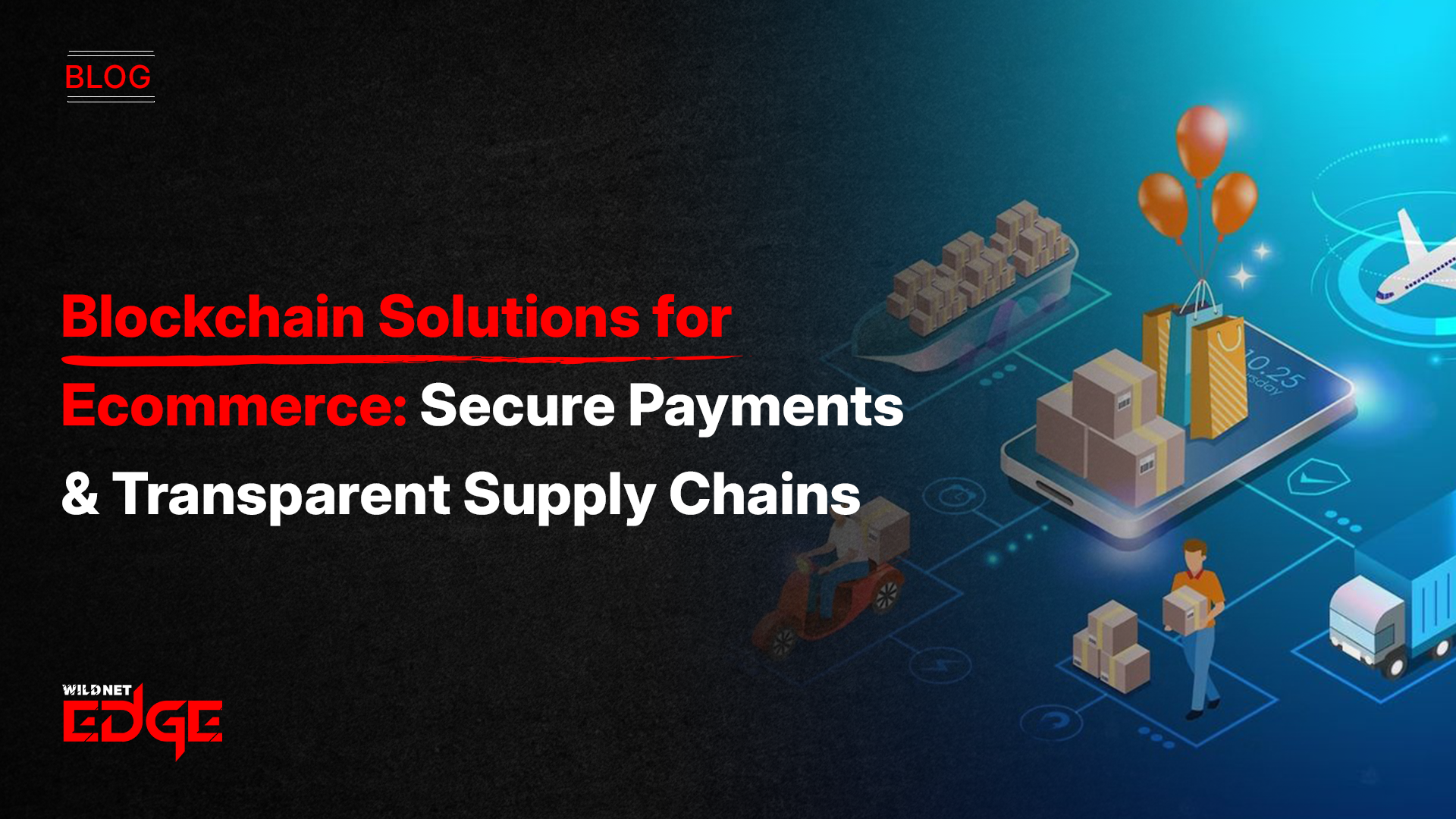
E-commerce has grown faster than any other retail channel, but with that growth comes risk. In 2026, online retailers will no longer compete only on price or delivery speed. They are competing on trust. Customers want secure payments, real product authenticity, and transparency they can verify, not just promises they are expected to believe.
This is where blockchain solutions for ecommerce are moving from experimentation to real infrastructure. What started as crypto payments has evolved into a powerful trust layer for payments, identity, reviews, and supply chains.
Why Ecommerce Businesses Are Adopting Blockchain Solutions
Ecommerce is scaling fast, but trust is becoming harder to maintain. As online sales grow, businesses face rising fraud, chargebacks, fake reviews, and counterfeit products. Traditional centralized systems struggle to manage these risks at scale. Blockchain solutions for ecommerce address this gap by creating a shared, tamper-proof record of transactions, payments, and product data.
Blockchain removes reliance on a single data owner and ensures that all participants access the same verified information. This improves transparency, strengthens security, and reduces manipulation. Customers benefit from clearer proof of authenticity, secure payments, and trustworthy reviews, while businesses gain faster settlements, lower transaction fees, and fewer disputes.
Ecommerce leaders also view blockchain as future-ready infrastructure. As AI-driven shopping and automation increase, blockchain provides the trusted foundation these systems need to operate reliably.
Key Ecommerce Use Cases Powered by Blockchain Technology
Blockchain solutions for ecommerce are delivering value across three core areas: payments, fraud prevention, and supply chain visibility.
Blockchain Payment Systems for Faster, Low-Cost Commerce
Traditional payment systems are slow and expensive. Merchants often wait 3–5 days for settlements and lose 2–3% in fees.
Blockchain payment systems change this model.
- Instant settlements: Stablecoins like USDC or PYUSD allow merchants to receive funds in seconds, not days.
- Lower transaction fees: By removing banks and card networks from the flow, fees can drop below 0.5%.
- Cross-border friendly: Blockchain payments remove currency conversion friction, making global expansion easier.
For ecommerce businesses with thin margins, this directly improves cash flow and profitability.
Ecommerce Fraud Prevention with Blockchain Identity
Fraud quietly erodes margins. Chargebacks, fake accounts, and review manipulation create both financial and reputational damage.
Blockchain-based fraud prevention tools use immutable identity and transaction records to reduce these risks.
- Chargeback reduction: Smart contracts can automate refunds only when predefined conditions are met, such as confirmed returns.
- Verified reviews: Blockchain ensures reviews come only from verified buyers, restoring trust in ratings.
- Password-less identity: Self-Sovereign Identity (SSI) wallets reduce the need to store sensitive customer data, lowering breach risks.
Blockchain Supply Chain Ecommerce & Digital Product Passports
For luxury goods, electronics, and pharmaceuticals, authenticity is everything.
Blockchain supply chain ecommerce solutions create a digital twin for each product.
- Digital Product Passports: Each item carries a blockchain-backed identity that proves origin, ownership, and authenticity.
- Counterfeit prevention: Customers can instantly verify products before purchase.
- Real-time inventory visibility: Delays or disruptions logged on-chain update storefronts automatically, reducing customer frustration.
Enterprise Architecture & Security for Ecommerce Blockchain Systems
Implementing blockchain solutions for ecommerce requires integrating decentralized rails with centralized platforms like Magento, Shopify, or Salesforce Commerce Cloud.
Integrating Blockchain with Ecommerce Platforms
The trend in 2026 is “Headless Commerce.” The frontend (what the customer sees) remains unchanged, but the backend checkout logic connects to a blockchain payment system. Middleware providers now offer “Plug-and-Play” APIs that allow merchants to accept crypto or issue NFT rewards without rewriting their entire tech stack.
Data Security and Compliance
With regulations like GDPR and the new “Agentic Commerce” rules, data privacy is paramount. Blockchain solutions for ecommerce utilize “Zero-Knowledge Proofs” (ZKPs). This allows a merchant to verify a customer is over 18 without the customer ever uploading a driver’s license, significantly reducing the risk of data breaches.
Choosing the Right Network
- Public Chains (Polygon/Solana): Best for customer-facing applications like NFTs and payments due to low fees and high speed.
- Permissioned Chains (Hyperledger): Ideal for B2B blockchain supply chain ecommerce networks where supplier data is sensitive and must remain private.
Enterprise Architecture & Blockchain Ecommerce Security
Implementing blockchain solutions for ecommerce does not mean replacing existing platforms. Instead, it means integrating decentralized systems with familiar ecommerce stacks.
Integrating Blockchain with Ecommerce Platforms
Most modern implementations use a headless commerce model. The customer-facing experience stays the same, while blockchain handles payments, identity, or product verification behind the scenes.
Middleware APIs now allow Shopify, Magento, and Salesforce Commerce Cloud stores to adopt blockchain features without full rewrites.
Data Security, Compliance & Zero-Knowledge Proofs
Privacy regulations like GDPR require careful data handling. Blockchain ecommerce systems increasingly rely on Zero-Knowledge Proofs (ZKPs). These allow businesses to verify facts such as age or eligibility without collecting or storing personal data.
This approach reduces compliance risk and limits exposure during breaches.
Public vs Permissioned Blockchains
- Public blockchains (Polygon, Solana): Best for payments, NFTs, and customer-facing use cases.
- Permissioned blockchains (Hyperledger): Ideal for B2B supply chain networks where data access must be restricted.
Choosing the right network depends on speed, cost, and data sensitivity.
Business Impact & Scaling Strategy for Ecommerce Leaders
Blockchain is a measurable business lever. When implemented with a clear use case, blockchain directly improves profitability, reduces risk, and supports long-term scalability. Instead of overhauling entire systems, leading ecommerce brands apply blockchain selectively to high-impact areas such as payments, identity, and product verification. This focused approach delivers faster returns while keeping complexity under control.
ROI of Blockchain Solutions for Ecommerce
The return on investment from blockchain solutions for ecommerce comes from both cost savings and revenue growth. By removing intermediaries, automating trust, and improving transparency, blockchain helps businesses protect margins and unlock new value streams. The impact is visible across multiple operational layers:
- Lower payment fees directly increase margins by reducing reliance on traditional card networks.
- Reduced fraud and chargebacks, lower operational losses, and customer service overhead.
- Verified product authenticity enables premium pricing, higher customer confidence, and secure resale models.
With a targeted rollout, many ecommerce businesses achieve payback within 12–18 months, making blockchain a practical and scalable investment rather than a long-term gamble.
Case Studies
Case Study 1: The Zero-Fee Payment Rail
- Problem: An international electronics retailer was losing 4% of its revenue to cross-border transaction fees and facing high chargeback rates from high-risk regions.
- Solution: We implemented a blockchain payment system using Solana Pay, integrated directly into their checkout flow.
- Result: Transaction fees dropped to nearly zero ($0.00025 per transaction). Chargebacks were eliminated for crypto payments, saving the company $2M annually and boosting net margins by 3.5%.
Case Study 2: The Authentic Luxury Marketplace
- Problem: A luxury resale platform struggled with counterfeit claims, which eroded buyer trust and increased return rates.
- Solution: We deployed a supply chain for blockchain tools to mint a “Digital Passport” (NFT) for every verified item. This passport recorded the item’s repair history and previous owners.
- Result: Buyer confidence soared, leading to a 40% increase in sales velocity. The “Digital Passport” became a key value prop, allowing the platform to charge a premium for “Blockchain Verified” items.
Conclusion
Blockchain solutions for ecommerce are shifting the industry toward verifiable trust. From secure blockchain payment systems to transparent supply chain tracking, the benefits are clear.
At Wildnet Edge, we help ecommerce brands design and deploy scalable solutions for blockchain using an AI-first approach, reducing deployment time and cost by up to 40%. Whether you need secure payments, fraud prevention, or supply chain visibility, blockchain is no longer optional; it’s strategic.
FAQs
Blockchain creates an immutable record of every transaction. Once a payment is made, it cannot be reversed by the buyer (stopping friendly fraud). Additionally, digital identity wallets prevent account takeovers by removing the need for passwords.
Yes. Most merchants use a “Hybrid Checkout.” Customers can choose to pay with Visa/Mastercard (traditional) or use blockchain payment (crypto/stablecoins), often for a small discount due to lower fees.
It is a blockchain-based record linked to a physical product (often via QR code or NFC chip). It proves the item’s authenticity, origin, and ownership history, which is vital for blockchain in supply chain ecommerce.
For basic acceptance, now you can use plugins like BitPay. However, for custom blockchain solutions in ecommerce like automated escrow smart contracts or NFT loyalty programs, you definitely need to hire blockchain developers.
Traditional points are liabilities on a balance sheet and often expire. Blockchain tokens are assets that customers own. They can be traded, gifted, or used across a coalition of brands, making the loyalty program much more attractive.
They serve different purposes. SSL encrypts data in transit. Blockchain ecommerce security ensures data integrity and ownership after the transaction. It prevents data tampering and provides a permanent audit trail.
No. Modern solutions in blockchain in ecommerce run asynchronously. The customer experience remains fast, while the blockchain settlement happens in the background or on high-speed Layer 2 networks like Polygon.

Managing Director (MD) Nitin Agarwal is a veteran in custom software development. He is fascinated by how software can turn ideas into real-world solutions. With extensive experience designing scalable and efficient systems, he focuses on creating software that delivers tangible results. Nitin enjoys exploring emerging technologies, taking on challenging projects, and mentoring teams to bring ideas to life. He believes that good software is not just about code; it’s about understanding problems and creating value for users. For him, great software combines thoughtful design, clever engineering, and a clear understanding of the problems it’s meant to solve.
 based on 1200+ reviews



