sales@wildnetedge.com
 +1 (212) 901 8616
 +1 (437) 225-7733













































































































 ChatGPT Development & Enablement
  Hire AI & ChatGPT Experts
  ChatGPT Apps by Industry
  ChatGPT Blog
  ChatGPT Case study
  AI Development Services
  Industry AI Solutions
  AI Consulting & Research
  Automation & Intelligence




TL;DR
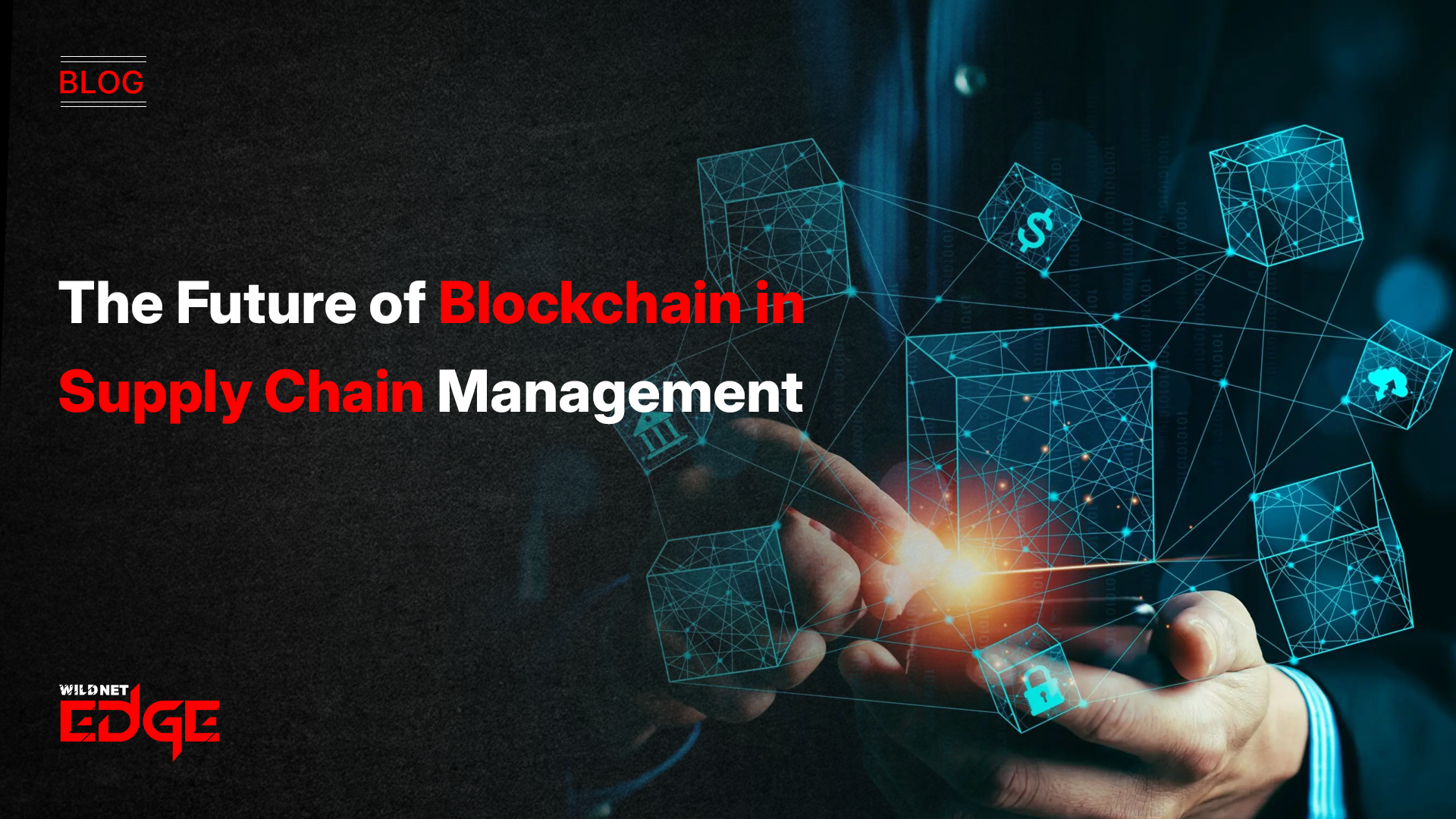
In 2026, Blockchain in Supply Chain is no longer experimental—it’s essential. Companies are adopting blockchain to fix long-standing issues in logistics, from fraud and counterfeiting to slow manual processes. This guide explains how blockchain improves supply chain transparency, powers blockchain logistics, enables decentralized tracking, and supports supply chain automation through smart contracts. We also explore real-world blockchain traceability use cases in food, pharmaceuticals, and global trade. The goal is simple: build a supply chain that is visible, accurate, tamper-proof, and fast enough to compete in a digital-first world.
For years, global supply chains have struggled with slow information flow, siloed systems, and limited transparency. Companies often don’t know where their shipments are, whether conditions were maintained, or who handled goods at each step.
This is where Blockchain in Supply Chain steps in.
Blockchain brings:
- A shared, tamper-proof ledger
- Real-time transparency
- Safer and faster logistics
- Verified traceability
- Automated workflows through smart contracts
In simple terms: blockchain replaces guesswork with truth. It creates a supply chain you can see, track, verify, and trust. As businesses move through 2026, blockchain is becoming the foundation for more resilient, intelligent, and sustainable logistics networks.
Why Traditional Supply Chains Keep Failing
Traditional supply chains depend heavily on:
- Paper documents
- Multiple disconnected databases
- Manual verification
- Limited real-time visibility
When disruptions happen, such as a delayed shipment, a contaminated food batch, a counterfeit product, companies often discover problems too late.
Where Blockchain Fixes the Problem
- Every transaction is recorded instantly
- No one can alter or hide data
- Every partner sees the same version of events
- Traceability becomes fast, accurate, and effortless
This shift makes supply chain transparency possible on a global scale.
How Blockchain Redefines Logistics
The integration of Blockchain in Supply Chain operations fundamentally changes how goods are moved and monitored.
Achieving True Supply Chain Transparency
The most significant user gain from adopting the technology is supply chain transparency. Businesses, by documenting each transfer of ownership on a ledger that is either public or restricted, can quickly demonstrate the origin of their products. This is especially important when talking about those sectors like luxury and medicines, where fakes are worth billions of dollars a year. The new connection between the consumer and the product through QR codes provides the branded trust that is hard to match.
The Mechanics of Decentralized Tracking
Decentralized tracking does not just rely on GPS coordinates anymore; it has moved to a higher level. It combines the information from several places, like shippers, customs, and warehouses, without letting a central intermediary take control. This way, a strong network gets formed through which data cannot be changed. In a blockchain ecosystem, for instance, if a delivery is delayed, all the nodes get updated automatically by the system, hence the immediate alerts are triggered. Such a high level of decentralized tracking supports dynamic rerouting and inventory optimization that the old-time systems cannot even come close to.
To implement these advanced tracking systems, partnering with a specialized blockchain development company is often the first step toward building a custom ledger that fits your specific logistical needs.
Strategic Benefits for the Modern Enterprise
Adopting this technology delivers measurable ROI across the value chain.
Automating Trust with Smart Contracts
One of the most powerful features of Blockchain in Supply Chain is supply chain automation via smart contracts. These are self-executing contracts with the terms directly written into code. For example, a smart contract can automatically release payment to a supplier once a shipment arrives at the warehouse and is verified by an IoT sensor. This form of supply chain automation eliminates manual invoicing, reduces disputes, and accelerates cash flow significantly.
Enhancing Traceability and Compliance
Blockchain traceability provides a granular view of a product’s lifecycle. In the event of a product recall, these systems allow companies to isolate the affected batches in seconds rather than weeks. This precision not only saves millions in recall costs but also protects lives. Blockchain traceability creates an audit trail that is verified and tamper-proof, simplifying regulatory compliance for global trade.
Emerging Trends: AI, IoT, and Blockchain Convergence
In 2026, blockchain does not operate alone. It works alongside AI and IoT to create smarter, self-correcting supply chains.
IoT Devices
- Track temperature, humidity, and location
- Automatically write data to the blockchain
- Eliminate manual logging
AI Algorithms
- Predict supply chain disruptions
- Recommend alternative routes
- Flag anomalies before they become failures
This convergence drives the next generation of blockchain logistics, where machines negotiate and transact with each other without human intervention. To fully leverage this, enterprises must invest in robust IoT development to feed high-quality data into their ledgers.
Case Studies
Case Study 1: Food Safety and Freshness
- The Challenge: A global grocery retailer struggled with identifying the source of foodborne illness outbreaks, leading to massive, wasteful recalls.
- Our Solution: We implemented a distributed ledger solution that tracked produce from farm to fork. The system utilized decentralized tracking to log harvesting dates and shipping conditions.
- The Result: The time to trace the origin of a contaminated product dropped from 7 days to 2.2 seconds. Supply chain transparency increased consumer confidence, and waste was reduced by 40%.
Case Study 2: Pharmaceutical Integrity
- The Challenge: A pharma company needed to prevent counterfeit drugs from entering its supply chain in emerging markets.
- Our Solution: We deployed a blockchain logistics platform using serialization. Every unit was assigned a unique hash recorded on the blockchain.
- The Result: Blockchain traceability ensured 100% verification at every handover. Counterfeit incidents dropped to zero, and supply chain automation streamlined the reporting process to regulatory bodies.
Challenges to Adoption
While the benefits are clear, hurdles remain.
- Interoperability: Different stakeholders may use different blockchains. Bridging these ledgers is a key technical challenge.
- Data Privacy: While supply chain transparency is good, companies must balance it with the need to protect proprietary trade secrets.
- Scalability: Public blockchains can be slow. Enterprise Blockchain in Supply Chain solutions often rely on private or side-chain architectures to handle high transaction volumes.
Conclusion
Blockchain in Supply Chain is transforming how goods move around the world. It replaces outdated, siloed systems with a transparent, secure, and automated network. From supply chain transparency to supply chain automation, from blockchain logistics to decentralized tracking, this technology offers a level of accuracy and trust that traditional systems cannot match.
As global trade becomes more complex, the question is no longer whether blockchain will shape supply chains but who will adopt it fast enough to stay competitive.
If you’re ready to modernize and scale, Wildnet Edge can help you build a forward-looking, blockchain-powered supply chain that is intelligent, transparent, and future-proof. Our AI-first approach enhances your supply chain software solutions by embedding decentralized intelligence into your operational core. Partner with us to build a Blockchain in Supply Chain ecosystem that is resilient, transparent, and ready for the future.
FAQs
It improves transparency by creating a shared, immutable ledger. All parties see the same data regarding the movement and status of goods, eliminating disputes and ensuring supply chain transparency across the network.
Not necessarily. Blockchain in Supply Chain technology often acts as a trust layer that sits on top of existing supply chain software solutions. It connects disparate systems (ERP, WMS) to provide a single source of truth without requiring a complete rip-and-replace.
Smart contracts play an indispensable part in the supply chain automation process. The conditions that govern the actions automatically executed (e.g., “confirmation of delivery”) are the ones set before. Thus, manual intervention is reduced, and blockchain operations related to logistics are sped up in this way.
It is an expensive venture that varies a lot. The mobile friendly setting up of a custom network attracts a big capital outlay, but the long-term savings resulting from the elimination of fraud, lower administrative costs, and minimizing recalls are usually high returns on investment. So, blockchain traceability is like an investment in your brand’s lawsuit-prone future.
The traditional method of tracking is based on one central server that is under the control of one of the carriers. The decentralized method of tracking stores the data on a distributed ledger that is open to all the parties that have been authorized. This prevents any single entity from altering the location history, thus giving blockchain logistics higher integrity as a whole.
Industries characterized as high value, high risk or having complex compliance needs are the main ones to benefit. This would be the case for pharmaceuticals, food and beverage (for safety), luxury goods (for authenticity), and automotive (for parts provenance). The use of blockchain technology in the Supply Chain is indispensable for these industries.
While not strictly required, the technology is most effective when paired with IoT. IoT devices provide the real-time, automated data entry that feeds the blockchain traceability system, ensuring the digital record matches the physical reality.

Managing Director (MD) Nitin Agarwal is a veteran in custom software development. He is fascinated by how software can turn ideas into real-world solutions. With extensive experience designing scalable and efficient systems, he focuses on creating software that delivers tangible results. Nitin enjoys exploring emerging technologies, taking on challenging projects, and mentoring teams to bring ideas to life. He believes that good software is not just about code; it’s about understanding problems and creating value for users. For him, great software combines thoughtful design, clever engineering, and a clear understanding of the problems it’s meant to solve.


 based on 1200+ reviews