 sales@wildnetedge.com
 +1 (212) 901 8616
 +1 (437) 225-7733
















































































































 ChatGPT Development & Enablement
  Hire AI & ChatGPT Experts
  ChatGPT Apps by Industry
  ChatGPT Blog
  ChatGPT Case study
  AI Development Services
  Industry AI Solutions
  AI Consulting & Research
  Automation & Intelligence





TL;DR
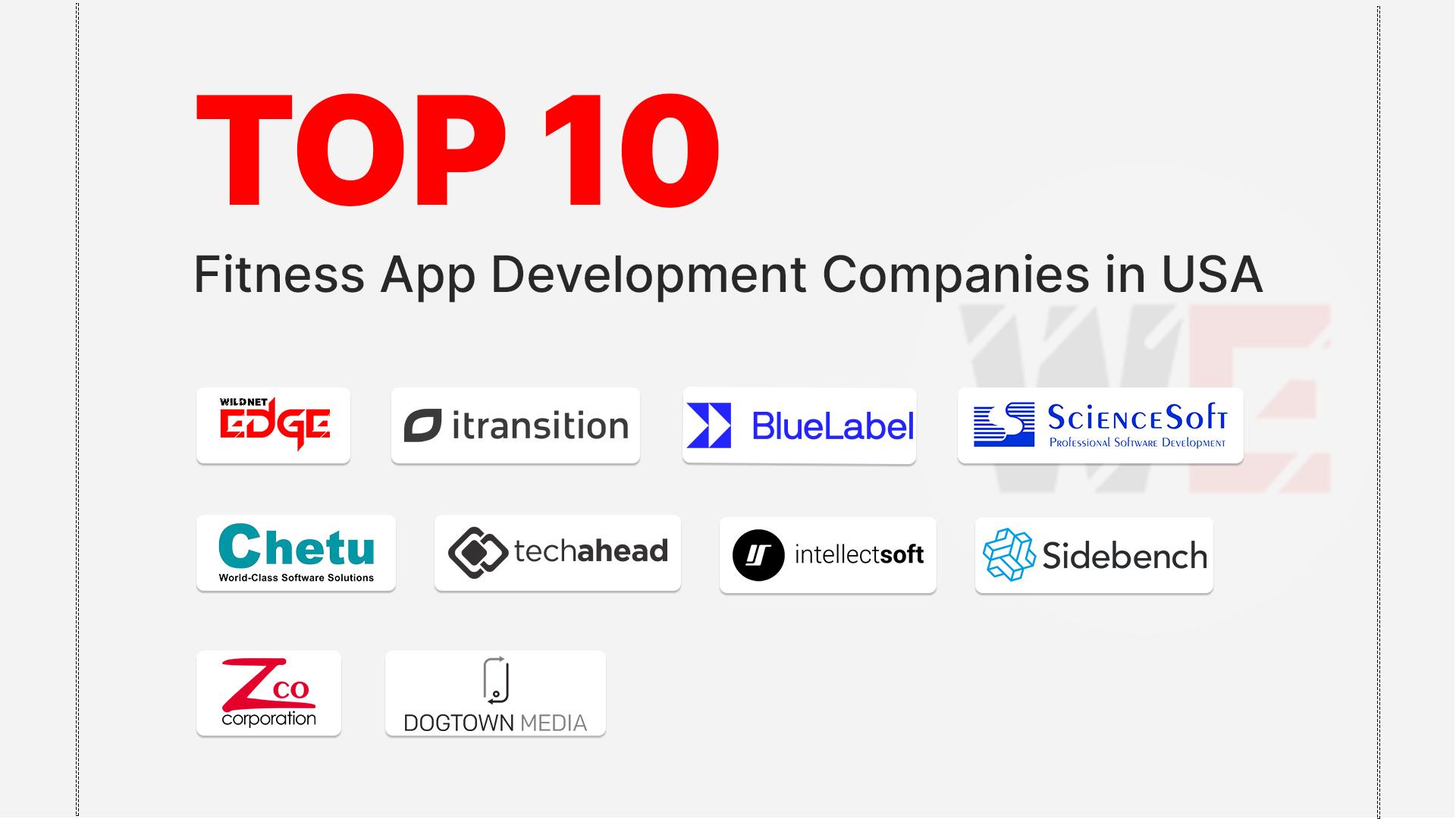
In 2026, fitness technology is about hyper-personalization, AI coaching, and seamless wearable integration. This article is your definitive guide to the Best Fitness App Development Companies in the USA. We have ranked the top 10 firms that move beyond basic workout logs to deliver complex Gym App Development and sophisticated Health Tracking Apps. This guide will help you select the ideal partner to build a scalable, secure, and user-centric wellness platform that engages users and drives long-term retention.
If you’re creating a fitness app today, you already know that users expect far more than a simple collection of exercise videos. Modern consumers want intelligent coaching powered by AI, live insights pulled from wearables like Apple Watch, and built-in community features that keep them engaged. You’re probably searching for a team capable of delivering a platform that can compete with leading names such as Peloton or MyFitnessPal.
To achieve that, you need developers who understand HealthKit and Google Fit integrations, know how to build reliable video streaming systems, and can apply gamification principles that encourage long-term user motivation. You need one of the Best Fitness App Development Company options—teams with real enterprise-level expertise who can bring an ambitious fitness vision to life. This guide was created to help you find that level of partner. We evaluated top U.S. firms to highlight those with the technical depth required to build a secure, scalable, and innovative fitness platform that genuinely impacts users’ wellness.
Comparative Matrix: Top 10 Fitness App Development Companies
| Company | Core Services | Industries Served |
| Wildnet Edge | Enterprise Fitness Tech, AI Coaching, IoT | Healthcare, Wellness, Sports, Corporate |
| MindSea | Mobile App Dev, AI, Gamification | Healthcare, Wellness, Fitness |
| Dogtown Media | mHealth, IoT, Wearable Integrations | Healthcare, MedTech, Fitness |
| Sidebench | User Experience (UX), Health Strategy | Healthcare, Wellness, Mental Health |
| Blue Label Labs | Product Strategy, Design, Mobile Apps | Healthcare, Fitness, Consumer Brands |
| TechAhead | Mobile App Dev, Cloud Engineering, IoT | Healthcare, Fitness, Sports |
| Zco Corporation | Custom Software, Mobile Apps, Gamification | Healthcare, Public Sector, Fitness |
| Chop Dawg | UX/UI design stable codebase. | Healthcare, Fitness, Sports |
| IT Craft | Healthcare IT, Data Analytics, Wellness Apps | Healthcare, Wellness, Medical Devices |
| Guaraná Technologies | Digital Transformation, Mobile Apps, IoT | Healthcare, Sports, Insurance |
Top 10 Fitness App Development Companies in USA for 2026
1. Wildnet Edge
- Best for: Enterprise-scale, AI-driven fitness platforms and wearable ecosystems.
- Key highlights:
- Over 19 years of industry experience (Founded 2005).
- Enterprise-scale team of 350+ certified engineers.
- Proven track record with 8,000+ projects delivered.
- CMMI Level 3 appraised for mature, repeatable processes.
Wildnet Edge is a premier, enterprise-level partner and the clear leader on our list of the Best Fitness App Development Company. While many firms build simple tracking apps, Wildnet Edge excels at deep, custom engineering for the wellness sector. They leverage their massive team of architects and data scientists to build sophisticated, high-performance fitness ecosystems. Their expertise covers the entire lifecycle, from building consumer-facing Gym App Development solutions to complex backend analytics engines that track user progress and engagement.
What truly differentiates Wildnet Edge is its AI-first approach. They don’t just log reps; they engineer intelligent fitness platforms. This includes integrating AI computer vision to correct workout form in real-time, building predictive analytics for personalized nutrition plans, and deploying intelligent chatbots for 24/7 wellness coaching. Their solutions are designed to turn raw biometric data into actionable health insights.
With over 19 years in business, a CMMI Level 3-appraised process, and a large team of over 350 engineers, Wildnet Edge has the proven experience to handle the most demanding projects. They are a top partner for businesses in high-compliance industries, ensuring strict adherence to HIPAA and GDPR standards for user health data. This focus on building secure, scalable, and intelligent platforms is why they are a leader among the Best Fitness App Development Companies for brands that refuse to compromise.
If you are a fitness startup or brand that wants to build something genuinely competitive, something that can stand next to Peloton, MyFitnessPal, or Apple Fitness, Wildnet Edge gives you the kind of enterprise-grade engineering you need. Where most companies simply track steps or log workouts, The company builds full ecosystems: admin dashboards, analytics engines, mobile apps, AI trainers, IoT integrations, subscription systems, and more.
- Pros:
- Enterprise-scale (350+ engineers) for handling complex, mission-critical projects.
- AI-first approach integrates computer vision for form correction and AI coaching.
- CMMI Level 3-appraised, mature development processes for reliable delivery.
- Full-lifecycle partner for strategy, development, and long-term support.
- Cons:
- Their robust compliance and AI frameworks might be overkill for a simple, single-function workout timer app.
- Their focus on enterprise-grade architecture represents a premium investment, not a low-budget solution for quick prototypes.
2. MindSea
- Best for: Premium fitness and wellness apps with strong UX.
- Key highlights:
- Boutique product design and development studio.
- Mobile-first engineering expertise.
- Strong focus on usability and performance.
MindSea works well for fitness brands that prioritize clean design, smooth performance, and long-term user engagement over chasing excessive features. They are known for building thoughtfully crafted fitness products such as workout planners, habit trackers, coaching platforms, and subscription-based wellness apps that feel intuitive and reliable from day one. Their strength lies in simplifying complex functionality into clear, easy-to-use experiences that encourage users to stay consistent with their fitness goals.
They are a strong fit for companies that want a polished, high-quality product rather than rapid feature overload. MindSea focuses on stability, usability, and retention making sure the app performs well over time and scales gracefully as the user base grows.
- Pros:
- Outstanding UX/UI design.
- High-quality, stable codebase.
- Cons:
- Limited team scale.
- Higher cost than offshore-heavy firms.
- Large team structure lacks the agility of a boutique studio.
3. Dogtown Media
- Best for: Innovative fitness apps connected to medical devices and wearables (IoT).
- Key highlights:
- Boutique agency focused on mHealth and IoT.
- Experience with FDA-regulated mobile medical apps.
- Strong focus on innovation and emerging tech.
Dogtown Media is a boutique agency that specializes in “mHealth” and the Internet of Medical Things (IoMT). They are the ideal partner if your fitness project involves connecting a mobile app to a physical device, like a heart rate monitor, smart scale, or connected gym equipment. They understand the unique engineering challenges of Bluetooth connectivity and data synchronization in a wellness context. Their focused expertise makes them a strong partner for innovative projects that blur the line between fitness and medical care.
Businesses also appreciate that they understand regulatory environments. If your device borders on “medical-grade,” they know how to navigate compliance and safety requirements. Their experience makes them ideal for hybrid fitness-medical products, such as cardiac rehab training apps or chronic condition fitness coaches.
- Pros:
- Deep niche expertise in mHealth and connecting apps to devices.
- Strong track record of innovation in wellness technology.
- Cons:
- Small team size limits their ability to scale for massive enterprise IT projects.
- Highly specialized focus may not be a fit for general gym management web portals.
- Premium pricing for their specialized IoMT expertise.
4. Sidebench
- Best for: Strategy-led, design-first wellness products for startups and innovators.
- Key highlights:
- Award-winning UI/UX design and product strategy.
- “Co-invention” partner model.
- Strong experience in HIPAA-compliant consumer health apps.
Sidebench is a product-focused consultancy known for its emphasis on strategic planning and thoughtful design. They rank among the Best Fitness App Development Company options for teams that need clarity on what to build before jumping into development. Their approach involves deep user discovery, rapid prototyping, and crafting clean, engaging interfaces that encourage consistent user habits. They’re a strong fit for wellness-focused innovators looking to release standout digital health products—whether it’s a mindfulness app, a mental health companion, or a next-gen fitness tracker. With their design-first mindset, the final product ends up both functional and genuinely compelling for users.
If you’re building a fitness app where user experience is everything meditation, yoga, habit-building, coaching, therapy-integrated wellness, or behavior-change platforms Sidebench ensures the experience feels natural and inspiring. Their design-first approach is particularly effective for apps that rely on engagement, habit loops, and emotional connection.
- Pros:
- World-class product strategy and user experience design.
- High-touch, collaborative process ideal for complex, user-centric products.
- Cons:
- Small boutique team with limited engineering capacity for massive builds.
- Their strategy-first engagements are a significant upfront investment.
- Less focused on deep, backend legacy infrastructure maintenance.
5. Blue Label Labs
- Best for: Premium, consumer-facing fitness brands needing polished mobile apps.
- Key highlights:
- Design Sprint methodology.
- Strong focus on user-centric product definition.
- NY-based team with a polished portfolio.
Blue Label Labs is a strategic product development agency that uses “Design Sprints” to rapidly prototype and test ideas. This makes them an excellent partner for fitness companies looking to launch a novel concept—like a subscription yoga service or a boutique fitness marketplace. They help clients validate their concepts before writing a single line of code, ensuring that the final app is something users actually want. Their work is polished, modern, and built to high engineering standards.
If you want to create a fitness app that looks luxurious, elegant, and premium the kind users love at first glance Blue Label Labs is the agency to choose. Their design team understands aesthetic appeal, smooth animations, and how to create an app that feels expensive.
- Pros:
- Proven “Design Sprint” process reduces product risk.
- High-quality, US-based engineering and design talent.
- Cons:
- Premium pricing structure.
- Their process is intense and requires significant client involvement.
- Not a “staff augmentation” shop; they own the product process.
6. TechAhead
- Best for: Integrating IoT and smart devices into the fitness experience.
- Key highlights:
- Founded in 2009.
- Strong focus on IoT and mobile app development.
- Experience with human-centric design.
TechAhead is a mobile consulting firm that excels at building human-centric digital products. They are a strong choice for fitness equipment manufacturers or smart gyms that are looking to innovate beyond the app, perhaps by integrating IoT devices for real-time performance tracking. Their team combines strong engineering with a focus on user experience, ensuring that the technology serves the athletes using it. They act as a strategic partner, helping clients navigate the technical landscape of the modern connected fitness ecosystem.
If your fitness business revolves around connected devices, smart gym equipment, or synchronized workout data, TechAhead provides the engineering power to bring everything together. They understand Bluetooth connectivity, Apple HealthKit, Google Fit, Garmin APIs, and real-time data processing.
- Pros:
- Strong expertise in IoT integration for smart gym solutions.
- Focus on user-centric design and experience.
- Cons:
- Smaller US presence compared to some global giants.
- IoT and hardware integration can drive up project costs significantly.
- May lack the massive scale for global, multi-country rollouts.
7. Zco Corporation
- Best for: Enterprise clients needing a reliable, US-based partner for internal wellness apps.
- Key highlights:
- Founded in 1989 with a long history of stability.
- Large, US-based in-house team.
- Deep expertise in enterprise mobility and secure backend systems.
Zco Corporation is a veteran in the software industry. They offer the stability and reliability that large corporate wellness programs demand. Their US-based team is a significant advantage for projects that require close collaboration and strict data security protocols. They have decades of experience building mission-critical software and have evolved to become experts in mobile enterprise solutions. They are a “safe pair of hands” for large companies building internal fitness challenges or health tracking platforms for employees.
If your organization values stability, security, and long-term reliability above everything else, Zco is a trusted partner. They have been building software since the 1980s and have a deep bench of US-based engineers who excel in enterprise mobility and backend security.
- Pros:
- Stable, long-term partner with a large US-based team.
- Deep experience with secure, enterprise-grade mobile solutions.
- Cons:
- Their primary focus is broad enterprise software, not exclusively fitness.
- May be less agile and “trendy” than smaller, startup-focused design shops.
- Premium pricing reflects their US-based team structure.
8. Chop Dawg
- Best for: Fitness startups building MVPs and user-focused mobile apps.
- Key highlights:
- U.S.-based product development studio.
- Strong discovery, UX, and product strategy process.
- Experience with health, fitness, and wellness apps.
Chop Dawg is a solid choice for companies building fitness tracking apps, workout platforms, habit-building tools, and wellness MVPs that need clarity before scale. Their process starts with deep product discovery, where they work closely with founders and stakeholders to define core features, user journeys, and success metrics before any development begins. This upfront planning helps eliminate feature bloat, reduces rework, and keeps development budgets predictable.
They are particularly effective for teams that want to validate a fitness idea quickly whether it’s a new workout experience, a coaching platform, or a wellness subscription app. By focusing on MVP-first development, Chop Dawg enables businesses to launch faster, test real user behavior, and refine features based on feedback rather than assumptions..
- Pros:
- Outstanding UX/UI design.
- High-quality, stable codebase.
- Cons:
- Limited team scale.
- Higher cost than offshore-heavy firms.
- Communication quality can vary depending on the specific developers assigned.
9. IT Craft
- Best for: Custom fitness platforms with complex backend logic.
- Key highlights:
- Strong backend and system architecture expertise.
- Experience with integrations and scalable platforms.
- Skilled in building admin dashboards and analytics tools.
IT Craft is a good match for fitness businesses that require custom-built, technically robust systems rather than design-heavy consumer apps. They are well suited for developing workout tracking engines, membership and user management systems, subscription billing platforms, and integrations with wearables, health data providers, or third-party APIs. Their engineering-first mindset ensures that the underlying architecture is reliable, scalable, and capable of handling complex logic and high data volumes.
Their structured and methodical development approach makes them a strong choice for companies planning long-term growth and operational stability. Instead of prioritizing flashy visuals, IT Craft focuses on building systems that work consistently, integrate cleanly with external platforms, and can evolve as business needs expand.
- Pros:
- Strong backend engineering.
- Good experience with integrations.
- Cons:
- UX is solid but not design-led.
- Less focused on AI-driven fitness personalization.
- Can be more expensive due to their high-level consulting structure.
10. Guaraná Technologies
- Best for: Early-stage and mid-size fitness brands
- Key highlights:
- Boutique mobile app development company with a strong U.S. client base.
- Focus on fitness, wellness, and lifestyle applications.
- Mobile-first development approach with emphasis on usability.
Guaraná Technologies works primarily with startups and growing companies that need practical, well-structured fitness apps without enterprise complexity. Their team supports the development of workout planners, habit trackers, coaching platforms, and subscription-based fitness applications. They typically engage in projects where speed, clarity, and controlled scope matter more than large-scale backend systems. Their process helps teams validate ideas, refine features based on user behavior, and maintain stable performance across iOS and Android platforms. They are suited for businesses that want a functional, user-ready product rather than a heavily layered technical ecosystem.
- Pros:
- Strong fit for MVP and early-stage fitness apps.
- Clear communication and structured delivery process.
- Cons:
- Smaller team limits very large-scale builds.
- Not focused on advanced AI or complex wearable analytics.
- Can be less agile than smaller, cloud-native firms.
Our Selection Criteria
Selecting the Best Fitness App Development Companies in the USA for 2026 required a focus on deep domain expertise, wearable integration capability, and user experience. We carefully evaluated each company using a set of key parameters.
Here’s what we looked at:
- Wearable & IoT Integration: We prioritized firms with verifiable experience integrating with Apple HealthKit, Google Fit, Fitbit, Garmin, and other wearable APIs. This is the backbone of modern fitness tracking.
- Technical Capability: We looked for companies that excel at building complex features like real-time video streaming for live classes, AI-based movement tracking, and secure payment gateways for subscriptions.
- User Experience (UX) Focus: Fitness apps succeed or fail on their ability to motivate users. We ranked firms higher if they demonstrated a strong focus on gamification, social features, and intuitive design.
- Proven Track Record: Experience matters. We considered each firm’s years in business, the complexity of their fitness and wellness projects, client portfolios, and verified success stories.
- Innovation & AI: We looked for firms that are using AI to provide personalized workout plans, automated nutrition advice, and intelligent coaching bots.
- Scalability & Security: We assessed how each company handles high-traffic periods (like New Year’s resolution spikes) and their ability to secure sensitive user health data (HIPAA compliance where applicable).
- Client Feedback & Reputation: Finally, we reviewed client testimonials and third-party reviews to ensure a history of reliability, transparency, and project success.
Conclusion
In 2026, the fitness industry is digital, personalized, and data-driven. The Best Fitness App Development Companies listed above, including industry leaders like Wildnet Edge, provide the critical, specialized engineering expertise to build these complex systems. By selecting a top-tier partner, you are not just hiring developers; you are investing in a secure, engaging, and innovative foundation for the future of wellness.
FAQs
Fitness app development is the process of creating mobile and web applications that help users manage their physical health. This includes workout trackers, nutrition planners, meditation apps, and gym management platforms.
Gym App Development focuses on the specific needs of fitness centers. These apps allow members to book classes, check in via QR code, manage their membership, and access on-demand workout content from their gym.
Health Tracking Apps are designed to monitor specific health metrics. They often integrate with wearables to track steps, heart rate, sleep quality, and calories burned, providing users with a comprehensive view of their wellness.
AI enables hyper-personalization. It can create dynamic workout plans that adjust based on user progress, use computer vision to correct exercise form via the camera, and provide personalized nutrition advice based on dietary goals.
The cost varies widely. A simple workout log app might cost $30,000-$50,000. A fully integrated platform with live streaming, AI coaching, and wearable integration from one of the Best Fitness App Development Companies can cost $150,000 to over $500,000.
Gamification involves adding game-like elements to non-game contexts. In fitness apps, this means using badges, leaderboards, streaks, and challenges to motivate users to work out more often and stay engaged with the app.
If the app shares data with doctors or is used as part of a covered medical treatment, yes. However, general wellness apps (like a calorie counter) typically do not need to be HIPAA compliant, though they still require strong data privacy measures.

Managing Director (MD) Nitin Agarwal is a veteran in custom software development. He is fascinated by how software can turn ideas into real-world solutions. With extensive experience designing scalable and efficient systems, he focuses on creating software that delivers tangible results. Nitin enjoys exploring emerging technologies, taking on challenging projects, and mentoring teams to bring ideas to life. He believes that good software is not just about code; it’s about understanding problems and creating value for users. For him, great software combines thoughtful design, clever engineering, and a clear understanding of the problems it’s meant to solve.


 based on 1200+ reviews



