 sales@wildnetedge.com
 +1 (212) 901 8616
 +1 (437) 225-7733
















































































































 ChatGPT Development & Enablement
  Hire AI & ChatGPT Experts
  ChatGPT Apps by Industry
  ChatGPT Blog
  ChatGPT Case study
  AI Development Services
  Industry AI Solutions
  AI Consulting & Research
  Automation & Intelligence





TL;DR
In 2026, logistics is no longer just about moving goods; it’s about data, AI, and real-time visibility. This article is your definitive guide to the Top Logistics App Development Companies in the USA. We’ve ranked the top 10 firms that go beyond simple tracking apps to deliver complex Fleet Management App solutions and enterprise-grade Supply Chain Software Development. This guide will help you select the ideal partner to build a scalable, secure, and intelligent logistics platform that optimizes routes, reduces costs, and ensures on-time delivery.
If you manage a logistics or transportation business, you know the pressure is higher than ever. Your customers expect Amazon-level visibility, your drivers need real-time route optimization, and your back office is drowning in data. You’ve likely realized that off-the-shelf software just doesn’t fit your unique workflows. You need a custom solution that connects your fleet, your warehouse, and your customers in real-time.
You’re looking for a partner who understands the difference between a simple GPS tracker and a complex telematics integration. You need a team that can build robust Supply Chain Software Development solutions and intuitive mobile apps for drivers. This is why we’ve compiled this guide to the Top Logistics App Development Companies. We’re here to help you find a partner with the proven, enterprise-level experience to turn your complex logistical challenges into a streamlined, automated competitive advantage.
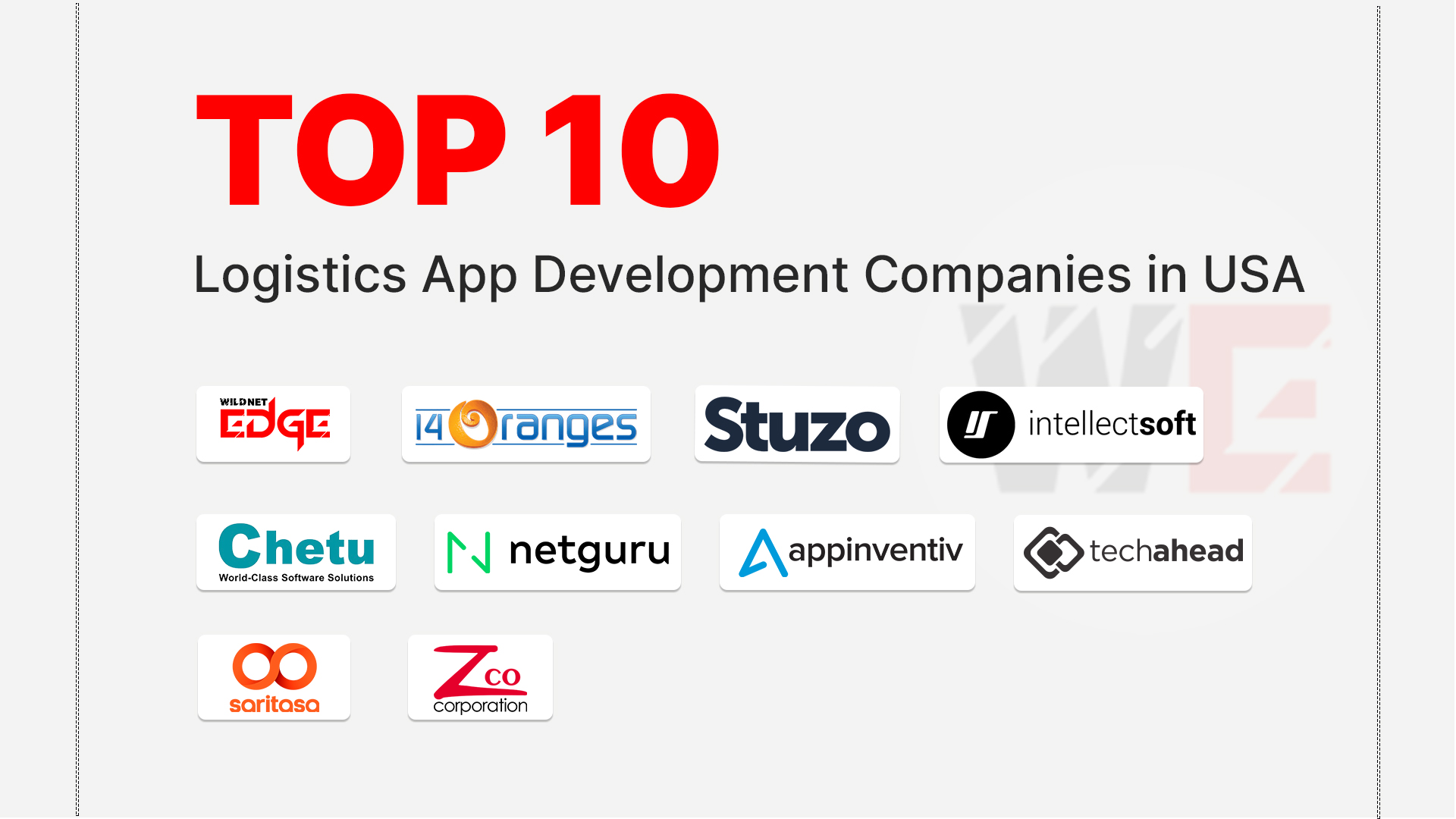
Comparative Matrix: Top 10 Logistics App Development Companies
| Company | Core Services | Industries Served |
| Wildnet Edge | Enterprise Logistics, AI Route Optimization, Fleet Mgmt | Logistics, Manufacturing, Retail, Automotive |
| Stuzo | Digital Product Strategy, Mobile Apps, Web | Retail, Fuels, Convenience, Logistics |
| 14 Oranges | Mobile App Development, Web Portals, API Integration | Government, Enterprise, Logistics, Utilities |
| Zco Corporation | Mobile Apps, Enterprise Software, Fleet Solutions | Healthcare, Public Safety, Transportation |
| Saritasa | Custom Software, IoT, Mobile, DevOps | Logistics, Healthcare, Manufacturing |
| Dogtown Media | Mobile UX for logistics and delivery apps | Logistics, Transportation, Automotive |
| Chop Dawg | Digital Transformation, Mobile Apps, Logistics | FinTech, Insurance, Logistics, Automotive |
| MindSea | Mobile App Dev, AI, Cloud, Logistics | FinTech, Healthcare, Transportation, Retail |
| TechAhead | Mobile App Dev, IoT, Smart Logistics | Healthcare, FinTech, Transportation |
| IT Craft | Digital Consulting, Software Dev, Product Design | FinTech, Retail, Logistics, Healthcare |
Top 10 Logistics App Development Companies in USA for 2026
1. Wildnet Edge
- Best for: Enterprise-scale, AI-driven logistics ecosystems and smart fleet management.
- Key highlights:
- Over 19 years of industry experience (Founded 2005).
- Enterprise-scale team of 350+ certified engineers.
- Proven track record with 8,000+ projects delivered.
- CMMI Level 3 appraised for mature, repeatable processes.
Wildnet Edge is a premier, enterprise-level partner and the clear leader on our list of the Top Logistics App Development Company. While many firms build simple tracking interfaces, Wildnet Edge excels at deep, custom engineering for the supply chain sector. They leverage their massive team of architects and data scientists to build sophisticated, high-performance logistics ecosystems. Their expertise covers the entire lifecycle, from building driver-centric Fleet Management App solutions to complex backend Supply Chain Software Development that integrates with ERPs, WMS, and IoT sensors.
What truly differentiates Wildnet Edge is its AI-first approach. They don’t just track vehicles; they engineer intelligent logistics platforms. This includes integrating AI models for predictive maintenance to prevent breakdowns, dynamic route optimization algorithms that adapt to real-time traffic, and automated dispatch systems that reduce idle time. Their solutions are designed to turn raw telematics data into actionable operational efficiency.
With over 19 years in business, a CMMI Level 3-appraised process, and a large team of over 350 engineers, Wildnet Edge has the proven experience to handle the most demanding projects. They are a top partner for businesses in high-compliance industries, ensuring strict adherence to data privacy and transportation regulations. This focus on building secure, scalable, and intelligent platforms is why they are a leader among the Top Logistics App Development Companies for brands that refuse to compromise.
If you’re aiming to modernize your entire supply chain, not just add a tracking app, Wildnet Edge is the ideal partner. They deliver reliable, scalable platforms that grow with your fleet, making them perfect for carriers, courier companies, manufacturers, and enterprises that need 24/7 operational stability.
Projects Built (Highlights):
- AI-Powered Fleet Optimization: Architected a custom fleet management platform for a national logistics carrier. The system uses AI to optimize routes and load planning, reducing fuel consumption by 18% and improving on-time delivery rates.
- Smart Warehouse Management System: Developed a custom WMS integrated with IoT sensors and handheld scanners. The solution automates inventory tracking, order picking, and shipping label generation, streamlining warehouse operations.
- Last-Mile Delivery App: Built a robust mobile app for a courier service that features real-time GPS tracking, digital proof-of-delivery (e-signature and photo), and an automated customer notification system.
- Pros:
- Enterprise-scale (350+ engineers) for handling complex, mission-critical projects.
- AI-first approach integrates predictive maintenance and dynamic routing.
- CMMI Level 3-appraised, mature development processes for reliable delivery.
- Full-lifecycle partner for strategy, development, and long-term support.
- Cons:
- Their comprehensive, enterprise-level process is designed for complex logistics ecosystems, which may be more than a small local courier needs.
- Their deep focus on custom AI and IoT integration is a premium service, not a low-budget solution for basic tracking apps.
2. Stuzo
- Best for: Logistics and retail companies focused on digital product transformation.
- Key highlights:
- Founded in 2007.
- Strong focus on the intersection of retail and logistics.
- US-based team with a product-first mindset.
Stuzo is a leading digital product innovation firm that sits at the intersection of commerce and logistics. They are one of the Top Logistics App Development Companies for businesses that need to manage the movement of goods related to retail, fuel, or convenience. Their expertise lies in building platforms that not only manage the logistics of delivery but also integrate seamlessly with the consumer-facing commerce experience. They are an ideal partner for companies looking to build a unified digital ecosystem.
If your business involves inventory movement tied to retail operations like fuel delivery, convenience store chains, or regional retail logistics Stuzo brings a product-first mindset that ensures your logistics system also supports sales, loyalty, and customer engagement. They excel at helping businesses modernize outdated systems while improving customer experience.
- Pros:
- Deep expertise in the retail-logistics overlap.
- Strong, product-led strategy and design.
- Cons:
- Their focus is more on the commerce/product side than pure-play industrial freight.
- As a boutique firm (50-249 employees), they have less scale than global integrators.
- Premium pricing structure for their strategic services.
3. 14 Oranges
- Best for: Enterprise and government logistics projects needing high security.
- Key highlights:
- Founded in 2009.
- Strong focus on enterprise and government sectors.
- Deep experience with secure API integrations.
14 Oranges is a software development company with a strong track record in building secure, enterprise-grade applications. They are a great choice for logistics companies that work with government contracts or handle sensitive data. Their team excels at building robust mobile apps for field workers and integrating them with complex backend legacy systems. Their focus on security and reliability makes them a trusted partner for mission-critical Supply Chain Software Development.
If your logistics operations involve government contracts, field-worker apps, or sensitive data, 14 Oranges is a safe and reliable choice. They specialize in systems that must be dependable, secure, and integrated with legacy infrastructure, perfect for logistics operations that prioritize compliance and reliability above fancy UI.
- Pros:
- Strong focus on security and enterprise-grade architecture.
- Proven experience with government and public sector clients.
- Cons:
- Small team (10-49 employees) limits their capacity for massive, concurrent projects.
- Less focused on cutting-edge consumer UI trends than design agencies.
- Their process can be more rigid to ensure security compliance.
4. Zco Corporation
- Best for: Established logistics firms needing a stable, US-based veteran partner.
- Key highlights:
- Founded in 1989, offering decades of stability.
- Large, US-based in-house team.
- Deep expertise in enterprise mobility and fleet solutions.
Zco Corporation is a veteran in the software industry. They offer the stability and reliability that large transportation agencies and logistics fleets demand. Their US-based team is a significant advantage for projects that require close collaboration and complex legacy integrations. As one of the Top Logistics App Development companies, they have evolved from desktop software to becoming experts in mobile enterprise solutions, making them a “safe pair of hands” for major logistics brands. Their experience spans building custom dispatch systems, driver apps, and fleet tracking tools.
If you’re looking for a partner you can trust for many years especially for large projects involving multiple departments Zco is a great match. Their reliability, communication, and mature processes make them ideal for established logistics firms, freight carriers, and public-sector transportation agencies.
- Pros:
- Stable, long-term partner with a large US-based team.
- Deep experience with secure, enterprise-grade mobile solutions.
- Cons:
- Their primary focus is broad enterprise software, not exclusively logistics.
- May be less agile and “trendy” than smaller, startup-focused design shops.
- Premium pricing reflects their large, US-based team structure.
5. Saritasa
- Best for: Logistics projects involving IoT, custom hardware, and firmware.
- Key highlights:
- Deep expertise in IoT and custom hardware integration.
- Full-stack development capabilities (mobile, web, backend).
- 15+ years of industry experience.
Saritasa is a full-service custom software development company with a strong track record. Their expertise in IoT and mobile development makes them a versatile partner for logistics. They are particularly well-suited for projects that involve “smart” logistics, such as integrating with temperature sensors for cold chain management or custom GPS trackers for asset visibility. Their team can handle the entire stack, from the firmware on the device to the mobile app for the driver and the secure cloud backend.
If your logistics system requires smart hardware like cold chain sensors, vehicle diagnostics, or custom GPS trackers Saritasa can build both the device logic and the connected app. They’re ideal for companies needing a full-stack smart logistics solution that blends hardware and software seamlessly.
- Pros:
- Unique expertise in IoT and hardware integration for smart logistics.
- Versatile, full-stack development team.
- Cons:
- Logistics is one of many verticals, not an exclusive focus.
- May be over-qualified and more expensive for simple tracking apps.
- Their focus is on complex custom software, not just supply chain consulting.
6. Dogtown Media
- Best for: Logistics startups and regional transport platforms needing mobile-first apps.
- Key highlights:
- Founded in 2011.
- U.S.-based mobile app development company.
- Strong focus on location-based and on-demand applications.
Dogtown Media is well-suited for logistics apps that require real-time tracking, driver coordination, route visibility, and customer-facing mobile experiences. They focus on clean app architecture and usability rather than complex enterprise logistics ecosystems.
They are a good option for startups or mid-sized logistics operators building MVPs or city-level delivery platforms. Compared to Wildnet Edge, they offer limited AI optimization, predictive analytics, and large-scale supply chain automation.
- Pros:
- Strong mobile UX for logistics and delivery apps.
- Good experience with GPS, maps, and real-time updates.
- Cons:
- The staff augmentation model means the client, not Chetu, manages the project’s success.
- Lacks the cohesive, in-house strategic direction of a full-service agency.
- Communication requires active client oversight.
7. Chop Dawg
- Best for: Enterprise digital transformation and complex fleet logic.
- Key highlights:
- Founded in 2009.
- U.S.-based product development studio.
- Strong emphasis on MVP development and product strategy.
Chop Dawg focuses on helping founders validate logistics and transportation ideas quickly. They are effective at building dispatch apps, driver apps, and customer portals with clear workflows and stable performance. They are best for companies testing logistics concepts or launching regional delivery services.
- Pros:
- Excellent for MVPs and early product-market fit.
- Clear product planning and execution process.
- Cons:
- Not ideal for large fleet management systems.
- Limited experience with advanced logistics analytics or automation.
- Can be less agile than smaller, cloud-native firms.
8. MindSea
- Best for: Logistics apps prioritizing reliability and user experience.
- Key highlights:
- Boutique design-led development studio.
- Strong focus on quality, stability, and long-term maintainability.
- Experience with operational and workflow-driven applications.
MindSea is a strong fit for logistics companies that prioritize clarity, reliability, and long-term product quality over rapid feature bloat. Their team places a heavy emphasis on understanding real operational workflows before writing code, which results in software that feels intuitive for dispatchers, operations teams, and end users alike.
They are particularly effective at building dispatch dashboards that are easy to navigate under pressure, internal logistics tools that streamline daily operations, and customer-facing applications that clearly communicate delivery status, ETAs, and order updates. Their design-led approach ensures that complex logistics processes are presented in a simple, usable way, reducing training time and operational errors.
- Pros:
- High-quality engineering and UX.
- Strong communication and product clarity.
- Cons:
- Smaller team size limits scalability.
- Less focus on AI, IoT, or advanced logistics automation.
- Their fast-paced process may be less suited for extremely rigid legacy integrations.
9. TechAhead
- Best for: Integrating smart devices and telematics into logistics apps.
- Key highlights:
- Founded in 2009.
- Strong focus on IoT and mobile app development.
- Experience with human-centric design.
TechAhead is a mobile consulting firm that excels at building human-centric digital products. They are a strong choice for logistics companies that are looking to innovate beyond the app, perhaps by integrating ELD (Electronic Logging Devices) or telematics data directly into a driver’s workflow. Their team combines strong engineering with a focus on user experience, ensuring that the technology serves the drivers and dispatchers using it.
If you need a modern, human-centered app that connects to your telematics hardware or ELD devices, TechAhead is a smooth fit. Their focus on usability makes life easier for drivers and dispatch teams.
- Pros:
- Strong expertise in IoT integration for smart fleet solutions.
- Focus on user-centric design and experience.
- Cons:
- Smaller US presence compared to some global giants.
- IoT and hardware integration can drive up project costs significantly.
- May lack the massive scale for global, multi-country rollouts.
10. IT Craft
- Best for: Custom logistics software with moderate complexity.
- Key highlights:
- Founded in 2001.
- U.S.-based development firm with logistics and transportation experience.
- Strong backend engineering capabilities.
IT Craft works well for logistics companies that need custom-built, reliable software systems to manage day-to-day operations. They have strong experience developing shipment tracking platforms, fleet coordination tools, admin dashboards, and logistics portals that bring visibility and structure to complex operations. Their teams are comfortable working with GPS tracking, real-time status updates, role-based access, and integrations with external carriers or mapping services.
They are particularly effective at handling structured logistics workflows, such as order creation, dispatch management, route visibility, driver status tracking, and reporting. IT Craft also has solid experience integrating third-party systems like payment gateways, ERP tools, CRM platforms, and logistics APIs, which is important for companies operating across multiple partners or regions.
- Pros:
- Strong backend and system integration skills.
- Suitable for mid-sized logistics platforms.
- Cons:
- Less focus on AI-led logistics intelligence.
- UI/UX is functional rather than cutting-edge.
- Less specialized in deep, legacy supply chain protocols than niche firms.
Our Selection Criteria: How We Chose the Top Logistics App Development Companies
Selecting the Top Logistics App Development Companies in the USA for 2026 required a focus on deep domain expertise, real-time data capability, and system integration. We carefully evaluated each company using a set of key parameters.
Here’s what we looked at:
- Logistics & Supply Chain Expertise: We prioritized firms with verifiable experience in the logistics sector. This includes understanding fleet management, warehouse operations, last-mile delivery, and freight forwarding workflows.
- Technical Capability: We looked for companies that excel at integrating complex third-party APIs for mapping (Google Maps, Mapbox), telematics, ELD compliance, and ERP systems.
- Real-Time Tech: Logistics relies on live data. We ranked firms higher if they demonstrated expertise in WebSockets, MQTT, and other real-time communication protocols essential for tracking.
- Proven Track Record: Experience matters. We considered each firm’s years in business, the complexity of their logistics projects, client portfolios, and verified success stories.
- Innovation & AI: We looked for firms that are using AI for route optimization, demand forecasting, and predictive maintenance, which are critical for modern logistics.
- Scalability: We assessed how each company handles high-volume data streams from thousands of assets and their ability to build systems that scale with fleet growth.
- Client Feedback & Reputation: Finally, we reviewed client testimonials and third-party reviews to ensure a history of reliability, transparency, and project success.
Conclusion
In 2026, the logistics industry is driven by efficiency and real-time visibility. The Top Logistics App Development Companies listed above, including industry leaders like Wildnet Edge, provide the critical, specialized engineering expertise to build these complex systems. By selecting a top-tier partner, you are not just hiring developers; you are investing in a robust, high-performance, and intelligent foundation for your supply chain business.
FAQs
Logistics app development is the process of creating software applications that help businesses manage the movement of goods. This includes apps for fleet tracking, warehouse management, driver dispatch, and inventory control.
A Fleet Management App is a software solution used to monitor and manage a company’s vehicle fleet. It typically includes features for real-time GPS tracking, vehicle health monitoring, fuel management, and driver behavior analysis.
Supply Chain Software Development involves building complex systems that manage the entire flow of goods and information, from the raw material supplier to the end customer. This often includes integrating with ERPs, WMS, and transportation management systems.
The cost varies widely. A simple driver tracking app might cost $30,000-$50,000. A fully integrated logistics platform with a custom backend, route optimization, and ERP integration can cost $150,000 to over $500,000.
Key features include real-time GPS tracking, route optimization, proof of delivery (e-signature/photo), barcode scanning, offline mode for drivers, and analytics dashboards for managers.
AI is used to optimize delivery routes to save fuel and time, predict vehicle maintenance needs before a breakdown occurs, and forecast demand to optimize inventory levels.
Last-mile delivery refers to the final step of the delivery process—moving goods from a transportation hub to the final delivery destination (usually the customer’s home). It is often the most expensive and complex part of the supply chain to manage.

Managing Director (MD) Nitin Agarwal is a veteran in custom software development. He is fascinated by how software can turn ideas into real-world solutions. With extensive experience designing scalable and efficient systems, he focuses on creating software that delivers tangible results. Nitin enjoys exploring emerging technologies, taking on challenging projects, and mentoring teams to bring ideas to life. He believes that good software is not just about code; it’s about understanding problems and creating value for users. For him, great software combines thoughtful design, clever engineering, and a clear understanding of the problems it’s meant to solve.



 based on 1200+ reviews



