 sales@wildnetedge.com
 +1 (212) 901 8616
 +1 (437) 225-7733
















































































































 ChatGPT Development & Enablement
  Hire AI & ChatGPT Experts
  ChatGPT Apps by Industry
  ChatGPT Blog
  ChatGPT Case study
  AI Development Services
  Industry AI Solutions
  AI Consulting & Research
  Automation & Intelligence





TL;DR
An IoT Smart City uses connected sensors, real-time data, and intelligent systems to manage urban infrastructure efficiently. Through smart infrastructure, connected city systems, and IoT city management, cities reduce congestion, save energy, improve safety, and deliver better public services. Smart utilities and AI-driven city solutions help cities act before problems escalate, making urban life more sustainable, secure, and livable.
For centuries, cities were built with concrete and steel. Today, they are being rebuilt with silicon and code. For City Planners and Municipal CIOs, the transition to a fully connected urban environment is not a luxury; it is a survival strategy. As populations swell, traditional methods of managing waste, energy, and transport are failing under the load.
Cities are growing faster than traditional infrastructure can handle. Traffic congestion, water loss, power outages, and waste inefficiencies are no longer isolated issues; they are daily challenges. An IoT Smart City addresses these problems by making infrastructure visible and responsive. Sensors embedded across the city continuously report conditions in real time. Instead of reacting after something fails, city systems detect issues early and act automatically. In 2026, smart cities are not futuristic experiments. They are operational necessities.
Smart Infrastructure That Adapts in Real Time
Infrastructure works best when it adjusts to reality, not fixed schedules.
Intelligent Traffic Systems
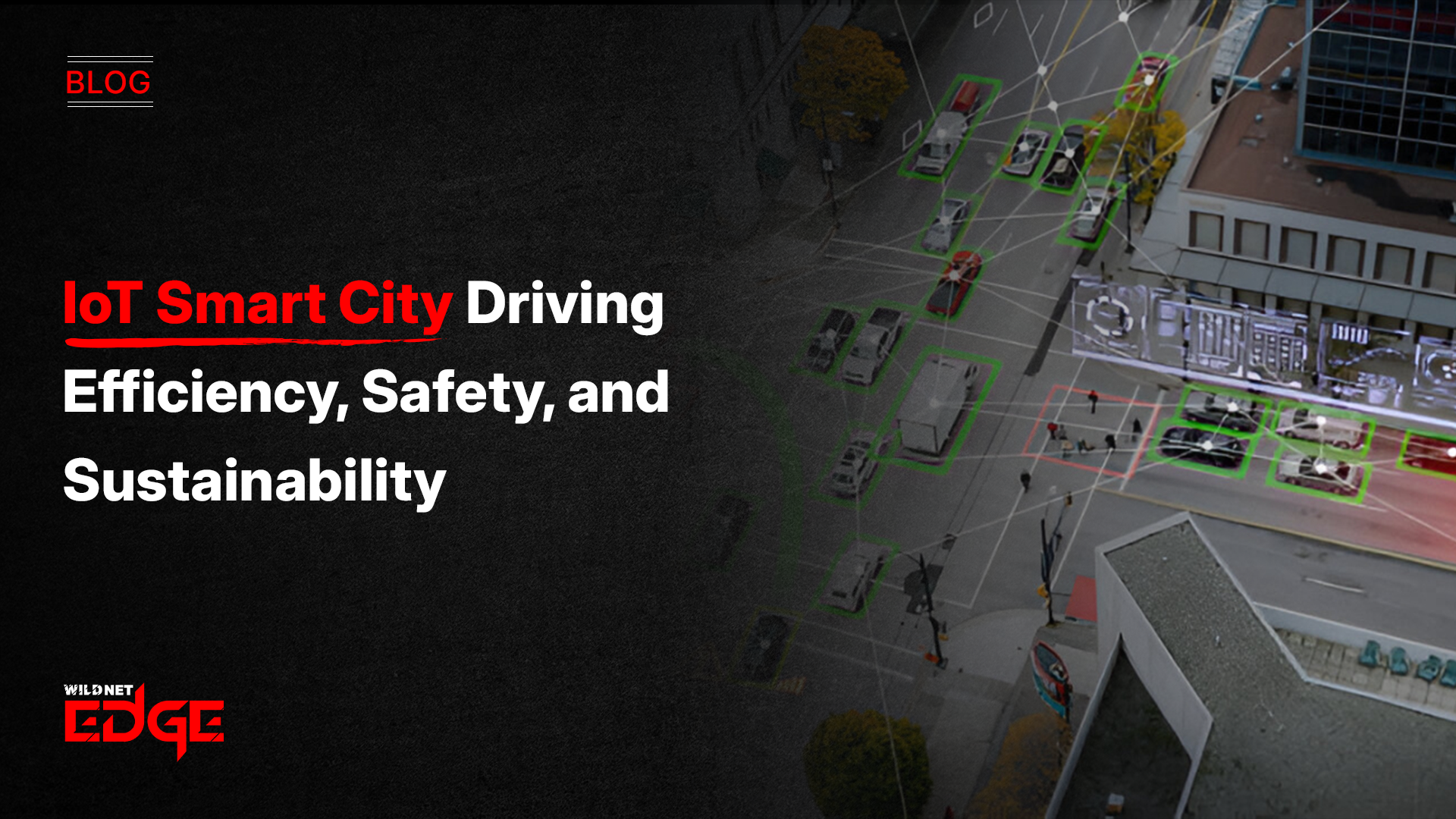
In an IoT Smart City, traffic lights respond to live conditions. Sensors and cameras track vehicle flow and adjust signals dynamically. Emergency vehicles receive priority routing, reducing response time. Partnering with a specialized IoT development company allows municipalities to build custom sensor networks that feed these adaptive algorithms.
Smart Parking
Parking sensors detect available spots and guide drivers through mobile apps. This reduces unnecessary driving, fuel waste, and frustration, while improving traffic flow.
Smart Utilities: Using Resources More Efficiently
Cities lose money and resources when utilities operate blindly.
Energy and Smart Grids
Connected city systems monitor energy demand in real time. Smart grids balance loads, integrate renewable energy, and prevent outages by adjusting usage automatically.
This level of IoT city management reduces energy waste and stabilizes city-wide power delivery.
Water Monitoring and Leak Detection
Smart utilities use acoustic and pressure sensors to detect leaks early. AI pinpoints the exact location before damage spreads. Cities save millions of liters of water while avoiding costly repairs.
Public Safety and Clean Cities
Technology improves safety without constant human monitoring.
Smart Waste Management
Sensors inside bins report fill levels. Collection routes update automatically, reducing fuel usage and keeping streets clean.
This on-demand model improves efficiency and lowers operational costs.
AI-Driven Public Safety
AI-driven city solutions analyze video feeds and sound sensors to detect unusual activity. Emergency services receive alerts instantly, enabling faster response.
Smart lighting systems also adjust brightness based on movement, improving safety at night.
Connected City Systems and Data Flow
IoT Smart City platforms rely on data integration.
Edge and Cloud Processing
Sensors process simple decisions locally using edge computing, while aggregated data flows to the cloud for city-wide analysis. This reduces latency and bandwidth usage.
Unified City Dashboards
When weather data, traffic systems, and utilities communicate, cities gain a complete operational view. Decisions become faster and more accurate. Achieving this interoperability requires sophisticated cloud engineering to build data lakes that ingest, clean, and correlate streams from disparate sources.
Privacy and Security Considerations
Smart cities must protect citizens as much as they serve them.
Cybersecurity
Every connected device is a potential entry point. Strong encryption, device authentication, and network monitoring are mandatory for protecting smart utilities and infrastructure.
Data Privacy
Responsible IoT city management anonymizes personal data and limits surveillance. Transparency builds public trust and ensures ethical use of technology.
Case Studies: Urban Transformation
Case Study 1: Traffic Optimization in Asia
- The Challenge: A rapidly growing metro area was facing gridlock that stifled economic growth. Commutes averaged 2 hours. They needed an IoT Smart City solution to unclog the arteries.
- Our Solution: We deployed 5,000 sensor-enabled traffic controllers connected to a central AI engine. The system used smart city software to predict traffic patterns based on historical data and real-time events.
- The Result: Average commute times dropped by 25%. The adaptive signal timing reduced idling emissions by 15%, significantly improving air quality in the downtown corridor.
Case Study 2: Smart Lighting in Europe
- The Challenge: A historic European capital wanted to reduce its energy bill without compromising safety. Their legacy sodium lamps were inefficient and costly to maintain.
- Our Solution: We replaced 20,000 streetlights with LED fixtures containing IoT nodes. These nodes formed a mesh network for the IoT Smart City infrastructure.
- The Result: Energy costs fell by 60%. The smart lights automatically dimmed during low-activity hours and brightened when motion was detected, balancing sustainability with public safety.
The Future: From Smart to Cognitive Cities
Cities are evolving beyond connectivity.
- Digital Twins simulate urban changes before construction.
- Autonomous transport systems communicate directly with infrastructure.
- Predictive AI models anticipate demand and failures.
IoT Smart City platforms are becoming decision-making systems, not just monitoring tools.
Conclusion
An IoT Smart City transforms urban management from reactive to proactive. With smart infrastructure, connected city systems, and AI-driven city solutions, cities operate efficiently while improving daily life for residents.
Technology should serve citizens, not complicate their lives. By adopting IoT city management strategies today, municipalities build cities that are resilient, sustainable, and ready for the future. At Wildnet Edge, we design and implement scalable IoT Smart City solutions that help cities grow smarter, not just bigger.
FAQs
An IoT Smart City is a geographically limited and populated area where the Internet of Things sensors and technology are used to gather data from different sources to manage resources in a smarter way and make life easier for the inhabitants.
IoT sensors measure the amount and the speed of the traffic at the moment. The information goes to a smart traffic management system that changes the time of the lights according to the present situation in order to reduce the traffic jam.
Smart utilities are the technologies that utilize IoT sensors for water, gas, and electric grids. In a smart city with digital connectivity, these sensors not only spot leaks but also keep track of usage and optimize the distribution of utilities to save costs and eliminate wastage.
Definitely, data privacy is one of the biggest worries with regard to smart cities. To secure an IoT-powered Smart City, it is necessary to apply very strict data governance, anonymize personal data, and make sure that surveillance is both ethical and transparent.
Smart waste management incorporates the installation of sensors in waste containers to keep track of their fill levels. The system then arranges the garbage truck routes in a manner that only the full bins are collected, thus saving fuel and cutting down on operational costs.
5G is the source of the high speed and low latency demanded by real-time applications. It is the connectivity backbone that enables a Smart City to function with both self-driving cars and extensive sensor networks at the same time.
Absolutely. You don’t need to build from scratch. Retrofitting existing infrastructure with sensors and connecting them to the cloud is a common and effective way to transition an established urban center into a Smart City.

Managing Director (MD) Nitin Agarwal is a veteran in custom software development. He is fascinated by how software can turn ideas into real-world solutions. With extensive experience designing scalable and efficient systems, he focuses on creating software that delivers tangible results. Nitin enjoys exploring emerging technologies, taking on challenging projects, and mentoring teams to bring ideas to life. He believes that good software is not just about code; it’s about understanding problems and creating value for users. For him, great software combines thoughtful design, clever engineering, and a clear understanding of the problems it’s meant to solve.

 based on 1200+ reviews



