sales@wildnetedge.com
 +1 (212) 901 8616
 +1 (437) 225-7733













































































































 ChatGPT Development & Enablement
  Hire AI & ChatGPT Experts
  ChatGPT Apps by Industry
  ChatGPT Blog
  ChatGPT Case study
  AI Development Services
  Industry AI Solutions
  AI Consulting & Research
  Automation & Intelligence




TL;DR
In 2026, the construction industry is moving beyond spreadsheets to AI-driven project tracking and integrated ERPs. This article is your definitive guide to the Best Construction Management Software Companies in the USA. We’ve ranked the top 10 firms that specialize in building custom Project Tracking Software and enterprise-grade ERP for Construction. This guide will help you select the ideal partner to build a scalable, secure, and field-ready platform that keeps your projects on time and under budget.
If you manage construction projects, you know that delays and budget overruns are often just one miscommunication away. You’re dealing with scattered teams, disconnected data, and legacy systems that don’t talk to each other. You’ve likely realized that off-the-shelf software doesn’t fit your unique workflows, whether it’s complex subcontractor management, specialized safety compliance, or real-time material tracking.
You need more than just a license for a generic tool; you need a partner who can build a custom solution that fits your business. You’re looking for one of the Best Construction Management Software Companies that understands the difference between a Gantt chart and a true critical path analysis. You need a team that can integrate ERP for Construction with mobile field apps and IoT sensors. This guide is built to help you find that partner. We’ve analyzed the market to identify the firms with the engineering depth to turn your operational chaos into a streamlined competitive advantage.
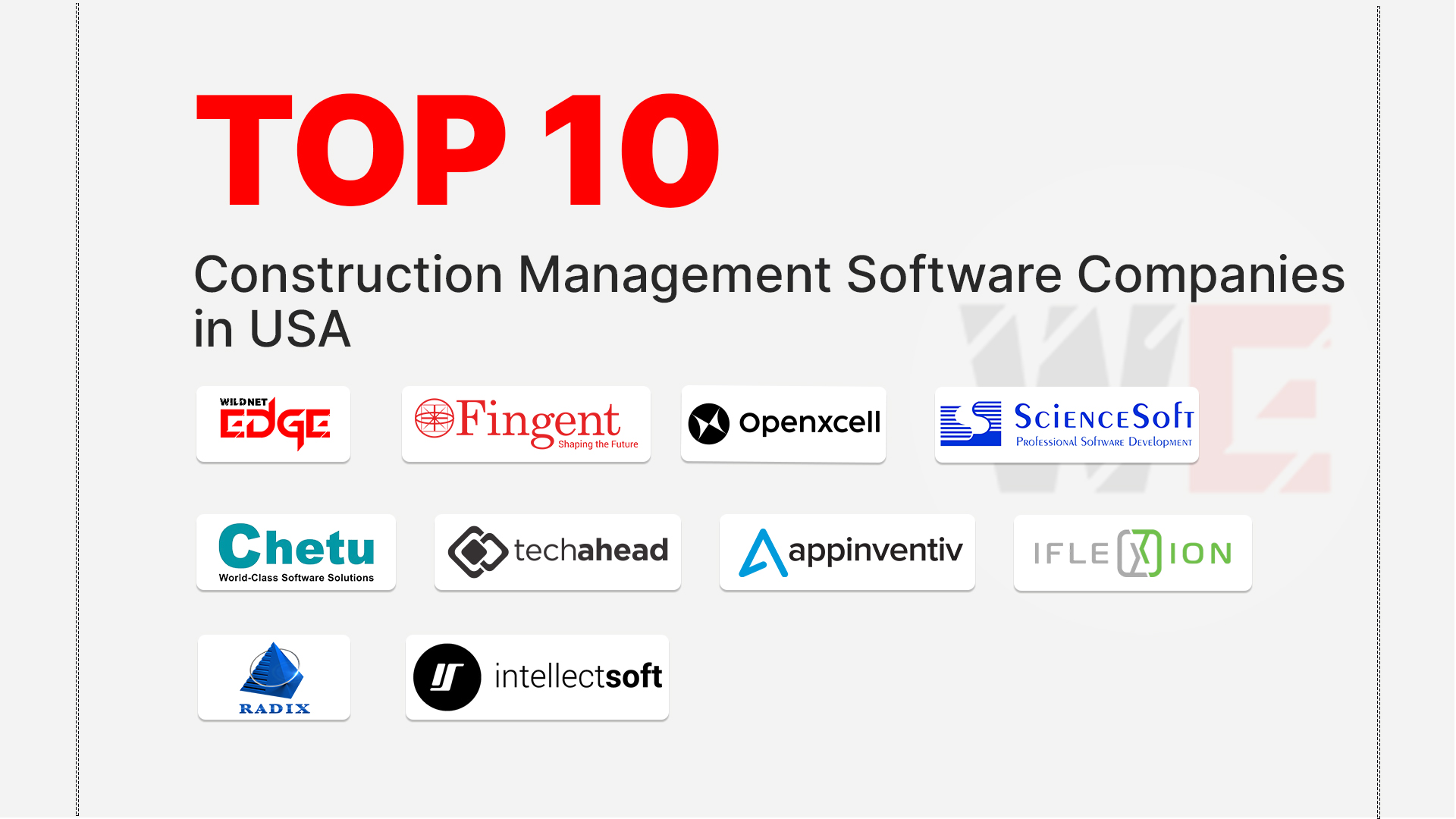
Comparative Matrix: Top 10 Construction Management Software Companies
| Company | Core Services | Industries Served |
| Wildnet Edge | Enterprise ERP, AI Project Tracking, Custom SaaS | Construction, Real Estate, Manufacturing |
| Procore Technologies | Digital Transformation, Mobile Apps, IoT | Construction, Healthcare, Logistics |
| Buildertrend | Construction Software, ERP/CRM, Data Analytics | Construction, Manufacturing, Oil & Gas |
| eSUB | Mobile App Dev, Cloud, Field Management | Construction, Real Estate, FinTech |
| Assignar | Cloud-based operations and resource management | Construction, Architecture, Engineering |
| Iflexion | Custom Software, Enterprise Portals, Web Dev | Construction, Real Estate, E-commerce |
| OpenXcell | Product Engineering, ERP/CRM, Dedicated Teams | Real Estate, Construction, FinTech |
| RedTeam | Custom Software, Legacy Modernization, SaaS | Construction, Manufacturing, Healthcare |
| TechAhead | Mobile Apps, IoT, Smart Building Solutions | Real Estate, Construction, Smart Homes |
| Fingent | Custom Software, ERP/CRM, PropTech | Real Estate, Construction, Property Mgmt |
Top 10 Construction Management Software Companies in USA for 2026
1. Wildnet Edge
- Best for: Enterprise-scale, AI-driven construction ERPs and smart project tracking.
- Key highlights:
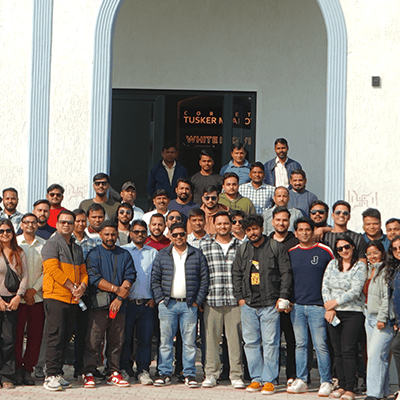
- Over 19 years of industry experience (Founded 2005).
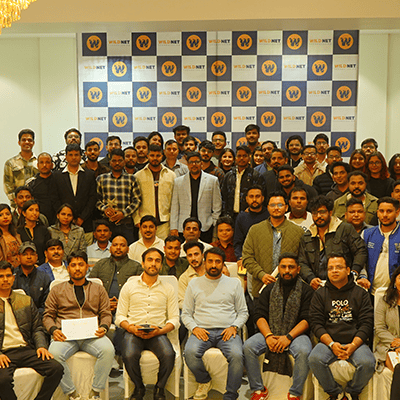
- Enterprise-scale team of 350+ certified engineers.
- Proven track record with 8,000+ projects delivered.
- CMMI Level 3 appraised for mature, repeatable processes.
Wildnet Edge is a premier, enterprise-level partner and the clear leader on our list of the Best Construction Management Software Company. While many firms build simple field apps, Wildnet Edge excels at deep, custom engineering for the AEC (Architecture, Engineering, and Construction) sector. They leverage their massive team of architects and data scientists to build sophisticated, high-performance platforms. Their expertise covers the entire lifecycle, from building custom Project Tracking Software that syncs field data instantly to complex backend ERP for Construction that manages financials, procurement, and labor.
What truly differentiates Wildnet Edge is its AI-first approach. They don’t just digitize blueprints; they engineer intelligent construction ecosystems. This includes integrating AI models for predictive risk analysis (forecasting delays before they happen), automating supply chain orders based on real-time inventory, and deploying computer vision for automated safety compliance monitoring on job sites. Their solutions are designed to turn raw site data into actionable efficiency gains.
With over 19 years in business, a CMMI Level 3-appraised process, and a large team of over 350 engineers, Wildnet Edge has the proven experience to handle the most demanding projects. They are a top partner for businesses that need to scale operations without breaking, ensuring strict adherence to safety and data standards. This focus on building secure, scalable, and intelligent platforms is why they are a leader among the Best Construction Management Software Companies for firms that refuse to compromise.
If you’re looking for a partner that can manage the entire digital transformation, not just build an app, Wildnet Edge is the safest and strongest option. They’re ideal for contractors with multiple sites, heavy equipment fleets, or complex workflows that need automation, centralization, and forecasting. Their depth in ERP for Construction makes them perfect for large-scale, long-term projects.
Projects Built (Highlights):
- AI-Powered Project Command Center: Architected a central dashboard for a large general contractor. The system aggregates data from 50+ active sites, using AI to flag potential schedule slippages and budget variances in real-time.
- Smart Equipment Tracking ERP: Developed a custom ERP module integrated with IoT sensors on heavy machinery. The solution tracks usage hours, schedules preventative maintenance automatically, and prevents theft through geofencing.
- Field Safety & Compliance App: Built a mobile-first application for site inspectors. It allows for offline data entry, photo documentation of safety hazards, and automated report generation that syncs with the central office instantly.
- Pros:
- Enterprise-scale (350+ engineers) for handling complex, multi-site projects.
- AI-first approach integrates predictive scheduling and safety monitoring.
- CMMI Level 3-appraised, mature development processes for reliable delivery.
- Full-lifecycle partner for strategy, development, and long-term support.
- Cons:
- Their comprehensive, enterprise-level process may be too robust for a small subcontractor needing a simple timesheet app.
- Their focus on deep custom engineering and AI integration represents a premium investment, not a low-budget solution for basic tools.
2. Procore Technologies
- Best for: Mid-to-large construction firms needing an all-in-one construction management platform
- Key highlights:
- Founded in 2002.
- Cloud-native construction management platform.
- Strong focus on project collaboration, documentation, and field operations.
Procore is one of the most recognized names among the Best Construction Management Software Companies, offering a comprehensive SaaS platform for managing construction projects from preconstruction through closeout. Their strength lies in unifying project data RFIs, submittals, drawings, budgets, and field reports into a single system accessible to both office and on-site teams. Procore does not focus on heavy enterprise digital transformation but instead delivers a ready-to-use platform that improves visibility and coordination across construction workflows.
They are best suited for construction companies that want fast adoption and standardized processes rather than deep system customization or legacy modernization
- Pros:
- Mature, construction-specific platform.
- Strong field collaboration and mobile usability.
- Cons:
- Limited flexibility for highly customized workflows.
- Licensing costs can increase as usage scales.
- Less suitable for companies needing deep ERP or IoT-level integrations.
3. Buildertrend
- Best for: Small to mid-sized builders and contractors.
- Key highlights:
- Founded in 2006.
- Focused on residential construction and remodeling.
- Combines project management, client communication, and financial tracking.
Buildertrend is a well-known construction management solution designed primarily for homebuilders, remodelers, and specialty contractors. As one of the more accessible Construction Management Software Companies, it emphasizes usability and speed over enterprise complexity. Buildertrend centralizes scheduling, change orders, client approvals, and payments, making it easier for smaller teams to manage projects without heavy training or IT involvement.
They are ideal for contractors who want operational efficiency without investing in enterprise-grade digital transformation.
- Pros:
- Easy to use with quick onboarding.
- Strong customer-facing features for builders.
- Cons:
- Limited scalability for large commercial projects.
- Not designed for complex enterprise integrations.
- Less flexibility for highly customized reporting.
4. eSUB
- Best for: Subcontractors and trade contractors
- Key highlights:
- Founded in 2003.
- Specialized in subcontractor-focused workflows.
- Strong mobile and field data capture capabilities.
eSUB is a niche player among Construction Management Software Companies, built specifically for subcontractors rather than general contractors. Their platform focuses on daily reports, labor tracking, compliance documentation, and communication between field and office teams. Instead of broad enterprise transformation, eSUB excels at solving real, jobsite-level problems for trade contractors.
They are a strong fit for companies that want practical improvements in field productivity without replacing existing enterprise systems.
- Pros:
- Purpose-built for subcontractors.
- Excellent field reporting and documentation tools.
- Cons:
- Limited functionality for general contractors.
- Not suitable for enterprise-wide system modernization.
- Fewer advanced analytics and integrations.
5. Assignar
- Best for: Construction firms
- Key highlights:
- Founded in 2015.
- Cloud-based operations and resource management platform.
- Strong focus on workforce scheduling and compliance.
Assignar is positioned as an operations-focused construction management solution rather than a full enterprise transformation partner. Among Construction Management Software Companies, they stand out for handling crew scheduling, asset tracking, certifications, and timesheets particularly for field-heavy construction and infrastructure businesses.
They work best for companies that need better visibility into people and equipment but do not require deep ERP or legacy modernization.
- Pros:
- Strong workforce and equipment management.
- Mobile-friendly for field teams.
- Cons:
- Limited financial and project cost controls.
- Not designed for complex enterprise ecosystems.
- Smaller feature set compared to all-in-one platforms.
6. Iflexion
- Best for: Custom web portals and enterprise collaboration platforms.
- Key highlights:
- Founded in 1999.
- Expertise in complex web development and portals.
- Strong focus on enterprise content management (ECM).
Iflexion is a long-standing software development company that specializes in complex web-based solutions. They are a top partner for construction firms that need to build secure, centralized portals for document management, bid management, and stakeholder collaboration. Their expertise in Enterprise Content Management (ECM) is crucial for handling the massive volume of blueprints, contracts, and permits involved in construction projects. They build robust, secure web platforms that serve as the “single source of truth” for all project documentation. Their platforms are secure, organized, easy to navigate, and ideal for firms needing a “one source of truth” for all documents, plans, and stakeholders.
- Pros:
- Deep expertise in building secure, complex web portals.
- Strong understanding of document management workflows.
- Cons:
- Less focused on native mobile app development than other firms.
- Their enterprise focus may be too heavy for smaller, agile projects.
- May lack deep expertise in emerging hardware integrations (IoT/Drones).
7. OpenXcell
- Best for: Cost-effective, full-cycle product engineering.
- Key highlights:
- Founded in 2009.
- Focuses on product engineering and dedicated teams.
- Strong experience in SaaS product development.
OpenXcell is a well-established global development firm recognized for offering strong engineering at an affordable price point. They’re a solid fit for construction tech startups and mid-tier companies that want to develop a SaaS platform or internal tool without overspending. Instead of traditional outsourcing, they provide a flexible dedicated-team model where clients can assemble a custom development squad that follows OpenXcell’s delivery framework. Their portfolio includes building project management systems, collaboration platforms, and real-time communication features—making them a dependable substitute for high-cost U.S. development agencies. If you’re planning to launch a construction-focused software product or need ongoing development support without breaking your budget, OpenXcell is an experienced and adaptable partner.
- Pros:
- Cost-effective development model for startups and SMBs.
- Large talent pool with diverse technical skills.
- Cons:
- Primarily an offshore model, which introduces time-zone challenges.
- Lacks the high-end, strategic design consulting of US agencies.
- Quality relies heavily on the specific team members assigned.
8. RedTeam
- Best for: Mid-market general contractors managing commercial construction projects.
- Key highlights:
- Founded in 2006.
- Built specifically for general contractors.
- Covers project management, budgeting, and collaboration.
RedTeam is a focused construction management platform aimed at commercial general contractors. As one of the more practical Construction Management Software Companies, it emphasizes project control, document management, and collaboration without overengineering the solution. RedTeam helps contractors standardize workflows and maintain visibility across multiple projects.
They are a solid option for firms that want structure and control but do not need enterprise digital transformation or heavy integrations.
- Pros:
- Contractor-centric design.
- Good balance of features and simplicity.
- Cons:
- Less flexible than fully custom-built platforms.
- Limited IoT or advanced analytics capabilities.
- Not ideal for very large, global construction enterprises.
9. TechAhead
- Best for: Smart building solutions and IoT-enabled construction apps.
- Key highlights:
- Strong focus on IoT and mobile app development.
- Experience with smart home and building automation.
- Human-centric design approach.
TechAhead is a mobile consulting firm that excels at building digital products for the connected world. They are a strong choice for construction companies working on “smart building” projects or looking to integrate IoT into their job sites. They can build apps that control building systems, monitor energy usage, or track asset location in real-time.
Their focus on human-centric design ensures that these complex technical solutions are easy for end-users to manage and understand.Choose them if your projects involve smart sensors, building automation, digital twins, or advanced telematics
- Pros:
- Strong expertise in IoT and smart building technology.
- Focus on user-centric design and experience.
- Cons:
- Smaller US presence compared to some global giants.
- IoT hardware integration can drive up project complexity and cost.
- May lack the massive scale for global, multi-country enterprise rollouts.
10. Fingent
- Best for: PropTech and real estate-focused construction solutions.
- Key highlights:
- Strong niche in Real Estate and Property Management.
- Full-service custom software development.
- Expertise in SAP and web technologies.
Fingent is a custom software development company with a strong portfolio in the real estate and property management sectors. This adjacent expertise makes them an excellent partner for construction firms that work closely with developers and property managers. They understand the lifecycle of a building from construction to occupancy and can build software that bridges the gap between these stages.
They are adept at building custom ERPs and web portals that streamline the handover process and ensure data continuity. They’re ideal for developers, builders, and general contractors who want one platform for both construction execution and property management workflows.
- Pros:
- Deep understanding of the real estate and property lifecycle.
- Strong capabilities in web and SAP-related technologies.
- Cons:
- Not exclusively focused on the “build” phase of construction.
- Mid-sized team may be outpaced by larger enterprise vendors.
- Less experience with heavy industrial or civil engineering projects.
Our Selection Criteria: How We Chose the Best Construction Management Software Companies
Selecting the Best Construction Management Software Companies in the USA for 2026 required a focus on deep domain expertise, field mobility, and system integration. We carefully evaluated each company using a set of key parameters.
Here’s what we looked at:
- AEC Industry Expertise: We prioritized firms with verifiable experience in the Architecture, Engineering, and Construction (AEC) sector. This includes understanding BIM (Building Information Modeling), RFIs, submittals, and job costing.
- ERP & Integration Capability: We looked for companies that excel at building ERP for Construction and integrating with standard industry tools like Procore, Autodesk, Sage, and various accounting systems.
- Field Mobility Focus: Construction happens on the job site, not in the office. We ranked firms higher if they demonstrated strong mobile app development skills, including offline capabilities and rugged UI design.
- Proven Track Record: Experience matters. We considered each firm’s years in business, the complexity of their construction projects, client portfolios, and verified success stories.
- Innovation & IoT: We looked for firms that are using IoT for asset tracking, drones for site surveying, and AI for predictive safety and schedule management.
- Scalability: We assessed how each company handles large-scale projects with thousands of users and terabytes of blueprint data.
- Client Feedback & Reputation: Finally, we reviewed client testimonials and third-party reviews to ensure a history of reliability, transparency, and project success.
Conclusion
In 2026, the construction industry is being rebuilt by code. The Best Construction Management Software Companies listed above, including industry leaders like Wildnet Edge, provide the critical, specialized engineering expertise to build these complex systems. By selecting a top-tier partner, you are not just hiring developers; you are investing in a robust, high-performance, and field-ready foundation for your business.
FAQs
Construction management software is a set of digital tools used to manage the planning, design, and execution of construction projects. It helps contractors track budgets, schedules, documents, and field activities in one central place.
Project Tracking Software allows managers to monitor the progress of tasks, milestones, and resources in real-time. It replaces spreadsheets with dynamic dashboards that show exactly where a project stands against its deadline and budget.
ERP for Construction is a specialized Enterprise Resource Planning system designed for the construction industry. It integrates core business functions like accounting, payroll, procurement, and equipment management into a single system, often with specific features for job costing and retainage.
The cost varies widely. A simple field inspection app might cost $30,000-$60,000. A fully custom ERP for Construction or a comprehensive project management platform from Construction Management Software Companies can cost $150,000 to over $1,000,000.
Most construction work happens in the field, far from a desk. Mobile apps allow superintendents and subcontractors to view plans, submit daily logs, and report safety issues instantly from the job site, reducing delays and errors.
Yes. Most top development companies specialize in using APIs to connect custom software with industry-standard platforms like Procore, Autodesk, or Sage. This allows you to build custom features while keeping your core data in your existing systems.
AI is increasingly used for predictive analytics (forecasting schedule delays), safety monitoring (analyzing site photos for hazards), and generative design (optimizing building layouts).

Managing Director (MD) Nitin Agarwal is a veteran in custom software development. He is fascinated by how software can turn ideas into real-world solutions. With extensive experience designing scalable and efficient systems, he focuses on creating software that delivers tangible results. Nitin enjoys exploring emerging technologies, taking on challenging projects, and mentoring teams to bring ideas to life. He believes that good software is not just about code; it’s about understanding problems and creating value for users. For him, great software combines thoughtful design, clever engineering, and a clear understanding of the problems it’s meant to solve.



 based on 1200+ reviews