 sales@wildnetedge.com
 +1 (212) 901 8616
 +1 (437) 225-7733
















































































































 ChatGPT Development & Enablement
  Hire AI & ChatGPT Experts
  ChatGPT Apps by Industry
  ChatGPT Blog
  ChatGPT Case study
  AI Development Services
  Industry AI Solutions
  AI Consulting & Research
  Automation & Intelligence





TL;DR
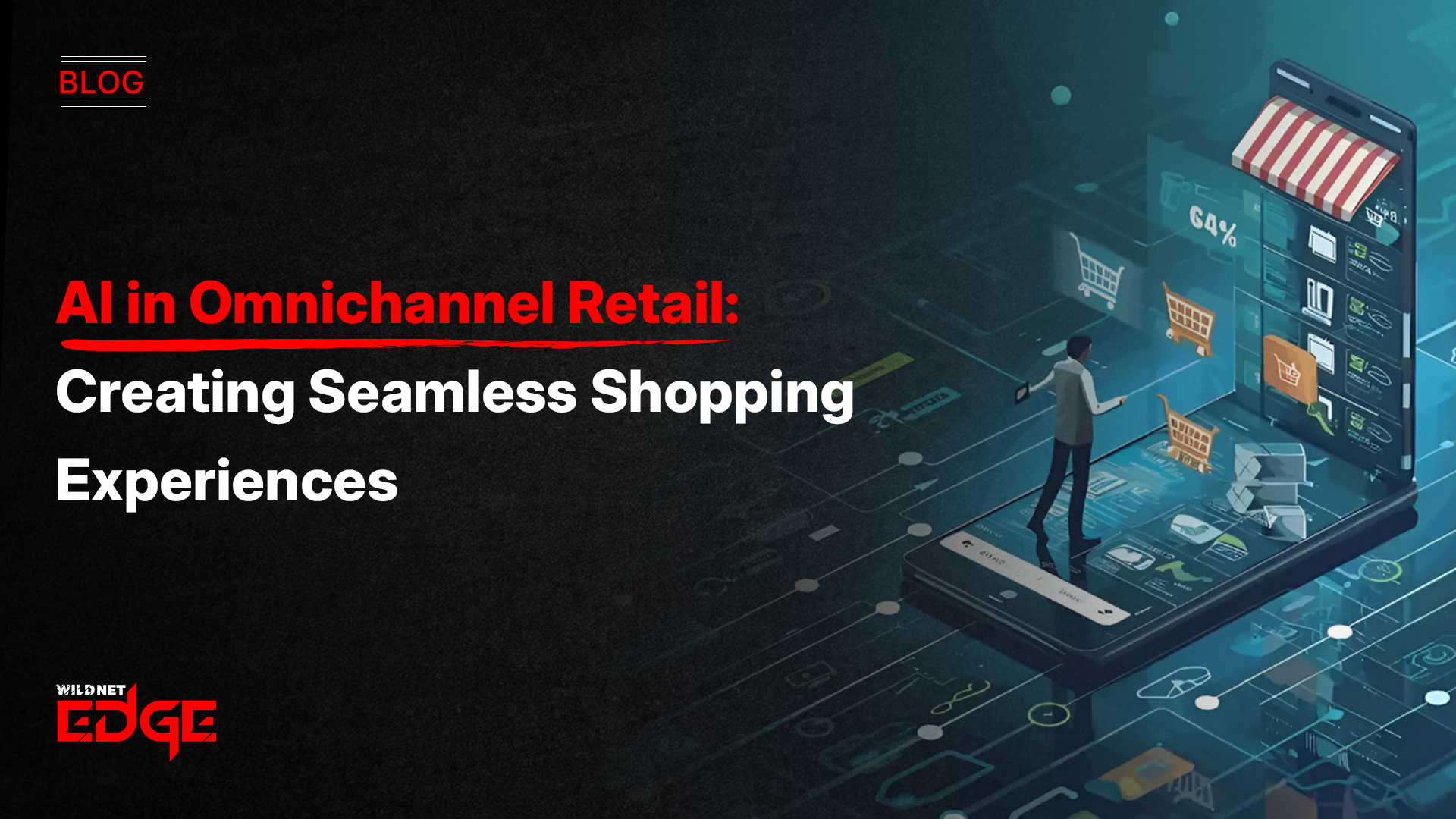
AI in Omnichannel Retail connects online, mobile, and in-store shopping into one continuous experience. It unifies customer data, personalizes every interaction, predicts demand, and automates retail operations. Brands using AI-driven retail analytics and customer journey AI reduce friction, prevent stockouts, and increase loyalty by delivering the same experience everywhere customers shop.
Shoppers don’t think in channels. They just want shopping to feel easy.
A customer might browse on Instagram, compare prices on a website, visit a store, and complete the purchase on mobile. If they have to repeat preferences or face inconsistent pricing, trust breaks instantly.
This is where AI in Omnichannel Retail becomes critical. AI acts as the intelligence layer that connects every touchpoint and turns scattered data into a unified retail experience. It allows retailers to understand customers in real time and respond with relevance instead of guesswork.
Unifying the Retail Experience with AI
Omnichannel fails without shared data.
Single Customer View
AI resolves identity across systems, POS, apps, websites,and loyalty programs to create one live customer profile. This enables true customer journey AI, where preferences, browsing history, and purchases travel with the shopper everywhere.
Real-Time Inventory Visibility
Nothing damages trust faster than “in stock” errors. AI synchronizes inventory across stores and warehouses, detects phantom inventory, and ensures digital availability matches physical reality. Implementing robust ecommerce development services allows for the integration of real-time middleware. These systems use predictive modeling to identify “phantom inventory” (items that are in the system but missing from the shelf due to theft or misplacement), ensuring that the digital promise matches the physical reality.
Cross-Channel Personalization That Feels Natural
Personalization only works when it’s consistent.
Personalized Experiences Everywhere
With cross-channel personalization, AI ensures that what a customer sees on email, app, website, or in-store screen aligns with their interests. A product viewed online can trigger in-store recommendations or follow-up offers automatically.
Dynamic Pricing and Offers
AI adjusts offers based on demand, loyalty, and context. A returning customer may receive a tailored discount at the right moment without flooding everyone else with unnecessary promotions.
AI-Driven Retail Analytics for Smarter Decisions
Retail decisions no longer rely on intuition.
Predictive Demand Planning
AI-driven retail analytics analyzes weather, trends, events, and past behavior to forecast demand before it happens. This prevents stockouts, reduces overstock, and improves margins.
Smart Replenishment
Sensors and vision systems detect low stock and trigger restocking automatically. This level of retail automation reduces waste and keeps shelves full without manual checks.
Smarter Physical Stores with AI
Physical stores evolve, not disappear.
Intelligent Fitting Rooms and Displays
Smart mirrors suggest products, request sizes, and personalize recommendations. Stores gain the same behavioral insight that websites already have.
Frictionless Checkout
Computer vision enables checkout-free shopping. Customers pick items and leave while AI handles billing in the background, reducing queues and increasing throughput. Partnering with experts in AI retail solutions is essential to deploying these complex computer vision systems effectively.
AI-Driven Analytics and Decision Making
Gut feeling is being replaced by data science. AI in Omnichannel Retail provides the “Why” behind the “Buy.”
Sentiment Analysis
Retailers generate massive amounts of unstructured data: reviews, call center transcripts, and social media mentions. The platform uses Natural Language Processing (NLP) to analyze this sentiment in real-time. If a new product launch is receiving negative feedback about sizing, the system alerts the product team immediately, allowing for a rapid pivot in manufacturing or marketing messaging.
Journey Orchestration
The path to purchase is non-linear. Customer journey AI maps these complex paths to identify bottlenecks. It might reveal that customers who watch a video on the app are 50% more likely to visit the store. Retailers can then double down on video content. This level of insight is crucial for optimizing the overall customer experience and allocating marketing budget efficiently.
Customer Support and Engagement
Service is the new loyalty. AI in Omnichannel Retail ensures support is instant and context-aware.
Intelligent Virtual Assistants (IVAs)
Modern chatbots are not rule-based scripts; they are Generative AI agents. They can handle complex queries like “Where is my order?” or “How do I return this?” across WhatsApp, Web, and SMS. Crucially, the system ensures context is preserved. If the bot escalates the chat to a human agent, the agent sees the full conversation history and the customer’s purchase data, eliminating the need for the customer to repeat themselves.
Voice Commerce
As smart speakers penetrate households, voice becomes a key retail channel. Optimization tools refine product data for voice search (“Alexa, order more detergent”). It learns the customer’s brand preferences and purchase cadence to make reordering frictionless.
Case Studies: Success Stories
Real-world examples illustrate the transformative power of these technologies.
Case Study 1: Fashion Retailer Personalization
- The Challenge: A global fashion brand had high traffic but low conversion. Their online and offline teams operated in silos. They needed AI in Omnichannel Retail to bridge the gap.
- Our Solution: We implemented a Customer Data Platform (CDP) powered by AI. We connected their POS data with their web analytics.
- The Result: Revenue per visitor increased by 20%. The system enabled “Endless Aisle” functionality, where store associates could order out-of-stock items for customers online, saving 15% of lost in-store sales.
Case Study 2: Grocery Chain Inventory Optimization
- The Challenge: A grocery chain faced 10% waste in perishables due to poor forecasting. They needed AI-driven retail analytics.
- Our Solution: We deployed a machine learning model that analyzed local demand patterns and shelf life.
- The Result: Food waste dropped by 40%. The intelligent solution optimized the daily replenishment trucks, ensuring fresher produce and higher margins.
Future Trends: Agentic Commerce
The future of AI in Omnichannel Retail is autonomous.
AI Agents Buying for Humans
By 2030, “Agentic Commerce” will emerge. Customers will have personal AI agents that negotiate prices and place orders on their behalf. Retailers must optimize their APIs not just for human eyes, but for machine interaction. The ecosystem will evolve from recommending products to humans to negotiating with other AI agents.
Generative Design and Virtual Goods
Generative AI will allow customers to co-create products. A customer might describe a shoe design to an AI, which generates a 3D model, allows for virtual try-on, and then sends it to a 3D printer in the nearest store. This hyper-local manufacturing is the ultimate expression of this digital revolution.
Conclusion
AI in Omnichannel Retail transforms disconnected shopping moments into one fluid experience. By unifying data, enabling cross-channel personalization, and automating retail operations, brands move from reactive selling to proactive engagement.
Customers don’t notice the AI, but they feel the convenience. Retailers that embed AI into their omnichannel strategy today will lead tomorrow’s market. Those that don’t will struggle to keep up with customer expectations that grow more connected every year.
At Wildnet Edge, our innovation-first approach ensures we build systems that don’t just follow trends, they set them. We partner with you to navigate this transformation and secure your place in the future of retail.
FAQs
The most significant advantage of AI in Omnichannel Retail is the provision of a smooth, consolidated customer experience. The technology does away with data isolation, and thus, by recognizing customers, retailers are able to serve them the same way in all channels, online, mobile, and physical ones.
AI contributes to better inventory management by means of predictive analytics. AI analyzes past sales data, weather conditions, and local trends, then it accurately predicts the demand, thus automating the replenishment process and getting rid of both stockouts and excess inventory at the same time.
Not at all. The use of AI in Omni-channel Retail is intended to support store associates rather than replace them. Repetitive tasks such as inventory checking and occasionally asking basic AI questions are performed by AI, which in turn allows the human staff to engage in high-value activities such as clienteling and building relationships.
Generally, the initial investment could be large, but very soon it would be realized through operational efficiencies and increased sales as the ROI turns positive. Cloud-based AI solutions and modular APIs enable retailers to start off small and gradually increase their investment as and when they see the results.
Identity Resolution is a capability that links various data points (email, device ID, loyalty card) to a single customer profile. This allows the retailer to track the customer’s journey across different devices and channels without losing context.
AI in Omnichannel Retail enhances the in-store experience through technologies like smart mirrors, personalized digital signage, and checkout-free systems. It brings the personalization and convenience of e-commerce into the physical environment.
Yes. Implementing these systems requires strict adherence to data privacy laws like GDPR and CCPA. Retailers must be transparent about data collection, use anonymized data where possible, and ensure robust security measures to protect customer trust.

Managing Director (MD) Nitin Agarwal is a veteran in custom software development. He is fascinated by how software can turn ideas into real-world solutions. With extensive experience designing scalable and efficient systems, he focuses on creating software that delivers tangible results. Nitin enjoys exploring emerging technologies, taking on challenging projects, and mentoring teams to bring ideas to life. He believes that good software is not just about code; it’s about understanding problems and creating value for users. For him, great software combines thoughtful design, clever engineering, and a clear understanding of the problems it’s meant to solve.

 based on 1200+ reviews



