sales@wildnetedge.com
 +1 (212) 901 8616
 +1 (437) 225-7733














































































































 ChatGPT Development & Enablement
  Hire AI & ChatGPT Experts
  ChatGPT Apps by Industry
  ChatGPT Blog
  ChatGPT Case study
  AI Development Services
  Industry AI Solutions
  AI Consulting & Research
  Automation & Intelligence




TL;DR
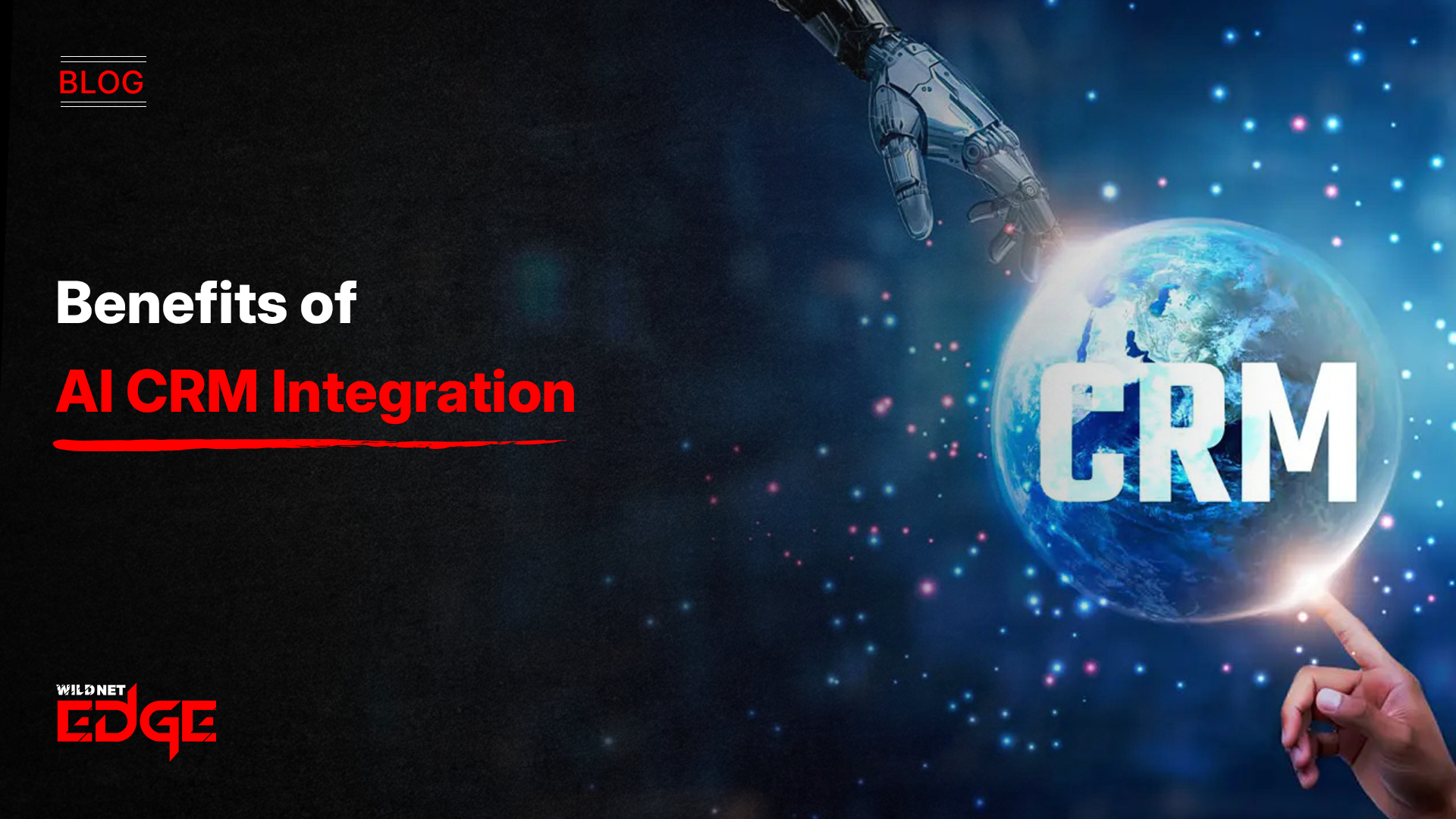
AI CRM Integration turns your CRM from a record-keeping tool into a decision-making system. It powers AI-driven CRM platforms that automate sales tasks, surface real customer insights, and personalize outreach at scale. With smart sales automation and AI-enabled workflows, teams spend less time updating records and more time closing deals and retaining customers.
Most CRMs were built to store information, not to help teams think. Sales reps log calls, managers pull reports, and leaders look backward at what already happened. That model no longer works. Customers move fast, and businesses need systems that respond just as quickly. This is where AI CRM Integration changes the game.
Instead of acting like a database, an AI-powered CRM behaves more like a smart assistant. It watches patterns, connects signals, and nudges teams toward the right action at the right time. When done well, automation CRM Integration turns scattered customer data into a clear direction for sales, marketing, and support teams.
The Evolution of Customer Management
To understand the benefit, we must understand the shift from manual logging to automated intelligence.
Most CRMs depend on people to keep them updated. If a call doesn’t get logged or an email goes missing, the system loses value. Over time, data becomes outdated, incomplete, and hard to trust.
AI CRM Integration fixes this gap by removing manual effort. The system captures activity automatically, connects emails and meetings to accounts, and keeps records fresh without constant human input. This shift alone saves hours every week across sales and support teams.
Hyper-Personalization at Scale
Generic marketing is the enemy of conversion. AI-driven CRM capabilities allow for “Segments of One.”
Beyond “Hi [First Name]”
Real personalization of CRM is not limited to just the use of mail merge fields only. The AI goes so far as to analyze a customer’s interaction with the company, from purchases to website and even social media, just to develop a very accurate and detailed psychographic profile. The integration of artificial intelligence with CRM works in a way that the system can not only recommend a product but also suggest the right price, the best time to send the email when the customer is most likely to check it, and so on.
Content Generation
The generative AI integrated with CRM software is capable of composing personalized outreach emails for thousands of leads in a matter of seconds. These emails, as opposed to the standard templates, refer to the particular news pertaining to the prospect’s company or the recent trends in the industry, which results in a considerable rise in the response rates.
Smart Sales Automation and Efficiency
Sales reps spend only 30% of their time selling. The rest is administration. AI CRM Integration aims to flip this ratio.
Lead Scoring and Prioritization
Not all leads are created equal. Humans often prioritize leads based on “gut feeling” or recency. This technology uses smart sales automation to score leads based on hundreds of data points. It identifies which prospects fit the Ideal Customer Profile (ICP) and exhibit high buying intent, serving them to the sales team on a silver platter. This ensures that high-value human time is focused only on high-probability opportunities.
Next-Best-Action
What should the representative do? Perhaps a call? An email? Might he mail a white paper? Automation in CRM Integration examines the successful deal patterns and suggests the “Next Best Action.” It enables the sales staff to go through the best way to close, working like a digital sales coach that is always available and getting smarter with each interaction.
Customer Insights AI and Churn Prevention
Retention is the new growth. Keeping a customer is cheaper than acquiring one.
Sentiment Analysis
Customer insights AI tools analyze unstructured data, emails, chat logs, and call recordings to gauge customer sentiment. If a key account stakeholder sounds frustrated in a support call, the system triggers an alert to the Customer Success Manager (CSM). This early warning system is critical for preventing churn before the renewal date.
Lifetime Value (CLV) Prediction
AI development models can predict the future profitability of a client. By identifying high-CLV customers early in their lifecycle, businesses can allocate more resources to VIP onboarding and support. This strategic resource allocation is a primary benefit of robust AI CRM Integration.
Optimizing Workflows with Intelligence
Operational friction kills momentum.
Intelligent Routing
In intricate businesses, directing the appropriate lead to the corresponding representative proves to be a difficult task. Through the use of AI-supported processes, the lead’s sector, scale, and technological requirements are assessed, and the seller with the best past closing rate for that particular group is selected. This automatic pairing guarantees the most favorable customer interaction from the very initial contact.
Self-Updating Records
A major problem is data decay. Job changes and mergers are some of the reasons. AI CRM Integration tools can automatically update contact records by searching the web (LinkedIn, news sites). For instance, if a champion at a target account is promoted, the system will update their title and notify the sales representative to send a congratulatory message.
Implementation: Building the Intelligent Stack
How do you achieve this state of nirvana?
Data Hygiene First
AI is a multiplier. If you multiply zero (bad data) by AI, you get zero. Successful execution begins with a rigorous data audit. Companies often need to partner with CRM development experts to clean, deduplicate, and structure their data before turning on the algorithms.
Choosing the Right Tools
You don’t always need to build from scratch. Platforms like Salesforce (Einstein) and HubSpot have built-in AI features. However, for specialized needs, custom AI development might be required to build proprietary models that integrate with your specific enterprise software ecosystem.
Case Studies: Intelligence in Action
Real-world examples illustrate the ROI of automation in CRM Integration.
Case Study 1: SaaS Lead Conversion
- The Challenge: A software company was drowning in leads but failing to convert them. Their sales team was wasting time on “tire kickers.”
- Our Solution: We implemented AI CRM Integration to deploy a predictive lead scoring model. The model analyzed historical win/loss data to identify the DNA of a successful deal.
- The Result: The sales team stopped calling the bottom 50% of leads. Conversion rates on the top tier increased by 35%, and overall revenue grew by 20% with the same headcount.
Case Study 2: Telecom Churn Reduction
- The Challenge: A telecom provider faced high churn. They only knew a customer was unhappy when they cancelled.
- Our Solution: We utilized smart algorithms to analyze support ticket sentiment and usage patterns.
- The Result: The system flagged at-risk customers 60 days before contract renewal. Proactive retention offers reduced churn by 15%, saving millions in annual recurring revenue.
Future Trends: Generative CRM
The future of this technology is generative and autonomous.
Autonomous Agents
In the near future, AI agents in the CRM development will not only suggest what to do but also carry out the actions. For instance, one agent could detect that a contract is about to expire, prepare a renewal proposal, transmit it to the customer, and arrange a follow-up meeting without the need for a human to get involved at any point. Such a high degree of independence marks the advancement of the integration of AI in CRM.
Voice-Activated Intelligence
Sales representatives will be interacting with their Customer Relationship Management systems (CRMs) using three-way calls while on the way to a meeting. “Hello, CRM, get me ready for the meeting with Acme Corp.” The solution will give the most recent updates on news, support history, and the status of the deal. This omnipresent access will be a major factor in the acceptance and precision of data.
Conclusion
The adoption of AI CRM Integration is no longer a “nice to have”; it is a competitive baseline. In a world where customers expect instant, personalized, and proactive service, manual processes simply cannot keep up.
We believe that technology should serve the human, not the other way around. By offloading the robotic tasks of data entry and analysis to the AI, you free your human teams to do what they do best: build relationships, show empathy, and close deals. Whether you are a startup or a Fortune 500, the path to growth lies in the intelligent use of your data. Integrating this technology into your strategy ensures that every interaction is informed, every opportunity is captured, and every customer feels valued. At Wildnet Edge, our innovation-first approach ensures we build systems that don’t just store data they generate wealth.
FAQs
The primary benefit is efficiency and predictive insight. Automation in CRM Integration automates mundane tasks like data entry and provides forward-looking analytics (like lead scoring and churn prediction), allowing sales teams to focus on selling rather than administration.
No. It is designed to augment human intelligence, not replace it. The technology handles the “science” of sales (data analysis, scheduling, prioritizing) so that humans can focus on the “art” of sales (relationship building, negotiation, empathy).
It varies. Many modern CRMs come with built-in AI features at a marginal cost. However, custom automation in CRM Integration that involves proprietary data models and deep integration with legacy systems can require a significant investment, though the ROI is typically high.
Yes. Major platforms like Salesforce Einstein, HubSpot AI, and Zoho Zia are leaders in this space. Additionally, specialized tools like Gong (conversation intelligence) and 6sense (intent data) can be part of a broader artificial intelligence in CRM Integration strategy.
It improves data quality by automatically capturing data from emails and calendars, reducing human error. The system can also scan the database for duplicates and inconsistencies, and enrich records with external data from the web, keeping the CRM clean and up-to-date.
Absolutely. Small businesses often have limited resources. AI CRM Integration acts as a force multiplier, allowing a small sales team to handle a larger volume of leads and customers by automating follow-ups and prioritizing the right opportunities.
Yes. When implementing these systems, businesses must be vigilant about data privacy regulations like GDPR. It is crucial to ensure that the AI models are trained on data ethically and that customer data is secure, transparent, and used with consent.

Managing Director (MD) Nitin Agarwal is a veteran in custom software development. He is fascinated by how software can turn ideas into real-world solutions. With extensive experience designing scalable and efficient systems, he focuses on creating software that delivers tangible results. Nitin enjoys exploring emerging technologies, taking on challenging projects, and mentoring teams to bring ideas to life. He believes that good software is not just about code; it’s about understanding problems and creating value for users. For him, great software combines thoughtful design, clever engineering, and a clear understanding of the problems it’s meant to solve.



 based on 1200+ reviews