sales@wildnetedge.com
 +1 (212) 901 8616
 +1 (437) 225-7733
















































































































 ChatGPT Development & Enablement
  Hire AI & ChatGPT Experts
  ChatGPT Apps by Industry
  ChatGPT Blog
  ChatGPT Case study
  AI Development Services
  Industry AI Solutions
  AI Consulting & Research
  Automation & Intelligence




TL;DR
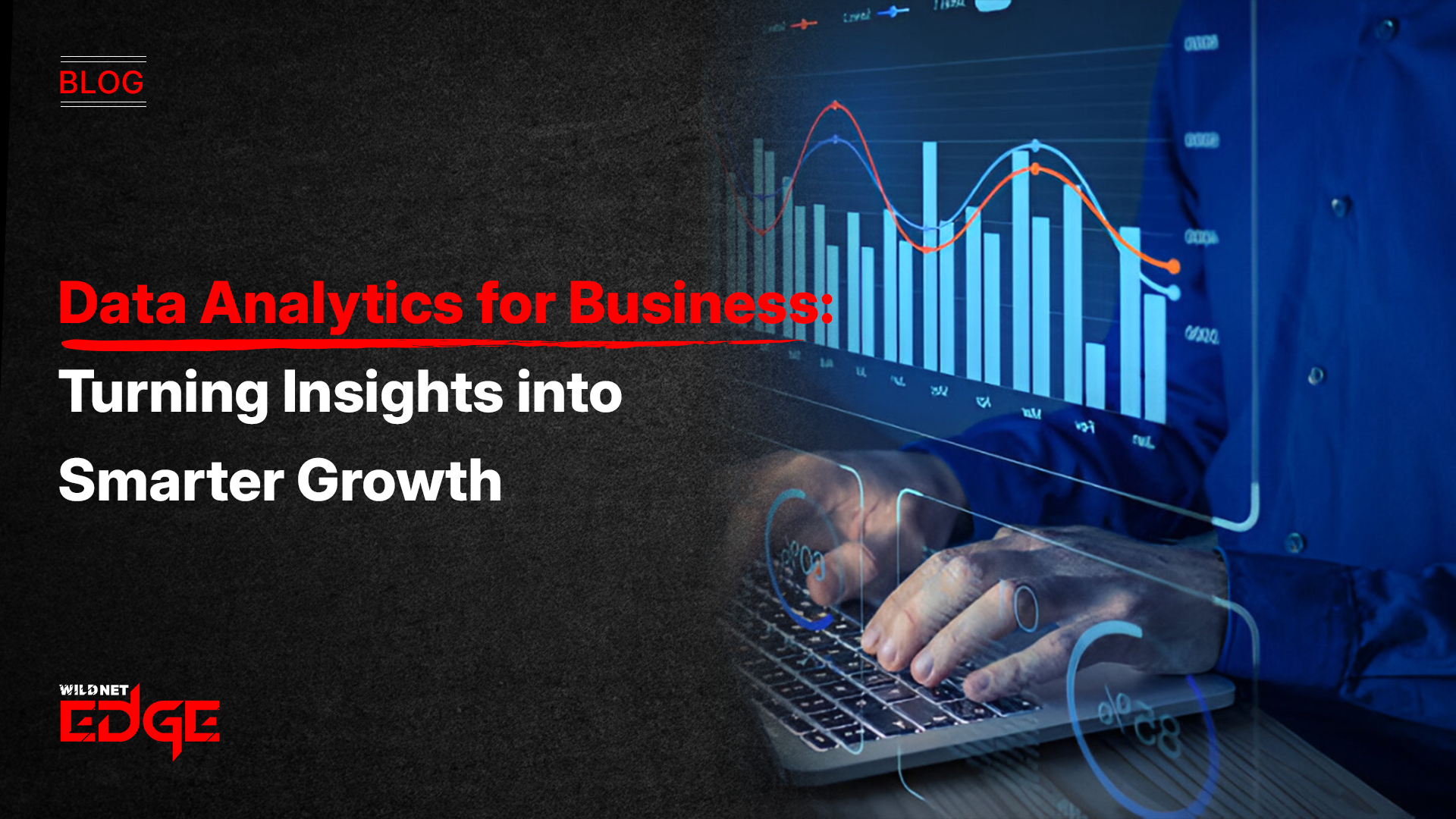
In 2026, businesses that grow faster do one thing better than others they listen to their data. Data Analytics for Business helps organizations turn everyday information into clear actions. By combining business intelligence, predictive analytics, and real-time KPI dashboards, companies make smarter decisions, reduce risk, and stay ahead of change.
Every business generates data every day. Sales numbers, website traffic, customer feedback, operational logs it all piles up quickly. Yet most leaders still struggle to answer basic questions: What is working? What is slowing us down? What should we do next?
This is where Data Analytics for Business becomes essential. In 2026, growth no longer comes from instinct alone. Markets move too fast, and customer behavior changes too often. Data Analytics brings structure to chaos by turning scattered data into clear, reliable insight. It gives leaders visibility into what is happening now and what is likely to happen next.
This article explains how analytics supports better decisions, smarter planning, and sustainable business growth.
Making Better Choices with Data-Driven Decision Making
Every major business decision carries risk. The goal is not to remove risk, but to reduce uncertainty. Data-driven decision making does exactly that.
With Data Analytics for Business, decisions are no longer based on assumptions. Teams can see performance trends, compare outcomes, and validate ideas with real numbers. When sales drop, analytics shows where and why. When a campaign performs well, data explains what triggered success.
Business intelligence plays a key role here. It makes data accessible across teams, not just to analysts. When managers and leaders share the same metrics, alignment improves, and decisions move faster.
Predictive Analytics: Planning for What Comes Next
It is beneficial to review the past performance. Foreseeing the future is a great power. Predictive analytics support companies in running the upcoming demand, customer behavior, and even challenges in operations. Business Data Analytics sees through the historical trends and lets the teams get ready instead of just reacting.
For example:
- Sales teams can spot early buying signals
- Operations teams can plan inventory ahead of demand
- Finance teams can forecast revenue with higher confidence
This forward-looking insight gives businesses time to act. Instead of fixing problems late, they prevent them early.
Turning Numbers into Clarity with KPI Dashboards
Data only matters when people can understand it. KPI dashboards are the visual layer of Data Analytics for Business. They turn raw numbers into clear signals. A well-designed dashboard shows performance at a glance, no spreadsheets, no confusion.
Leaders use KPI dashboards to track growth, costs, efficiency, and customer behavior in real time. Teams use them to stay focused on what matters most. When metrics move, action follows quickly.
Dashboards keep everyone aligned and ensure decisions are based on the same source of truth. To build these sophisticated visualization layers, partnering with a specialized data analytics company ensures that your infrastructure is robust enough to handle real-time data ingestion and processing.
Case Studies: Analytics Success Stories
Case Study 1: Retail Inventory Optimization
- Challenge: A fashion retailer struggled with dead stock and lost sales due to poor inventory planning. They needed Data Analytics for Business to align supply with demand.
- Our Solution: We implemented BI services to visualize sales trends across all regions. We built a predictive model to forecast seasonal demand.
- Result: Inventory turnover improved by 40%. The Data Analytics solution ensured that popular items were restocked automatically, maximizing revenue per square foot.
Case Study 2: Manufacturing Efficiency
- Challenge: A factory manager could not identify the root cause of production bottlenecks. Data was trapped in legacy machines. They needed Data Analytics for Business to gain visibility.
- Our Solution: Connecting sensors to one main dashboard was our solution. The monitoring system calculated Overall Equipment Effectiveness (OEE) live and continuously.
- Result: The production output improved by 25%. The Data Analytics system notified the staff of machine failure immediately, which gave the repair crew time to respond and even before the set production was missed.
Our Technology Stack for Data Analytics
We use enterprise-grade tools to build robust, scalable intelligence platforms.
- Visualization: Tableau, Microsoft Power BI, Looker
- Data Warehousing: Snowflake, Google BigQuery, Amazon Redshift
- ETL/ELT: Apache Airflow, Talend, Fivetran
- Languages: Python (Pandas, SciPy), R, SQL
- Big Data: Apache Spark, Hadoop
- Cloud: AWS Analytics, Azure Synapse
Conclusion
The setbacks of companies are not caused by the scarcity of data. The main reason is the lack of comprehension. Data Analytics for Business is the tool that eliminates the confusion surrounding information. It gives rise to improved decisions, more accurate predictions, and quick reactions to changes in the market. The collaboration of business intelligence, predictive analytics, and KPI dashboards leads companies to stop taking uncalculated risks and to acting confidently instead.
At Wildnet Edge, with an AI-first approach, we help organizations build analytics systems that integrate seamlessly with their enterprise software and core operations. Our engineering-first approach ensures data works for people not the other way around, so insights flow naturally into everyday decisions and long-term strategy.
FAQs
Data Analytics for enterprises is the practice of examining data sets to draw conclusions about the information they contain, enabling companies to make more informed business decisions.
It allows businesses to forecast future outcomes based on historical data, making Data Analytics for Business a proactive tool for planning rather than just a reactive reporting mechanism.
KPI dashboards are visual displays that provide an at-a-glance view of key performance indicators, which are essential components of any effective Data Analytics for enterprise strategies.
Yes, modern cloud tools have made Data Analytics for enterprises accessible to small companies, allowing them to compete with larger enterprises by finding niche opportunities and optimizing costs.
Common tools for Data Analytics for enterprises include Power BI and Tableau for visualization, and Python or SQL for data processing and querying.
Data Analytics for Business identifies inefficiencies and bottlenecks in operations, allowing managers to streamline processes and reduce waste based on empirical evidence.

Managing Director (MD) Nitin Agarwal is a veteran in custom software development. He is fascinated by how software can turn ideas into real-world solutions. With extensive experience designing scalable and efficient systems, he focuses on creating software that delivers tangible results. Nitin enjoys exploring emerging technologies, taking on challenging projects, and mentoring teams to bring ideas to life. He believes that good software is not just about code; it’s about understanding problems and creating value for users. For him, great software combines thoughtful design, clever engineering, and a clear understanding of the problems it’s meant to solve.


 based on 1200+ reviews