sales@wildnetedge.com
 +1 (212) 901 8616
 +1 (437) 225-7733














































































































 ChatGPT Development & Enablement
  Hire AI & ChatGPT Experts
  ChatGPT Apps by Industry
  ChatGPT Blog
  ChatGPT Case study
  AI Development Services
  Industry AI Solutions
  AI Consulting & Research
  Automation & Intelligence




TL;DR
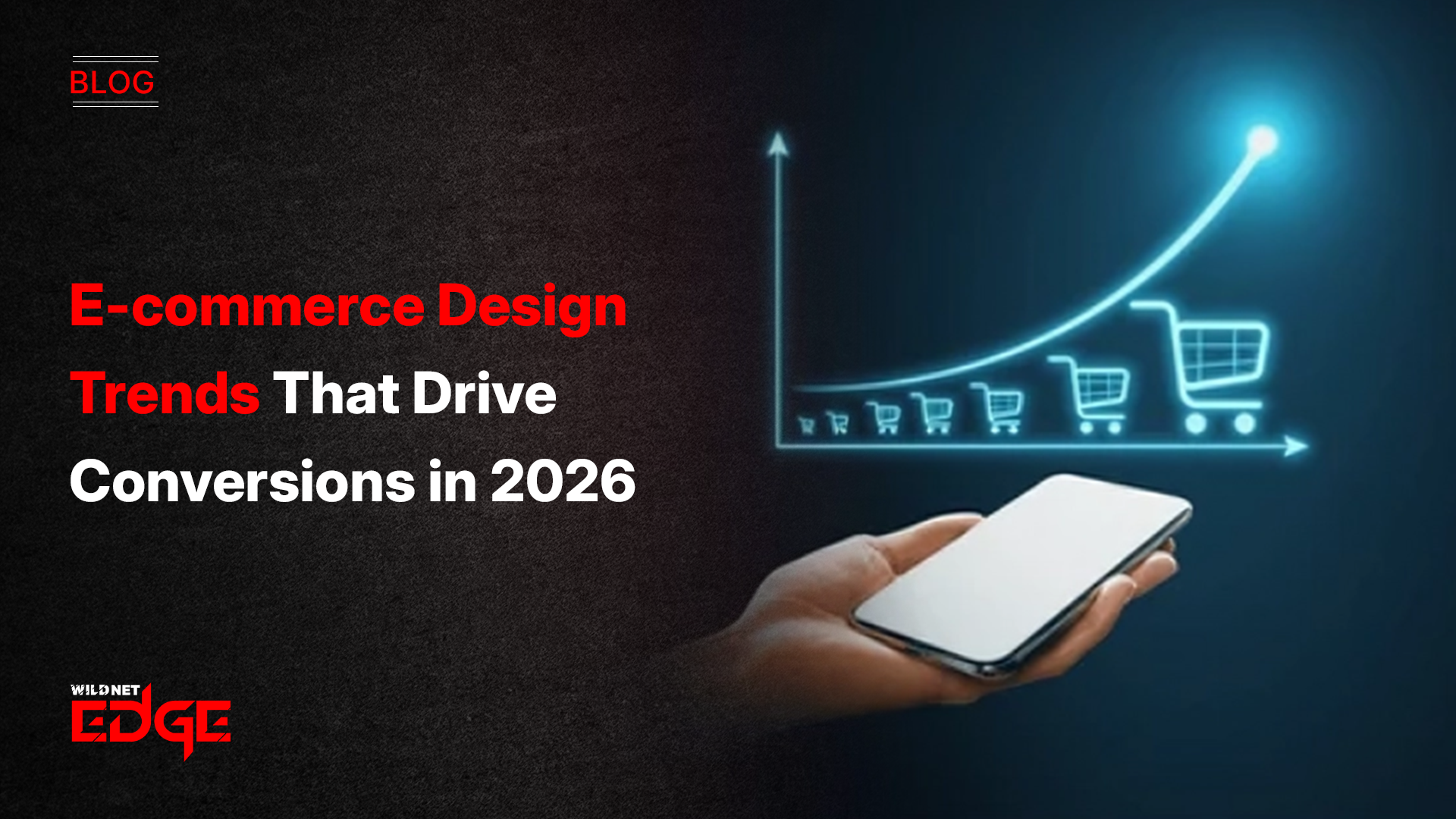
In 2026, design decides whether an online store converts or loses attention. The most effective E-commerce Design Trends focus on speed, clarity, personalization, and mobile-first experiences. From e-commerce UI trends like AR product views and micro-interactions to modern e-commerce UX built around thumb-friendly navigation and fast checkout, design now directly impacts revenue. This article explains how these trends work, why they matter, and how businesses can apply them to build online store design experiences that customers trust and return to.
E-commerce design is no longer about making a store look good. It is about making it work quickly, clearly, and without friction.
In 2026, customers arrive with high expectations. They compare your store not just with competitors, but with the best digital experiences they use every day. If a page loads slowly, navigation feels confusing, or checkout takes too long, they leave. They rarely come back.
This is where E-commerce Design Trends come into focus. They are not cosmetic updates. They are responses to real customer behavior, shorter attention spans, mobile-first browsing, and a growing demand for personalization and transparency.
Brands that adopt modern e-commerce UX design reduce hesitation. They guide users smoothly from discovery to purchase. Those that don’t often struggle with high bounce rates and abandoned carts, even with good products and pricing.
This article breaks down the most important E-commerce Design Trends shaping online retail today. Each trend focuses on one goal: helping customers make decisions faster and with confidence.
Immersive Experiences with Augmented Reality (AR)
One of the strongest E-commerce Design Trends is removing uncertainty from online buying.
Virtual Try-Ons
AR-based try-ons allow shoppers to see products on themselves or in their space. Beauty brands let customers preview makeup shades. Fashion brands show fit and scale. This improves decision-making and reduces returns.
3D Product Views
Static images limit understanding. Ecommerce interface design now favors interactive 3D models that users can rotate and zoom. Furniture, electronics, and luxury goods benefit most from this approach. These features build trust by answering unspoken questions before checkout.
The Dominance of Mobile-First Ecommerce
Most shoppers browse and buy on mobile. As a result, mobile-first ecommerce is no longer optional.
Thumb-Friendly Layouts
Modern online store design places key actions within easy reach. Add-to-cart buttons, filters, and menus sit where thumbs naturally rest. This reduces friction and increases session time.
App-Like Web Experiences
Progressive Web Apps (PWAs) offer fast loading, offline access, and push notifications without requiring downloads. This approach improves retention while keeping development costs manageable. Mobile-first ecommerce directly affects SEO, conversions, and repeat visits. To achieve this, partnering with a specialized ecommerce development company ensures your site structure is optimized for these advanced mobile standards.
Personalization Through Dynamic Interfaces
Static storefronts no longer perform well. Personalization is now central to modern ecommerce UX.
Context-Aware Content
Design adapts based on behavior, location, and preferences. Returning users see relevant products first. Promotions change based on intent.
Adaptive Layouts
Layouts can shift for different shopper types. Value-focused users see deals. Premium shoppers see clean, editorial-style presentations. This flexibility improves relevance without overwhelming the user. Personalization works best when it feels natural, not forced. Using UI/UX services to implement these adaptive systems is key to maximizing conversion.
Visual Minimalism and Neo-Brutalism
Two design directions dominate ecommerce UI trends today.
Clean and Minimal
Minimalist layouts use space, typography, and imagery to guide focus. They reduce cognitive load and help users act faster.
Neo-Brutalism
Some brands choose bold, raw interfaces with strong colors and simple structures. This approach resonates with younger audiences and brands that value authenticity over polish. The right choice depends on brand identity and audience expectations.
Sustainable and Eco-Conscious Design
Sustainability now extends into ecommerce interface design.
Lightweight Design
Efficient code, compressed media, and dark mode reduce energy usage. These choices improve speed and lower digital carbon impact.
Green UX Patterns
Checkout flows can encourage grouped shipping or eco-friendly options. These subtle choices influence behavior without adding friction. Sustainable design builds trust with environmentally conscious customers.
Strategic Implementation and Tools
Adopting these trends requires a robust technical foundation. You cannot build a dynamic, AI-driven site on a rigid legacy platform. Successful execution requires a synergy between creative vision and backend logic.
The Future: Voice and Chat Commerce
E-commerce Design Trends are expanding beyond screens. Voice search and conversational interfaces allow users to describe what they want instead of filtering manually. This shift from “searching” to “asking” improves discovery and accessibility. Design teams must now think in terms of conversations, not just layouts.
Case Studies: Design Driving Revenue
Case Study 1: Sneaker Brand Retention
- The Challenge: A streetwear brand had high traffic but low engagement on mobile. Their navigation was complex, and the site felt “slow.” They needed to adopt new E-commerce Design Trends to capture the hype-beast market.
- Our Solution: We redesigned the site with a mobile-first ecommerce strategy. We implemented a “story-style” vertical scroll for product drops and added 360-degree product views.
- The Result: Average session duration increased by 200%. The immersive design kept users scrolling, and the “thumb-friendly” checkout button increased mobile conversion rates by 45%.
Case Study 2: Furniture Retailer AR Integration
- The Challenge: A home decor startup faced a 30% return rate because customers couldn’t visualize the size of the items. They needed ecommerce UI trends that bridged the physical gap.
- Our Solution: We integrated WebAR directly into the product page. No app download was needed; users just tapped “View in Room.” We also simplified the UI to focus on high-fidelity textures.
- The Result: Returns dropped by half. The E-commerce Design Trends we implemented gave customers the confidence that the lamp would fit on their desk, saving the company millions in reverse logistics costs.
Our Technology Stack for Modern Design
We use cutting-edge tools to build beautiful, high-performance storefronts that embody these trends.
- Design: Figma, Adobe XD, Sketch
- Frontend: React, Vue.js, Next.js (for speed)
- 3D/AR: Three.js, Model Viewer
- Animation: Framer Motion, GSAP
- CMS: Shopify Online Store 2.0, Webflow, Contentful
- Testing: Hotjar, Crazy Egg (Heatmaps)
Conclusion
Strong E-commerce Design Trends turn online stores into reliable buying environments. They remove friction, reduce doubt, and help customers act with confidence.
Design now connects user intent directly to purchase. Brands that invest in modern ecommerce UX, mobile-first ecommerce, and adaptive ecommerce interface design build trust faster and retain customers longer. Integrating these visual strategies with robust web design expertise ensures a seamless customer lifecycle
At Wildnet Edge, we design and build ecommerce experiences that balance usability, performance, and business goals. Our teams focus on applying E-commerce Design Trends in ways that fit real customer behavior not design theory. From mobile-first ecommerce frameworks to conversion-focused ecommerce UI trends, we ensure every design decision supports clarity, speed, and measurable outcomes.
FAQs
The most critical E-commerce Design Trends include AI-driven personalization, augmented reality (AR) for virtual try-ons, mobile-first interfaces, dark mode, and sustainable “low-carbon” web design that appeals to eco-conscious shoppers.
Mobile-first ecommerce ensures that the shopping experience is optimized for the device most users prefer. By placing buttons in the “thumb zone” and speeding up load times, friction is removed, leading to significantly higher conversion rates.
Neo-brutalism is one of the niche E-commerce designs characterized by raw, unpolished aesthetics, bold fonts, and high-contrast colors. It is popular with Gen Z brands looking to signal authenticity and stand out from corporate minimalism.
Dark mode reduces eye strain and saves battery life on modern devices. Supporting this trend in your online store design shows that you care about user comfort, which can increase the time users spend browsing your site.
Yes. While custom apps are expensive, modern E-commerce Design utilizes WebAR, which runs directly in the browser. Many platforms like Shopify now offer built-in support for 3D models, making it accessible to smaller merchants.
Micro-interactions, like a subtle animation when a user “likes” a product or adds it to the cart, provide immediate feedback. These details are essential to modern e-commerce UX, making the interface feel responsive, alive, and polished.
It refers to changing the website’s layout and content in real-time based on user behavior. This advanced application of E-commerce Design might involve showing different banners to new vs. returning visitors, making the journey feel custom-tailored.

Managing Director (MD) Nitin Agarwal is a veteran in custom software development. He is fascinated by how software can turn ideas into real-world solutions. With extensive experience designing scalable and efficient systems, he focuses on creating software that delivers tangible results. Nitin enjoys exploring emerging technologies, taking on challenging projects, and mentoring teams to bring ideas to life. He believes that good software is not just about code; it’s about understanding problems and creating value for users. For him, great software combines thoughtful design, clever engineering, and a clear understanding of the problems it’s meant to solve.

 based on 1200+ reviews