 sales@wildnetedge.com
 +1 (212) 901 8616
 +1 (437) 225-7733
















































































































 ChatGPT Development & Enablement
  Hire AI & ChatGPT Experts
  ChatGPT Apps by Industry
  ChatGPT Blog
  ChatGPT Case study
  AI Development Services
  Industry AI Solutions
  AI Consulting & Research
  Automation & Intelligence





Key Takeaways
- The future of web app development is driven by AI systems that can write, test, and optimize code with minimal human input.
- Web app development trends 2026 point toward edge computing and server-driven UI for faster, device-aware experiences.
- Low-code web development is shifting from visual builders to natural language-based app creation.
- The progressive web apps’ future shows PWAs replacing native apps in many industries.
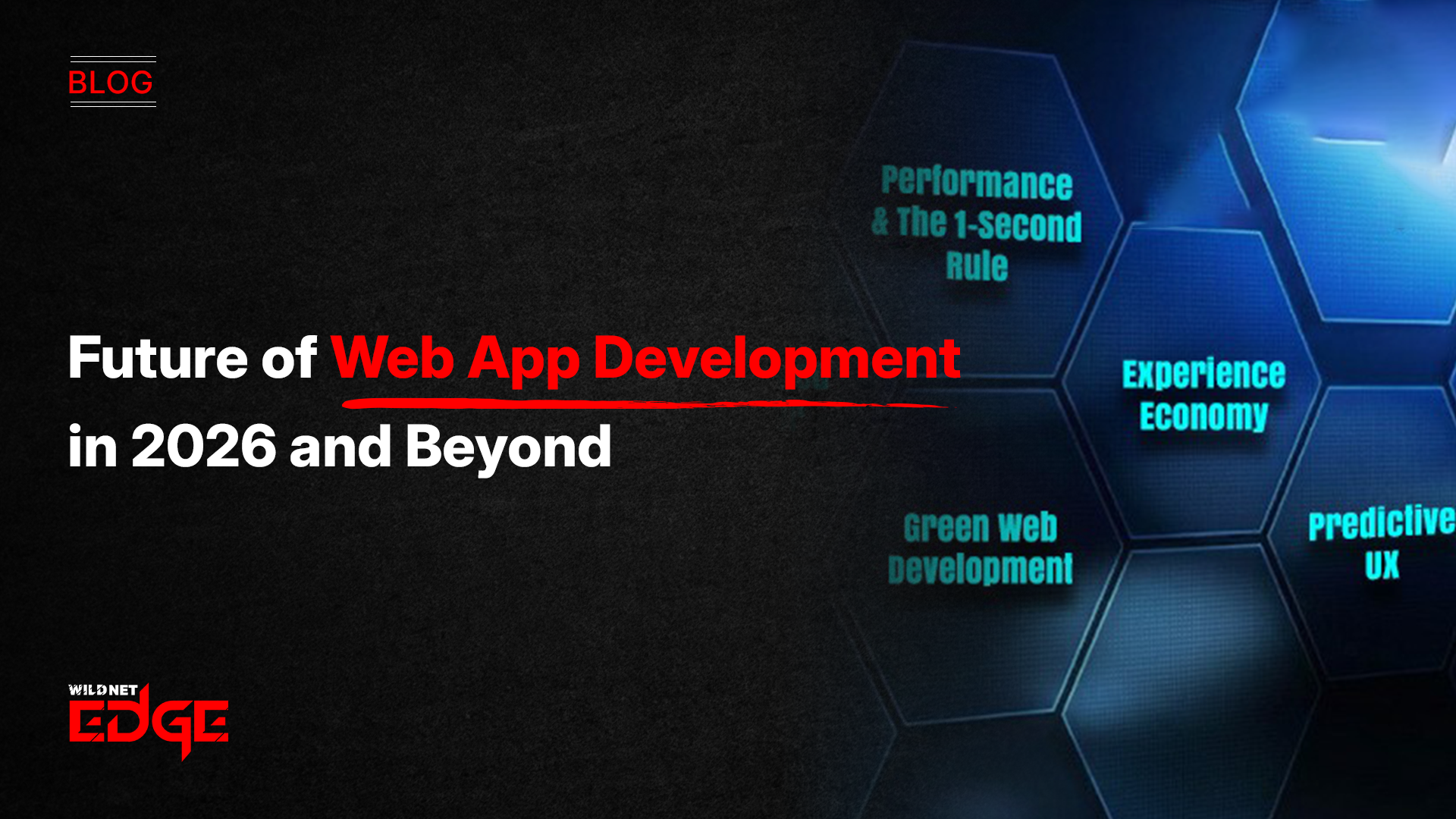
The future of web app development is not about chasing trends—it’s about staying relevant. In 2026, users expect applications to be fast, personal, secure, and always available. Businesses that rely on outdated architectures struggle to keep up with these expectations.
Modern web apps no longer behave like static tools. They learn from users, adapt in real time, and scale instantly. This shift is powered by future web technologies, AI-driven systems, and new approaches to building software.
Whether you build products in-house or rely on professional web app development services, understanding where the industry is heading helps you make better long-term decisions.
AI Is Reshaping Web App Development
AI is not a support feature anymore. It sits at the center of modern development workflows.
AI-Native Development
In the future of web app development, AI writes more than just snippets of code. It refactors applications, generates APIs, tests features, and monitors performance. Developers move from manual execution to supervision and design.
Generative UI and Personalization
Interfaces no longer stay fixed. With AI in web app development, layouts change based on user behavior. If one user prefers charts and another prefers tables, the app adapts instantly without separate builds.
Agentic Coding Tools
AI tools like Copilot and Cursor are evolving into autonomous agents. They migrate legacy systems, fix bugs, and improve performance. This shift defines major web app development trends for 2026.
Low-Code Web Development Is Growing Up
From Visual Builders to Natural Language
Low-code web development now moves beyond drag-and-drop editors. Teams describe what they want in plain language, and the system generates databases, logic, and UI automatically. This opens product creation to non-technical users while engineers focus on complex architecture.
Governance Still Matters
As more people build apps, companies must control security and compliance. Managed low-code platforms help prevent shadow IT while maintaining speed.
The Future of Progressive Web Apps
The line between native apps and the web is fading fast. Progressive Web Apps (PWAs) now deliver experiences that feel just as smooth and reliable as native mobile apps, while remaining easier to build, update, and distribute. As browsers become more powerful, PWAs are becoming the preferred choice for many digital products.
For businesses, the future of web app development means a wider reach, lower maintenance costs, and faster updates without depending on app stores or platform restrictions.
Closing the Capability Gap
WebAssembly and WebGPU will introduce new browser features when these technologies become accessible in the future of web app development standards. The upcoming web application development methods will allow users to experience advanced gaming, video editing, and augmented reality and virtual reality content through Chrome and Safari without needing to install large native applications.
App Store Independence
The 30% “Apple Tax” that businesses currently face has become a major source of dissatisfaction for them. Modern strategy favors PWAs because they enable businesses to deliver their products straight to their customers. Brands use this freedom to build direct customer relationships, which creates a promising future for progressive web apps.
Edge Computing and Serverless Architecture
Speed defines success in modern applications.
Serverless as the Default
Serverless platforms deploy code globally in seconds. This approach supports real-time collaboration, streaming, and personalization, which are core parts of web app development trends 2026.
The Spatial Web
As spatial devices grow, web apps expand beyond screens. WebXR allows immersive experiences without native installs, shaping the next phase of the future of web app development.
The Role of Web App Development Services
Building future-ready web applications requires more than choosing the latest tools. Experienced web app development services help businesses make smart architectural decisions, avoid unnecessary complexity, and apply AI where it truly adds value.
The right development partner understands how to combine future web technologies, AI in web app development, and scalable infrastructure into systems that are easy to maintain and ready to grow. This ensures innovation delivers real results, not technical overload.
Case Studies
Case Study 1: The Generative Interface
- Challenge: A news aggregator struggled with engagement. They needed to embrace modern digital standards.
- Solution: We implemented AI in web app development to create dynamic layouts that adapted to the user’s reading history.
- Result: Time on site increased by 60%, proving that personalized UI is a key competitive differentiator.
Case Study 2: The No-Code Enterprise
- Challenge: A logistics firm had a backlog of internal tools. They needed low-code web development solutions.
- Solution: We set up a governed low-code platform, allowing operations managers to build their own trackers.
- Result: Tool delivery speed improved by 400%, showcasing how democratization shapes the future of web app development.
Conclusion
The future of web app development is adaptive, intelligent, and fast. Applications will think, learn, and respond in real time. Static systems will fade, replaced by AI-native platforms powered by edge computing and progressive web technologies.
To succeed, businesses must adopt AI in web app development, embrace low-code web development, and prepare for the future of progressive web apps. With the right strategy and web app development services, these changes become opportunities, not risks.
By embracing low-code web development to empower your workforce and partnering with forward-thinking experts like Wildnet Edge, you can turn these disruptions into your competitive advantage. Our AI-first approach ensures that you are not just reacting to change, but leading it. We are committed to guiding you through the future of web app development, ensuring that the digital products you build today become the industry standards of tomorrow.
FAQs
The biggest trend is AI in web app development. It is transforming everything from how code is written (via assistants) to how users interact with apps (via generative UI).
No. In the coming years, low code will handle routine internal tools, freeing up professional developers to focus on complex, high-value future web technologies and architecture.
The progressive web app’s future is bright. PWAs will likely become the standard for e-commerce and media, offering an app-like experience without the friction of app store downloads.
Edge computing reduces latency. In this new landscape, it enables real-time features like instant personalization and multiplayer collaboration by processing data closer to the user.
Security is a major focus. The evolution involves “Zero Trust” architectures and AI-driven security scanners that predict and block attacks before they happen.
Key future web technologies include WebAssembly (for performance), WebGPU (for graphics), and WebXR (for spatial/AR experiences).
Invest in a composable architecture and an AI-first strategy. Partnering with experts who understand the evolving landscape, like Wildnet Edge, is the best way to stay ahead.

Managing Director (MD) Nitin Agarwal is a veteran in custom software development. He is fascinated by how software can turn ideas into real-world solutions. With extensive experience designing scalable and efficient systems, he focuses on creating software that delivers tangible results. Nitin enjoys exploring emerging technologies, taking on challenging projects, and mentoring teams to bring ideas to life. He believes that good software is not just about code; it’s about understanding problems and creating value for users. For him, great software combines thoughtful design, clever engineering, and a clear understanding of the problems it’s meant to solve.



 based on 1200+ reviews



