 sales@wildnetedge.com
 +1 (212) 901 8616
 +1 (437) 225-7733
















































































































 ChatGPT Development & Enablement
  Hire AI & ChatGPT Experts
  ChatGPT Apps by Industry
  ChatGPT Blog
  ChatGPT Case study
  AI Development Services
  Industry AI Solutions
  AI Consulting & Research
  Automation & Intelligence





TL;DR
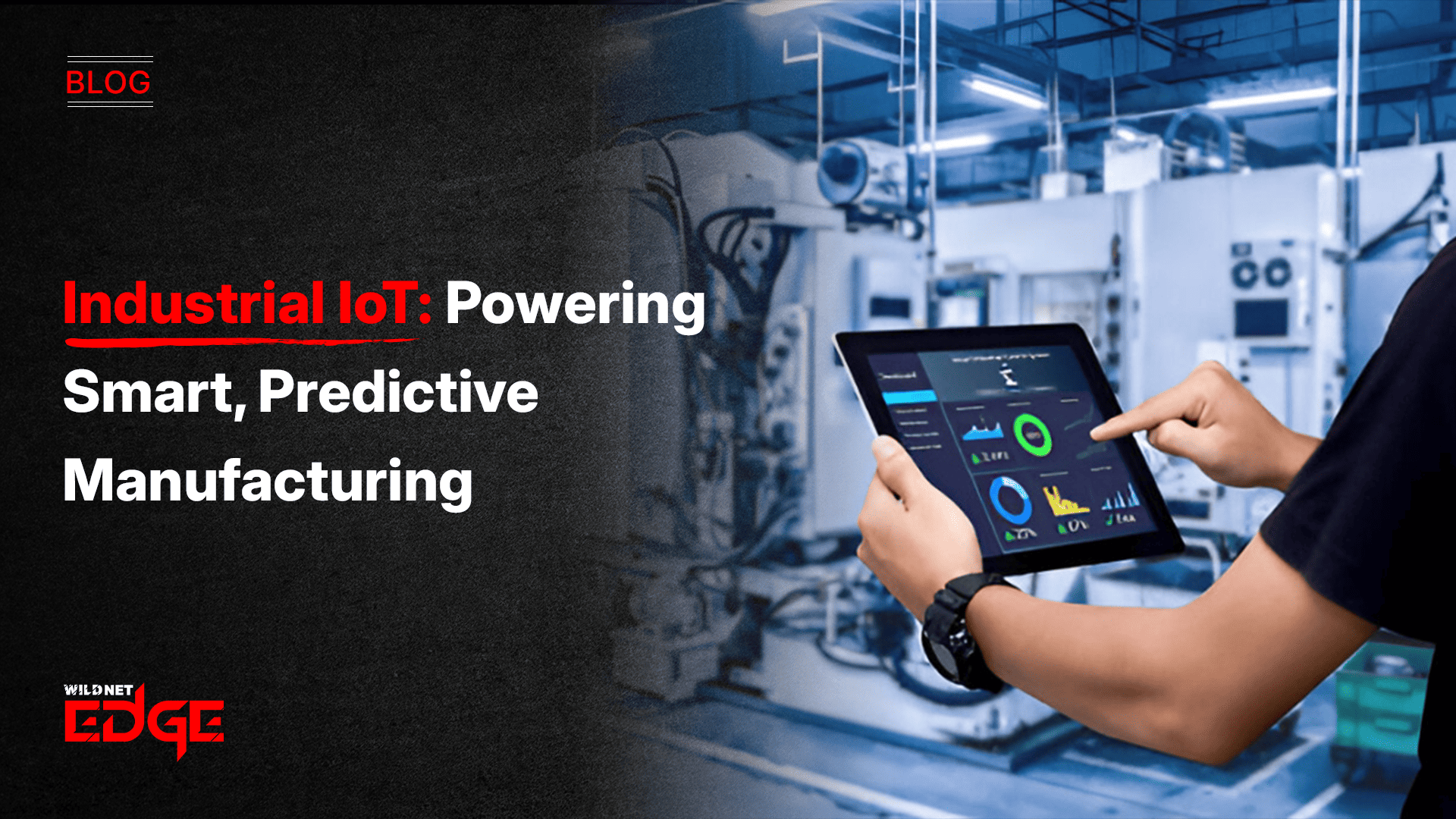
Industrial IoT connects machines, sensors, and systems to create smart factories that run on real-time data. By using industrial sensors, machine monitoring, and strong industrial connectivity, businesses reduce downtime, improve safety, and automate decisions. Industrial IoT replaces guesswork with visibility, helping manufacturers scale operations with confidence.
Factories no longer fail because machines break. They fail because problems are detected too late. That is exactly where Industrial IoT changes everything.
In 2026, manufacturing is no longer about running equipment harder, it is about running it smarter. Industrial internet connects machines, sensors, and systems so factories can see issues as they form, not after production stops. Instead of relying on reports and manual checks, teams get live insight into machine health, performance, and risk.
When industrial connectivity is in place, decisions move from reactive to predictive. This article explains how IIoT enables smart factories, improves machine monitoring, and powers reliable IoT automation at scale.
Building Smart Factories
A traditional factory reacts. A smart factory anticipates. Industrial IoT enables machines to share data continuously. Sensors track temperature, vibration, pressure, and output. That data flows into centralized systems where patterns become visible.
With IIoT, factories gain:
- Real-time visibility across production lines
- Automatic adjustments when conditions change
- Better quality control without manual inspection
For example, if humidity rises and affects output quality, the system adjusts parameters automatically. This level of responsiveness defines modern IoT automation.
Optimizing with Machine Monitoring
Downtime rarely happens without warning. The signals are just ignored. Machine monitoring powered by Industrial IoT detects subtle changes, small temperature increases, vibration shifts, or performance drops that indicate failure ahead. Maintenance teams get alerts early and fix issues during planned downtime instead of emergency shutdowns.
Industrial sensors make this possible by:
- Tracking asset health continuously
- Reducing unnecessary maintenance
- Extending machine life
Predictive maintenance turns maintenance from a cost into a competitive advantage.
The Power of Connectivity and Automation
None of this works without reliable industrial connectivity. Industrial IoT connects legacy machines, modern equipment, and enterprise automation systems into one network. When production data flows freely, automation becomes smarter.
Examples include:
- Machines trigger ERP restocking automatically
- Safety systems shutting down equipment remotely
- Production metrics updating dashboards in real time
This connection between OT and IT is what enables true IoT automation, not isolated tools, but coordinated systems.
To achieve this level of integration, businesses must deploy robust automation solutions that bridge the gap between Operational Technology (OT) and Information Technology (IT).
Case Studies: Manufacturing Success Stories
Case Study 1: Automotive Quality Control
- Challenge: An auto parts manufacturer faced a high rejection rate due to inconsistent welding temperatures. They needed manufacturing software to standardize the process.
- Our Solution: We deployed an Industrial IoT solution using thermal sensors. The system monitored weld heat in real-time and automatically paused the robot if the temperature drifted out of range.
- Result: Defect rates dropped by 95%. The IIoT integration saved the company millions in scrap material and warranty claims.
Case Study 2: Chemical Plant Safety
- Challenge: A chemical processing plant struggled to monitor pressure valves in hazardous zones manually. They needed a remote monitoring solution to ensure worker safety.
- Our Solution: We installed wireless industrial sensors connected to a central Industrial IoT dashboard. This allowed operators to monitor tank pressure from a safe control room.
- Result: Safety incidents were reduced to zero. The system provided instant alerts for pressure spikes, allowing for rapid remote shutdowns and improved compliance.
Our Technology Stack for IIoT
We use enterprise-grade hardware and software to build resilient industrial networks.
- Protocols: MQTT, OPC-UA, Modbus, Zigbee
- Cloud Platforms: AWS IoT Core, Azure IoT Hub
- Edge Computing: AWS Greengrass, Azure IoT Edge
- Databases: InfluxDB (Time-series), DynamoDB
- Visualization: Grafana, Kibana, Power BI
- Hardware: Raspberry Pi (Prototyping), Siemens Simatic IOT
Conclusion
Industrial IoT turns factories into data-driven systems. It replaces blind spots with insight.
It replaces downtime with prediction. By combining industrial sensors, machine monitoring, industrial connectivity, and IoT automation, manufacturers gain control over complexity and confidence at scale.
At Wildnet Edge, we operate as a specialized IoT development company, designing IIoT systems that fit real factories, not demos. Our engineering-first approach ensures performance, security, and long-term reliability across complex production environments.
FAQs
The primary benefit is predictive maintenance; IIoT allows manufacturers to anticipate equipment failures before they happen, significantly reducing unplanned downtime and maintenance costs.
Industrial IoT focuses on critical machinery, precision, and reliability in harsh environments, whereas consumer IoT focuses on convenience and user interaction in smart homes.
Yes, when properly architected with network segmentation and encryption, IIoT networks are highly secure, protecting sensitive production data from external threats.
Industrial sensors are the eyes and ears of the system; they measure physical variables like temperature, pressure, and vibration, feeding this data into the Industrial IoT network.
Absolutely. Retrofitting legacy equipment with external sensors and gateways is a common way to bring older machines into the IIoT ecosystem without replacing them.
IIoT improves safety by monitoring hazardous environments remotely and alerting workers to dangerous conditions like gas leaks or overheating before accidents occur.

Managing Director (MD) Nitin Agarwal is a veteran in custom software development. He is fascinated by how software can turn ideas into real-world solutions. With extensive experience designing scalable and efficient systems, he focuses on creating software that delivers tangible results. Nitin enjoys exploring emerging technologies, taking on challenging projects, and mentoring teams to bring ideas to life. He believes that good software is not just about code; it’s about understanding problems and creating value for users. For him, great software combines thoughtful design, clever engineering, and a clear understanding of the problems it’s meant to solve.

 based on 1200+ reviews



