sales@wildnetedge.com
 +1 (212) 901 8616
 +1 (437) 225-7733













































































































 ChatGPT Development & Enablement
  Hire AI & ChatGPT Experts
  ChatGPT Apps by Industry
  ChatGPT Blog
  ChatGPT Case study
  AI Development Services
  Industry AI Solutions
  AI Consulting & Research
  Automation & Intelligence





TL;DR
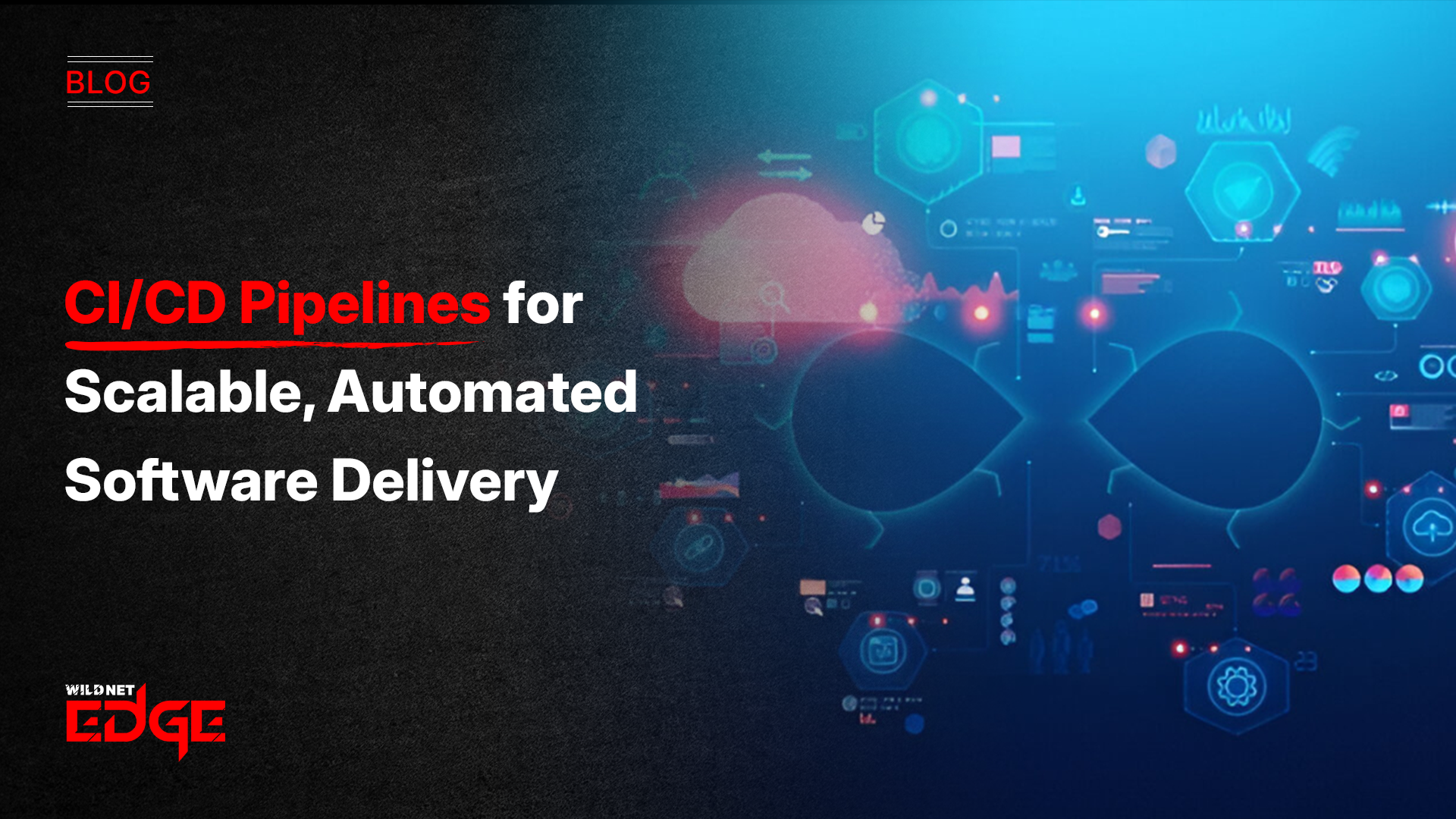
CI/CD Pipelines automate how software is built, tested, and deployed. By using continuous integration, continuous delivery, build automation, and DevOps automation, teams release code faster with fewer errors. These pipelines eliminate manual deployments, improve code quality, strengthen security, and help engineering teams scale without chaos.
Software delivery has changed. Users expect frequent updates, fast fixes, and zero downtime. Manual releases cannot meet those expectations anymore.
This is where CI/CD Pipelines become essential. They automate the entire journey from code commit to production, removing delays, reducing errors, and giving teams confidence in every release.
In 2026, high-performing engineering teams rely on CI/CD Pipelines to ship features quickly without sacrificing stability. This article explains how continuous integration, continuous delivery, and DevOps automation work together to make modern development predictable and scalable.
From Manual Releases to Automated Flow
Manual deployments slow teams down and introduce risk.
With CI/CD Pipelines, every code change follows the same automated process. Developers push code, tests run automatically, builds are created, and deployments happen consistently across environments.
This removes uncertainty. Teams no longer rely on memory or checklists. The software deployment pipeline becomes repeatable, reliable, and easy to audit.
Continuous Integration Keeps Code Healthy
Code breaks most often when teams integrate changes late.
Continuous integration solves this by encouraging small, frequent merges into a shared repository. Each merge triggers automated tests that catch issues immediately.
CI/CD Pipelines prevent “merge hell” by surfacing problems early, when fixes are simple. Developers spend less time debugging and more time building features.
Continuous Delivery Makes Releases Routine
Releasing software should not feel risky.
Continuous delivery ensures that code is always in a deployable state. Once tests pass, the pipeline prepares the application for release automatically.
With CI/CD Pipelines, teams can deploy on demand—or even automatically—without scrambling at the last minute. Releases become routine events instead of high-pressure moments.
DevOps Automation Reduces Human Error
Most outages happen because of manual steps.
DevOps automation removes those steps. CI/CD Pipelines script environment setup, configuration, testing, and deployment so every release behaves the same way.
Build automation compiles code, packages dependencies, and creates container images without developer involvement. This consistency reduces failures caused by mismatched environments or missed steps.
Quality and Security Built Into the Pipeline
Speed only matters if quality stays high.
Software delivery pipeline run automated tests at every stage, from unit tests to integration and regression checks. Code moves forward only when it meets defined standards.
Modern pipelines also support DevSecOps. Security scans check dependencies and source code for vulnerabilities before deployment. If a risk appears, the pipeline stops automatically.
This approach shifts quality and security left, where they belong.
Ensuring Quality and Security
Speed means nothing if you break the app. Robust Software delivery pipeline integrate automated testing at every stage, from integration tests to UI regression scans, acting as a quality gatekeeper. Built on strong cloud engineering foundations, these pipelines scale testing reliably across environments without slowing teams down.
Security is also embedded directly into the workflow through DevSecOps. Reliable Software delivery pipeline scan dependencies and source code for vulnerabilities before deployment. If a critical issue appears, the pipeline stops the release automatically. This shift-left approach ensures security is baked into cloud engineering practices from day one, making this pipelines the enforcer of code quality, compliance, and stability across the enterprise.
Case Studies: Pipeline Success Stories
Case Study 1: Fintech Release Velocity
- Challenge: A fintech startup took three days to deploy a single update due to manual compliance checks. They needed a DevOps company to speed up the process.
- Our Solution: We engineered secure Software delivery pipeline that automated compliance auditing and security scanning. We implemented blue-green deployment strategies to ensure zero downtime.
- Result: Deployment time was reduced from 3 days to 45 minutes. The optimized Software delivery pipeline allowed them to release updates multiple times a day, keeping them ahead of competitors.
Case Study 2: Healthcare Compliance Automation
- Challenge: A healthcare provider struggled with inconsistent environments causing bugs in production. They needed CI/CD services to standardize their infrastructure.
- Our Solution: We implemented containerized Software delivery pipeline using Kubernetes. The system spun up ephemeral testing environments that mirrored production exactly.
- Result: Production bugs dropped by 90%. The compliant Software delivery pipeline ensured that every line of code was tested in a production-like environment before going live.
Our Technology Stack for CI/CD
We use industry-standard tools to build resilient, high-speed deployment workflows.
- Orchestration: Jenkins, GitLab CI, CircleCI, GitHub Actions
- Containerization: Docker, Kubernetes
- Infrastructure as Code: Terraform, Ansible
- Cloud Providers: AWS CodePipeline, Azure DevOps
- Monitoring: Prometheus, Grafana, ELK Stack
- Artifact Management: JFrog Artifactory, Docker Hub
Conclusion
Modern software teams cannot scale with manual processes. CI/CD Pipelines turn software delivery into a controlled, automated flow. By combining continuous integration, continuous delivery, build automation, and DevOps automation, teams release faster and with fewer failures. Organizations that invest in Software delivery pipeline gain speed, reliability, and confidence in every deployment.
At Wildnet Edge, we design Software delivery pipeline that fit real development workflows. Our DevOps engineers help teams move from fragile releases to friction-free delivery so shipping software becomes routine, not risky.
FAQs
The speed and reliability are the main benefits; Software delivery pipeline let the software delivery process go through automation, thus making the release of new features frequent with less manual intervention and a smaller risk of human mistakes.
CI/CD is like a yin-yang where one part is the Continuous Integration (CI) that targets the automation of code building and testing, whereas the other part is the Continuous Delivery (CD,) which not just checks if the code is always in a deployable state but also automates the release process.
Build automation is a step-mother whose main duty is to incorporate the code changes automatically and to do it continuously, saving time for developers and at the same time ensuring the same quality product.
Modern Software delivery pipelines do have security measures as they include integrating security scans (DevSecOps), which are conducted automatically and carried out on the code that remains in production; therefore, the part of the code in production is the most secure one.
CI/CD Pipelines can be set up and managed without the cloud; however, it is the cloud that provides the best environment for their operation, as the infrastructure used can be scaled up and down in a very short time to accommodate the needs of running tests and hosting applications.
Jenkins, GitLab CI, GitHub Actions, and CircleCI are among the most popular tools that are used for building CI/CD Pipelines, and they are often integrated with Docker and Kubernetes for containerized deployments.

Managing Director (MD) Nitin Agarwal is a veteran in custom software development. He is fascinated by how software can turn ideas into real-world solutions. With extensive experience designing scalable and efficient systems, he focuses on creating software that delivers tangible results. Nitin enjoys exploring emerging technologies, taking on challenging projects, and mentoring teams to bring ideas to life. He believes that good software is not just about code; it’s about understanding problems and creating value for users. For him, great software combines thoughtful design, clever engineering, and a clear understanding of the problems it’s meant to solve.


 based on 1200+ reviews