sales@wildnetedge.com
 +1 (212) 901 8616
 +1 (437) 225-7733













































































































 ChatGPT Development & Enablement
  Hire AI & ChatGPT Experts
  ChatGPT Apps by Industry
  ChatGPT Blog
  ChatGPT Case study
  AI Development Services
  Industry AI Solutions
  AI Consulting & Research
  Automation & Intelligence





TL;DR
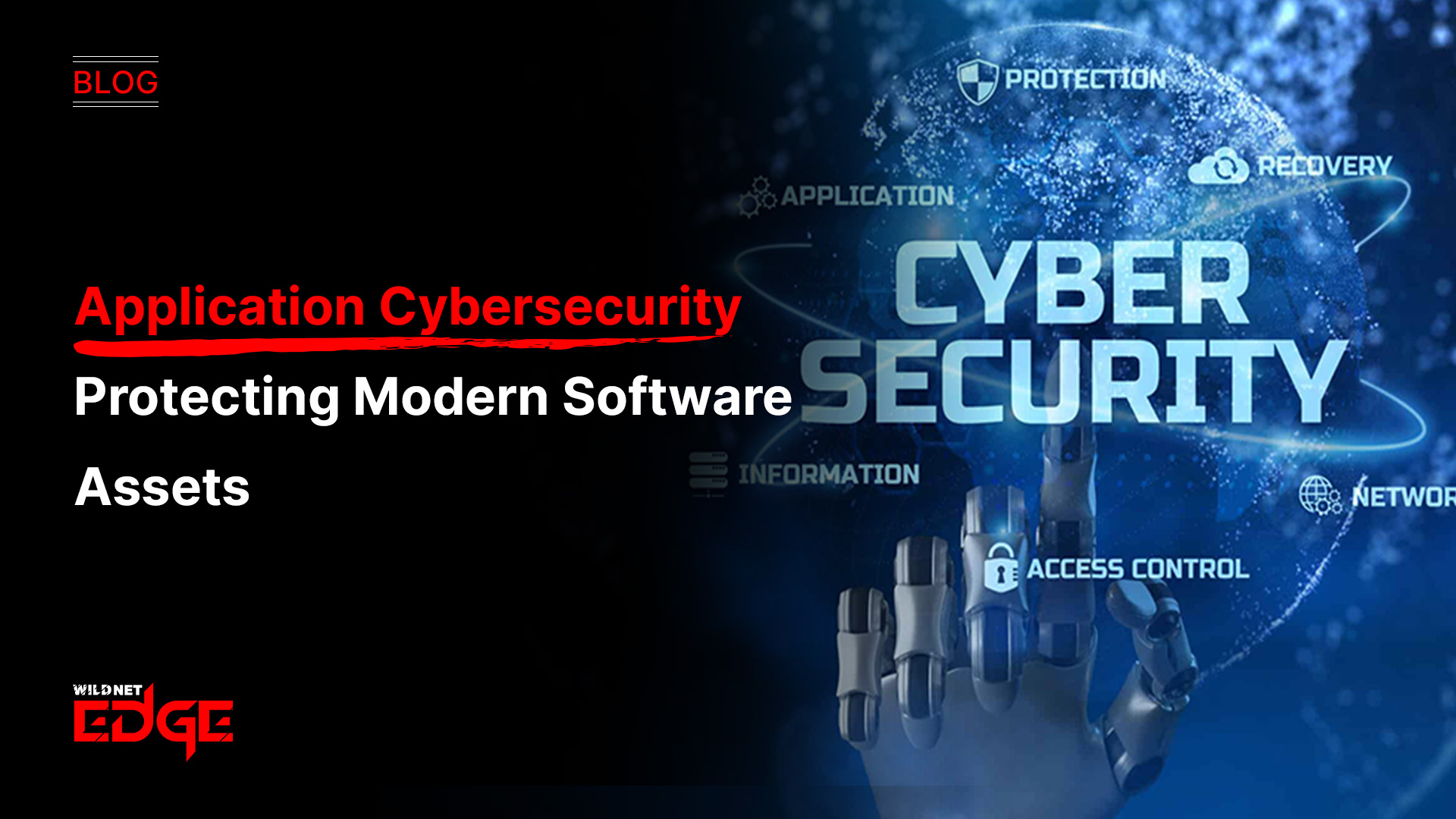
Application Cybersecurity protects software applications from modern app threats by embedding security directly into the development process. By adopting secure software practices, continuous vulnerability management, and strong data protection strategies, organizations reduce app security risks, protect sensitive data, and prevent costly breaches before they occur.
Applications now sit at the center of every business operation. They handle payments, store personal data, manage workflows, and connect customers to services. That also makes them the most attractive target for attackers.
This is why Application Cybersecurity has become a business priority, not just an IT concern. A single exposed API or misconfigured authentication flow can lead to data leaks, regulatory fines, and long-term damage to customer trust.
Modern security does not rely on firewalls alone. It protects the application itself. This article explains how secure software practices, vulnerability management, and data protection strategies help enterprises defend against modern app threats.
Security Starts Inside the Development Process
Security added at the end always arrives too late.
Modern Application Cybersecurity follows a DevSecOps approach. Teams integrate security checks directly into design, development, and deployment workflows. Developers scan code automatically as they write it, not weeks later during audits.
Secure software practices turn developers into the first line of defense. Automated scans inside CI/CD pipelines catch vulnerabilities before they reach production. This keeps releasing fast without sacrificing safety.
Security becomes continuous, not reactive.
Understanding Modern App Threats
Attackers no longer focus only on infrastructure. They exploit application logic.
Modern app threats include SQL injection, cross-site scripting, broken access control, and authentication flaws. APIs face even higher risk as microservices and third-party integrations expand.
Strong Application Cybersecurity strategies protect APIs with authentication, rate limiting, and traffic monitoring. These controls prevent attackers from abusing business logic or scraping sensitive data. Ignoring app-layer threats allows attackers to bypass traditional defenses entirely.
Data Protection Strategies That Actually Work
Applications exist to process data. Protecting that data is non-negotiable.
Application Cybersecurity enforces encryption in transit and at rest. Even if attackers gain access, encrypted data remains useless to them.
Identity and access controls also matter. Least-privilege access limits damage if credentials are compromised. Data masking prevents real customer information from leaking during testing and development. Strong data protection strategies reduce exposure at every stage of the application lifecycle.
Continuous Vulnerability Management
New vulnerabilities appear every day. Static defenses fail quickly. Effective vulnerability management relies on constant scanning and prioritization. Automated tools detect weaknesses in code, configurations, and third-party libraries.
Modern applications depend heavily on open-source components. Software Composition Analysis identifies risky dependencies before attackers exploit them.
Teams fix issues based on risk and exposure, not just severity scores. This keeps security work focused and efficient.
Security Depends on People, Not Just Tools
Technology alone does not stop breaches. Application Cybersecurity works best when teams understand secure coding principles and management supports security-first decisions. Training developers reduces common app security risks before they reach production.
Red team exercises simulate real attacks and expose blind spots that automated tools miss. These drills strengthen defenses and improve response readiness.
When everyone shares responsibility for security, protection becomes part of daily work—not a blocker.
Case Studies: Our Automation Success Stories
Case Study 1: Fintech API Security
- Challenge: A digital bank was facing automated bot attacks on its login API, leading to account takeovers. Their existing firewall could not distinguish between legitimate users and sophisticated bots. They needed expert cybersecurity services to harden their endpoints.
- Our Solution: We implemented an advanced Application Cybersecurity framework using behavioral analysis. We deployed a Web Application Firewall (WAF) with custom rules to detect and block abnormal traffic patterns.
- Result: Account takeover attempts were reduced by 99%. The measures restored customer confidence and ensured compliance with strict financial data regulations.
Case Study 2: Healthcare Compliance Audit
- Challenge: A telehealth platform needed to achieve HIPAA compliance to expand their services. Their legacy code contained hardcoded credentials and unencrypted data flows. They required a security testing company to remediate these app security risks.
- Our Solution: We conducted a deep code review and penetration test. We re-architected their authentication flow and integrated secure app development practices into their workflow to encrypt all patient data.
- Result: The client passed the HIPAA audit with zero non-conformities. The investment in Application Cybersecurity allowed them to launch in three new states, securing a $10M partnership with a hospital network.
Our Technology Stack for Application Security
We use industry-leading tools and frameworks to identify, analyze, and remediate security threats.
- Static Application Security Testing (SAST): SonarQube, Checkmarx
- Dynamic Application Security Testing (DAST): OWASP ZAP, Burp Suite
- Dependency Scanning: Snyk, WhiteSource
- Infrastructure Security: Terraform, AWS Shield, Cloudflare
- Identity Management: Okta, Auth0, Keycloak
- Compliance & Monitoring: Splunk, ELK Stack
Conclusion
Applications face constant pressure from evolving threats. Application Cybersecurity provides the structure needed to defend against those risks without slowing innovation.
By embedding security into development, managing vulnerabilities continuously, and protecting data at every layer, organizations build software that customers trust.
At Wildnet Edge, we design security-first applications that hold up under real-world attacks. Our teams help businesses reduce app security risks while shipping software that scales safely. We partner with you to deliver secure app development services designed for your specific industry challenges and threats.
FAQs
The main objective is to keep software applications safe from outside attacks and weaknesses, and at the same time, to guarantee the confidentiality, integrity and availability of data all through the application lifecycle.
DevSecOps adds Application Cybersecurity checks to each and every step of the development pipeline, hence enabling teams to discover and resolve vulnerabilities early (shifting left) instead of waiting till production phase.
The major risks consist of injection attacks (SQLi), disrupted authentication, exposure of sensitive data, and improperly set security, all of which are lessened through a proper defense strategy.
It guarantees that your programs are always checked for new dangers and that updates are made quickly, thus blocking hackers from taking advantage of the existing holes in your ICT security.
With a year-end outlay of money, the fines for data breaches, loss of reputation, and remediation costs are far greater than the initial investment, thus putting Cybersecurity for applications as a high-ROI insurance policy for the enterprise.
Indeed, a large portion of the testing, comprising static code analysis and dependency scanning, can be automated in the CI/CD pipeline to ensure speed without compromising safety.
We recommend conducting penetration testing at least annually or whenever a major release occurs to validate the effectiveness of your Information Security controls against human intelligence.

Managing Director (MD) Nitin Agarwal is a veteran in custom software development. He is fascinated by how software can turn ideas into real-world solutions. With extensive experience designing scalable and efficient systems, he focuses on creating software that delivers tangible results. Nitin enjoys exploring emerging technologies, taking on challenging projects, and mentoring teams to bring ideas to life. He believes that good software is not just about code; it’s about understanding problems and creating value for users. For him, great software combines thoughtful design, clever engineering, and a clear understanding of the problems it’s meant to solve.


 based on 1200+ reviews