 sales@wildnetedge.com
 +1 (212) 901 8616
 +1 (437) 225-7733
















































































































 ChatGPT Development & Enablement
  Hire AI & ChatGPT Experts
  ChatGPT Apps by Industry
  ChatGPT Blog
  ChatGPT Case study
  AI Development Services
  Industry AI Solutions
  AI Consulting & Research
  Automation & Intelligence





Key Takeaways
- Manufacturing web application development connects factory-floor machines with cloud systems, creating real-time visibility across operations.
- Smart manufacturing web apps turn raw machine data into actionable insights such as live OEE, downtime causes, and production trends.
- Production monitoring web apps replace delayed reports with real-time dashboards, helping managers fix issues as they happen.
- Factory automation software is moving to secure web platforms, enabling remote monitoring and control of production lines.
- Enterprise manufacturing platforms unify production, inventory, and supply-chain data to reduce waste and improve planning accuracy.
Manufacturing is driven by data. In Industry 4.0, every production line, sensor, and system generates valuable information. The challenge is not collecting this data, but making it visible, usable, and actionable. That is where manufacturing web application development plays a critical role.
Today’s factories need more than isolated control systems and spreadsheets. Leaders need live dashboards, remote access, and clear insights into what is happening on the shop floor right now. Industrial web solutions bridge the long-standing gap between Operational Technology (OT) and Information Technology (IT), turning machine data into decisions that improve output, quality, and uptime.
This guide explains how manufacturing web application development supports smart factories. We explore smart manufacturing web apps, production monitoring web apps, factory automation software, and enterprise manufacturing platforms, and how they work together to modernize manufacturing operations.
The Shift Toward Smart Manufacturing
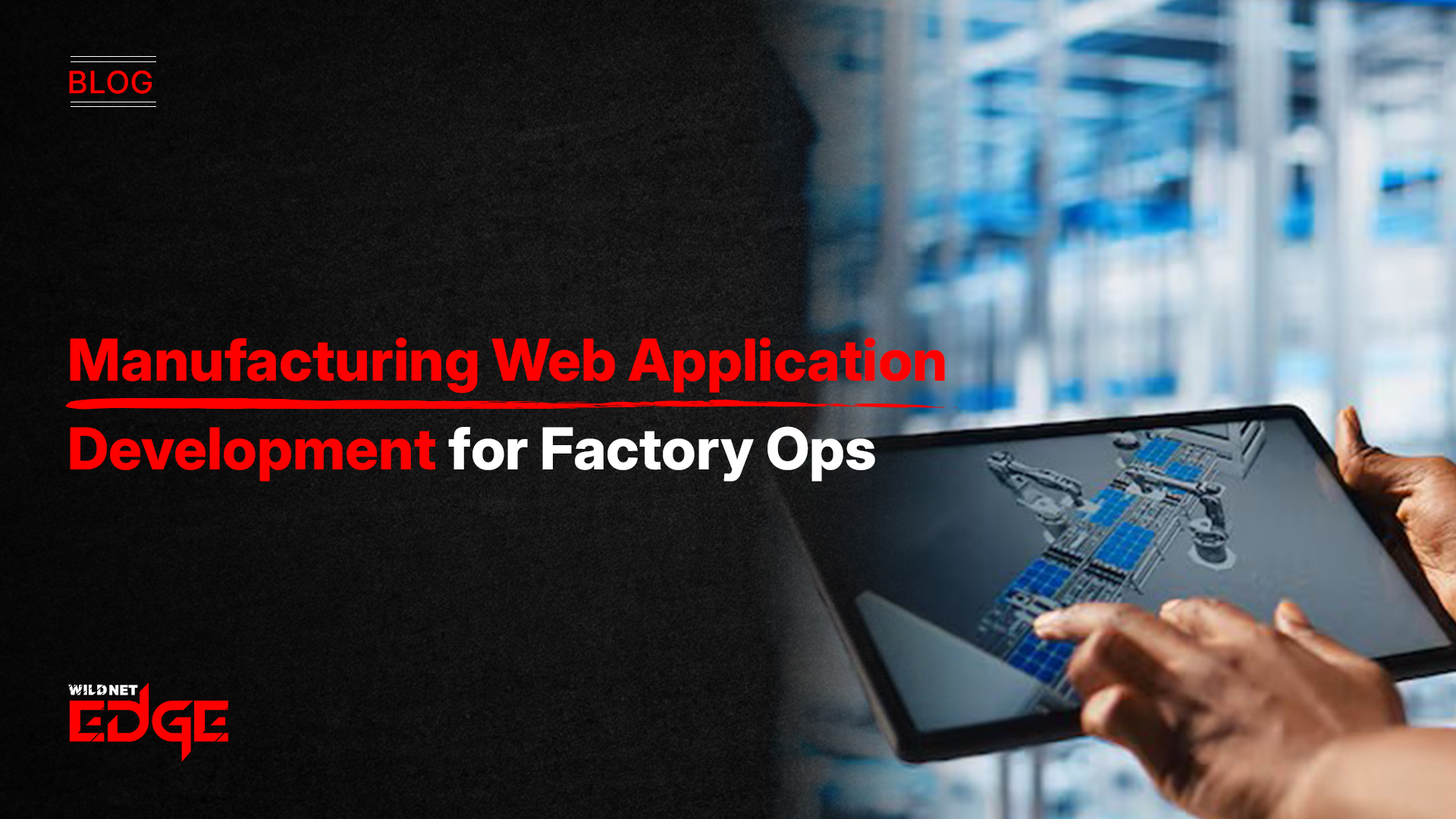
Smart factories rely on connected systems rather than isolated machines. Instead of waiting for end-of-shift reports, teams see production data live. Instead of reacting to breakdowns, they predict and prevent them. Manufacturing web application development provides the digital layer that makes this possible. These applications collect data from machines, sensors, and control systems, then present it in clear, role-based dashboards for operators, engineers, and executives. The focus is simple: make complex industrial data easy to understand and act on.
Smart Manufacturing Web Apps
Smart manufacturing web apps connect directly to IIoT devices and production equipment. They handle high-volume, real-time data such as temperature, vibration, cycle times, and throughput.
Unlike traditional factory software, these apps run in secure browsers and are accessible from anywhere. Plant managers can track performance across multiple facilities without being physically present. Engineers can diagnose issues faster, and operators get instant feedback on production status. These applications form the foundation of data-driven manufacturing.
Factory Automation Software on the Web
Factory automation software has traditionally lived on local machines inside the plant. Today, that model is changing. Web-based automation platforms allow secure remote monitoring and control of production systems.
With modern manufacturing, web application development:
- Engineers can oversee multiple plants from a central control room
- On-call staff can respond faster without travelling on-site
- Production parameters can be adjusted securely and consistently
This shift reduces downtime, improves response times, and lowers operational costs.
Core Use Cases for Industrial Web Solutions
Manufacturers adopt industrial web solutions to solve real operational problems, not just to modernize IT. The highest-value use cases focus on visibility, efficiency, and reliability.
Production Monitoring Web Apps
Production monitoring web apps are among the most common and impactful tools. They track live production metrics such as output, downtime, and quality rates.
Instead of paper logs or delayed spreadsheets, teams see:
- Live OEE scores
- Real-time downtime reasons
- Performance trends by machine or shift
This visibility enables faster decisions and continuous improvement.
Digital Twins and Simulation
Advanced manufacturers use web-based Digital Twins to create virtual simulations of their production lines. Engineers test changes in a digital environment before applying them on the factory floor. The process helps to identify risks while it protects against expensive errors.
Challenges in Manufacturing Web Application Development
Building web applications for manufacturing environments is more complex than typical business software. Factories run on legacy systems, harsh environments, and strict reliability requirements.
OT and IT Integration
The main difficulty manufacturers face during web application development arises from their need to connect existing equipment that operates on outdated industrial standards. The middleware layers provide a solution to convert machine data into contemporary application programming interfaces, which enable data transmission to smart manufacturing web applications and enterprise manufacturing systems. The system enables digital workflows to include equipment that has existed for more than fifty years.
Security and Intellectual Property Protection
In manufacturing, security risks extend beyond data loss. Unauthorized access can lead to equipment damage or IP theft. Industrial web solutions must enforce strict access controls, encryption, and network segmentation. Security is designed into the architecture, not added later.
AI-Powered Manufacturing Web Applications
The next step in manufacturing digitalization is intelligence. By combining AI with manufacturing web app development services, factories move from monitoring to optimization.
Predictive Maintenance
AI models analyze sensor data to detect early signs of machine failure. Instead of reacting to breakdowns, teams receive alerts days in advance. This reduces unplanned downtime and extends equipment life.
Predictive maintenance is one of the most valuable features of smart manufacturing web apps.
Automated Quality Control
Computer vision systems integrated into web platforms inspect products in real time. AI detects defects that human inspectors may miss and logs issues automatically into enterprise manufacturing platforms. This improves quality while reducing manual inspection effort.
Case Studies
Case Study 1: The OEE Transformation
- Challenge: An automotive parts supplier relied on paper logs, leading to a 24-hour delay in reporting. They needed custom manufacturing web application development.
- Solution: We built production monitoring web apps connected to their stamping presses via IoT gateways.
- Result: Real-time visibility exposed micro-stoppages. The insights gained helped them increase OEE by 12%, worth $3M annually.
Case Study 2: The Supply Chain Portal
- Challenge: A furniture manufacturer had zero visibility into raw material shipments. They needed enterprise manufacturing platforms.
- Solution: We provided services to build a supplier portal that integrated with logistics providers.
- Result: Inventory holding costs dropped by 20% due to better Just-in-Time coordination enabled by the industrial web solutions.
Conclusion
Manufacturing web application development is no longer optional—it is essential for competitive, resilient factories. It connects machines, people, and systems into a single operational view. Whether you are deploying smart manufacturing web apps, production monitoring web apps, or full enterprise manufacturing platforms, the right software unlocks efficiency, quality, and scale.
Wildnet Edge’s AI-first approach ensures that your investment yields long-term value. We combine deep industrial knowledge with cutting-edge AI to build systems that are rugged, secure, and intelligent. Partner with us to turn your factory floor into a competitive advantage.
FAQs
The field of manufacturing web application development creates software systems that users access through web browsers to support manufacturing operations by handling production management and inventory tracking, machine health monitoring, and supply chain optimization.
ERPs handle high-level business data (invoices, HR). Smart manufacturing web apps handle operational data (machine speed, temperature, throughput). The development process often focuses on integrating these two worlds.
Yes, factory automation software creates web interfaces (SCADA/HMI) that allow authorized users to control machines. However, using Web application development in Manufacturing for control requires extreme security measures.
IoT is the data source. Web application development in Manufacturing builds a dashboard that visualizes the data collected by IoT sensors, making it useful for humans.
A basic dashboard might cost $30,000. A comprehensive enterprise manufacturing platform with Digital Twins and AI integration can exceed $200,000. The cost depends heavily on hardware integration complexity.
It saves money. By using Web application development in Manufacturing to visualize predictive models, maintenance teams can fix machines during scheduled breaks rather than emergency shutdowns.
Modern industrial web solutions use advanced encryption and role-based access control. In professional Web application development in Manufacturing, security is the top priority to protect against industrial espionage and sabotage.

Managing Director (MD) Nitin Agarwal is a veteran in custom software development. He is fascinated by how software can turn ideas into real-world solutions. With extensive experience designing scalable and efficient systems, he focuses on creating software that delivers tangible results. Nitin enjoys exploring emerging technologies, taking on challenging projects, and mentoring teams to bring ideas to life. He believes that good software is not just about code; it’s about understanding problems and creating value for users. For him, great software combines thoughtful design, clever engineering, and a clear understanding of the problems it’s meant to solve.


 based on 1200+ reviews



