sales@wildnetedge.com
 +1 (212) 901 8616
 +1 (437) 225-7733


















































































































 ChatGPT Development & Enablement
 Hire AI & ChatGPT Experts
 ChatGPT Apps by Industry
 ChatGPT Blog
 ChatGPT Case study
 AI Development Services
 Industry AI Solutions
 AI Consulting & Research
 Automation & Intelligence





TL;DR
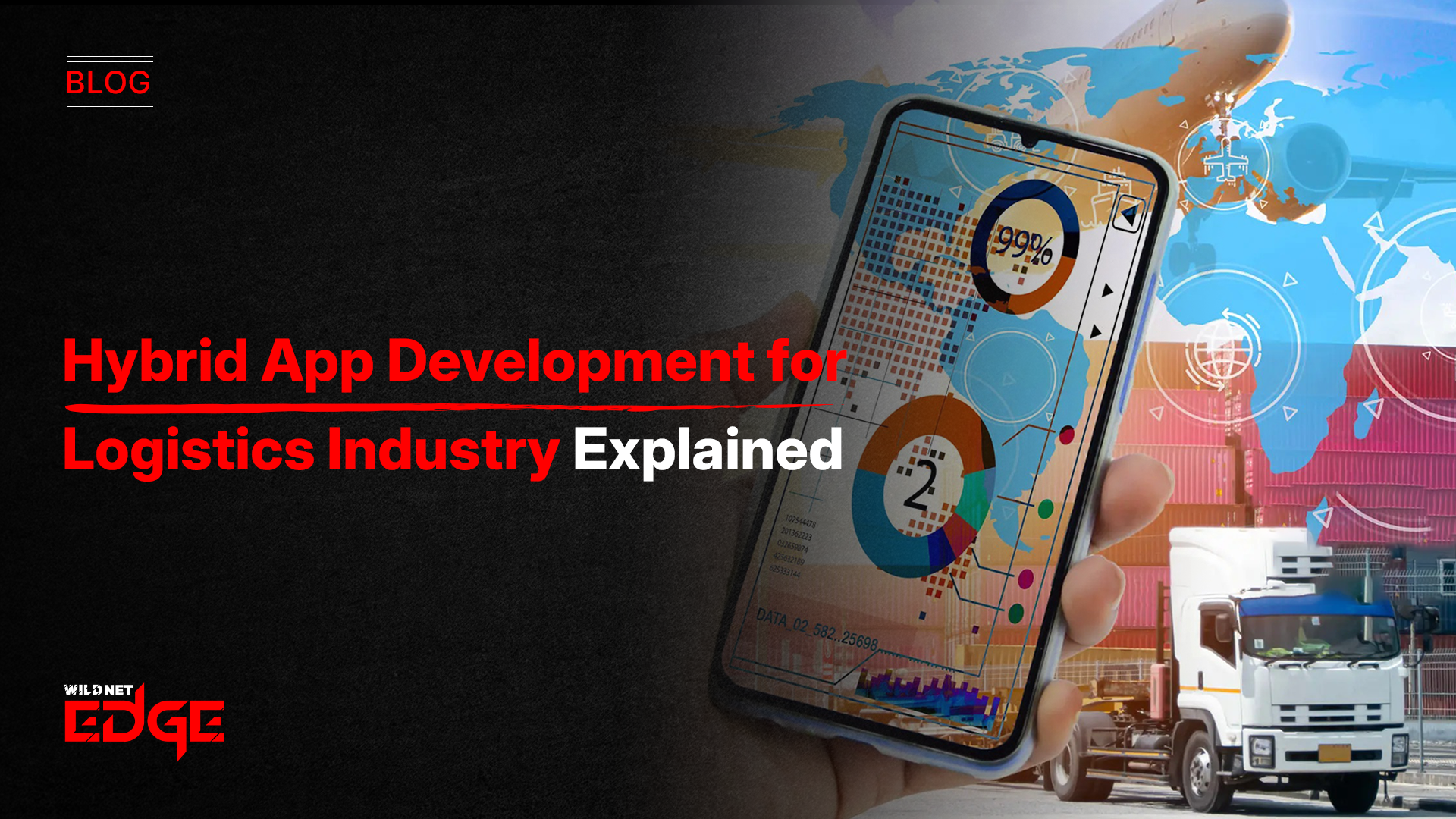
In 2026, logistics runs on mobile speed and real-time visibility. Hybrid app development for Logistics Industry helps companies build reliable, offline-first supply chain mobile apps using a single codebase. From warehouse management apps to fleet management hybrid apps, this approach reduces costs, supports rugged devices, integrates with legacy systems, and scales across regions. This guide explains why logistics leaders choose hybrid apps, key use cases, technical architecture, and how to select the right hybrid app development company.
Logistics operates on thin margins and tight timelines. A delayed scan, a missed delivery update, or a lost signal can disrupt the entire supply chain. Studies show that over 60% of logistics inefficiencies come from delayed or inaccurate field data.
This is why hybrid app development for Logistics Industry has become essential.
Drivers move through low-network areas. Warehouse teams use rugged scanners. Managers need live dashboards. Native apps slow teams down, while web apps fail offline. Hybrid apps solve this gap.
With logistics hybrid app development, companies deploy one mobile solution that works across iPhones, Android scanners, and tablets without rebuilding everything twice.
Why Logistics Leaders Are Choosing Hybrid
The shift to hybrid app development for Logistics Industry is driven by the need for operational resilience and cost control.
1. One App for Every Device
Logistics teams use personal phones, rugged handhelds, and tablets. Hybrid app development for Logistics Industry supports all of them with a single codebase.
This reduces maintenance effort and speeds up updates.
2. Built for Offline Operations
Drivers often lose connectivity. Hybrid apps store data locally and sync automatically later. Fleet management hybrid apps continue tracking routes, signatures, and delivery proofs even in dead zones.
Nothing gets lost.
3. Faster Scaling at Lower Cost
Logistics hybrid app development cuts development time by up to 40% compared to native apps. Teams launch new regions or services faster without doubling engineering costs.
High-Impact Use Cases in the Supply Chain
1. Warehouse Management Apps
Warehouse management apps built with hybrid frameworks turn mobile devices into fast barcode scanners.
- What it solves: Inventory mismatches and picking errors
- Why hybrid works: Same interface runs on scanners and tablets without extra builds
2. Fleet Management Hybrid Apps
Fleet management hybrid apps support route tracking, fuel logs, compliance, and vehicle health monitoring.
- What it solves: Delays, compliance risks, high fuel costs
- Why hybrid works: Updates deploy instantly to every driver
3. Last-Mile Delivery Apps
Last-mile delivery costs can account for over 50% of total shipping expenses. Hybrid supply chain mobile apps optimize routes and enable digital proof of delivery.
- What it solves: Failed deliveries and customer complaints
- Why hybrid works: Easy map SDK integration across platforms
Flutter vs React Native for Logistics Apps
Choosing the right framework matters.
Flutter
Best for apps with heavy map rendering and real-time animations. Ideal for advanced fleet management hybrid apps.
React Native
Works well if your TMS or dashboard already uses React. Teams reuse logic and speed up logistics hybrid app development.
A skilled hybrid shopping apps development helps choose based on operations not trends.
Why Work With a Hybrid App Development Company
Logistics software must work every hour, every day. When you hire hybrid app developers and partner with a hybrid app development company, it can bring:
- Experience with legacy TMS and ERP integrations
- Hardware expertise (barcode scanners, printers, RFID)
- Battery-optimized background GPS tracking
- Secure, scalable architecture for enterprise logistics
Case Studies
Case Study 1: The Global Freight Forwarder
- Challenge: Drivers were using paper forms, leading to 3-day delays in invoicing.
- Solution: We executed a hybrid app development for Logistics Industry strategy using Flutter.
- Result: The new fleet management hybrid app digitized all paperwork. Invoicing became instant, improving cash flow by 30%.
Case Study 2: The 3PL Warehouse Provider
- Challenge: High error rates in picking due to a clunky legacy scanner interface.
- Solution: We built a user-friendly warehouse management app using React Native.
- Result: Picking accuracy rose to 99.8%, and training time for new staff dropped from 2 days to 4 hours, proving the value of intuitive logistics hybrid app development.
Conclusion
In 2026, logistics depends on real-time mobile execution. Hybrid app development for Logistics Industry gives companies the flexibility to connect warehouses, fleets, and customers without the cost and delay of native development.
At WildnetEdge, we build secure, scalable supply chain mobile apps designed for real-world logistics environments. Whether you want to hire hybrid app developers or modernize your warehouse management apps, hybrid app development for Logistics Industry is the foundation of efficient, resilient operations.
FAQs
Yes. With modern plugins and native code bridging, hybrid app development for Logistics Industry can leverage the device’s camera hardware to scan barcodes in milliseconds, rivaling dedicated scanners.
A basic driver app might cost $30,000 – $60,000. A comprehensive enterprise solution including warehouse management apps and fleet tracking typically ranges from $100,000 to $250,000+.
Absolutely. Offline capability is a core requirement. Logistics hybrid app development uses local databases to store data when connectivity is lost and syncs it securely once the connection is restored.
Both are excellent. Flutter is often preferred for hybrid app development for Logistics Industry when you need pixel-perfect rendering on custom rugged devices. React Native is great if you have an existing web-based logistics platform.
Logistics apps have unique constraints like battery life, background location tracking, and hardware integration. Specialized developers understand these challenges and ensure your hybrid app development for Logistics sector project succeeds.
Yes. A professional logistics app development company builds secure API layers (Middleware) to connect your new mobile apps with legacy systems like SAP, Oracle, or custom TMS platforms.
Yes. By implementing industry-standard encryption, OAuth for authentication, and secure data storage, supply chain mobile apps built on hybrid frameworks meet the strict security standards of the industry.

Nitin Agarwal is a veteran in custom software development. He is fascinated by how software can turn ideas into real-world solutions. With extensive experience designing scalable and efficient systems, he focuses on creating software that delivers tangible results. Nitin enjoys exploring emerging technologies, taking on challenging projects, and mentoring teams to bring ideas to life. He believes that good software is not just about code; it’s about understanding problems and creating value for users. For him, great software combines thoughtful design, clever engineering, and a clear understanding of the problems it’s meant to solve.


 based on 1200+ reviews