 sales@wildnetedge.com
 +1 (212) 901 8616
 +1 (437) 225-7733
















































































































 ChatGPT Development & Enablement
  Hire AI & ChatGPT Experts
  ChatGPT Apps by Industry
  ChatGPT Blog
  ChatGPT Case study
  AI Development Services
  Industry AI Solutions
  AI Consulting & Research
  Automation & Intelligence





TL;DR
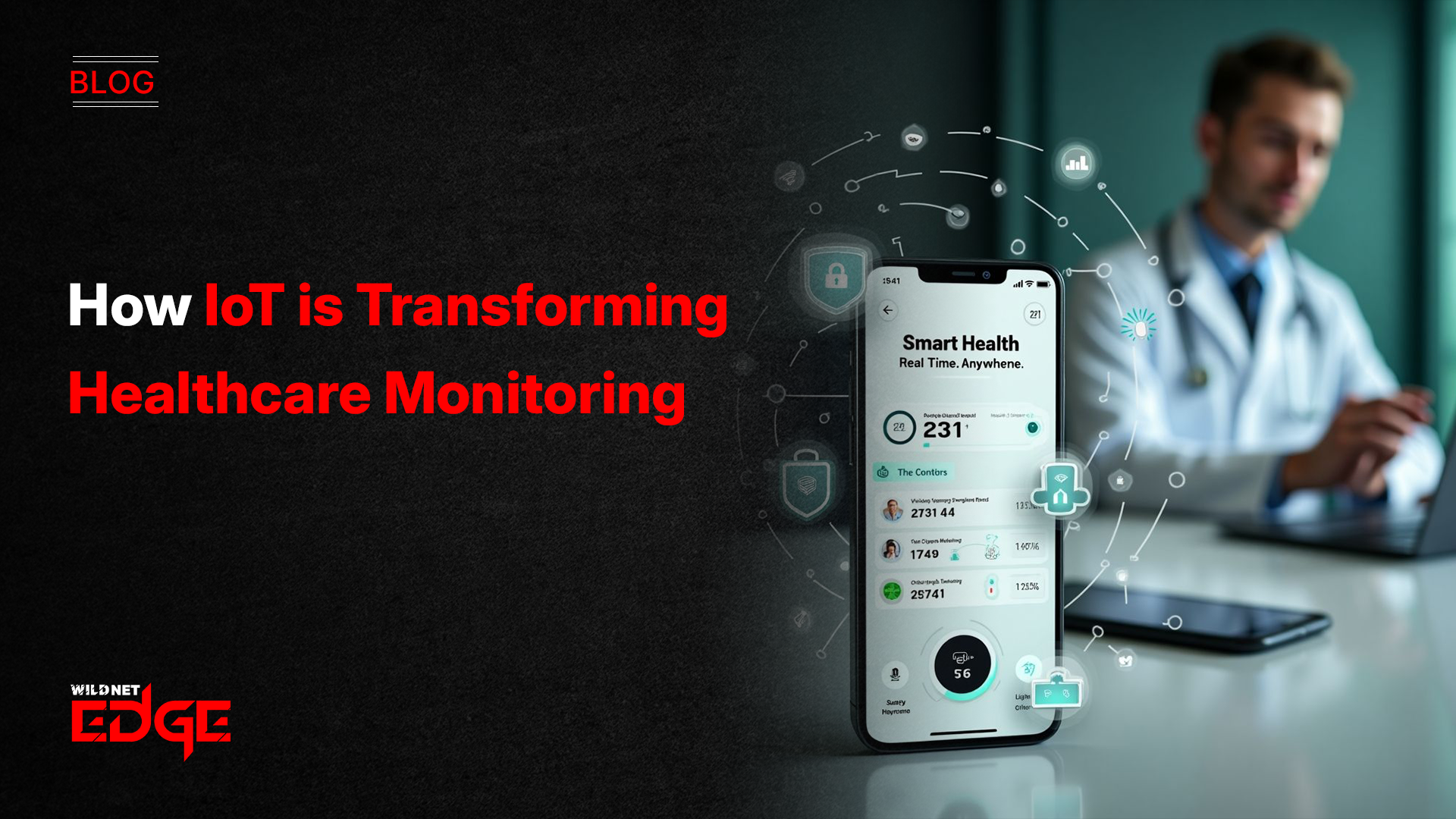
IoT in Healthcare Monitoring enables continuous, real-time care instead of occasional checkups. Through remote health monitoring, wearable IoT devices, and connected patient IoT systems, healthcare providers detect risks early, reduce hospital stays, and improve outcomes. Real-time health tracking combined with AI turns raw data into timely action, while medical IoT innovation lowers costs and improves the quality of life for patients.
Healthcare used to react after symptoms appeared. By then, problems were already serious. IoT in Healthcare Monitoring changes this model by tracking patient health continuously instead of relying on infrequent visits. Connected devices now collect vital signs every minute, not every few months. Doctors see trends, not snapshots. Patients receive care before conditions escalate. This shift moves healthcare from treatment to prevention, and that shift saves lives, time, and money.
The Rise of Remote Health Monitoring
Hospitals are no longer the only place for care.
With remote health monitoring, patients recover and manage chronic conditions at home while clinicians track their vitals remotely. Sensors measure oxygen levels, heart rate, temperature, and movement in real time.
If readings cross a risk threshold, alerts trigger instantly. Nurses intervene early instead of reacting to emergencies. This approach reduces readmissions and frees hospital beds for critical cases. Remote health monitoring also improves patient comfort. People heal better at home, and families stay informed without constant clinic visits.
Virtual Wards
Remote health monitoring allows a single nurse to monitor 50 patients simultaneously. If the connected system detects a drop in oxygen saturation, an alert is triggered immediately. This capability drastically reduces readmission rates, as complications are caught early. Partnering with a specialized IoT development company is essential to building the secure pipelines required for this sensitive data.
Wearable IoT Devices: Beyond Step Counting
Wearables have moved far beyond fitness tracking. Modern wearable IoT devices now meet clinical standards. Smart patches monitor glucose without needles. Rings track blood pressure trends. ECG wearables detect irregular heart rhythms days before symptoms appear.
Medication adherence improves, too. Smart pill containers track missed doses and send reminders to patients or caregivers. These small interventions prevent major complications and improve long-term outcomes. IoT in Healthcare Monitoring works best when devices blend into daily life without disrupting routines.
Real-Time Health Tracking and AI
Data alone does not save lives. Speed does. Real-time health tracking allows clinicians to respond immediately when a patient’s condition changes. Edge computing processes data on the device itself, reducing delays and preventing overload.
AI analyzes patterns instead of raw numbers. It detects early signs of cardiac events, respiratory distress, or fall risk before visible symptoms appear. This predictive layer makes healthcare proactive instead of reactive. When real-time health tracking works well, alerts are meaningful, not noisy. Expert AI healthcare solutions are critical for training these predictive models to avoid false alarms.
Patient IoT Systems and Interoperability
Disconnected data creates blind spots. Modern patient IoT systems integrate directly with electronic health records. Doctors see weeks of trends instead of single readings. Treatment decisions improve because context improves.
Inside hospitals, patient IoT systems track equipment, monitor bed usage, and prevent pressure injuries through movement detection. Nurses spend less time searching for tools and more time caring for people. Interoperability is critical. Systems must communicate smoothly to deliver real value.
Medical IoT Innovation and 5G
Connectivity enables scale.
Medical IoT innovation accelerates with private 5G networks. Low latency allows continuous streaming without interruption. This reliability supports advanced use cases like robotic assistance and real-time imaging.
The broader Internet of Medical Things now includes connected inhalers, smart lenses, and ingestible sensors. These devices extend monitoring beyond hospitals into everyday life.
As IoT in Healthcare Monitoring grows, software platforms must manage devices securely and reliably. Robust healthcare software is the backbone that manages this diverse fleet of devices.
Security and Privacy Challenges
Healthcare data is sensitive by default. Every connected device increases risk if not protected properly. IoT in Healthcare Monitoring requires strong device authentication, encrypted data flows, and strict access control. Compliance with HIPAA and global privacy laws is mandatory. Patients trust these systems with their lives. Losing that trust breaks adoption. Security must be built into architecture, not added later.
Case Studies: Saving Lives with Data
Real-world examples illustrate the power of these systems.
Case Study 1: Cardiac Rhythm Management
- The Challenge: Patients with arrhythmia had to visit the clinic weekly for checks, burdening the system.
- Our Solution: We deployed IoT in Healthcare Monitoring using connected pacemakers that uploaded data nightly via a bedside hub.
- The Result: In-person visits dropped by 60%. Real-time health tracking allowed doctors to adjust medications remotely, improving patients’ quality of life.
Case Study 2: Diabetic Care Automation
- The Challenge: Pediatric patients struggled to manage insulin levels, leading to emergency room visits.
- Our Solution: We integrated Continuous Glucose Monitors (CGMs) into a patient IoT systems dashboard accessible by parents and school nurses.
- The Result: The connected monitoring solution reduced emergency incidents by 80%. The system provided “peace of mind” alerts, transforming the family’s daily routine.
Future Trends: The Autonomous Clinic
Cardiac Monitoring
Connected pacemakers now send data automatically. Doctors adjust treatment remotely. Patients avoid frequent clinic visits while staying safer.
Diabetes Management
Continuous glucose monitoring integrated into patient IoT systems reduces emergency incidents dramatically. Families receive alerts before levels become dangerous. These outcomes show how IoT in Healthcare Monitoring improves both safety and quality of life.
Conclusion
IoT in Healthcare Monitoring transforms care from occasional checkups to continuous support. By adopting remote health monitoring, deploying advanced wearable IoT devices, and integrating intelligent patient IoT systems, healthcare providers improve outcomes while lowering costs. Real-time health tracking and medical IoT innovation ensure problems are addressed early, not late. Healthcare no longer waits for symptoms. It listens constantly. At Wildnet Edge, we design secure, scalable IoT in Healthcare Monitoring solutions that turn data into better care every day, not just during visits.
FAQs
The primary benefits include early detection of diseases, reduced hospital readmissions, lower healthcare costs, and improved patient engagement. This technology empowers patients to manage their own conditions with real-time feedback.
Security is a top priority. While risks exist, modern IoT in Healthcare Monitoring systems use end-to-end encryption and strict access controls to protect sensitive health data (PHI) in compliance with HIPAA.
5G is a game-changer for connected care. It provides the high bandwidth and low latency needed for data-heavy applications like remote surgery and real-time high-resolution imaging transmission.
Common examples include smartwatches (Apple Watch), continuous glucose monitors (Dexcom), smart rings (Oura), and connected ECG patches (Zio). These feed data into the broader Remote Patient Monitoring ecosystem.
Yes. By enabling remote health monitoring, hospitals can discharge patients earlier, freeing up expensive beds. This technology also automates administrative tasks, significantly reducing labor costs.
The biggest challenges for Remote Patient Monitoring are interoperability (getting different devices to talk to each other) and data overload (filtering useful signals from the noise).
AI acts as the brain, while IoT acts as the nervous system. The sensors collect the raw data, and AI analyzes it to identify patterns, predict risks, and recommend treatments.

Managing Director (MD) Nitin Agarwal is a veteran in custom software development. He is fascinated by how software can turn ideas into real-world solutions. With extensive experience designing scalable and efficient systems, he focuses on creating software that delivers tangible results. Nitin enjoys exploring emerging technologies, taking on challenging projects, and mentoring teams to bring ideas to life. He believes that good software is not just about code; it’s about understanding problems and creating value for users. For him, great software combines thoughtful design, clever engineering, and a clear understanding of the problems it’s meant to solve.

 based on 1200+ reviews



