sales@wildnetedge.com
 +1 (212) 901 8616
 +1 (437) 225-7733















































































































 ChatGPT Development & Enablement
  Hire AI & ChatGPT Experts
  ChatGPT Apps by Industry
  ChatGPT Blog
  ChatGPT Case study
  AI Development Services
  Industry AI Solutions
  AI Consulting & Research
  Automation & Intelligence




TL;DR
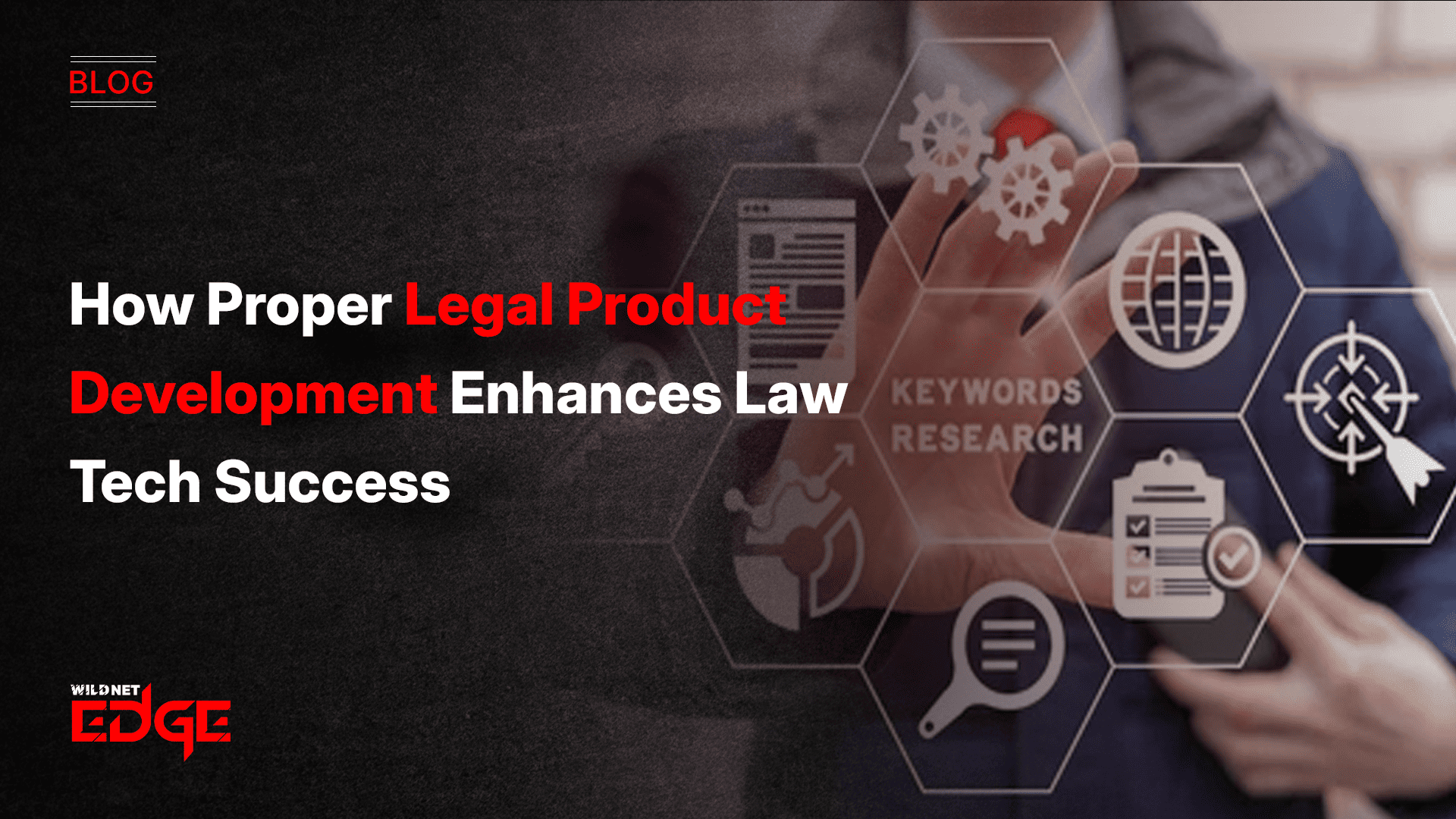
Legal teams can no longer rely only on manual processes and custom one-off solutions. Legal Product Development gives firms a structured way to turn their expertise into scalable software, streamline compliance, and ship features predictably. With the right Product roadmaps, strong engineering, and AI-driven workflows, firms can reduce risk, speed up delivery, and build tools that clients actually adopt. It leads to better ROI, stronger competitiveness, and products that stay relevant in a fast-moving LawTech market.
The legal world is changing fast. Clients want faster answers, predictable pricing, and smarter digital tools. Law firms and legal tech startups are realizing that offering software, not just services, is now a major competitive edge.
This is where Legal Product Development comes in. Instead of relying on scattered tools or manual work, firms can create repeatable, scalable products that capture their expertise, such as compliance portals, automated document review tools, and workflow platforms. When done right, these products reduce the workload on legal teams and create new revenue streams without adding headcount. Legal Product Development is not just “building software.” It’s designing products that match how lawyers work, meet regulatory requirements, and deliver consistent value to clients.
The Strategic Core: Why Product Roadmaps Matter
In the volatile world of legal technology, a vision without a plan is a liability. This is where Product roadmaps become the central nervous system of your strategy. Unlike a simple project timeline, a roadmap is a strategic document that communicates the rationale and direction behind your product’s evolution.
1. Roadmaps Bring Direction and Transparency
A Product roadmap is not just a timeline; it’s the strategy behind the product.
In Legal Product Development, a roadmap helps teams:
- Prioritize features that support real legal workflows
- Reduce risk by planning compliance milestones early
- Align partners, associates, and engineers on what will be delivered (and when)
Without a clear roadmap, teams usually build in chaos—leading to delays, rework, or features no one uses.
Navigating Regulatory Complexity
Legal products must follow strict rules: GDPR, HIPAA, attorney-client privilege, e-discovery preservation, audit trails, and more.
A roadmap helps teams plan compliance checkpoints so nothing is missed. Strong compliance planning is foundational to Legal Product Development, saving firms from costly redesigns later.
Aligning Diverse Stakeholders
LawTech projects often fail due to a misalignment between partners, associates, and engineering teams. A clear roadmap acts as a “North Star,” aligning the firm’s business goals with technical execution. It manages expectations by clearly visualizing when specific high-value features like automated contract review or predictive litigation analytics will be delivered.
Partnering with a specialized Product development company can help translate these complex requirements into a coherent, actionable architecture. They bridge the gap between legal theory and software reality, ensuring that all stakeholders have a unified vision of success.
Trends Shaping LawTech Engineering
Successful Legal Product Development requires looking beyond today’s standards. The engineering landscape is shifting towards more autonomous and flexible systems that can adapt to future demands. Firms that fail to anticipate these shifts risk building legacy systems that are obsolete upon launch.
From Generative to Agentic AI
Generative AI can draft or summarize text.
Agentic AI can take action review documents, draft clauses, route approvals, or complete workflows.
For Legal Product Development, this means:
- AI that assists, not just writes
- Automated workflows that reduce hours of manual review
- Systems built with reasoning, auditability, and safeguards
Integrating these capabilities requires deep backend engineering—not plug-and-play APIs.
The Rise of Composable Architecture
Modern LawTech tools are moving away from bulky systems.
Composable architecture breaks software into small, replaceable modules (billing, contracts, compliance dashboards).
Benefits for Legal Product Development:
- Faster updates
- Easier integrations
- Better long-term flexibility
Standardization with SALI
The SALI standard allows different legal products to exchange data easily.
Building SALI into your product early increases:
- Interoperability
- Accuracy
- Market adoption
The Value of a Specialized LawTech Product Agency
Building legal software requires a unique intersection of skills that generalist developers often lack. This is why partnering with a specialized partner is a strategic accelerator.
- Domain Fluency: A specialist understands filings, clauses, ethics, conflict checks, and workflows so the product fits naturally into a lawyer’s day.
- Security by Design: Experts embed protections like zero-trust security and detailed audit trails into every layer.
- Ethical AI Implementation: Legal AI has a zero-tolerance policy for hallucinations. Specialized agencies know how to implement human-in-the-loop systems and retrieval-augmented generation (RAG) to ensure AI outputs are verifiable and grounded in case law.
For firms looking to build robust, scalable solutions, partnering with a dedicated LawTech product agency that understands these nuances is often more cost-effective and less risky than building an entire engineering team from scratch.
Case Studies: Legal Product Development in Action
Case Study 1: Automating Due Diligence
- The Challenge: A global M&A firm was drowning in manual document review. Their existing process was slow, error-prone, and expensive, relying heavily on associate hours.
- Our Solution: We executed a Legal Product Development strategy to build a custom AI-powered due diligence platform. The system used NLP to extract key clauses from thousands of contracts instantly.
- The Result: The firm reduced review time by 70%. The platform’s accuracy and speed allowed them to close deals faster, giving them a significant competitive advantage in the market.
Case Study 2: A Client-Facing Compliance Portal
- The Challenge: A boutique regulatory firm wanted to productize its expertise. They needed a way to offer continuous compliance monitoring to clients without increasing headcount.
- Our Solution: We built a subscription-based compliance portal. The process focused on creating an intuitive dashboard where clients could track their regulatory status in real-time.
- The Result: The portal generated a new, recurring revenue stream for the firm. It also increased client retention by providing continuous, automated value.
Our Tech Stack for LawTech Innovation
We leverage a secure, enterprise-grade stack to drive innovation.
- Backend: Python, .NET Core, Node.js
- Frontend: React, Angular
- AI/ML: OpenAI, LangChain, Hugging Face
- Cloud: AWS GovCloud, Azure
- Security: Keycloak, HashiCorp Vault
Conclusion
Legal Product Development is now essential for firms that want to scale, innovate, and stay competitive. With strong Product roadmaps, secure engineering, and modern AI capabilities, firms can build tools that deliver lasting impact, not just quick fixes.
If you are looking for a company that gives you a faster solution, then you can partner with Wildnet Edge. Our AI-first approach enhances this process, ensuring your product is built on a foundation of predictive intelligence and scalable architecture. We are ready to engineer the future of your firm.
FAQs
LPD requires a deep understanding of legal workflows, regulatory constraints, and ethical obligations. It prioritizes security, accuracy, and auditability far above typical consumer software metrics.
The most common reasons are a lack of product-market fit (solving a problem lawyers don’t actually have), poor user experience (ignoring legal workflows), and failure to integrate with existing ecosystems (like Outlook or Word).
Standard automation follows a rigid script. Agentic AI can reason, plan, and adapt to unexpected variables to achieve a broader goal, making it capable of handling complex, non-linear legal tasks.
Buying is faster for standard functions like billing. Building via custom development is essential for creating proprietary value, unique client experiences, or specialized workflows that offer a competitive advantage.
Crucial. Lawyers are busy and risk-averse. If a product is difficult to use or opaque, they will return to manual methods. Excellent UX design in this field focuses on clarity, speed, and trust.
Roadmaps should be living documents. Review them quarterly, prioritize based on user feedback and regulatory changes, and focus on outcomes rather than just feature lists. Utilizing flexible Product roadmaps allows for necessary pivots.
Beyond basic encryption, standards now include SOC 2 Type II compliance, ISO 27001 certification, and often specific adherence to GDPR, CCPA, or HIPAA, depending on the practice area.

Managing Director (MD) Nitin Agarwal is a veteran in custom software development. He is fascinated by how software can turn ideas into real-world solutions. With extensive experience designing scalable and efficient systems, he focuses on creating software that delivers tangible results. Nitin enjoys exploring emerging technologies, taking on challenging projects, and mentoring teams to bring ideas to life. He believes that good software is not just about code; it’s about understanding problems and creating value for users. For him, great software combines thoughtful design, clever engineering, and a clear understanding of the problems it’s meant to solve.


 based on 1200+ reviews