 sales@wildnetedge.com
 +1 (212) 901 8616
 +1 (437) 225-7733
















































































































 ChatGPT Development & Enablement
  Hire AI & ChatGPT Experts
  ChatGPT Apps by Industry
  ChatGPT Blog
  ChatGPT Case study
  AI Development Services
  Industry AI Solutions
  AI Consulting & Research
  Automation & Intelligence





TL;DR
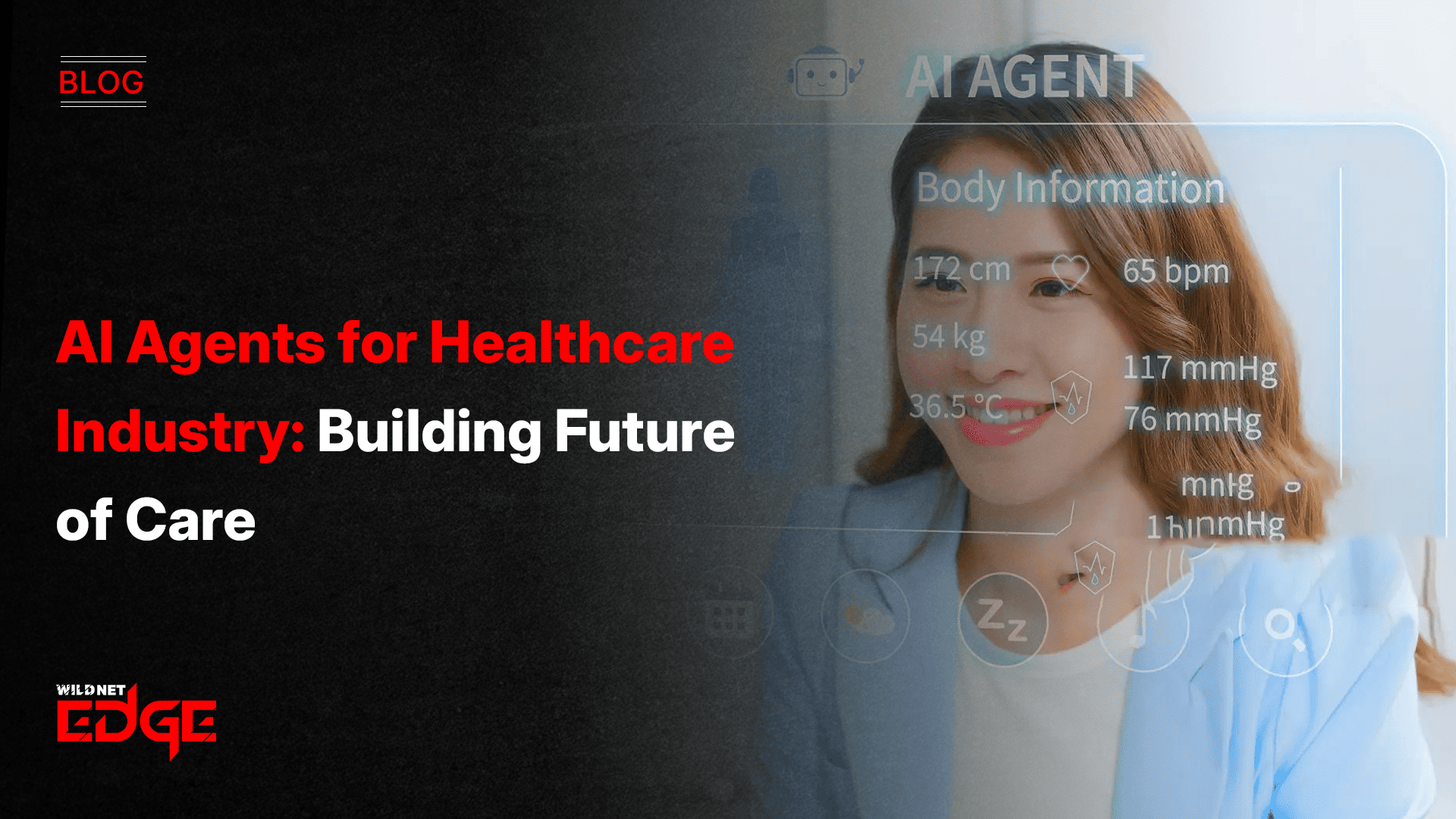
In 2026, AI agents for the healthcare industry have moved beyond chatbots to become active digital workers. Hospitals and clinics now use enterprise healthcare AI agents to automate scheduling, analyze medical data, support clinical decisions, and manage operations—while staying HIPAA compliant. This guide explains how custom AI agent development for healthcare works, where healthcare organizations see the highest impact, and why partnering with a specialized AI Agent Development Company is critical for safety, scale, and trust.
Healthcare teams are overwhelmed not because they lack skill, but because they carry too much administrative weight. Doctors document more than they diagnose. Nurses manage systems instead of patients. Schedulers juggle calendars instead of care.
This is where AI agents for the healthcare industry change the equation.
Unlike traditional healthcare software, AI agents do not wait for clicks. They observe, reason, and act. They schedule appointments, analyze medical data, monitor patient risk, and escalate issues before harm occurs. These agents handle the operational load so clinicians can focus on care.
However, healthcare allows zero margin for error. A hallucination is not a bug; it is a patient safety risk. That is why healthcare organizations rely on custom AI agent development for healthcare, not generic tools. Properly built agents follow clinical protocols, respect HIPAA boundaries, and know when to stop and ask a human.
Clinical Impact: AI as a Trusted Assistant
1. AI Agents for Clinical Decision Support
Modern AI agents for clinical decision support continuously monitor patient data instead of triggering static alerts.
- They track vitals, labs, and notes in real time
- They detect early warning patterns like sepsis risk
- They notify care teams with clear, structured summaries
This reduces alert fatigue and helps clinicians act earlier with confidence.
2. AI Agents for Medical Data Analysis
AI agents for the healthcare industry process medical data at a scale humans cannot manage alone. These AI agents for medical data analysis review imaging reports, lab trends, and patient history together. They surface insights that support diagnosis and treatment planning while keeping clinical judgment firmly in human hands.
3. Automated Clinical Documentation
Healthcare automation using AI agents is a core capability of modern AI agents for healthcare industry. Ambient agents securely transcribe patient visits, structure SOAP notes, and populate EHR fields automatically. Clinicians review and approve documentation instead of spending late nights typing notes.
Operational Efficiency: Hospitals That Run Themselves
4. AI Agents for Healthcare Scheduling
AI agents for the healthcare industry remove one of healthcare’s biggest operational bottlenecks through intelligent scheduling. These AI agents for healthcare scheduling act in real time to:
- Fill cancellations instantly
- Reschedule appointments automatically
- Notify patients and staff without manual follow-ups
This level of coordination allows hospitals to operate smoothly without constant human intervention.
5. AI Agents for Hospital Operations
AI agents for hospital operations coordinate resources behind the scenes. They optimize OR schedules, manage staffing shifts, and predict supply shortages. When demand spikes, these agents act before humans can react.
6. Revenue Cycle and Billing Automation
AI-powered healthcare workflow automation improves cash flow. Agents assign accurate codes, verify insurance eligibility, and predict claim denials before submission. This reduces rework and shortens payment cycles.
Patient Support: Care Beyond the Hospital
7. AI Agents for Patient Support
AI agents for patient support extend care outside clinical walls.
- They monitor post-discharge recovery
- They flag early warning symptoms
- They escalate to nurses when risk appears
These agents improve outcomes while reducing readmissions.
Why Custom AI Agent Development Is Non-Negotiable
Healthcare cannot rely on generic AI.
Custom AI agent development for healthcare ensures:
- HIPAA compliance with Zero Trust security
- Data sovereignty inside private infrastructure
- FHIR-based integration with EHRs and PACS
- Governance-as-code tied to clinical guidelines
Public AI tools cannot meet these requirements. That is why healthcare leaders work with a dedicated AI agent development company for healthcare.
How a Healthcare AI Agent Development Company Works
A mature healthcare AI development company follows a safety-first lifecycle:
- Workflow selection – Identify high-impact, low-risk processes
- Cognitive design – Define what agents can and cannot do
- Secure integration – Connect to EHRs and hospital systems
- Human-in-the-loop controls – Escalate when confidence drops
- Red teaming – Test for privacy, bias, and failure modes
This approach ensures enterprise healthcare AI agents operate safely from day one.
Case Studies
Case Study 1: The Multi-Specialty Clinic (Scheduling)
- The Challenge: A clinic with 50 doctors faced a 20% “no-show” rate and overwhelmed phone lines. Staff spent 4 hours a day just rescheduling appointments.
- The Solution: They engaged us for AI agent consulting for healthcare. We built a “Scheduling Concierge Agent” integrated with their EHR. The agent conversed with patients via SMS to book slots and fill cancellations.
- The Result: No-show rates dropped to 5%. The agent filled 90% of the last-minute cancellations autonomously. The clinic saved $200,000 annually in lost revenue, proving the value of AI agents for healthcare industry.
Case Study 2: The Regional Hospital (Clinical Support)
- The Challenge: Nurses were burnt out from manual documentation and alert fatigue. Important patient trends were being missed in the noise of data.
- The Solution: We deployed AI agents for hospital operations that acted as “Virtual Scribes” and “Vitals Monitors.”
- The Result: Nursing documentation time was reduced by 40%. The “Sepsis Watch” agent caught 15 cases of early-stage sepsis that human monitoring missed, directly saving lives and demonstrating the power of custom AI agent development for healthcare.
Conclusion
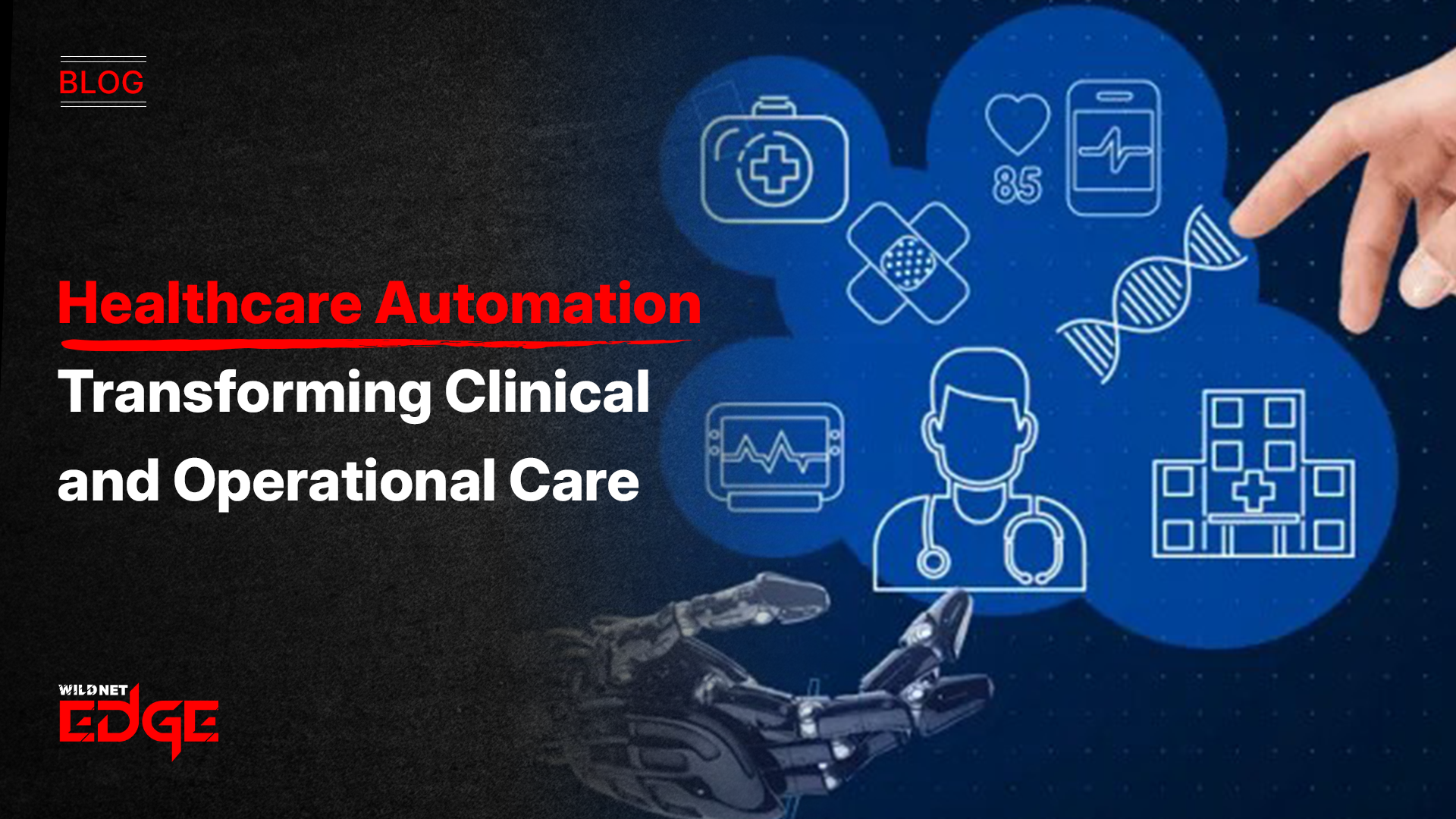
AI agents for healthcare industry are no longer optional; they are essential. Healthcare systems face staff shortages, rising demand, and increasing complexity. The only sustainable path forward is AI-powered healthcare workflow automation that removes friction without removing humanity.
By investing in custom AI agent development for healthcare, organizations gain speed, accuracy, and resilience while keeping clinicians in control. With the right AI Agent Development Company, healthcare institutions do not replace care with automation. They protect it.
Wildnet Edge’s digital engineering approach guarantees that we create healthcare ecosystems that are high-quality, secure, and future-proof. We collaborate with you to untangle the complexities of medical automation and to realize engineering excellence. AI agents for healthcare industry are the future of efficient, compassionate medicine.
FAQs
They are autonomous AI systems that perform specific healthcare tasks like scheduling, billing, or clinical analysis without constant human supervision. Unlike chatbots, AI agents for healthcare industry can execute actions within hospital software systems.
Yes, but only if built correctly. Custom AI agent development for healthcare ensures that agents operate within secure, private environments (Zero Trust) and do not share PHI with public AI models.
They process vast amounts of data instantly. AI agents for medical data analysis can look at a patient’s entire genetic history, lab results, and imaging to suggest personalized treatment plans that a human doctor might take days to synthesize.
They don’t replace staff; they augment them. AI agents for healthcare scheduling handle repetitive booking and confirming, allowing staff to focus on patients who are in the waiting room or have complex needs.
Healthcare data is complex and regulated. A specialized AI agent development company for healthcare understands FHIR standards, HIPAA rules, and clinical workflows, ensuring your agents are safe and effective from day one.
Chatbots answer FAQs. AI agents for patient support can take action like booking an appointment, alerting a nurse, or updating a prescription refill request in the pharmacy system.
Costs vary, but the ROI is often rapid. Enterprise healthcare AI agents can pay for themselves in months by reducing claim denials, filling empty appointment slots, and lowering administrative labor costs.

Managing Director (MD) Nitin Agarwal is a veteran in custom software development. He is fascinated by how software can turn ideas into real-world solutions. With extensive experience designing scalable and efficient systems, he focuses on creating software that delivers tangible results. Nitin enjoys exploring emerging technologies, taking on challenging projects, and mentoring teams to bring ideas to life. He believes that good software is not just about code; it’s about understanding problems and creating value for users. For him, great software combines thoughtful design, clever engineering, and a clear understanding of the problems it’s meant to solve.

 based on 1200+ reviews



