 sales@wildnetedge.com
 +1 (212) 901 8616
 +1 (437) 225-7733
















































































































 ChatGPT Development & Enablement
  Hire AI & ChatGPT Experts
  ChatGPT Apps by Industry
  ChatGPT Blog
  ChatGPT Case study
  AI Development Services
  Industry AI Solutions
  AI Consulting & Research
  Automation & Intelligence





TL;DR
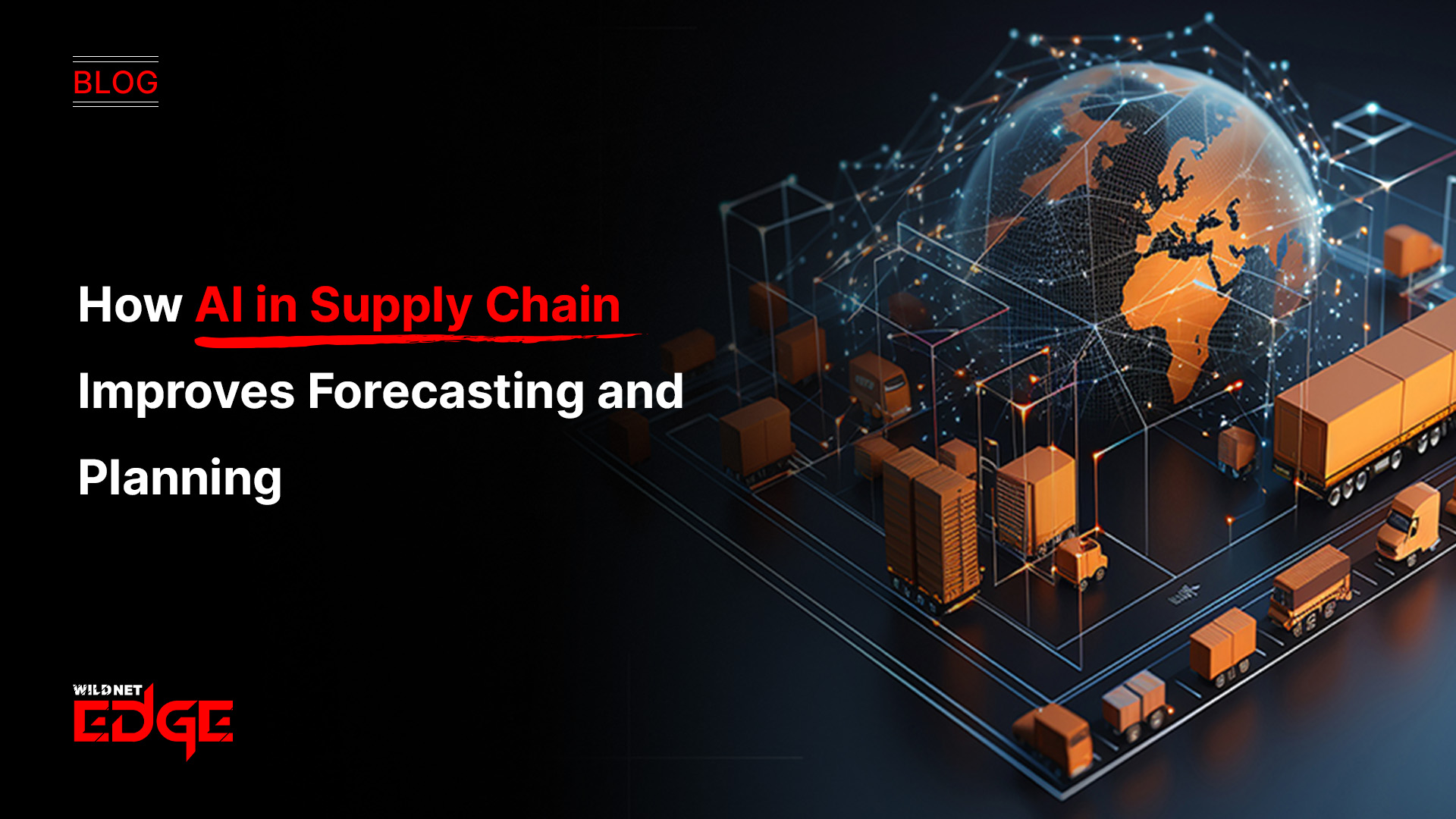
Supply chains break when they rely on manual decisions and delayed data. AI in Supply Chain replaces guesswork with prediction. By combining supply chain automation, demand forecasting, logistics AI, and inventory prediction AI, businesses gain real-time visibility, prevent disruptions, and move goods faster with lower costs. In this article, we explain how AI turns fragile supply chains into resilient, self-adjusting networks.
Modern supply chains are under constant pressure. Delays, demand spikes, labor shortages, and global disruptions are no longer rare events; they are the norm. This is why AI in Supply Chain has become essential.
In 2026, successful supply chains are not just connected; they are intelligent. They do not wait for problems to appear. They anticipate them. AI helps businesses shift from reacting after damage is done to acting before disruption happens.
1. The Strategic Shift to Visibility
The biggest advantage of AI in Supply Chain is visibility. It connects data from suppliers, warehouses, transport systems, and retailers into a single, reliable view.
Instead of asking:
- Where is my shipment?
- Why is this delayed?
- What went wrong?
The system already knows and alerts you early.
With AI-driven monitoring, companies can track shipment conditions, detect risks, and respond before losses occur. This level of transparency is especially critical for industries handling sensitive goods, such as pharmaceuticals or electronics.
2. Revolutionizing Demand Forecasting
The biggest advantage of AI in Supply Chain is visibility. It connects data from suppliers, warehouses, transport systems, and retailers into a single, reliable view.
Instead of asking:
- Where is my shipment?
- Why is this delayed?
- What went wrong?
The system already knows and alerts you early.
With AI-driven monitoring, companies can track shipment conditions, detect risks, and respond before losses occur. This level of transparency is especially critical for industries handling sensitive goods, such as pharmaceuticals or electronics.
3. Warehouse Optimization and Robotics
Warehouses are no longer static storage spaces. With AI in Supply Chain, they become dynamic, self-optimizing systems.
AI-powered warehouse optimization:
- Assigns faster picking paths
- Adjusts inventory placement automatically
- Coordinates robots and human workers efficiently
High-demand items are placed closer to dispatch zones, while slower-moving stock shifts automatically. The result is faster fulfillment with less effort.
4. Logistics and Route Optimization
Fuel, time, and delays cost money. Logistics AI reduces all three.
AI-driven routing systems adjust delivery plans in real time using traffic data, weather updates, and delivery constraints. If conditions change, routes change instantly.
This improves:
- On-time delivery rates
- Fuel efficiency
- Sustainability outcomes
Logistics AI ensures goods move efficiently, not just quickly.
5. Smarter Inventory Management
Managing inventory across regions and channels is complex. Inventory prediction AI simplifies it. By calculating optimal reorder points for each SKU, AI ensures stock arrives exactly when needed. This is the foundation of modern, AI-powered Just-in-Time operations.
The benefits are clear:
- Lower holding costs
- Reduced waste
- Fewer production stoppages
Inventory becomes precise, not excessive.
6. Overcoming Implementation Hurdles
AI only works when data flows freely. Breaking down silos between procurement, logistics, and sales is critical.
Successful companies adopt AI in phases:
- Start with one pain point (routing or forecasting)
- Prove value
- Scale across the network
Security is also key. AI systems must use secure integrations and trusted vendors to protect sensitive supply chain data. Secure APIs and rigorous vendor vetting are essential components of any supply chain software strategy.
Case Studies: Our Automation Success Stories
Case Study 1: Cold Chain Logistics Resilience
- Challenge: A pharmaceutical distributor faced spoilage issues due to unpredictable delays in transit. They lacked real-time visibility into the temperature of their sensitive cargo. They needed robust enterprise logistics solutions to ensure compliance.
- Our Solution: We deployed a sensor-based platform powered by AI in Supply Chain analytics. It monitored temperature in real-time and predicted potential excursions based on traffic and weather delays.
- Result: Spoilage was reduced by 90%. The automated system rerouted trucks to closer cold storage facilities when delays were predicted, saving millions in inventory.
Case Study 2: Manufacturing Inventory Optimization
- Challenge: An automotive parts manufacturer struggled with frequent shortages of critical components, halting production lines. Manual forecasting could not keep up with volatile raw material availability. They sought AI development to stabilize production.
- Our Solution: We integrated an AI in the Supply Chain module that analyzed supplier lead times and global raw material availability. It automated purchase orders based on predictive consumption rates.
- Result: Production stoppages dropped to zero. The solution using AI in Supply Chain reduced safety stock levels by 25%, freeing up significant working capital for R&D.
Our Technology Stack for Supply Chain AI
We use enterprise-grade technologies to build scalable, resilient, and intelligent logistics platforms.
- Frontend: React, Angular (Dashboards & Visualization)
- Backend: Python, Java, Node.js
- AI & Machine Learning: TensorFlow, PyTorch, Scikit-learn
- Cloud Platforms: AWS Supply Chain, Azure, Google Cloud
- Data & Integration: Apache Kafka, MuleSoft, PostgreSQL
- Optimization Solvers: Gurobi, CPLEX
Conclusion
AI in Supply Chain is no longer optional. It is the foundation of efficiency, resilience, and growth. By combining supply chain automation, demand forecasting, logistics AI, and warehouse optimization, businesses move from constant firefighting to controlled execution. The result is faster delivery, lower costs, and stronger customer trust.
At Wildnet Edge, we help enterprises build intelligent, AI-driven supply chains that adapt, scale, and perform no matter what disruption comes next.
FAQs
The main advantage is improved awareness and faster decision-making, which enables organizations to foresee interruptions and fine-tune their logistics, thus cutting costs and upgrading service to a certain level.
It eliminates human mistakes and quickens processes that require humans, such as data entry, order processing, and picking in a warehouse, thus giving human teams time to concentrate on more complex issue-solving.
Certainly, AI in Supply Chain can diagnose the demand and subsequently prompt automatic reordering to make sure there is stock available all the time by looking at historical sales, seasonality, and market trends.
It is true that an investment is required to acquire the enterprise platforms; however, the ROI coming from fuel savings, reduced inventory holding costs, and improved labor efficiency is generally seen very soon with this technology.
In order to create effective models that are able to foresee real-life outcomes, a mixture of internal data (ERP, WMS, TMS) and external data (weather, traffic, market indices) is required.
No, AI in Supply Chain is a co-worker that supports the manager. It does the data analysis and routine optimization, which allows managers to make better strategic decisions based on accurate insights.
By optimizing routes to reduce fuel consumption and minimizing overproduction through better forecasting, AI significantly lowers the carbon footprint of the entire logistics network.

Managing Director (MD) Nitin Agarwal is a veteran in custom software development. He is fascinated by how software can turn ideas into real-world solutions. With extensive experience designing scalable and efficient systems, he focuses on creating software that delivers tangible results. Nitin enjoys exploring emerging technologies, taking on challenging projects, and mentoring teams to bring ideas to life. He believes that good software is not just about code; it’s about understanding problems and creating value for users. For him, great software combines thoughtful design, clever engineering, and a clear understanding of the problems it’s meant to solve.

 based on 1200+ reviews



