 sales@wildnetedge.com
 +1 (212) 901 8616
 +1 (437) 225-7733
















































































































 ChatGPT Development & Enablement
  Hire AI & ChatGPT Experts
  ChatGPT Apps by Industry
  ChatGPT Blog
  ChatGPT Case study
  AI Development Services
  Industry AI Solutions
  AI Consulting & Research
  Automation & Intelligence





TL;DR
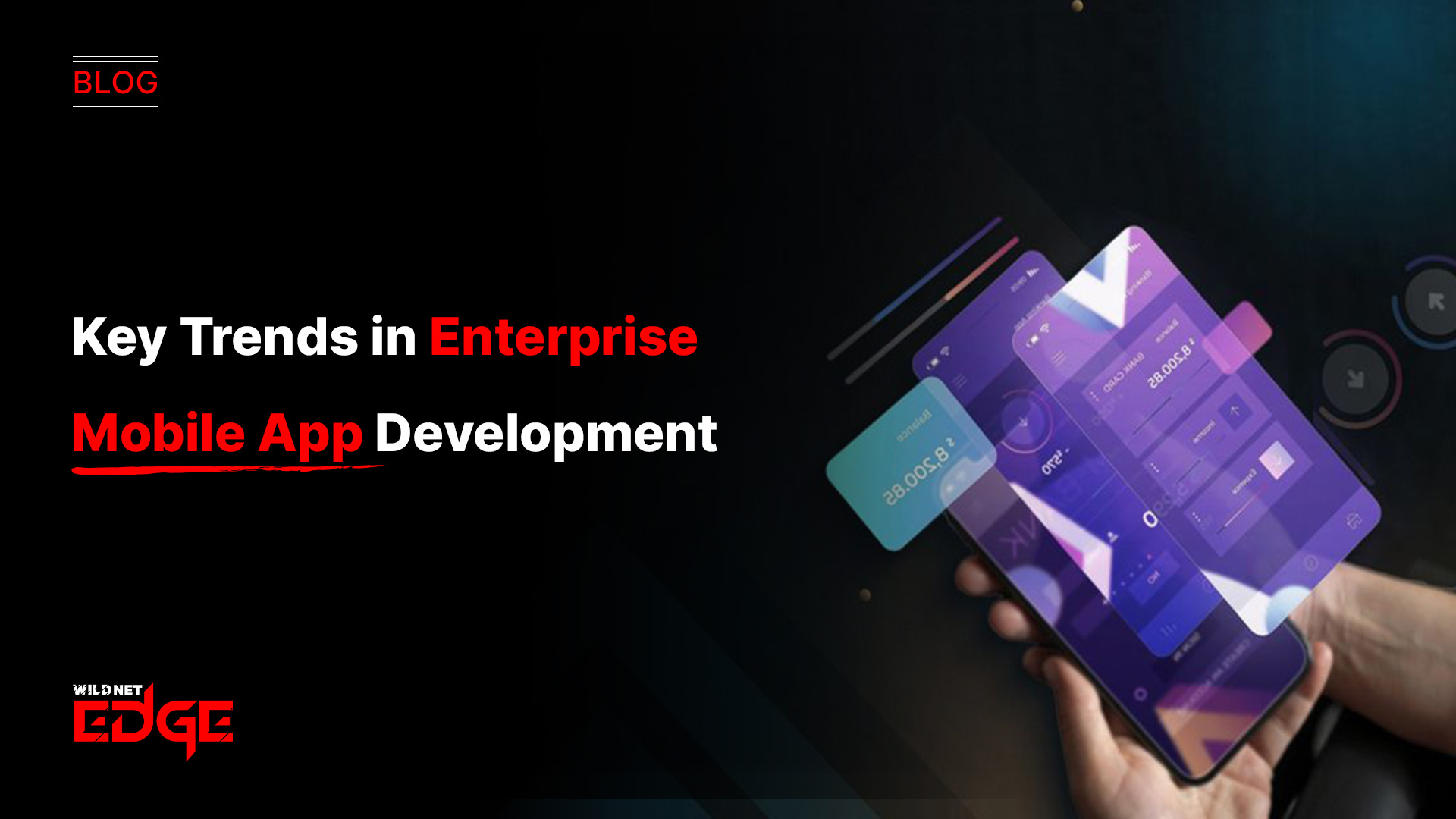
Enterprise Mobile Apps are replacing desktop-first workflows as businesses move toward distributed, mobile teams. Key trends include AI-powered assistance, cross-platform development, stronger enterprise UX, Zero Trust security, super-app consolidation, and the use of 5G and edge computing. Together, these trends enable faster decisions, better employee adoption, and scalable mobile workforce apps that support work from anywhere.
Nowadays, work is not limited to the desk. Approvals happen in airport lounges. Reports are checked on factory floors. Decisions are made between meetings. This shift is why Enterprise Mobile Apps have moved from “nice to have” tools to core business infrastructure.
In 2026, companies that rely only on desktop systems move more slowly by default. Employees expect business tools to work like the apps they use every day: fast, intuitive, and always available. When internal software fails to meet that expectation, productivity drops and adoption suffers.
This article breaks down the most important enterprise mobility trends shaping business app development today, and explains how organizations are using mobile-first systems to drive real mobile digital transformation.
1. AI Is Becoming Built-In, Not Optional
The biggest shift in Enterprise Mobile Apps is the move from static tools to intelligent systems.
AI now handles pattern recognition, predictions, and recommendations inside everyday workflows. A sales app can suggest follow-ups based on customer behavior. A support app can surface the next best action without manual searching.
This reduces mental load. Employees spend less time navigating screens and more time acting on insights. Voice input is also becoming common, especially for mobile workforce apps used by technicians, drivers, and inspectors who need hands-free interaction.
AI turns mobile apps from task trackers into active work partners.
2. Cross-Platform Development Is the Default
Maintaining separate iOS and Android apps slows teams down and inflates costs. That model no longer makes sense.
Modern Enterprise Mobile Apps rely on cross-platform frameworks such as Flutter and React Native. One codebase supports all devices, ensuring consistent features, faster releases, and simpler maintenance.
This approach accelerates mobile digital transformation. Security updates roll out faster. New features reach the entire workforce at once. Development teams focus on improvements instead of duplication.
3. Enterprise UX Drives Adoption
Employees will not tolerate clunky tools. If an app feels slow or confusing, they avoid it.
Strong enterprise UX focuses on clarity, speed, and usability. Navigation stays simple. Screens show only what matters. Accessibility and dark mode are built in, not added later.
Good design directly impacts ROI. When employees enjoy using Enterprise Mobile Apps, they use them more often, enter better data, and complete workflows faster.
4. Security Follows a Zero Trust Model
Remote work removed the idea of a safe internal network. Every request now requires verification. Modern Enterprise Mobile Apps follow Zero Trust principles. Each login, device, and action is authenticated. Mobile Device Management (MDM) and Mobile Application Management (MAM) protect company data without invading personal devices.
Biometric authentication, Face ID, and fingerprints are standard. If a phone is lost, IT can remove corporate data instantly while leaving personal content untouched.
Security is built into the app experience, not layered on afterward.
5. Super-Apps Replace App Sprawl
Employees are tired of juggling multiple apps for HR, expenses, travel, and communication.
Many organizations now build internal “super-apps” that combine these functions into a single platform. One login. One interface. One place to manage daily work.
These consolidated Enterprise Mobile Apps reduce friction, simplify onboarding, and improve engagement. They also become a central channel for company updates, policies, and internal communication.
6. 5G and Edge Computing Unlock Real-Time Use Cases
5G removes latency bottlenecks that once limited mobile apps.
With faster speeds and lower delay, Enterprise Mobile Apps now support live video, AR-assisted repairs, and real-time analytics. Edge computing processes data closer to the source, avoiding cloud delays.
For manufacturing, logistics, and utilities, this enables instant decisions. Systems detect issues immediately instead of after the fact, supporting safer and more responsive operations.
This low latency is critical for mission-critical app modernization efforts. It makes Enterprise Mobile Apps responsive enough for real-time industrial control.
Case Studies: Our Automation Success Stories
Case Study 1: Field Service Optimization
- Challenge: A national utility provider struggled with paper-based reporting. Field technicians had to return to the office to file reports, causing delays. They needed a mobile app development company to digitize the workflow.
- Our Solution: We developed a suite of offline-first Enterprise Mobile Apps. Technicians could download daily schedules, log repairs, and upload photos even without internet access.
- Result: Reporting time was cut by 60%. The system synchronized automatically when connectivity was restored, ensuring the back office had real-time visibility into grid status.
Case Study 2: Logistics Fleet Management
- Challenge: A logistics firm lacked real-time communication with drivers. Dispatch relied on phone calls, which were dangerous and inefficient. They sought enterprise software to modernize reporting.
- Our Solution: We built a custom driver companion app. It integrated GPS routing, digital signature capture, and instant messaging. We focused heavily on Enterprise UX to ensure drivers could use it easily on the road.
- Result: Delivery efficiency increased by 25%. The Enterprise Mobile Apps allowed dispatch to reroute drivers dynamically, saving fuel and improving on-time delivery rates.
Our Technology Stack for Enterprise Mobile
We use scalable, secure, and modern frameworks to build mission-critical mobile solutions.
- Cross-Platform Frameworks: Flutter, React Native, .NET MAUI
- Native Development: Swift (iOS), Kotlin (Android)
- Backend & API: Node.js, GraphQL, Microsoft Azure
- Security & Auth: OAuth 2.0, Okta, Firebase Auth
- Database: Realm, SQLite, PostgreSQL
- DevOps: Bitrise, App Center, Jenkins
Conclusion
Enterprise work now happens wherever employees are business Apps make that possible by delivering speed, intelligence, and secure access without friction.
Organizations that invest in modern mobile platforms gain faster execution, higher adoption, and better visibility across operations. Those who delay remain tied to rigid systems that slow teams down.
At Wildnet Edge, we design and build enterprise-grade mobile solutions that support real workflows, not just features. Our focus is simple: apps that employees actually use and businesses can scale with confidence.
FAQs
The primary benefits include increased employee productivity, real-time data access, improved communication, and the ability to work from any location, fostering a flexible work environment.
It allows businesses to build business apps for both iOS and Android using a single codebase, significantly reducing development time and maintenance costs while ensuring consistency.
Good UX ensures that employees can use the app intuitively without extensive training, which drives higher adoption rates and ensures that business apps actually improve efficiency.
Yes, modern business apps are built with enterprise-grade security, including data encryption, multi-factor authentication, and integration with MDM (Mobile Device Management) systems.
Absolutely. We specialize in connecting modern mobile solutions to legacy ERP and CRM systems via secure APIs, extending the life and value of your existing infrastructure.
An offline-first app allows users to continue working (filling forms, viewing data) even without an internet connection, syncing data automatically once connectivity is restored a crucial feature for business apps.
Timeline varies by complexity, but a functional MVP for a corporate application can often be deployed in 3-4 months using agile cross-platform frameworks.

Managing Director (MD) Nitin Agarwal is a veteran in custom software development. He is fascinated by how software can turn ideas into real-world solutions. With extensive experience designing scalable and efficient systems, he focuses on creating software that delivers tangible results. Nitin enjoys exploring emerging technologies, taking on challenging projects, and mentoring teams to bring ideas to life. He believes that good software is not just about code; it’s about understanding problems and creating value for users. For him, great software combines thoughtful design, clever engineering, and a clear understanding of the problems it’s meant to solve.

 based on 1200+ reviews



