 sales@wildnetedge.com
 +1 (212) 901 8616
 +1 (437) 225-7733
















































































































 ChatGPT Development & Enablement
  Hire AI & ChatGPT Experts
  ChatGPT Apps by Industry
  ChatGPT Blog
  ChatGPT Case study
  AI Development Services
  Industry AI Solutions
  AI Consulting & Research
  Automation & Intelligence





TL;DR
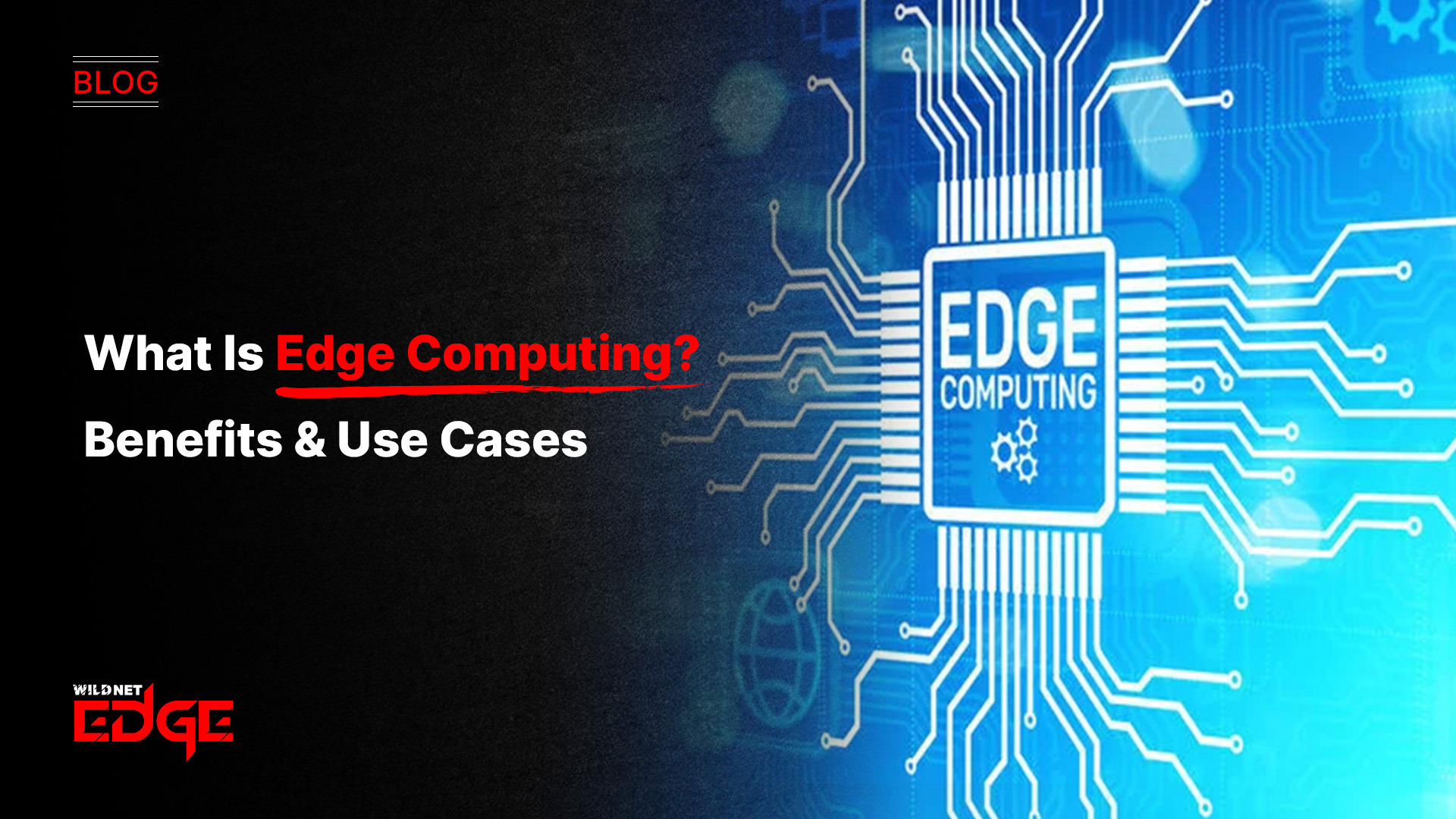
Edge Computing processes data near its source instead of relying solely on centralized cloud servers. This reduces latency, cuts bandwidth costs, improves reliability, and strengthens privacy. By using edge devices for real-time processing, businesses can run low-latency apps, support edge IoT systems, and build resilient distributed computing architectures that continue working even when connectivity is limited.
Cloud computing changed how software is built, but it also introduced a new problem: distance.
Every time data travels from a device to a distant data center, and back, it adds delay, cost, and risk. For many modern systems, that delay is no longer acceptable. A self-driving car cannot wait. A factory robot cannot pause. A medical monitor cannot lag. This is why Edge Computing matters.
Instead of sending everything to the cloud, edge systems process data close to where it is created on edge devices, local servers, or gateways. This shift enables real-time processing, powers low-latency apps, and makes distributed computing practical at scale.
Why Computing Is Moving to the Edge
Traditional cloud models require data to travel long distances before any decision is made. That delay adds friction and failure points.
Edge Computing flips the model. Instead of moving data to computation, it moves computation to the data. Algorithms run directly on devices or nearby nodes, producing instant results.
This shift improves reliability. If a network connection drops, local systems keep working. That independence is critical for environments like hospitals, factories, oil rigs, and remote sites where downtime is not an option.
Speed and Low-Latency Apps
Latency defines experience.
With Edge Computing, data does not need to make a round trip to the cloud. Processing happens locally, often within milliseconds. This makes low-latency apps possible in scenarios where cloud-only systems fail.
Examples include:
- Augmented reality overlays that respond instantly
- Industrial controls that stop machines the moment a fault appears
- Financial systems that react to market changes without delay
By enabling real-time processing, edge systems turn devices into decision-makers rather than passive data collectors.
Edge IoT and Bandwidth Control
IoT networks generate massive volumes of raw data. Sending all of it to the cloud is expensive and unnecessary.
Edge Computing filters data locally. Devices analyze information on the spot and send only meaningful events or summaries upstream. This makes edge IoT networks scalable without overwhelming cloud computing infrastructure.
For example, a camera processes video locally and uploads data only when it detects movement. This approach cuts bandwidth use, lowers storage costs, and keeps cloud systems focused on insights instead of noise.
Security and Privacy at the Edge
Data becomes vulnerable when it travels.
By processing information locally, Edge Computing reduces exposure. Sensitive data—such as biometric scans, medical readings, or location data can remain on the device instead of moving across public networks.
This local handling supports privacy regulations and data residency requirements. It also limits the blast radius of breaches by keeping critical information contained.
For users, it builds trust. Personal data stays close to home, not on distant servers.
The Future of Distributed Computing
Edge Computing does not replace the cloud. It works alongside it.
Cloud platforms still handle long-term storage, historical analysis, and centralized coordination. Edge systems handle immediate decisions and time-sensitive workloads. Together, they form a flexible distributed computing model.
As hardware improves, more AI models will run directly on phones, laptops, and embedded systems. This brings intelligence closer to users and reduces reliance on always-on connectivity.
Case Studies: Our Automation Success Stories
Case Study 1: Smart Manufacturing Quality Control
- Challenge: A global automotive manufacturer faced high defect rates on their assembly line. Cloud-based visual inspection was too slow, letting faulty parts pass before the alert arrived. They needed an IoT solutions company to implement real-time checks.
- Our Solution: We deployed an Edge Computing system using local GPUs. High-speed cameras fed data directly to edge servers on the factory floor, running AI inference models instantly.
- Result: Defect detection improved by 99%. The solution stopped the line within 10 milliseconds of spotting a flaw, saving the company $5M annually in rework costs.
Case Study 2: Retail Inventory Management
- Challenge: A retail chain struggled with “ghost inventory” systems saying items were in stock when shelves were empty. Manual audits were too slow. They needed a way to utilize their existing CCTV infrastructure for tracking.
- Our Solution: We implemented an Edge Computing layer on their existing camera network. The system analyzed video feeds locally to count stock levels on shelves in real-time without consuming store bandwidth.
- Result: Out-of-stock incidents dropped by 40%. The platform triggered automatic reorders when shelves ran low, optimizing the supply chain without upgrading their internet connection.
Our Technology Stack for Edge Development
We use enterprise-grade hardware and software to build robust, scalable edge solutions.
- Hardware: NVIDIA Jetson, Raspberry Pi, Intel NUC
- Orchestration: Kubernetes (K3s), Docker Swarm
- Cloud Edge Services: AWS IoT Greengrass, Azure IoT Edge
- Connectivity: 5G, LoRaWAN, Wi-Fi 6, MQTT
- Databases: SQLite, InfluxDB (Time-series)
- AI Frameworks: TensorFlow Lite, PyTorch Mobile
Conclusion
Edge Computing removes delay from decision-making. It allows systems to act immediately, even when networks are slow or unavailable.
By processing data locally, organizations gain speed, reduce costs, and protect sensitive information. Whether powering smart factories, retail analytics, or connected vehicles, Decentralized Computing enables systems that respond in real time.
At Wildnet Edge, we design edge-first architectures that balance performance, security, and scalability, helping businesses build systems that work wherever data is created.
FAQs
The primary advantage is significantly reduced latency, as the system processes data locally near the source rather than sending it to a distant centralized cloud server.
No, Decentralized Computing complements the cloud. Heavy historical analysis and storage happen in the cloud, while immediate, real-time decisions occur at the edge.
While physical access can be a risk, Decentralized Computing often enhances privacy by keeping sensitive data local and reducing the amount of information transmitted over the public internet.
Manufacturing, healthcare, retail, and automotive benefit most because they rely on rapid processing for real-time decision-making, predictive maintenance, and immediate user feedback.
Initial hardware costs can be higher, but this architecture saves significant money long-term by reducing cloud data ingestion fees and bandwidth requirements.
5G and Decentralized Computing are symbiotic. 5G provides the high-speed, low-latency pipe that connects edge devices, enabling high-bandwidth applications like real-time video analytics.
Edge processing happens directly on the device or gateway, while Fog computing is a layer between the edge and the cloud that handles broader data aggregation.

Managing Director (MD) Nitin Agarwal is a veteran in custom software development. He is fascinated by how software can turn ideas into real-world solutions. With extensive experience designing scalable and efficient systems, he focuses on creating software that delivers tangible results. Nitin enjoys exploring emerging technologies, taking on challenging projects, and mentoring teams to bring ideas to life. He believes that good software is not just about code; it’s about understanding problems and creating value for users. For him, great software combines thoughtful design, clever engineering, and a clear understanding of the problems it’s meant to solve.

 based on 1200+ reviews



