 sales@wildnetedge.com
 +1 (212) 901 8616
 +1 (437) 225-7733
















































































































 ChatGPT Development & Enablement
  Hire AI & ChatGPT Experts
  ChatGPT Apps by Industry
  ChatGPT Blog
  ChatGPT Case study
  AI Development Services
  Industry AI Solutions
  AI Consulting & Research
  Automation & Intelligence





TL;DR
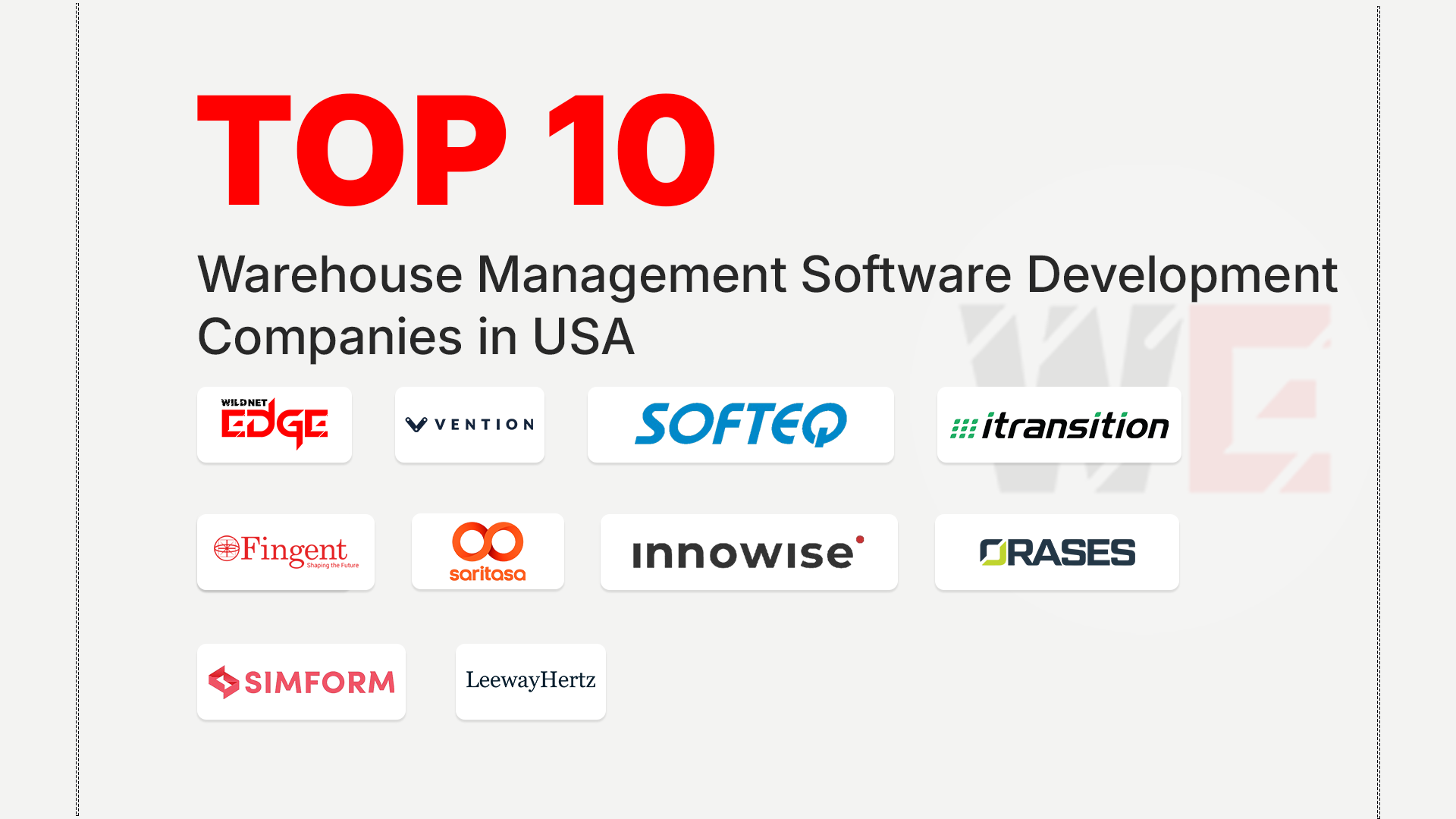
In 2026, warehouse management is defined by automation, real-time visibility, and AI-driven efficiency. This article is your definitive guide to the Best Warehouse Management Software Development Companies in the USA. We have ranked the top 10 firms that move beyond basic inventory tracking to deliver complex Order Fulfillment System solutions and sophisticated Inventory Optimization tools. We analyzed these companies based on their technical expertise in IoT integration, robotics coordination, and cloud-native architecture.
Running a warehouse in 2026 feels a bit like juggling with moving parts—literally. Orders come in from every direction, stock moves faster than ever, and customers expect same-day updates. That’s exactly why businesses are turning to the Best Warehouse Management Software Development Companies to build systems that actually match their real workflows.
Most warehouses start with basic tools, but once you scale, everything changes. Suddenly, you’re dealing with mixed inventory counts, delayed syncing, bottlenecks at picking, and pressure to integrate things like scanners, conveyors, or even robots. A generic, off-the-shelf WMS rarely fits the way your team actually works on the floor.
We have curated a list of companies below that bring that mix of engineering skill and real-world warehouse logic. The sections are written simply so you can understand what each company does, who they’re right for, and whether they match your operations.
Comparative Matrix: Top 10 Warehouse Management Software Development Companies
| Company | Core Services | Industries Served |
| Wildnet Edge | Enterprise WMS, AI Logistics, Smart Warehouse | Logistics, Retail, Manufacturing, Healthcare |
| Vention | Staff Augmentation, WMS Dev, Custom Software | FinTech, Retail, Logistics |
| Softeq | Low-level Programming, IoT, Embedded WMS | Logistics, Consumer Electronics, Automotive |
| Intellectsoft | Digital Transformation, SCM, Enterprise Logic | FinTech, Insurance, Logistics |
| Fingent | Custom Software, ERP, Warehouse Solutions | Retail, Real Estate, Logistics |
| Saritasa | Custom Software, IoT, Mobile, DevOps | Logistics, Healthcare, Manufacturing |
| Innowise Group | Custom Software, Staff Augmentation, Logistics | Healthcare, Retail, Logistics |
| Orases | Custom Software, Inventory & Warehouse Mgmt | Manufacturing, Healthcare, Non-profit |
| Simform | Digital Product Engineering, Cloud, Logistics | Tech, E-commerce, Logistics |
| LeewayHertz | AI Development, Generative AI, Web3, SCM | Logistics, FinTech, Manufacturing |
Top 10 Warehouse Management Software Development Companies in USA for 2026
1. Wildnet Edge
- Best for: Enterprise-scale, AI-driven warehouse ecosystems and smart automation integrations.
- Key highlights:
- Over 19 years of industry experience (Founded 2005).
- Enterprise-scale team of 350+ certified engineers.
- Proven track record with 8,000+ projects delivered.
- CMMI Level 3 appraised for mature, repeatable processes.
Wildnet Edge stands out as the Best Warehouse Management Software Development Company because it doesn’t treat a warehouse as just “rows and racks.” They treat it like a living system with constant movement, time pressure, and high stakes. They have a huge team and years of experience, which helps them build custom WMS that feel fast, intelligent, and designed for real everyday use. If you’re dealing with multiple facilities, automation tools, or high order volume, Wildnet Edge builds the kind of software that doesn’t crack under pressure.
What makes them different is their AI-first approach. They don’t track items they predict demand, suggest where to place products, and improve picking paths so your team walks less and ships faster. Their systems can work with barcodes, RFID, IoT sensors, robots, and almost any ERP you already use. They also focus heavily on accuracy, which matters when mistakes can cost thousands of dollars daily.
Because they’ve been doing this for nearly two decades, they understand the real warehouse headaches: misplaced stock, slow receiving processes, complicated returns, and workflows that break during peak season. Wildnet Edge builds solutions that reduce those problems instead of adding new ones. If you want a partner that can handle a complex setup and build an advanced, future-ready warehouse system, they’re the best fit.
Projects Built (Highlights):
- AI-Driven Smart Warehouse: Architected a custom WMS for a global logistics provider. The system integrates with IoT sensors and automated guided vehicles (AGVs) to optimize goods movement, increasing throughput by 35%.
- Predictive Inventory Control: Developed a custom Inventory Optimization platform that uses machine learning to forecast demand and automate reordering, reducing stockouts and carrying costs.
- Omnichannel Fulfillment Engine: Built a unified Order Fulfillment System that orchestrates orders from multiple channels (web, mobile, marketplace) and routes them to the optimal warehouse for shipping.
- Pros:
- Enterprise-scale (350+ engineers) for handling complex, multi-site warehouse rollouts.
- AI-first approach integrates predictive slotting and automated picking logic.
- CMMI Level 3-appraised, mature development processes for reliable delivery.
- Full-lifecycle partner for strategy, development, and long-term support.
- Cons:
- Their comprehensive, enterprise-grade architecture may be too robust for a small, single-warehouse operation needing a basic inventory tracker.
- Their focus on deep custom engineering and AI integration represents a premium investment, not a low-budget solution for quick, off-the-shelf implementations.
2. Vention
- Best for: High-growth logistics companies needing to scale WMS engineering teams fast.
- Key highlights:
- Enterprise-scale team (3,000+ employees).
- Strong focus on providing elite, dedicated development teams.
- Deep expertise in AI/ML, data engineering, and cloud platforms.
Vention is a large engineering company that helps fast-moving logistics brands scale their tech teams quickly. As one of the Best Warehouse Management Software Development Companies, their strength is not in building an entire WMS from scratch for every client, but in providing skilled developers who join your existing team and help you move faster. This is useful for businesses that already have a product roadmap but not enough engineers to meet deadlines.
They work well with cloud systems and real-time data tools, which are important for warehouses that process a lot of orders. Most of their clients use Vention when they want to expand their Order Fulfillment System or add advanced features like multi-warehouse syncing or automated billing. They also help build dashboards and backend logic that make warehouse data easier to understand.
If you already have a tech direction and just need reliable talent to keep things moving, Vention fits the bill. They’re not the typical “warehouse specialists,” but they know how to build steady, scalable systems that can handle daily warehouse challenges.
- Pros:
- Access to a large pool of elite, pre-vetted engineering talent.
- Fast onboarding and ability to scale teams up or down.
- Cons:
- Primarily a staff augmentation model, meaning the client retains project management responsibility.
- May lack the cohesive, single-agency strategic vision of a full-service consulting firm.
- Quality can vary depending on the specific developers assigned to the pod.
3. Softeq
- Best for: Warehouse projects involving custom hardware, firmware, and IoT.
- Key highlights:
- Founded in 1997.
- Specializes in low-level programming and hardware integration.
- Expertise in industrial IoT and embedded software for logistics.
Softeq brings a very unique strength: they’re great with hardware and firmware. If your warehouse uses (or wants to use) custom devices like RFID readers, smart shelves, conveyor systems, or automated equipment, this team fits well. They understand how machines and sensors talk to software, which is rare in the development world.
Many warehouses struggle when they try to add IoT devices because off-the-shelf systems don’t always support them properly. As one of the best warehouse Management Software Development Companies, Softeq solves that problem by building software that works directly with your physical tools. They can even help you design devices if needed, which makes them a strong choice for smart warehouse operations.
Their approach is more technical and engineering-heavy, so they may not be the best choice for a simple WMS project. But if you’re pushing toward automation, robotics, or smart tracking, Softeq offers the depth required to make everything run smoothly.
- Pros:
- Deep expertise in hardware, firmware, and IoT integration.
- Capable of full-stack development from chip to cloud.
- Cons:
- Their niche focus on hardware makes them less suitable for pure web-based WMS projects.
- Engineering-heavy culture may lack the user-centric design flair of a digital agency.
- Premium pricing for specialized low-level programming skills.
4. Intellectsoft
- Best for: Enterprise digital transformation and complex supply chain logic.
- Key highlights:
- Founded in 2007.
- Large team (250-999 employees).
- Strong focus on enterprise digital transformation.
Intellectsoft works mostly with big companies that already have multiple systems in place—ERP, CRM, transport software, vendor portals, and so on. They help connect all those systems with a custom WMS so data moves cleanly across your organization. This is valuable for warehouses that can’t afford delays or data mismatches because of the scale they operate at.
Ranked among the best warehouse management software development companies, they’re skilled at building software that handles huge transaction volumes and keeps everything updated in real time. They also handle integrations for carriers like UPS or FedEx, which helps with shipping automation. Their solutions usually fit companies that want long-term, stable software rather than quick fixes. While they’re not niche warehouse experts, they do a solid job for enterprises that need strong backend systems, high uptime, and predictable project delivery.
- Pros:
- Deep expertise in enterprise mobility and complex integrations.
- Strong, long-term partner for digital transformation.
- Cons:
- WMS is a component of their service, not their sole specialty.
- Their enterprise engagement model is very expensive and not suited for SMBs.
- Can be less agile than smaller, cloud-native firms.
5. Fingent
- Best for: Mid-market companies needing secure, integrated operational software.
- Key highlights:
- Strong focus on security and compliance.
- Experience in retail and logistics solutions.
- Global delivery model with US headquarters.
Fingent is known for building reliable software with strong security. They’re good for warehouse teams that want a clean, practical WMS that ties into other systems like retail POS, ERP, or billing. They pay attention to data accuracy and access control, which reduces errors and keeps sensitive information safe.
They understand warehouse workflows well enough to build tools for receiving, picking, putaway, and cycle counting. Their projects tend to be steady and well-managed, which is reassuring for companies that can’t afford disruptions during implementation.
They’re reliable and experienced, especially for businesses upgrading from spreadsheets or outdated systems.
- Pros:
- Strong focus on data security and operational compliance.
- Proven ability to build secure transaction and inventory systems.
- Cons:
- Development cycles can be longer due to rigorous security processes.
- Not a niche logistics specialist; they serve broader enterprise sectors.
- Services are priced for mid-to-large enterprises.
6. Saritasa
- Best for: Custom WMS integrating mobile apps and IoT.
- Key highlights:
- Deep expertise in IoT and custom hardware integration.
- Full-stack development capabilities (mobile, web, backend).
- 15+ years of industry experience.
Saritasa is a strong fit if your warehouse relies on mobile devices or needs to track items using sensors. They’re good at building apps for scanners, tablets, and custom hardware. Warehouses that use temperature sensors, smart shelves, or want to monitor storage conditions often choose them because they handle complex data coming from different devices.
They can build both the app that workers use and the backend that stores all the data. This is helpful for companies that want real-time updates, smoother scanning workflows, and tools that are easy for warehouse staff to understand. Saritasa works across many industries, so they’re flexible, but their strength lies in combining hardware and software in a way that feels natural on the warehouse floor.
- Pros:
- Unique expertise in IoT and hardware integration for smart warehouses.
- Versatile, full-stack development team.
- Cons:
- Logistics is one of many verticals, not an exclusive focus.
- May be over-qualified and more expensive for simple inventory apps.
- Their focus is on complex custom software, not just supply chain consulting.
7. Innowise Group
- Best for: Large-scale backend integration and cost-effective WMS development.
- Key highlights:
- Large, global team (1,000+ employees).
- Strong focus on staff augmentation and dedicated teams.
- Wide range of technical expertise.
Innowise Group offers large development teams at a good price, which makes them useful for businesses that want to expand their tech capabilities without huge budgets. They often work in a staff-augmentation model, meaning they provide developers who join your internal team and help build parts of your WMS.
This works well for companies that already have technical leadership and just need more hands to finish integrations, improve dashboards, or add features like Inventory Optimization. They’re also experienced with data-heavy warehouse environments and can support migration from old systems. If your goal is to scale development steadily without overpaying for enterprise vendors, Innowise fits that direction.
- Pros:
- Ability to scale teams and resources very quickly.
- Cost-effective model for long-term projects.
- Cons:
- Staff augmentation model means the client, not Innowise, manages the project.
- Global team can lead to time-zone and communication challenges.
- Lacks the deep, niche focus of a pure-play logistics consultancy.
8. Orases
- Best for: Mid-market US businesses needing a long-term custom software partner.
- Key highlights:
- Founded in 2000, with 25+ years of experience.
- 100% US-based team.
- Focuses on complex, custom business applications.
Orases is a fully US-based software team with more than two decades of experience. Many mid-sized companies work with them because they prefer local collaboration, easier communication, and a partner who stays involved long-term. Orases focuses on building custom systems that replace old, slow tools that no longer match warehouse workflows.
They’re especially good at creating web portals and back-office systems that connect with existing ERPs. Warehouse teams that struggle with outdated internal tools often choose Orases because they modernize systems without forcing a complete change in operations. They’re not the cheapest option, but they’re steady, clear, and reliable ideal for businesses that value consistency.
- Pros:
- Long, 25+ year track record of enterprise project delivery.
- 100% US-based team for high-touch, real-time collaboration.
- Cons:
- Their premium, US-based talent model is more expensive than offshore competitors.
- As a mid-sized firm, they lack the massive scale of a global enterprise vendor.
- Less focused on mobile-first consumer apps than digital agencies.
9. Simform
- Best for: Tech-forward logistics companies needing scalable engineering.
- Key highlights:
- Digital product engineering focus.
- Strong agile and DevOps culture.
- Experience building scalable SaaS platforms for logistics.
Simform is strong in cloud engineering, DevOps, and creating scalable systems. They work well with logistics companies that expect high order volume or rapid growth. If your warehouse runs through a SaaS platform or you’re building a logistics app, Simform provides the engineering muscle to keep everything running smoothly.
They’re good at API integrations, which helps if you want various services—shipping carriers, online marketplaces, ERP systems to work together. Their work feels modern and clean, making them a solid partner for companies that want long-lasting tech infrastructure. While they’re not specialized in warehouse-only projects, they build dependable systems that scale nicely over time.
- Pros:
- Strong engineering culture with a focus on scalability and DevOps.
- Good balance of cost and quality for long-term product development.
- Cons:
- As a generalist product engineering firm, they lack the hyper-niche logistics focus.
- Global team structure requires effective communication management.
- May be less suited for small, one-off marketing sites or simple apps.
10. LeewayHertz
- Best for: Logistics companies exploring AI, Web3, and Blockchain.
- Key highlights:
- Strong focus on emerging technologies.
- Expertise in Generative AI and Blockchain.
- Experience with smart contracts for supply chain transparency.
LeewayHertz leans into emerging technologies. If your company wants to test new concepts such as using blockchain to track product origins, or AI to design warehouse layouts they’re a good match. They help businesses push beyond traditional WMS setups and explore new ways to improve transparency and automation.
Their work is ideal for companies thinking long-term and willing to try new approaches. For example, AI can suggest better slotting patterns, while smart contracts can automate freight payments. These ideas aren’t standard yet, but LeewayHertz helps companies prepare for what warehouse tech may look like soon. They’re not focused on traditional WMS development, but they’re valuable for innovation-driven teams.
- Pros:
- Deep expertise in cutting-edge AI and blockchain technologies.
- An agile team capable of rapid prototyping and innovation.
- Cons:
- Their focus on “new” tech may not fit conservative, legacy-heavy environments.
- Less experience with traditional, large-scale WMS maintenance.
- Niche focus on emerging tech might not suit standard app dev needs.
Our Selection Criteria: How We Chose the Best Warehouse Management Software Development Companies
Picking the Best Warehouse Management Software Development Companies isn’t just about checking who has a nice website or a long list of services. To keep things practical, we used a simple set of criteria focused on what actually matters in day-to-day operations.
Here’s what we looked at:
- WMS Domain Expertise: We chose teams who understand how warehouses function, things like FIFO vs. LIFO picking, slotting logic, returns handling, and cycle counts. If a company didn’t show real knowledge of warehouse operations, they didn’t make the list.
- Technical Capability: A good WMS connects to shipping carriers, ERPs, robotics systems, scanners, and sometimes even cold-chain sensors. We picked companies that know how to tie all these systems together without breaking your workflow.
- Real-Time Tech: Warehouses run on live updates. We prioritised companies that can handle real-time tech like WebSockets, MQTT, and instant stock updates so teams don’t rely on stale data.
- Proven Track Record: We looked for companies that have built warehouse tools, supply chain apps, Order Fulfillment System modules, or Inventory Optimization features, not just generic software.
- Innovation & AI: We gave extra points to teams that use AI to improve forecasting, reduce picking time, or track equipment health. These tools make a real impact on warehouse speed and accuracy.
- Scalability: The companies on this list can handle growing inventory, more orders, more users, and even new warehouse locations without performance issues.
- Client Feedback & Reputation: We reviewed testimonials, third-party ratings, and case studies to confirm they deliver projects on time, communicate clearly, and support clients after launch.
Conclusion
Warehouses in 2026 don’t have room for slow systems or guesswork. The right software can help you ship faster, avoid mistakes, and keep inventory visible across every aisle and location. The companies on this list, especially leaders like Wildnet Edge, bring the technical depth and practical understanding needed to build tools that actually support your team’s daily workflow.
Choosing one of the Best Warehouse Management Software Development Companies isn’t just a tech decision. It’s a long-term investment in smoother operations, better accuracy, happier customers, and a warehouse that runs with confidence instead of chaos. With the right partner, your warehouse becomes more than a storage space; it becomes a fast, connected, and intelligent part of your business.
FAQs
Warehouse management software development is the process of creating digital solutions that manage and optimize warehouse operations. This includes tracking inventory levels, managing stock locations, orchestrating picking and packing, and shipping orders.
An Order Fulfillment System is the engine that processes customer orders. It receives orders from sales channels, allocates inventory, generates pick lists, and manages the shipping process to ensure timely delivery.
Inventory Optimization involves using data and algorithms to maintain the ideal amount of stock. It balances the costs of carrying inventory against the risk of stockouts, ensuring you have the right product in the right place at the right time.
The cost varies widely. A simple inventory tracking app might cost $30,000-$50,000. A fully integrated WMS with AI optimization, handheld scanner apps, and ERP integration from one of the Best Warehouse Management Software Development Companies can cost $150,000 to over $1,000,000.
Key features include real-time inventory tracking, barcode/RFID scanning, order picking optimization, receiving and putaway management, shipping label generation, and reporting dashboards.
AI is used to predict demand patterns, optimize picking routes to reduce travel time, automate slotting (where items are stored), and predict equipment maintenance needs.
Yes. Advanced WMS solutions are designed to integrate with warehouse automation technologies, such as Automated Guided Vehicles (AGVs) and robotic picking arms, to orchestrate a fully automated fulfillment center.

Managing Director (MD) Nitin Agarwal is a veteran in custom software development. He is fascinated by how software can turn ideas into real-world solutions. With extensive experience designing scalable and efficient systems, he focuses on creating software that delivers tangible results. Nitin enjoys exploring emerging technologies, taking on challenging projects, and mentoring teams to bring ideas to life. He believes that good software is not just about code; it’s about understanding problems and creating value for users. For him, great software combines thoughtful design, clever engineering, and a clear understanding of the problems it’s meant to solve.

 based on 1200+ reviews



