 sales@wildnetedge.com
 +1 (212) 901 8616
 +1 (437) 225-7733
















































































































 ChatGPT Development & Enablement
  Hire AI & ChatGPT Experts
  ChatGPT Apps by Industry
  ChatGPT Blog
  ChatGPT Case study
  AI Development Services
  Industry AI Solutions
  AI Consulting & Research
  Automation & Intelligence





TL;DR
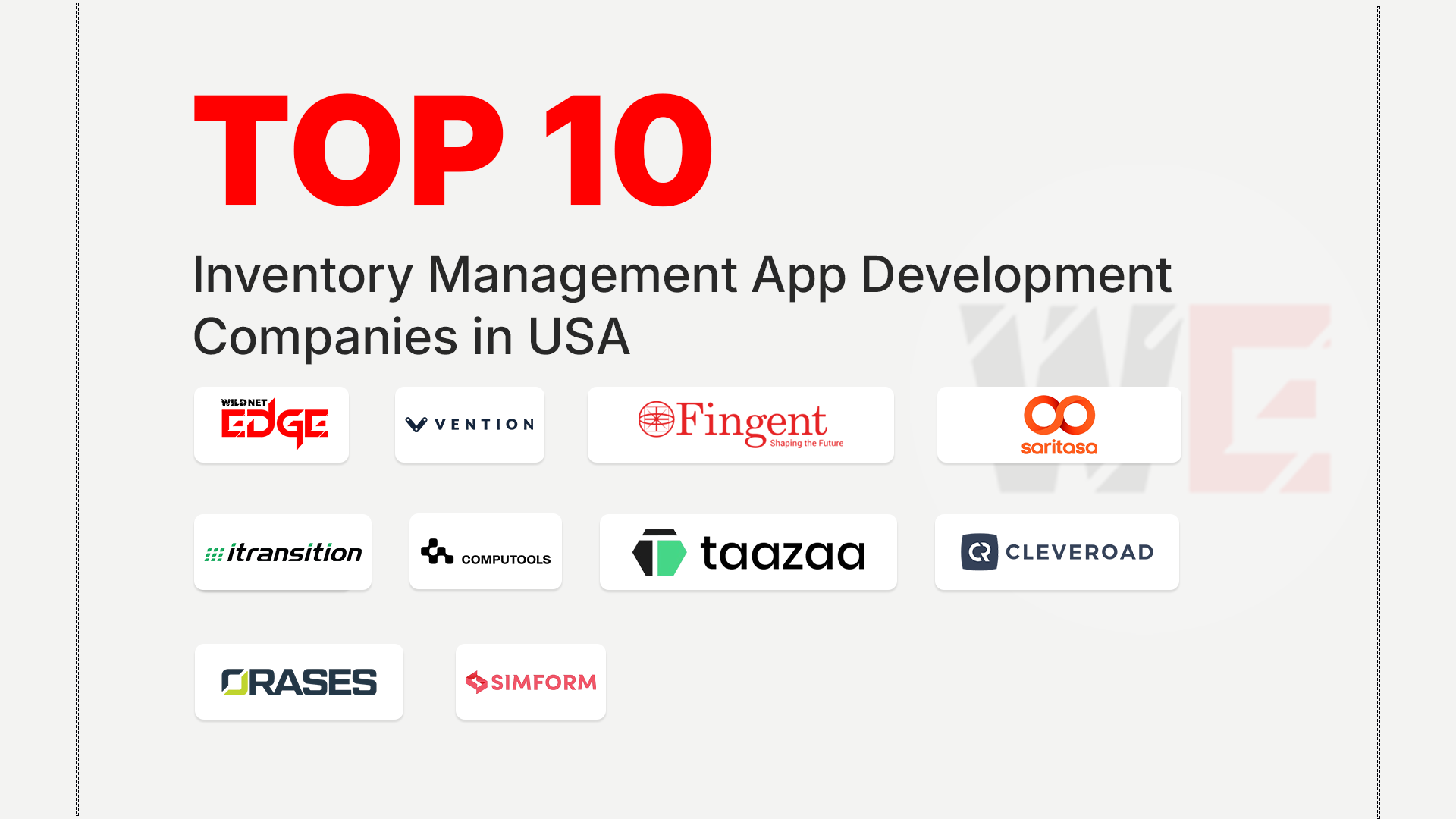
In 2026, inventory management is the backbone of efficient supply chains and retail operations. This article is your definitive guide to the Best Inventory Management App Development Companies in the USA. We have ranked the top 10 firms that move beyond basic spreadsheets to deliver complex Stock Tracking Software and robust Warehouse App Development solutions. We analyzed these companies based on their technical expertise in IoT integration, real-time data synchronization, and predictive analytics.
Inventory issues can spiral fast, especially when stock moves constantly, orders pile up, and customers expect up-to-date availability even when your systems don’t sync well. That’s why many businesses eventually look beyond spreadsheets and off-the-shelf tools and start searching for the Best Inventory Management App Development Companies to build something that actually fits their workflow.
If you run a warehouse, retail chain, or growing e-commerce operation, you’ve likely faced ghost inventory, mismatched counts, or scanners that don’t update in real time. A custom solution, whether it’s Stock Tracking Software or Warehouse App Development, can bring clarity back to your operations.
This guide breaks down the top companies in the USA for 2026 in a simple, clear way so you can find a partner that truly supports your supply chain and day-to-day warehouse needs.
Comparative Matrix: Top 10 Inventory Management App Development Companies
| Company | Core Services | Industries Served |
| Wildnet Edge | Enterprise Inventory, AI Logistics, Smart Warehouse | Retail, Logistics, Manufacturing, Healthcare |
| Vention | Staff Augmentation, Inventory Systems, Retail Tech | FinTech, Retail, HealthTech |
| Fingent | Custom Software, ERP, Retail Solutions | Retail, Real Estate, Finance |
| Saritasa | Custom Software, IoT, Inventory Mgmt | Logistics, Healthcare, Manufacturing |
| Intellectsoft | Digital Transformation, Enterprise Software, Retail | FinTech, Insurance, Retail |
| Computools | Retail Software, Supply Chain, Digital Transformation | Retail, Logistics, Finance |
| Taazaa | Product Engineering, Custom Software, Inventory | Retail, Manufacturing, PropTech |
| Cleveroad | Supply Chain Software, Warehouse Mgmt, Logistics | Logistics, Healthcare, Retail |
| Orases | Custom Software, Inventory & Warehouse Mgmt | Manufacturing, Healthcare, Non-profit |
| Simform | Digital Product Engineering, Cloud, Retail | Tech, E-commerce, Retail |
Top 10 Inventory Management App Development Companies in USA for 2026
1. Wildnet Edge
- Best for: Enterprise-scale, AI-driven inventory ecosystems and smart warehouse integrations.
- Key Highlights:
- Over 19 years of industry experience (Founded 2005).
- Enterprise-scale team of 350+ certified engineers.
- Proven track record with 8,000+ projects delivered.
- CMMI Level 3 appraised for mature, repeatable processes.
Wildnet Edge sits at the top of the list of Best Inventory Management App Development Company. When most companies think about inventory tools, they imagine basic tracking features or simple barcode scanning apps. Wildnet Edge goes far beyond that. They build complete, intelligent, high-speed inventory ecosystems designed for retailers, logistics brands, manufacturers, and large businesses that manage complex warehouses.
Their approach is practical: they learn your workflows, study your warehouse layout, and understand how items move through your system. Then they design Stock Tracking Software or Warehouse App Development that feels natural to your team instead of forcing you into rigid templates. Because their engineers specialize in enterprise systems, they can integrate everything into your ERP, sales channels, scanners, IoT sensors, and even forecasting engines into one smooth platform.
Unlike firms that just “log inventory,” Wildnet Edge follow AI-first systems that think ahead. For example, they can predict demand changes, trigger reorders before you hit a shortage, flag unusual movement that may indicate shrinkage, or analyze picking paths to improve warehouse efficiency. Everything updates in real time, which helps teams make decisions faster and reduce costly mistakes.
Wildnet Edge’s size (350+ engineers) is also a huge advantage for enterprise projects. They can run large, parallel development tracks, support multi-location rollouts, and maintain systems long-term without slowing down your operations. Their background in compliance and data security means your inventory remains protected even when you’re syncing millions of SKUs across multiple warehouses.
Wildnet Edge also works well with companies that feel stuck between outdated ERPs and modern retail demands. Many businesses can’t rip out their legacy systems but still want advanced features like RFID integration, handheld scanner apps, AI-driven forecasting, or multi-warehouse syncing.
Projects Built (Highlights):
- Smart Warehouse Management System (WMS): Architected a custom WMS for a national logistics provider. The system integrates with handheld scanners and IoT sensors to track inventory movement in real-time, reducing picking errors by 40%.
- AI-Driven Demand Forecasting Tool: Developed a predictive analytics engine for a retail chain that analyzes historical sales data to automate stock replenishment orders, optimizing cash flow and reducing waste.
- Multi-Location Inventory Sync: Built a unified inventory platform that synchronizes stock levels across 50+ physical stores and an e-commerce website instantly, preventing overselling and improving customer satisfaction.
- Pros:
- Enterprise-scale (350+ engineers) for handling complex, multi-warehouse deployments.
- AI-first approach integrates predictive forecasting and automated workflows.
- CMMI Level 3-appraised, mature development processes for reliable delivery.
- Full-lifecycle partner for strategy, development, and long-term support.
- Cons:
- Their enterprise-grade inventory logic might be too complex for a small dropshipping business needing a simple tracker.
- Their focus on custom AI forecasting is a premium service, not a cheap plug-and-play tool.
2. Vention
- Best for: High-growth retail companies needing to scale engineering teams fast.
- Key Highlights:
- Enterprise-scale team (3,000+ employees).
- Strong focus on providing elite, dedicated development teams.
- Deep expertise in retail tech and cloud platforms.
Vention is known for supplying strong engineering talent to companies that need to grow quickly. Many retailers, logistics startups, and mid-sized warehousing teams choose them when they already have a product idea but need more hands to build or maintain it. They operate like an extended team rather than a full-service strategy partner, which works well for businesses with internal product managers who know what they want.
Vention’s biggest strength is flexibility. If you need five engineers for a short-term push or want to scale up to an entire dedicated team for months, they can staff it without long waiting periods. Their developers know how to build real-time stock sync systems, e-commerce integrations, basic warehouse tracking tools, and retail dashboards. They’re especially comfortable working with cloud platforms, which is essential if you want inventory to update instantly across multiple channels.
Because they work with a lot of funded startups, Vention is also used to building MVPs quickly. If you’re testing a new inventory feature or experimenting with automation, they can prototype and refine ideas fast. They may not offer deep logistics strategy or warehouse consulting, but they’re reliable builders. For businesses that know their workflows and simply need better code, Vention is a good match.
- Pros:
- Access to a large pool of elite, pre-vetted engineering talent.
- Fast onboarding and the ability to scale teams up or down.
- Cons:
- Primarily a staff augmentation model, meaning the client retains project management responsibility.
- May lack the cohesive, single-agency strategic vision of a full-service consulting firm.
- Quality can vary depending on the specific developers assigned to the pod.
3. Fingent
- Best for: Mid-market retailers needing secure, integrated billing solutions.
- Key Highlights:
- Strong focus on security and financial compliance.
- Experience in retail software and payment gateways.
- Global delivery model with US headquarters.
Fingent combines software development skills with a strong knowledge of financial workflows. Many retailers choose them because inventory data often connects directly to billing, payments, POS, and financial reporting. Fingent is particularly strong in building secure systems that keep transaction data safe.
What makes Fingent useful is its understanding of the financial side of retail. Inventory isn’t just numbers; it affects cash flow, procurement, vendor payments, and customer billing. As one of the Best Inventory Management App Development Companies, Fingent builds platforms that keep these parts connected, which helps teams avoid mismatches between what’s sold, what’s shipped, and what’s recorded in finance.
They’re also careful with security and compliance, which matters if your inventory system handles customer orders or stores payment data. Their solutions typically include strong access controls, encryption, and audit logs to help companies stay compliant. While they may not specialize exclusively in inventory software, their ability to connect inventory with financial processes makes them valuable for mid-sized retailers looking to modernize internal tools.
They tend to move methodically, which some businesses appreciate because the software ends up stronger and more secure. If you want a partner with a thoughtful approach especially when transactions or customer data are involved Fingent fits well.
- Pros:
- Strong focus on data security and financial compliance.
- Proven ability to build secure transaction and billing systems.
- Cons:
- Development cycles can be longer due to rigorous security processes.
- Not a niche inventory specialist; they serve broader enterprise sectors.
- Services are priced for mid-to-large enterprises.
4. Saritasa
- Best for: Inventory projects involving IoT, custom hardware, and firmware.
- Key Highlights:
- Deep expertise in IoT and custom hardware integration.
- Full-stack development capabilities (mobile, web, backend).
- 15+ years of industry experience.
Saritasa shines when a project involves hardware barcode scanners, RFID tags, IoT sensors, or custom handheld devices. As one of the Best Inventory Management App Development Companies, they’re comfortable working with both the software interface and the hardware that powers modern warehouses.
Warehouse operations often rely on devices that need to communicate smoothly with backend systems. Saritasa understands how to build apps that work well on rugged devices, support offline syncing, and handle thousands of rapid scans without lag. If your warehouse relies on RFID or wants to automate certain tasks with sensors, Saritasa is one of the few mid-sized US companies that can handle those deeper technical layers.
They also take user experience seriously. Many inventory workers operate in fast-paced environments, sometimes in noisy warehouse areas or under time pressure. Saritasa builds simple, clear screens that help workers complete tasks without confusion. They also help companies test handheld devices and choose hardware that fits their operations.
- Pros:
- Unique expertise in IoT and hardware integration for smart inventory.
- Versatile, full-stack development team.
- Cons:
- Inventory management is one of many verticals, not an exclusive focus.
- May be over-qualified and more expensive for simple tracking apps.
- Their focus is on complex custom software, not just supply chain consulting.
5. Intellectsoft
- Best for: Enterprise digital transformation and complex supply chain logic.
- Key Highlights:
- Founded in 2007.
- Large team (250-999 employees).
- Strong focus on enterprise digital transformation.
Intellectsoft focuses on large, enterprise-level digital transformation. If you’re a big retailer or logistics company with multiple warehouses and older systems that need modernization, they can help connect everything into a cleaner, more modern experience.
Enterprise inventory comes with challenges: legacy ERPs, multiple warehouses, outdated interfaces, manual spreadsheets, and complex approval flows. Intellectsoft is familiar with these environments and helps companies update systems without disrupting daily operations. They connect older databases with new apps, build dashboards for leadership, and create modern mobile tools for warehouse workers.
As one of the Best Inventory Management App Development Companies, they understand how inventory flows between stores, distribution centers, and procurement systems. They also know the frustrations of old systems’ slow response times, inaccurate counts, or processes that require multiple screens. Intellectsoft builds cleaner flows, reduces duplication, and introduces automation where it saves the most time. They may not be the fastest or cheapest option, but for enterprise-level modernization where reliability matters, Intellectsoft provides stability and technical depth.
- Pros:
- Deep expertise in enterprise mobility and complex integrations.
- Strong, long-term partner for digital transformation.
- Cons:
- Inventory management is a component of their service, not their sole specialty.
- Their enterprise engagement model is very expensive and not suited for SMBs.
- Can be less agile than smaller, cloud-native firms.
6. Computools
- Best for: Retail and grocery chains needing specialized inventory software.
- Key Highlights:
- Strong focus on the retail and consumer goods sectors.
- Expertise in digital transformation for grocery and fashion.
- Global team with a focus on innovation.
Computools has a strong grip on retail industries that require precise, real-time inventory handling. Grocery stores deal with perishables, while fashion has constantly changing SKUs and styles. Computools understands these differences and builds systems tailored for each.
Retailers often feel frustrated because generic inventory systems don’t understand their specific challenges. For example, grocery stores need expiration tracking and cold-storage workflows, while fashion stores need tools to manage color/size variations or seasonal rollouts. Computools builds custom solutions for these scenarios, helping retailers avoid overstocking or stockouts.
They are also comfortable connecting inventory systems with POS terminals, websites, mobile apps, and loyalty programs. This gives businesses one unified view of what’s in stock, what’s selling fast, and what needs attention. They also help build dashboards that show store managers what to reorder, what’s sitting too long, and where shrinkage may be happening.
- Pros:
- Deep industry expertise in retail, grocery, and fashion.
- Strong capability in building integrated retail ecosystems.
- Cons:
- Their primary development centers are offshore, requiring careful communication management.
- May be less focused on heavy industrial or manufacturing inventory needs.
- Pricing and engagement models are geared towards larger projects.
7. Taazaa
- Best for: Manufacturing and industrial inventory management solutions.
- Key Highlights:
- Strong focus on product engineering and innovation.
- Expertise in manufacturing and industrial software.
- US-based project management.
Taazaa focuses on product engineering, making them a good match for manufacturing companies tracking raw materials, production runs, and finished goods.
Manufacturing inventory has complexities that retail systems don’t cover, such as bill of materials, work-in-progress tracking, raw material thresholds, and production forecasting. As one of the Best Inventory Management App Development Companies, Taazaa understands these needs and builds software that aligns with factory operations. Instead of forcing manufacturers into retail-style systems, they create tools that follow the actual flow of production.
Their apps often include features like tracking machine output, scanning materials at each stage, and connecting inventory data with production schedules. This helps factories reduce downtime and avoid wasting materials. They also focus on usability, which matters because many factory workers don’t want overly technical screens. Taazaa designs simple interfaces that work even in fast-moving industrial environments.
- Pros:
- Specialized expertise in manufacturing and industrial inventory.
- Strong product mindset ensures practical, user-friendly solutions.
- Cons:
- Less focused on consumer-facing retail apps than some competitors.
- A mid-sized team may lack the massive scale of global giants.
- Not a low-cost “staff augmentation” shop; they deliver finished products.
8. Cleveroad
- Best for: Logistics and warehouse management system (WMS) development.
- Key Highlights:
- Strong niche in logistics and supply chain.
- Expertise in building Warehouse Management Systems (WMS).
- Cost-effective global delivery model.
Cleveroad is a solid choice for logistics companies that need Warehouse Management Systems, transportation apps, or tools that support complex storage and picking workflows.
Cleveroad understands how goods move through a warehouse receiving, putaway, picking, packing, and shipping. They design software that helps workers complete these tasks systematically. Their WMS solutions include barcode scanning, location tracking, and route optimization inside the warehouse, which helps reduce picking time and increase accuracy.
Their global delivery model keeps costs manageable, making them accessible for mid-size logistics companies that need powerful tools without enterprise-level pricing. However, since much of their team is offshore, they work best with clients who already have clear requirements or strong project managers.
- Pros:
- Deep niche expertise in logistics and warehouse management.
- Cost-effective development for complex supply chain tools.
- Cons:
- Primarily an offshore model, which requires strong client oversight.
- Less experience with consumer-facing retail billing interfaces.
- Quality relies heavily on the specific team members assigned.
9. Orases
- Best for: Mid-market US businesses needing a long-term custom software partner.
- Key Highlights:
- Founded in 2000, with 25+ years of experience.
- 100% US-based team.
- Focuses on complex, custom business applications.
Orases has been in the custom software industry for over 25 years. Their fully US-based team offers reliability and easy communication, making them a top choice for companies that want a long-term technology partner.
Many mid-market businesses feel stuck between outdated inventory systems and expensive enterprise ERPs. Orases helps bridge that gap with custom tools that match how your operations actually run. They specialize in building web portals, dashboards, and back-office systems that simplify daily tasks for staff.
Their US-based team is helpful for companies that want direct collaboration, quick communication, and easy alignment on requirements. They’re also great at integrating new inventory software with older systems that still hold essential data. Their approach is stable, predictable, and process-driven, which builds trust with companies that have mission-critical needs.
- Pros:
- Long, 25+ year track record of enterprise project delivery.
- 100% US-based team for high-touch, real-time collaboration.
- Cons:
- Their premium, US-based talent model is more expensive than offshore competitors.
- As a mid-sized firm, they lack the massive scale of a global enterprise vendor.
- Less focused on mobile-first consumer apps than digital agencies.
10. Simform
- Best for: Tech-forward retail companies needing scalable engineering.
- Key Highlights:
- Digital product engineering focus.
- Strong agile and DevOps culture.
- Experience building scalable SaaS platforms for retail.
Simform is a strong engineering partner for companies building SaaS products or large retail apps that require strong backend performance and cloud scalability.
If you’re building a modern, cloud-based inventory platform or a retail software product that needs strong infrastructure Simform is a solid choice. They bring a strong engineering culture with deep knowledge of DevOps, microservices, and high-scale backend design. This matters when your inventory system needs to sync across e-commerce, POS, marketplaces, and warehouse apps all at once.
Simform works well with tech-driven companies that want a long-term engineering extension rather than a traditional consulting firm. They can build advanced features like real-time dashboards, automated reporting, multi-store sync, and scalable APIs for third-party integrations. Their cloud-first approach makes them strong for businesses expecting rapid growth or seasonal spikes.
- Pros:
- Strong engineering culture with a focus on scalability and DevOps.
- Good balance of cost and quality for long-term product development.
- Cons:
- As a generalist product engineering firm, they lack the hyper-niche retail focus.
- Global team structure requires effective communication management.
- May be less suited for small, one-off marketing sites or simple apps.
Our Selection Criteria: How We Chose the Best Inventory Management App Development Companies
To choose the Best Inventory Management App Development Companies, we focused on what really matters in retail and warehouse environments. Inventory might look simple on paper, but it gets complicated fast, so we evaluated companies on practical strengths.
Here’s what we looked at:
- Inventory & Retail Expertise: We prioritized firms with verifiable experience in the retail and supply chain sectors. This includes understanding SKU management, multi-warehouse logic, and the specific needs of e-commerce and brick-and-mortar integration.
- Technical Capability: We looked for companies that excel at integrating complex third-party APIs for payment gateways, shipping providers, and ERP systems, which is the backbone of any Stock Tracking Software.
- Innovation in AI & Data: We evaluated their ability to leverage modern tech. We looked for firms building AI-powered demand forecasting models, automated reordering systems, and predictive analytics dashboards.
- Proven Track Record: Experience matters. We considered each firm’s years in business, the complexity of their inventory projects, client portfolios, and verified success stories.
- Security & Compliance: We assessed their ability to build secure systems that comply with PCI-DSS for payments and protect sensitive business data.
- Scalability: We looked for firms that can build systems capable of handling millions of SKUs and high transaction volumes without performance degradation.
- Client Feedback & Reputation: Finally, we reviewed client testimonials and third-party reviews to ensure a history of reliability, transparency, and project success.
Conclusion
In 2026, inventory management is one of the biggest drivers of profit and one of the easiest places for money to leak unnoticed. The companies in this list of Best Inventory Management App Development Companies, including leaders like Wildnet Edge, know how to build systems that keep your stock accurate, your warehouses organized, and your team confident in every count.
When you choose the right web and mobile app development company, you’re not just ordering software—you’re building a strong digital foundation. A reliable partner helps you avoid costly mistakes, streamline operations, deliver faster and better customer experiences, and stay competitive in a fast-moving market.
FAQs
Inventory management app development is the process of creating digital tools that track goods across the supply chain. It monitors stock levels, manages orders, tracks shipments, and uses data to predict future demand.
Stock Tracking Software is a digital tool used to monitor inventory levels in real-time. It tracks goods as they move through the supply chain, from receipt at the warehouse to final delivery, helping to prevent stockouts and overstocking.
Warehouse App Development involves creating specialized mobile applications for warehouse staff. These apps run on handheld scanners or tablets and assist with tasks like picking, packing, receiving, and cycle counting.
The cost varies widely. A simple tracking app might cost $30,000-$50,000. A fully integrated enterprise platform with AI forecasting and custom billing features from one of the Best Inventory Management App Development Companies can cost $150,000 to over $500,000.
AI is used to predict future demand based on historical sales data, seasonality, and trends. This helps businesses optimize stock levels, reducing the cost of holding excess inventory while preventing stockouts.
Yes. Most enterprise-grade inventory software is designed to integrate seamlessly with major ERP platforms like SAP, Oracle, or NetSuite, ensuring that data flows automatically between systems.
Real-time tracking means that your inventory levels are updated instantly whenever a sale is made, a return is processed, or a new shipment arrives. This gives you an accurate view of your stock at any given moment, which is essential for omnichannel retail.

Managing Director (MD) Nitin Agarwal is a veteran in custom software development. He is fascinated by how software can turn ideas into real-world solutions. With extensive experience designing scalable and efficient systems, he focuses on creating software that delivers tangible results. Nitin enjoys exploring emerging technologies, taking on challenging projects, and mentoring teams to bring ideas to life. He believes that good software is not just about code; it’s about understanding problems and creating value for users. For him, great software combines thoughtful design, clever engineering, and a clear understanding of the problems it’s meant to solve.


 based on 1200+ reviews



