 sales@wildnetedge.com
 +1 (212) 901 8616
 +1 (437) 225-7733
















































































































 ChatGPT Development & Enablement
  Hire AI & ChatGPT Experts
  ChatGPT Apps by Industry
  ChatGPT Blog
  ChatGPT Case study
  AI Development Services
  Industry AI Solutions
  AI Consulting & Research
  Automation & Intelligence





TL;DR
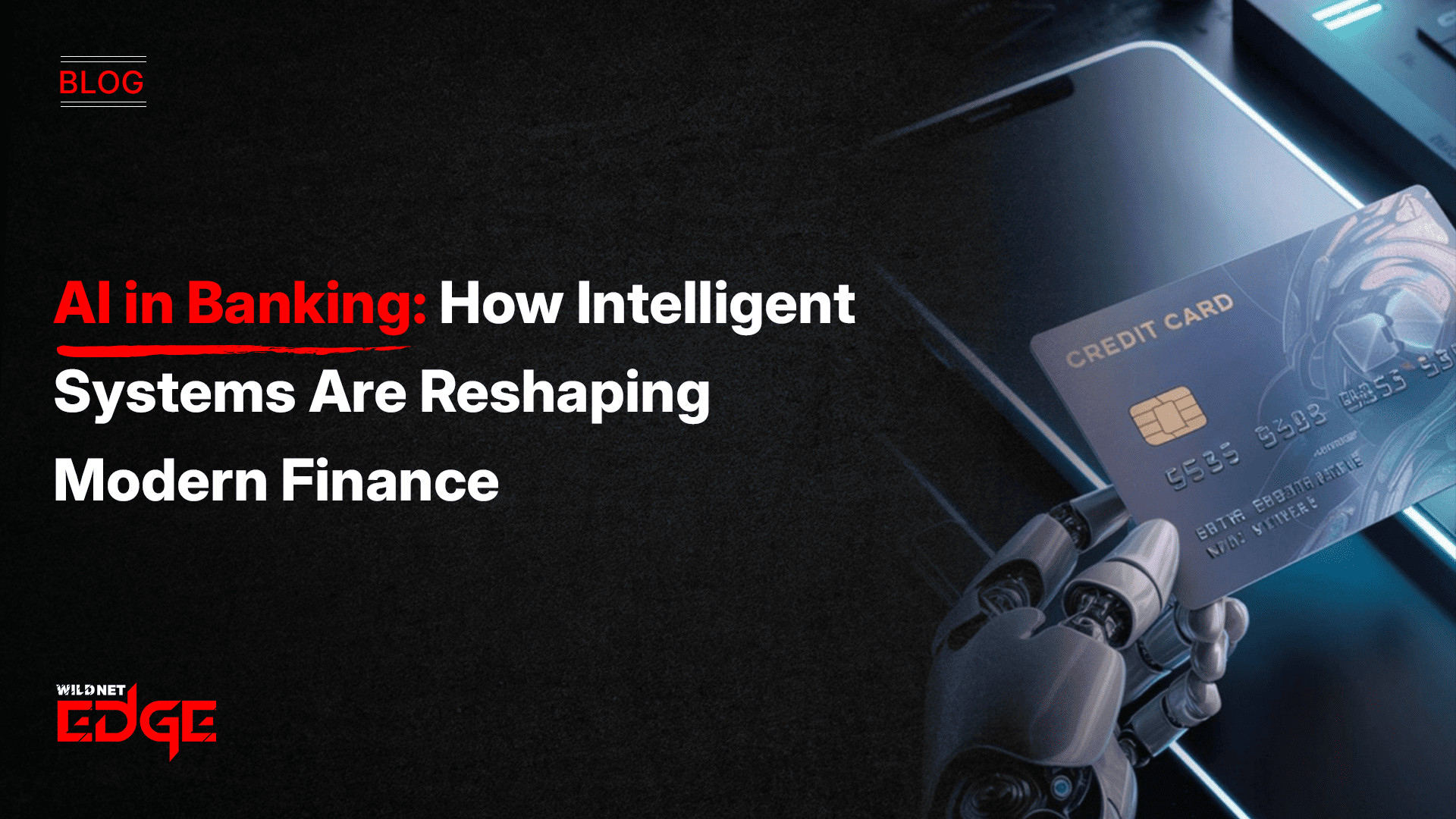
AI in Banking has moved from experimentation to everyday execution. Banks now use fraud detection AI to stop threats in real time, AI chatbots for banking to handle customer needs instantly, risk scoring AI to expand fair credit access, and automated banking workflows to cut operational costs. Together, these capabilities power AI-driven finance, making banking faster, safer, and more personal at scale.
AI in Banking is no longer about innovation labs or pilot projects. It now sits at the core of how modern banks operate. Customers expect instant answers, secure transactions, and personalized financial advice. Regulators expect accuracy, transparency, and compliance. AI makes all three possible at scale.
Banks that adopt AI in Banking move from reacting to problems to predicting them. Instead of reviewing data after the fact, they act in real time. This shift changes security, customer service, lending, and internal operations without adding headcount or friction.
Fortifying Security with Fraud Detection AI
Fraud moves fast. Static rules no longer work. Fraud detection AI analyzes behavior, not just transactions. It looks at device signals, location patterns, login timing, spending habits, and historical context. When something breaks the pattern, the system reacts instantly.
This approach reduces false alerts while catching real fraud early. Customers face fewer declined transactions. Banks reduce losses and investigation costs. Fraud detection AI strengthens trust without slowing down payments.
The Evolution of Service: AI Chatbots Banking
Customer service defines trust in digital banking. AI chatbots banking now handle this role at scale. Modern bots understand intent, not just keywords. They answer questions, resolve issues, explain transactions, and guide users through complex steps like disputes or loan eligibility checks. They work 24/7 and respond in seconds.
AI chatbots banking handle routine tasks so human agents can focus on sensitive or high-value cases. This balance improves response times and customer satisfaction without increasing operational cost
Risk Scoring AI: Smarter and Fairer Credit Decisions
Traditional credit models miss large parts of the population. Risk-scoring AI fixes that gap. Risk scoring AI evaluates real financial behavior income flow, bill payments, spending stability, and business cash cycles. This creates a fuller picture of risk and ability to repay.
Banks use these models to approve loans faster, adjust limits dynamically, and detect early warning signs before defaults happen. Risk scoring AI expands access while protecting balance sheets. Integrating these models often requires specialized fintech development to ensure compliance with fair lending laws.
Automated Banking Workflows: Speed at the Back Office
Manual processes slow banks down. Automated banking workflows remove that drag. AI reads documents, extracts data, validates information, and routes tasks without human intervention. Account opening, KYC checks, loan processing, and compliance reporting now run in hours instead of days.
Automated banking workflows reduce errors, speed approvals, and cut operational costs. Teams shift from processing paperwork to managing exceptions and improving customer outcomes. We see a growing trend of banks partnering with AI development firms to build custom compliance engines tailored to specific jurisdictions.
AI-Driven Finance: Personalization at Scale
AI-driven finance changes how banks interact with customers. Systems analyze spending habits, savings behavior, and life events to deliver timely insights. Customers receive alerts before overdrafts, suggestions to reduce fees, or reminders to save when cash flow allows.
This personalization feels helpful, not intrusive. AI-driven finance turns banking apps into financial companions that guide better decisions instead of just recording transactions.
Case Studies: Leaders in AI Adoption
Real-world examples illustrate the tangible impact of these technologies.
Case Study 1: JPMorgan Chase
- The Challenge: Reviewing thousands of commercial credit agreements consumed 360,000 lawyer-hours annually.
- The Solution: They deployed COiN (Contract Intelligence), a machine learning system that interprets commercial loan agreements.
- The Result: The task was completed in seconds, not hours. This application of AI in Banking drastically reduced operational costs and eliminated human error in contract review.
Case Study 2: Capital One
- The Challenge: Customers were unaware of subscription creep and double charges until they saw their monthly statement.
- The Solution: Capital One launched Eno, a proactive assistant that monitors charges in real-time.
- The Result: Eno alerts users to unusually high tips or duplicate charges instantly. This use of AI in Banking saved customers millions and positioned Capital One as a tech-forward leader.
Future Trends: Agentic AI and Beyond
The next frontier is agency.
Digital Employees
We are moving from chatbots that talk to agents that do. Future AI in Banking will involve autonomous agents that can execute complex multi-step tasks. An agent could notice a customer’s lease is ending, research mortgage rates, get pre-approved, and schedule a viewing with a realtor, all with a single command.
Quantum AI
While still emerging, the intersection of Quantum Computing and AI promises to revolutionize portfolio optimization and high-frequency trading. Banks investing in modern banking software today are laying the groundwork for this quantum future.
Conclusion
AI in Banking is no longer a feature layered on top of legacy systems. It is the operating model of modern finance. Fraud detection AI protects trust. AI chatbots redefine service. Risk-scoring AI improves credit access. Automated banking workflows unlock efficiency. Together, they power AI-driven finance that feels faster, safer, and more human.
Banks that embrace this shift gain speed, resilience, and relevance. Those who delay fall behind quickly. The future of banking belongs to institutions that let intelligence not process, drive every decision. At Wildnet Edge, our expertise ensures we build secure, compliant, and intelligent financial systems. We partner with you to harness the full potential of AI in Banking and drive sustainable growth.
FAQs
The biggest benefit is efficiency combined with personalization. AI in Banking allows institutions to process vast amounts of data to automate routine tasks (lowering costs) while simultaneously offering hyper-personalized financial advice to millions of customers (increasing revenue).
Fraud detection AI works by establishing a baseline of normal behavior for every user. It then monitors transactions in real-time. If it detects an anomaly—like a login from a new device in a different country followed by a large transfer—it flags the transaction for review or blocks it instantly.
Yes, modern AI chatbots’ banking systems are built with enterprise-grade security. They use end-to-end encryption and typically do not store sensitive data like PINs. They are designed to authenticate users securely before discussing account details.
Not entirely. Risk-scoring AI is a tool to augment human decision-making. While it can automate approvals for simple, low-value loans, complex commercial lending or high-value mortgages often still require human judgment to assess qualitative factors the AI might miss.
Automated banking workflows use AI and Robotic Process Automation (RPA) to handle repetitive back-office tasks. Examples include onboarding new customers (KYC), processing loan applications, reconciling transactions, and generating regulatory reports.
While automation in Banking will automate routine roles (like data entry or basic support), it will create new roles in data science, AI ethics, and relationship management. The focus shifts the workforce from processing transactions to advising customers.
Heavily. Automation in Banking must comply with strict regulations regarding fairness, transparency, and explainability. Banks must be able to explain why an AI model made a specific decision (e.g., denying a loan) to ensure they are not violating fair lending laws.

Managing Director (MD) Nitin Agarwal is a veteran in custom software development. He is fascinated by how software can turn ideas into real-world solutions. With extensive experience designing scalable and efficient systems, he focuses on creating software that delivers tangible results. Nitin enjoys exploring emerging technologies, taking on challenging projects, and mentoring teams to bring ideas to life. He believes that good software is not just about code; it’s about understanding problems and creating value for users. For him, great software combines thoughtful design, clever engineering, and a clear understanding of the problems it’s meant to solve.

 based on 1200+ reviews



