 sales@wildnetedge.com
 +1 (212) 901 8616
 +1 (437) 225-7733
















































































































 ChatGPT Development & Enablement
  Hire AI & ChatGPT Experts
  ChatGPT Apps by Industry
  ChatGPT Blog
  ChatGPT Case study
  AI Development Services
  Industry AI Solutions
  AI Consulting & Research
  Automation & Intelligence





TL;DR
In 2026, tourism apps have become smarter. AI plans entire itineraries. Mobile apps sync with airline systems. And travelers expect personalized recommendations instead of generic lists. This guide breaks down the Top Tourism App Development Companies in the USA, the firms capable of building advanced Vacation Planner App platforms, custom Hotel Booking Software, and travel ecosystems at scale.
If you’ve planned a trip lately, you’ve probably noticed how wild travel apps have become. A few years ago, all you needed was a simple search bar and a “Book Now” button. But travelers today? They want everything in one place. A travel app should build its itinerary, track flights, send check-in reminders, find good restaurants nearby, and somehow know exactly what they’ll enjoy before they even ask. That’s why choosing the Top Tourism App Development Companies has become such a big deal.
People don’t have patience online, especially when they’re planning a vacation. They expect instant results, clean navigation, and zero stress. Behind the scenes, that means travel businesses need a tech partner who understands the messy reality of tourism: airline APIs that break unexpectedly, hotel systems that update every second, maps, geolocation, dynamic pricing, and availability that can change in a flash.
So next time when you want to launch a Vacation Planner App, build custom Hotel Booking Software, or create a travel platform that feels as smooth as the big names in the industry, this list will help you find the right match, a partner who can actually build what travelers need today.
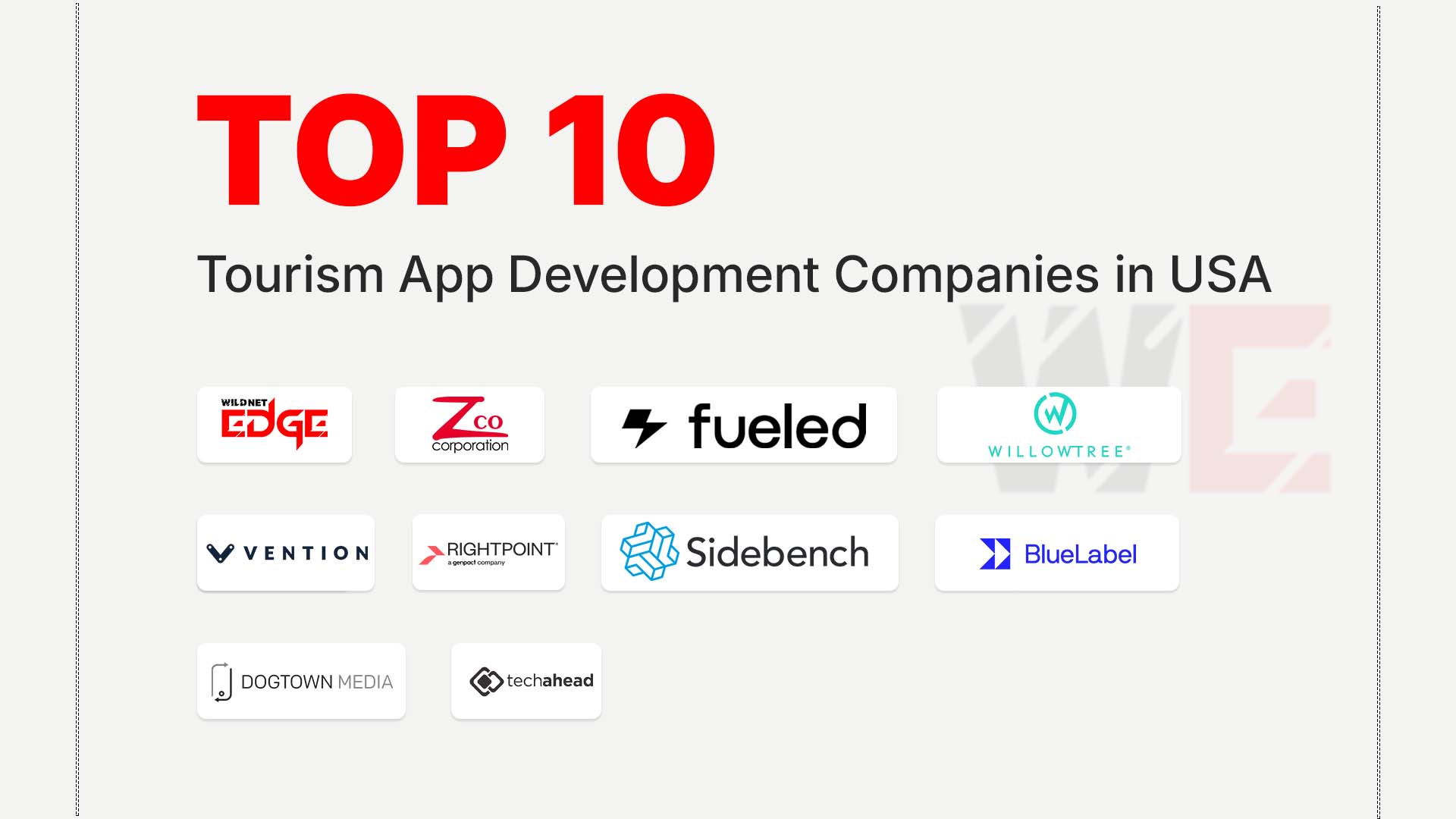
Comparative Matrix: Top 10 Tourism App Development Companies
| Company | Core Services | Industries Served |
| Wildnet Edge | Enterprise Travel Tech, AI Booking, GDS | Tourism, Hospitality, Logistics, FinTech |
| Zco Corporation | Mobile Apps, Enterprise Software, Travel Tech | Healthcare, Public Safety, Tourism |
| Fueled | Mobile App Design, Digital Strategy, Branding | Retail, Tourism, Consumer Tech |
| WillowTree | Digital Product, Web & App Dev, CX Strategy | Media, Finance, Tourism |
| Vention | Staff Augmentation, Travel Dev, Cloud | FinTech, Tourism, HealthTech |
| Rightpoint | Digital Transformation, Mobile Apps, Enterprise | FinTech, Insurance, Tourism |
| Sidebench | UI/UX Design, Product Strategy, Mobile Apps | Healthcare, Tourism, Consumer Tech |
| Blue Label Labs | Product Strategy, GenAI, Mobile Apps | Finance, Healthcare, Tourism |
| Dogtown Media | mHealth, IoT, Mobile App Development | Healthcare, FinTech, Tourism |
| TechAhead | Mobile App Dev, IoT, Smart Travel Solutions | Tourism, FinTech, Healthcare |
Top 10 Tourism App Development Companies in USA for 2026
1. Wildnet Edge
- Best for: Enterprise-scale, AI-driven tourism platforms and complex itinerary planning engines.
- Key highlights:
- Over 19 years of industry experience (Founded in 2005).
- Enterprise-scale team of 350+ certified engineers.
- Proven track record with 8,000+ projects delivered.
- CMMI Level 3 appraised for mature, repeatable processes.
Wildnet Edge stands out because they treat tourism tech like a complete system, not a simple app. They look at the entire journey, the user interface, the booking logic, the pricing rules, API connections, cancellations, changes, and the way travelers behave in real life. This is why they are ranked first as the Top Tourism App Development Company. They understand the behind-the-scenes mess that most travelers never see.
What makes them different is their AI-first approach. They design for scenarios such as delayed flights, last-minute booking changes, hotel inventory syncing issues, and unstable API responses. Instead of patching things later, they build systems that stay stable when things go wrong. Their AI features also go deeper than most firms. They create engines that recommend trips, adjust prices, suggest activities, and guide travelers based on their preferences, not random data.
Clients often mention that Wildnet Edge already understands the travel industry before the first meeting even starts. They know how GDS systems behave, why hotel inventory updates can break during peak seasons, and how important it is for a Hotel Booking Software backend to never freeze. Their engineers think through tiny details like time zone changes, offline behavior, and itinerary updates based on live flight data. These small choices make a big difference in how reliable the final app feels.
Projects Built (Highlights):
- AI-Powered Trip Concierge: Developed a mobile app that acts as a personal travel agent, using NLP to understand user preferences and automatically generate detailed daily itineraries including flights, hotels, and activities.
- Unified Hotel Inventory System: Architected a centralized reservation platform for a boutique hotel chain. The system synchronizes room availability in real-time across Expedia, Booking.com, and the hotel’s own app to prevent overbooking.
- AR City Guide App: Built an augmented reality app for a tourism board that overlays historical information and restaurant reviews onto the user’s camera view as they walk through the city.
- Pros:
- Enterprise-scale (350+ engineers) for handling complex, multi-API travel integrations.
- AI-first approach integrates smart itinerary planning and dynamic pricing.
- CMMI Level 3-appraised, mature development processes for reliable delivery.
- Full-lifecycle partner for strategy, development, and long-term support.
- Cons:
- Their comprehensive, enterprise-level process may be too robust for a simple travel blog app.
- Their focus on deep custom engineering and AI integration represents a premium investment, not a low-budget solution for quick templates.
2. Zco Corporation
- Best for: Established tourism brands needing a stable, US-based veteran partner.
- Key highlights:
- Founded in 1989, offering decades of stability.
- Large, US-based in-house team.
- Deep expertise in enterprise mobility and backend systems.
Zco Corporation brings something many tourism businesses value: stability. They’ve been around long enough to see the industry change from desktop booking engines to mobile-first travel apps. Their biggest strength is building reliable systems for companies that want consistency more than experimentation. If you need a trustworthy team that delivers what they promise, Zco is a safe choice. They’re especially good for tourism companies that already have older systems and don’t want to break them while upgrading. They help modernize and connect these systems at a steady, controlled pace.
Working with Zco often feels structured and predictable, which is reassuring if your business handles sensitive travel data and relies on systems that must run 24/7. They’ve handled projects for large organizations, so they know how to deal with heavy traffic, data syncing, and integrations that can’t fail during peak booking hours.
- Pros:
- Stable, long-term partner with a large US-based team.
- Deep experience with secure, enterprise-grade mobile solutions.
- Cons:
- Their primary focus is on broad enterprise software, not exclusively tourism.
- May be less agile and “trendy” than smaller, startup-focused design shops.
- Premium pricing reflects their large, US-based team structure.
3. Fueled
- Best for: Premium tourism brands needing award-winning design and UX.
- Key highlights:
- Renowned for world-class UI/UX design.
- Strong focus on branding and consumer experience.
- NY-based with a premium clientele.
Fueled is all about design and experience. They’re the team you choose if your tourism brand wants to stand out visually and emotionally. As one of the top tourism app development companies, they build apps that feel premium from the moment the user opens them. If your target audience values aesthetics, such as luxury travelers, boutique hotel guests, or adventure seekers, Fueled’s approach fits well.
They are ideal in creating interfaces that make planning a trip feel enjoyable, not overwhelming. They focus on smooth transitions, engaging layouts, and clear navigation, which helps users move through the booking flow without friction.
Fueled spends a lot of time understanding how travelers behave. Instead of guessing, they research what people tap, how they browse destinations, and what keeps them engaged. Because travel decisions are emotional, their design approach often results in higher user satisfaction and better conversions.
- Pros:
- World-class, award-winning UI/UX design capabilities.
- Strong strategic focus on brand building and user retention.
- Cons:
- Very high cost, making them inaccessible for many budget-conscious businesses.
- Highly selective with their client list.
- Focus is heavily on the frontend/design; complex backend GDS engineering is secondary.
4. WillowTree
- Best for: Enterprise-scale digital products with high polish and reliability.
- Key highlights:
- Large, US-based enterprise team.
- “Digital Product” agency focused on full-scale builds.
- Strong expertise in mobile and web/cloud convergence.
WillowTree is a trusted name among enterprise-level tourism companies. Airlines, hotel chains, and national tourism boards often choose them because they’re built for scale. They handle large, complex apps that must stay fast and reliable, even with millions of users. What sets them apart is their structured process. Every step, from research to development to testing, follows a clear method. This makes them ideal for companies that want stability and long-term support.
WillowTree pays special attention to performance. Travel platforms face heavy traffic spikes during holidays, promotions, and seasonal surges, so they test apps under pressure to make sure nothing crashes. They focus heavily on speed, stability, and smooth user flow.
- Pros:
- Proven, stable partner for large enterprise clients.
- Delivers high-quality, polished digital products.
- Cons:
- Tourism is one component of their service, not their sole specialty.
- Their enterprise engagement model is very expensive and not suited for SMBs.
- Can be less agile than smaller, niche-focused firms.
5. Vention
- Best for: High-growth travel startups needing to scale engineering teams fast.
- Key highlights:
- Enterprise-scale team (3,000+ employees).
- Strong focus on providing elite, dedicated development teams.
- Deep expertise in AI/ML, data engineering, and cloud platforms.
Vention is well-known for helping fast-growing travel startups scale quickly. If you already have a product team but need more engineers to speed up development, Vention is a strong option. As one of the top tourism app development companies, they provide senior developers who integrate directly into your process, helping you build new features without long hiring cycles. Their engineers are experienced with complex tourism logic like multi-city bookings, map-based search, seat selection, and dynamic pricing.
Companies like Vention are especially useful when your travel platform is growing faster than your internal team can handle. If you need backend help for airline API integration or extra mobile developers to launch your app faster, they can assemble a team within days.
- Pros:
- Access to a large pool of elite, pre-vetted engineering talent.
- Fast onboarding and the ability to scale teams up or down.
- Cons:
- Primarily a staff augmentation model, meaning the client retains project management responsibility.
- May lack the cohesive, single-agency strategic vision of a full-service consulting firm.
- Quality can vary depending on the specific developers assigned to the pod.
6. Rightpoint
- Best for: Premium guest experiences and hospitality digital transformation.
- Key highlights:
- “Total Experience” approach integrating digital and physical.
- Strong portfolio with major hospitality brands like Outrigger.
- Expertise in mobile booking and on-property apps.
Rightpoint is a digital experience consultancy that excels at transforming how guests interact with travel brands. They are an ideal partner for hotels and travel companies that want to create a seamless, premium journey from booking to checkout. Their work often bridges the gap between the digital app and the physical resort experience, ensuring consistent branding and utility. They focus heavily on user research to design interfaces that reduce friction and increase ancillary revenue for hospitality clients.
- Pros:
- World-class design and strategy capabilities.
- Deep understanding of the traveler’s emotional journey.
- Cons:
- High-end agency rates may be out of reach for smaller travel startups.
- Focus is often on “experience” over deep legacy backend maintenance.
- Projects are typically large-scale, multi-month engagements.
7. Sidebench
- Best for: Strategy-led tourism products with a focus on traveler engagement.
- Key highlights:
- Award-winning product strategy and design.
- “Co-invention” partner model.
- Strong focus on user research and testing.
Sidebench is a strategy-focused development firm that helps tourism companies shape their product idea before writing the first line of code. They’re great for businesses that know what they want to create but aren’t sure how travelers will actually use it. They dig into user research, study travel behavior, and simplify complicated journeys like group trips, multi-city itineraries, or shared planning.
Sidebench is known for asking the right questions early. As one of the top tourism app development companies, they explore what travelers look for, what confuses them, and what keeps them coming back. This helps tourism brands avoid building features that users don’t actually need. Their prototypes and user tests give you clarity before you invest in full development.
- Pros:
- High-touch, strategic consulting combined with development.
- Excellent track record in user research and product definition.
- Cons:
- Boutique size limits engineering capacity for massive builds.
- Strategy-first engagements require a significant upfront investment.
- Less focused on deep, backend legacy infrastructure maintenance.
8. Blue Label Labs
- Best for: Innovative travel apps requiring deep design sprints.
- Key highlights:
- Design Sprint methodology.
- Strong focus on user-centric product definition.
- NY-based team with a polished portfolio.
Blue Label Labs is ideal for tourism startups trying to validate ideas quickly. They run design sprints that test and refine your concept in days instead of months. This helps companies avoid building features that won’t resonate with travelers. They combine creativity with strong UX and design, making their apps clean, modern, and easy to use.
Blue Label focuses on reducing risk. Instead of jumping into development immediately, they test your ideas with real users and gather feedback early. This approach is especially useful in tourism, where travelers often react emotionally to design, convenience, and simplicity.
Their apps have a storytelling style that works well for destination guides, curated itineraries, and experience-based tourism products. They’re also comfortable with AI-powered suggestions and personalization.
- Pros:
- Proven “Design Sprint” process reduces product risk.
- High-quality, US-based engineering and design talent.
- Cons:
- Premium pricing structure.
- Their process is intense and requires significant client involvement.
- Not a “staff augmentation” shop; they own the product process.
9. Dogtown Media
- Best for: Tourism apps integrating IoT and connected experiences.
- Key highlights:
- Boutique agency focused on emerging tech.
- Strong expertise in IoT and Bluetooth integration.
- Experience with location-based services.
Dogtown Media is best for tourism companies building connected travel experiences, smart luggage, beacon-enabled museum tours, keyless hotel entry, or location-triggered alerts. They specialize in IoT and hardware-connected apps, which makes them unique on this list. They understand how devices behave in crowded travel environments, where signals drop, and connections fluctuate.
Ranked as one of the top tourism app development companies, Dogtown Media blends mobile development with hardware knowledge, making it a great fit for modern travel experiences that extend beyond the screen. They consider details like Bluetooth range, battery usage, offline fallback, and how travelers move through airports, hotels, and attractions.
- Pros:
- Deep niche expertise in IoT and hardware connectivity.
- Agile, innovative team willing to tackle novel technical challenges.
- Cons:
- Small team size limits the ability to scale for large enterprise IT projects.
- A highly specialized focus may not fit general booking web portals.
- Premium pricing for their specialized IoT expertise.
10. TechAhead
- Best for: Integrating smart technology into travel apps.
- Key highlights:
- Founded in 2009.
- Strong focus on IoT and mobile app development.
- Experience with human-centric design.
TechAhead is a balanced choice for tourism companies that want strong engineering paired with user-focused design. They’re experienced with building travel apps that support smart features like digital room keys, connected hotel devices, or intelligent city guides. Their focus is on making the app feel smooth and supportive throughout the trip.
TechAhead approaches travel with a practical mindset. They think about real issues travelers face: weak network coverage, confusing schedules, battery drain, or unclear directions. Their apps are designed to reduce stress and make navigation easier.
They’re good at integrating IoT devices into tourism apps, such as keyless entry, smart controls for hotel rooms, or location-aware recommendations. Their design process focuses on clarity so users don’t feel overwhelmed.
- Pros:
- Strong expertise in IoT integration for smart travel solutions.
- Focus on user-centric design and experience.
- Cons:
- Smaller US presence compared to some global giants.
- IoT integration can drive up project costs significantly.
- Global team structure implies time-zone management is needed.
Our Selection Criteria: How We Chose the Top Tourism App Development Companies
Choosing the Top Tourism App Development Companies wasn’t a checklist exercise. We looked at how these companies actually work in the real world, with real APIs, real booking data, real travelers, and real business challenges.
Here’s what we looked at:
- Travel Tech Expertise: We prioritized firms with verifiable experience in the tourism sector. This includes understanding GDS systems (Amadeus, Sabre), OTA workflows, and the specific needs of airlines, hotels, and tour operators.
- Technical Capability: We looked for companies that excel at integrating complex third-party APIs for flight booking, hotel inventory, maps, and payment gateways, which is the backbone of any Hotel Booking Software.
- User Experience (UX) Focus: Tourism apps succeed or fail on their ease of use. We ranked firms higher if they demonstrated a strong focus on intuitive search, inspiring visuals, and frictionless booking flows.
- Proven Track Record: Experience matters. We considered each firm’s years in business, the complexity of their travel projects, client portfolios, and verified success stories.
- Innovation & AI: We looked for firms that are using AI to personalize travel recommendations, optimize pricing strategies, and automate customer support via chatbots.
- Scalability: We assessed how each company handles high-traffic periods (like holiday booking seasons) and their ability to build systems that don’t crash under load.
- Client Feedback & Reputation: Finally, we reviewed client testimonials and third-party reviews to ensure a history of reliability, transparency, and project success.
Conclusion
Travelers today expect more from an app than before, instant recommendations, real-time updates, smooth booking, and a personalized journey. The Top Tourism App Development Companies on this list, including innovators like Wildnet Edge, are the partners who can turn those expectations into real digital experiences.
Choosing the right development company isn’t just about hiring engineers. It’s choosing a team that understands how people travel, what stresses them out, and what makes a trip memorable. With the right partner, your travel business can offer an app that feels effortless, one that helps travelers explore the world without confusion or friction.
FAQs
Tourism app development is the process of creating mobile and web applications that assist users in planning, booking, and enjoying their travels. This includes flight and hotel booking apps, digital travel guides, itinerary managers, and local experience finders.
A Vacation Planner App allows users to organize their entire trip in one place. It helps them discover destinations, create day-by-day itineraries, store tickets and reservations, and often provides recommendations for activities and dining.
Hotel Booking Software is the engine that powers room reservations. It connects a hotel’s inventory to the user-facing app, managing availability, pricing, and payments in real-time to prevent double-bookings.
The cost varies widely. A simple city guide app might cost $30,000-$50,000. A fully custom OTA platform with GDS integration, AI recommendations, and a custom backend from one of the Top Tourism App Development Companies can cost $150,000 to over $500,000.
Key features include a powerful search engine with filters, secure booking and payment, interactive maps, user reviews, itinerary management, offline access, and push notifications for trip updates.
AI is used to personalize the travel experience by recommending hotels and activities based on past behavior. It also powers dynamic pricing algorithms and intelligent chatbots that can handle customer service inquiries instantly.
Yes. Most top development companies specialize in integrating with major travel APIs like Amadeus, Sabre, Skyscanner, and TripAdvisor to pull in real-time data on flights, hotels, and attractions.

Managing Director (MD) Nitin Agarwal is a veteran in custom software development. He is fascinated by how software can turn ideas into real-world solutions. With extensive experience designing scalable and efficient systems, he focuses on creating software that delivers tangible results. Nitin enjoys exploring emerging technologies, taking on challenging projects, and mentoring teams to bring ideas to life. He believes that good software is not just about code; it’s about understanding problems and creating value for users. For him, great software combines thoughtful design, clever engineering, and a clear understanding of the problems it’s meant to solve.



 based on 1200+ reviews



